Card Payment Surcharges to End from 1 October 2026

From 1 October 2026, businesses will no longer be able to charge customers a surcharge for paying by Visa, Mastercard, American Express or eftpos, including credit, debit and prepaid cards.

The change affects businesses that currently add a separate fee when customers pay by card. Until 30 September 2026, businesses can continue to charge card surcharges, provided they comply with the existing rules limiting the surcharge to the business’s actual cost of accepting that payment type.

From 1 October, businesses will need to remove card surcharges from their payment systems, websites, menus and other customer-facing materials.

Businesses will still incur costs for accepting card payments. They can recover these costs by incorporating them into their overall prices, rather than charging a separate card surcharge.

Importantly, the change does not apply to other types of fees or surcharges, such as weekend or public holiday surcharges charged by hospitality businesses, booking fees or delivery fees, provided these comply with existing consumer law requirements.

Businesses should contact their payment provider before 1 October to ensure their payment terminals and systems are updated.

SMSF and property – preparing for a smooth audit

For many SMSF trustees, property is one of the most significant assets held by their SMSF. Unlike personally owned assets, there is a legal requirement that all SMSF assets are valued each 30 June. This can be a simple process for assets that have a ready market like listed shares, however the process for other assets like property can be more onerous.

Trustees are responsible for determining the market value of fund assets. After your annual financial statements are prepared your fund auditor will need to see objective and supportable evidence that backs up how you have arrived at the market value.

Trustees have the option to use a qualified independent valuer for this and should consider this where an asset represents a significant part of the fund’s value or might be difficult to value.

Where trustees choose not to use an independent valuer, they will need to be able to support asset valuations with evidence from multiple sources. Typically, for property this may include:

  • Recent comparable sales – Generally at least 3 and the properties should be genuinely comparable in terms of size and location.
  • A real estate agent appraisal that also includes comparable sales.
  • Net income yields for commercial property (generally not sufficient evidence on its own).

The ATO includes some helpful guidance on this in their Guide to valuing SMSF assets.

Where an SMSF holds property that meets the business real property (BRP) definition it is possible that this property can be leased to a business that is operated by a member or a related party of the SMSF. However, the fact that an arrangement like this is permitted does not mean the fund trustees can charge a non-market rate of rent.

When a rental arrangement is entered into with a related party of the super fund, that arrangement should be on arm’s length (commercial) terms and this should be supported by a rental appraisal. An easy way to think about this is – do all the lease terms reflect an arrangement that would be agreed to if the tenant was an unrelated third party?

To evidence that a related party arrangement is on arm’s length (commercial) terms an auditor should be provided with;

  • A properly documented lease;
  • A rent appraisal when the lease was first entered into;
  • Evidence that the arrangement is operating based on the terms of the lease; and
  • Evidence that where a prior lease term has expired the terms have been reset to market value – backed up by a new rent appraisal.

Although your financial year 2026 SMSF audit might not be taking place for some months, the process can be much smoother where SMSF trustees are proactive and start to compile this evidence in advance, rather than waiting for the auditor’s request.

Image by Thanakorn Lappattaranan on Vecteezy
https://www.vecteezy.com/free-photos/audit

Penalty units increase from 1 July 2026

From 1 July 2026, the value of a Commonwealth penalty unit increased from $330 to $364. While this may sound like a minor administrative change, it has a direct impact on many ATO penalties, increasing the cost of a range of compliance failures.

A penalty unit is simply the method used under Commonwealth law to calculate many fines and administrative penalties. Rather than specifying a fixed dollar amount, the legislation often refers to a certain number of penalty units. As the value of a penalty unit increases, so too do the penalties that rely on it.

The new value applies to breaches that occur on or after 1 July 2026. Earlier breaches continue to be assessed using the previous rate.

Where the increase is likely to be felt

Many of the ATO’s administrative penalties are based on penalty units, meaning the increase flows directly through to the amount payable.

Failure to lodge on time

One of the most common penalties applies where tax returns, activity statements or other required documents are lodged late.

The base penalty is generally one penalty unit for every 28 days (or part of 28 days) that a document remains outstanding, up to a maximum of five penalty units.

For a small entity, this means the maximum base penalty has increased from $1,650 to $1,820. Higher penalties may apply to medium and large entities, while significant global entities are subject to much larger penalty amounts.

False or misleading statements

Providing incorrect information to the ATO can also result in penalties.

Where there is no tax shortfall, the law provides for base penalties of 20, 40 or 60 penalty units, depending on the circumstances and the taxpayer’s level of care.

At the new penalty unit value, these base penalties have increased to $7,280, $14,560 and $21,840 respectively, before taking into account any reductions or increases that may apply.

Self-managed super funds

Trustees of self-managed superannuation funds (SMSFs) should also be aware of the higher penalty amounts.

A range of SMSF administrative penalties are calculated using penalty units. For example, some breaches that previously attracted a penalty of $19,800 (60 penalty units) now carry a penalty of $21,840.

Importantly, these penalties are generally imposed on each individual trustee rather than the fund itself. This means the total cost can increase significantly where a fund has multiple individual trustees, and the penalties cannot usually be paid from the assets of the superannuation fund.

Other obligations, such as certain record-keeping requirements, tax invoice obligations and some superannuation guarantee penalties, may also be affected by the higher penalty unit value.

Why this matters

For most taxpayers, these penalties are entirely avoidable.

Late lodgements, poor record keeping and incorrect information remain some of the most common reasons businesses and individuals incur ATO penalties. While the increase in penalty units may not seem substantial on its own, the cost can add up quickly where there are multiple outstanding obligations or repeated compliance issues.

It is also worth remembering that ATO penalties are generally not tax deductible, meaning they must be paid from after-tax income.

The good news is that the ATO will often consider remitting penalties (in part or full) where there are genuine mitigating circumstances, reasonable care has been taken, or a voluntary disclosure is made before the issue is identified by the ATO. Addressing problems early typically results in a better outcome than waiting until formal compliance action begins.

Practical steps to reduce your risk

There are several simple steps that can help minimise the risk of penalties:

  • Lodge on time. Providing information to us well before due dates gives enough time to prepare accurate returns and meet lodgement deadlines.
  • Keep good records. Accurate and up-to-date records make it easier to prepare returns correctly and support your tax positions if questions arise.
  • Review your compliance regularly. If you operate a business or manage an SMSF, periodic reviews can identify issues before they become costly.
  • Seek advice early. If you think you’ve made a mistake or have fallen behind with your tax obligations, speaking with us as soon as possible will generally provide more options than waiting for the ATO to contact you.

A timely reminder

The increase in penalty units is a timely reminder that the cost of tax non-compliance continues to rise. While the higher penalties are intended to encourage timely and accurate compliance, they also reinforce the value of good record keeping and proactive tax management.

If you have any concerns about outstanding lodgements, record-keeping obligations or any other tax compliance matter, please contact us. We can help you address issues early and minimise the risk of unnecessary penalties.

Photo by Markus Winkler on Pexels

New reasonable travel and overtime meal rates

The ATO has released its updated reasonable travel and overtime meal allowance rates for the 2026–27 income year in Taxation Determination TD 2026/4.

The overtime meal allowance has increased to $40.00, while the reasonable amounts for domestic and overseas travel have also been updated based on salary levels and travel destinations.

Although these figures are widely publicised each year, they are often misunderstood. A common misconception is that employees can automatically claim a tax deduction up to the ATO’s published rates. In reality, the rules are much narrower, and applying them incorrectly could lead to deductions being denied as well as interest and penalties.

A travel allowance is the starting point

The ATO’s reasonable amounts only become relevant if an employee receives a genuine travel or overtime meal allowance from their employer.

Generally, an allowance should:

  • Be paid specifically to cover work-related travel or overtime meal expenses;
  • Relate to particular work trips or overtime worked, rather than being a general additional payment;
  • Be shown separately from normal salary or wages; and
  • Be intended to help cover expenses the employee is expected to incur.

If an amount has simply been built into an employee’s normal salary package or is not identified as a separate allowance, the ATO’s reasonable rates generally do not apply. Instead, the normal substantiation rules will usually apply to any deduction claimed.

The reasonable rates are not an automatic deduction

One of the most common misunderstandings is that receiving a travel allowance allows an employee to automatically claim the ATO’s published rate as a tax deduction.

This is not how the rules operate.

Employees can generally only claim the amount they actually spend on deductible work-related travel or overtime meal expenses. The ATO’s reasonable amounts simply mean that, in certain circumstances, employees may not need to keep a receipt for every specific expense.

Importantly, the expenses must still have been incurred and they must relate to work-related activities.

Good records are still essential

Even where a genuine travel allowance has been paid, employees should still keep sufficient records to demonstrate that they incurred the expenses and that their claim is reasonable.

Useful records may include:

  • A diary recording work trips and overnight travel;
  • Details of meals and incidental expenses incurred while travelling;
  • Bank or credit card statements showing the expenses were personally paid;
  • A representative sample of receipts; and
  • Where travel involves six or more consecutive nights away from home, a travel diary recording the dates, locations and purpose of the travel.

While receipts may not always be required, relying solely on the ATO’s published rates without any supporting evidence could expose you to unnecessary scrutiny if your return is reviewed.

Practical tips for employees and employers

If you receive a travel or overtime meal allowance, it is worth checking that the arrangement satisfies the ATO’s requirements before claiming a deduction.

Some practical steps include:

  • Review your payslip. Check that the allowance is separately identified rather than being included in ordinary salary or wages.
  • Keep records throughout the year. Maintaining a simple travel diary and retaining some supporting documents is much easier than trying to recreate the information months later.
  • Only claim what you actually spend. The ATO’s reasonable amounts are not a target or standard deduction. They simply provide a benchmark for when the normal receipt requirements may be relaxed.
  • Take extra care on longer trips. If you are away from home for six or more consecutive nights, additional travel diary requirements will generally apply.

A little preparation can avoid problems later

The updated reasonable amounts provide a useful guide for employers and employees during the 2026–27 income year, but they should not be viewed as an automatic entitlement to a tax deduction.

Understanding how the rules operate, keeping appropriate records and claiming only genuine work-related expenses can significantly reduce the risk of problems if the ATO reviews your tax return.

If you or your employees receive travel or overtime meal allowances, now is a good opportunity to review your current arrangements. We can help you confirm whether the allowances meet the ATO’s requirements and what records should be kept to support any future claims.

Image by Joshua Woronjecki on Pixabay

Discretionary trusts and the proposed 30% minimum tax

Discretionary trusts, often referred to as family trusts, have been a popular structure for Australian families and businesses for many decades. They are commonly used to operate family businesses, hold investments and assist with succession planning. Their flexibility, together with asset protection and estate planning benefits, has made them an attractive option for many groups.

In the 2026–27 Federal Budget, the Government announced a significant proposed change. From 1 July 2028, trustees of discretionary trusts would generally be required to pay a minimum tax of 30% on the trust’s taxable income.

According to the Government, the proposal is intended to better align the tax paid on trust income with that paid by salary and wage earners, while reducing opportunities to split income between family members. However, the announcement has generated considerable debate. Professional bodies, business groups and tax advisers have expressed concerns that the changes could increase complexity and compliance costs for many genuine family businesses and investment structures.

How the proposal is expected to work

Under the proposal, the trustee would generally pay the minimum 30% tax on the trust’s taxable income.

Where trust income is distributed to individual beneficiaries or certain other non-corporate beneficiaries, those beneficiaries would generally receive a non-refundable tax offset recognising the tax already paid by the trustee. This is intended to reduce the risk of the same income being taxed twice, but while maintaining the impact of the 30% minimum tax rate.

Importantly, the minimum tax would not apply to every trust. The Government has indicated that a number of trusts would be excluded, including fixed trusts, widely held trusts, complying superannuation funds, charitable trusts, deceased estates, special disability trusts and genuine testamentary trusts. Primary production income and certain income relating to vulnerable minors would also be excluded.

The Government has also stated that more than 90% of small businesses are not expected to be affected. While that may be reassuring for some taxpayers, there are still some important issues that could affect family groups using discretionary trusts.

What could this mean in practice?

One area likely to receive close attention is the use of companies as beneficiaries of family trusts.

Many family groups have historically distributed some trust income to a company. This can provide flexibility in managing cash flow, retaining profits within the business and funding future growth. Under the proposed rules, however, the corporate beneficiary would not receive a tax offset for the tax already paid by the trustee. In many cases this will mean that income distributed from a discretionary trust to a company would be subject to double taxation.

Another practical impact of the proposed change is that some family groups may find it more difficult to fully utilise existing tax losses.

While the impact will depend on each group’s circumstances, the proposed minimum tax is likely to reduce some of the flexibility that currently exists when managing taxable income across a family structure within many groups.

The Government has also proposed a temporary three-year rollover period, commencing from 1 July 2027, to help restructure into alternative business structures, such as companies or fixed trusts, without triggering immediate income tax or capital gains tax consequences.

While this may assist some groups, restructuring is rarely straightforward. Depending on the circumstances, it might be necessary to consider things like stamp duty, loan approvals, financing arrangements, contract changes, licensing requirements and professional advice. Even relatively simple restructures can involve significant time and cost, so careful planning will be important.

The rules are not yet final

At this stage, the proposal remains subject to consultation. Treasury released a consultation paper in July 2026 seeking feedback on a range of design issues, including how the new rules would operate in different situations. Final legislation has not yet been introduced, meaning aspects of the proposal could still change before the rules become law.

For this reason, most groups utilising discretionary trust structures should avoid making major structural decisions based solely on the announcement. Instead, it is sensible to monitor developments while considering whether existing structures are likely to remain appropriate if the proposal proceeds.

What should you do now?

For many families, discretionary trusts are about much more than tax. They can continue to provide valuable asset protection, succession planning and business flexibility. The proposed changes do not remove those benefits, nor do they prevent discretionary trusts from continuing to be used.

However, the proposal does have the potential to change the tax outcomes for some family groups, particularly those with more complex structures or those that regularly distribute income to companies.

With the proposed start date still some time away, there is an opportunity to pause and carefully understand how the changes may affect your circumstances and consider whether any planning or restructuring might be appropriate. As the legislation develops, we can help you assess the impact on your business or investment structure and determine whether any action is warranted.

Image by Orapan Yenchum on Vecteezy
https://www.vecteezy.com/free-photos/tax

Changes to Self Managed Super Fund (SMSF) borrowing rules

To ensure passage of the negative gearing and CGT discount changes that were announced in the May 2026 Federal Budget the Government agreed to make amendments to the SMSF borrowing rules.

SMSFs are able to borrow in restricted circumstances which includes borrowing under a limited recourse borrowing arrangement (LRBA) to purchase a single acquirable asset. While there have previously been no specific legislative restrictions on the type of asset a SMSF can borrow to purchase, most commonly we see LRBAs being used to purchase property. Up until this point, this could have been any type of real property.

These amendments will mean that when SMSF trustees wish to borrow to purchase a property, it must meet the business real property (BRP) definition. This BRP definition relates to usage of the property rather than zoning or what the property was originally built for.

This change became law on 26 June 2026, but the Bill includes a 45 day transitional period which will finish on 10 August 2026. This transitional period may allow for arrangements that are currently being implemented on non-BRP assets to be allowable under the new rules where settlement occurs after 10 August 2026, provided the arrangement to purchase the property was entered into on or before 10 August 2026. We recommend that SMSF trustees who are currently implementing LRBA arrangements on non-BRP assets seek specialist SMSF legal advice to ensure their arrangements meet these transitional rules.

While this change has been referred to in the media as a ban on super funds borrowing to purchase residential property, the use of the BRP definition makes the change slightly more complex than this. As this definition relates to usage of the property, it is possible that some residentially designed properties could meet the BRP definition (for example, a medical practice that operates from a residentially designed terrace dwelling).

The BRP definition also requires that the property is wholly and exclusively used for business purposes. This could mean that some properties that may initially appear to be commercial in nature may not meet the BRP definition (for example, a mixed use residential and retail property on a single title).

We recommend that SMSF trustees entering into new LRBAs seek advice from specialist legal and financial advisers to ensure the new requirements are met.

Existing arrangements

The updated rules allow for existing LRBAs over non-BRP assets to continue. They also allow for existing arrangements to be refinanced, subject to lender availability and approval.

Image by Markus Winkler on Unsplash

Navigating the 2026–27 Car Thresholds

If you’re thinking about purchasing or leasing a vehicle for your business in the new financial year, it’s worth understanding the updated car thresholds that apply from 1 July 2026. While these limits may seem technical, they can have a practical impact on the amount you can claim for tax depreciation deductions, the GST credits that are available, and whether luxury car tax (LCT) could apply.

Knowing how these rules work before signing a contract can help you make a more informed decision and potentially improve your overall tax and cash flow position.

The car limit – understanding the depreciation cap

For vehicles first used or leased in the 2026–27 income year, the car limit is $69,883.

This limit generally represents the maximum value that can be used when calculating tax depreciation deductions for a passenger vehicle, regardless of how much was actually paid for the car.

From a commercial perspective, this is an important consideration if you’re looking at a higher-value vehicle. While purchasing a more expensive car may still make sense for operational or business reasons, the portion of the purchase price above the car limit will generally not attract depreciation deductions.

If the vehicle is used for both business and private purposes – which is common for many business owners – you would typically only be able to claim deductions for the business-use portion. Maintaining appropriate records, such as a valid logbook and odometer readings, remains an important part of supporting those claims should the ATO undertake a review or audit.

Rather than focusing solely on the purchase price, it is often worthwhile considering the overall after-tax cost of the vehicle. In many cases, a vehicle priced around the car limit may provide similar practical benefits while maximising the available tax deductions.

It’s also worth confirming which depreciation rules apply to your circumstances, including whether any simplified depreciation concessions are available so that deductions can be claimed at a faster rate.

GST credits – also subject to a cap

Businesses that are registered for GST may also be entitled to claim GST credits when purchasing a business vehicle. However, where the purchase price exceeds the car limit, the GST credit is also capped.

For the 2026–27 financial year, the maximum GST credit available is $6,353 (being one-eleventh of the $69,883 car limit) for passenger vehicles.

Even if the vehicle costs considerably more, the GST credit will generally not increase beyond this amount. However, when the vehicle is sold you will normally need to pay GST on the full sale price.

For many businesses, GST credits can provide an important short-term cash flow benefit, so it is important to ensure they are claimed correctly and within the relevant time limits through your Business Activity Statement (BAS).

Luxury Car Tax thresholds increase

The Luxury Car Tax (LCT) thresholds have also increased from 1 July 2026 and are now:

  • $91,661 for fuel-efficient vehicles.
  • $80,809 for all other vehicles.

Where applicable, LCT is generally imposed at 33% of the value above the relevant threshold, increasing the overall purchase cost of eligible vehicles.

If you’re considering a premium vehicle, these thresholds may become an important part of the purchasing decision. In particular, many fuel-efficient vehicles, including a range of hybrid and electric models, benefit from the higher threshold. Depending on the vehicle selected, this could potentially reduce the amount of LCT payable while also delivering lower running costs over the life of the vehicle.

Planning ahead can pay off

These updated thresholds apply to vehicles first used or leased from 1 July 2026, making now an ideal time to review any planned vehicle purchases.

Before making a decision, it may be worthwhile considering:

  • The total after-tax cost of ownership, including depreciation deductions, GST credits and any LCT;
  • Whether purchasing or leasing is likely to be more suitable for your circumstances;
  • The expected business use of the vehicle and the records you’ll need to maintain; and
  • How the purchase fits within your broader cash flow and business plans.

Whether you’re replacing a work vehicle, expanding your fleet or purchasing a new car for client-facing activities, taking these factors into account can help ensure the vehicle meets both your operational requirements and your tax objectives.

Key takeaways

A business vehicle is often a significant investment, and while tax considerations shouldn’t drive the decision, they can influence the overall cost of ownership.

Before committing to a purchase, it’s worth speaking with your accountant to model the likely tax outcomes based on your individual circumstances. A little planning upfront may help you maximise available tax concessions, avoid unexpected costs and ensure the purchase aligns with your broader business strategy.

For more information, refer to the ATO’s Small Business Newsroom: Car thresholds from 1 July | Australian Taxation Office, or contact our team to discuss how these changes may apply to your business.

Image by Mohamed Hassan from Pixabay

Don’t Let Sharing Economy Income Catch You Off Guard This Tax Time

The sharing economy has created new opportunities for Australians to earn additional income. Whether it’s driving for a ride-sharing service, renting out a holiday property, completing freelance work, hiring out equipment, or creating digital content, many people are supplementing their regular income through online platforms.

However, one aspect that can sometimes come as a surprise at tax time is that this income generally needs to be declared in your tax return. Unlike salary and wages, sharing economy income isn’t always fully pre-filled in your tax return, so it’s important to maintain your own records and check that tax returns are completely accurately.

The ATO continues to focus on income earned through the sharing economy and has expanded its data-matching capabilities in recent years. As a result, it is becoming increasingly likely that income reported by online platforms will be compared against returns that are lodged by taxpayers.

What counts as sharing economy income?

Sharing economy income can arise from a wide range of activities, including:

  • Ride-sourcing services such as Uber or DiDi
  • Short-term accommodation through platforms like Airbnb or Stayz
  • Hiring out assets such as vehicles, caravans, tools, parking spaces or storage areas
  • Freelance or task-based work, including deliveries, cleaning, handyman services or graphic design
  • Creating digital content, streaming, selling digital products or receiving tips through online platforms.

Even if these activities are only occasional or generate relatively modest amounts of income, they may still have tax consequences. In many cases, the income will be assessable for tax purposes, regardless of whether the activity is carried on as a business, as a contractor, or simply as a way of earning extra money.

Increased reporting to the ATO

Under the Sharing Economy Reporting Regime (SERR), many electronic platform operators are required to provide transaction information directly to the ATO. This regime applies across a growing range of sharing economy activities, including ride-sharing, short-term accommodation and certain personal services.

This information may be used by the ATO to compare against the income reported in tax returns. Where discrepancies arise, the ATO may contact taxpayers to seek clarification and, in some cases, adjustments, interest or penalties could apply.

Practical tips to help stay on top of your tax

If you earn income through the sharing economy, a few simple habits can make tax time much easier.

Keep good records

While many platforms provide annual income summaries, it is generally worthwhile maintaining your own records as well. Keeping receipts and tracking expenses such as platform fees, vehicle costs, repairs, cleaning expenses or equipment purchases can help support any deductions you may be entitled to claim.

Understand what expenses may be deductible

You may be able to claim deductions for expenses that are directly related to earning your sharing economy income. This will always depend on your particular circumstances and the nature of the expenses you are incurring, so it’s worth discussing your situation with us to ensure claims are appropriate and adequately supported.

Plan ahead for your tax bill

Unlike employment income, tax is often not withheld from sharing economy earnings. This can result in an unexpected tax liability when you lodge your return.

Depending on your circumstances, it may be worthwhile considering strategies such as making voluntary tax payments during the year, setting aside part of your earnings in a separate account, or, where appropriate, entering the PAYG instalment system.

Don’t overlook other obligations

In some situations, GST registration may be required if your activities reach the relevant turnover thresholds. If you are involved in ride-sourcing activities then you will normally need to register for GST regardless of the income you generate.

Depending on the nature of your income, there may also be opportunities to make additional superannuation contributions, which could provide longer-term financial benefits.

Looking beyond tax time

Treating your sharing economy activities in a business-like manner can provide benefits beyond simply meeting your tax obligations. Good record-keeping and proactive tax planning may help you better understand the profitability of your activities, improve cash flow management and make it easier to access finance if the activity continues to grow.

If you’ve earned income through an online platform during the year, now is a good time to review your records and ensure you’re well prepared before lodging your tax return. A conversation with your accountant may help identify deductions you are entitled to claim, confirm that your reporting is accurate and avoid unnecessary surprises at tax time.

The sharing economy can provide valuable opportunities to earn additional income. With some forward planning and good record-keeping, managing the tax implications should become a straightforward part of making the most of those opportunities.

For more information, visit the ATO’s guidance on sharing economy income and tax or speak with us about your individual circumstances.

Image by Jens Junge from Pixabay

High Court Brings Greater Clarity on Trust Distributions

The High Court has recently handed down an important decision that will impact many private business groups using discretionary trusts and corporate beneficiaries.

In Commissioner of Taxation v Bendel [2026] HCA 18 (10 June 2026), the Court rejected the ATO’s long-standing view that an unpaid distribution (also known as an unpaid present entitlement or UPE) owed by a trust to a corporate beneficiary will automatically constitute a loan for the purpose of the integrity rules in Division 7A.

The rules in Division 7A are aimed at situations where private companies provide benefits to shareholders or their associates in the form of payments, loans or forgiven debts. When these rules are triggered the tax rules apply as if the company had paid an unfranked dividend to the recipient of the benefit.

Why this matters

Many private business groups use discretionary trusts as part of their structure. It is common for a trust to distribute at least some income to a corporate beneficiary so that this income can be taxed at the corporate tax rate (currently 25% or 30%), while the cash remains within the trust to fund working capital, future investment or business growth.

Until now, the ATO’s view was that these unpaid distributions would typically be treated as loans under Division 7A. This often meant businesses needed to put complying loan agreements in place, charge benchmark rates of interest and make annual repayments to avoid the risk of deemed unfranked dividends being recognised for tax purposes. For many groups, this created an additional administration burden, reduced cash flow flexibility and increased compliance costs.

The High Court has now clarified that an unpaid distribution will not necessarily amount to a Division 7A loan simply because the corporate beneficiary has not demanded payment.

While every arrangement will depend on its particular facts, the decision is likely to provide greater certainty for many business groups that have historically retained funds within their trusts.

What happens with existing loan arrangements?

The ATO has since released a Decision Impact Statement (26 June 2026), confirming that it will generally administer the law in accordance with the Court’s decision, while also highlighting that other integrity provisions may still need to be considered.

One of the key things that the ATO has clarified is that where formal written loan agreements have been put in place in response to the ATO’s previous views in this area, these can’t simply be unwound just because of the High Court decision.

That is, the trust still needs to make minimum loan repayments each year until the loan period ends or the loan is completely repaid to prevent a deemed unfranked dividend from being recognised under the tax rules.

Other tax rules still matter

Although the decision represents a significant development, it should not be viewed as removing all Division 7A or tax related concerns.

The ATO has made it clear that other provisions within Division 7A can still apply in certain situations. For example, if a trustee appoints income to a corporate beneficiary and this is left unpaid, but the trustee subsequently lends money to a shareholder of the company (or an associate of a shareholder), then this can potentially still trigger a deemed unfranked dividend for tax purposes unless appropriate steps are taken.

Other integrity rules also need to be considered when trust distributions are left unpaid. For example, the rules in section 100A can potentially trigger adverse tax outcomes in situations where a trustee appoints income to a beneficiary but the real benefit of the funds is enjoyed by another party.

These provisions remain highly fact-dependent, making it important to review arrangements carefully rather than assuming the Bendel decision resolves every issue.

Looking ahead

The decision provides a timely opportunity for private groups to review their trust structures, distribution resolutions and patterns, accounting records and the way unpaid entitlements have been managed over time.

However, we also need to keep an eye on the Government’s proposed trust tax reforms. The Government announced in the recent Federal Budget that it will be introducing a 30% minimum tax rate for discretionary trusts from 1 July 2028. The Government has also indicated that income distributed by discretionary trusts to corporate beneficiaries will generally be subject to double taxation because companies won’t receive a credit for the tax that is paid at the trust level on its income. This is likely to significantly reshape tax planning strategies over the coming years.

A recent consultation paper released by Treasury in connection with the proposed 30% minimum tax rate also suggests that the Government might modify the tax rules to ensure that Division 7A can apply to unpaid distributions. This isn’t law yet, so we will need to monitor developments because this could mean that tax planning strategies need to be revisited before we reach 1 July 2028.

Please let us know if you would like to discuss how the Bendel decision and proposed 30% minimum tax on discretionary trust income will impact on your group.


Image by Succo on Pixabay

Get Ready for 2026–27: Practical Steps SMSF Trustees Must Take Now

With the start of the 2026–27 financial year, SMSF trustees should take a proactive approach to ensure funds remain compliant and well positioned. Below is a concise checklist of the key legislative changes, compliance deadlines and practical steps trustees should prioritise.

1. Review Transfer Balance Cap and Pension Planning

Indexation of the general TBC: From 1 July 2026 the general transfer balance cap (TBC) increases from $2.0 million to $2.1 million. Members should check whether their personal transfer balance cap is eligible for indexation, particularly if they started a pension before the latest indexation dates.

The ATO will calculate a member’s entitlement to indexation of their personal TBC, however, this will be based on reported transfer balance account (TBA) events (eg, commencement or commutation of a pension). It’s important that all TBA events up to 30 June 2026 have been reported to the ATO to ensure an accurate calculation of TBC indexation entitlement.

Legacy pensions: The five-year legacy pension exit measure (7 Dec 2024 – 6 Dec 2029) remains available. Where clients hold legacy lifetime, life expectancy or market-linked pensions, confirm deed powers and consider the interaction with Division 296 and commutation rules before acting.

2. Update Contribution Strategies and Caps

Higher caps for 2026–27: The concessional contributions cap rises to $32,500 and the standard non-concessional cap becomes $130,000. However, the non-concessional cap is subject the member’s 30 June 2026 total superannuation balance (TSB) being less than $2.1 million. Review your planned contributions to avoid cap breaches.

Bring-forward and TSB thresholds: Check each member’s TSB at 30 June 2026 prior to applying bring-forward rules in 2026-27. Thresholds and allowable bring-forward periods changed for 2026–27.

The increase to the standard non-concessional cap means the maximum bring forward cap has increased from $360,000 to $390,000. However, if the bring-forward rule was triggered in 2024-25 or 2025-26, the member does not get the benefit of the increase.

3. Pension Minimums, TRIS and ECPI Risks

Minimum pension percentages: Check minimum pension percentages for age groups and ensure pensions meet the standards to avoid breaches and potential loss of fund tax exempt income.

For a transition to retirement (TTR) pension, in addition to making at least the minimum pension payment, make sure you don’t exceed the 10% maximum. Also, if turning 65 in 2026-27, a TTR pension automatically moves into retirement phase and has TBC consequences. Speak to your adviser about implications and options well before your 65th birthday.

Commutations and starting pensions: Follow correct commencement and commutation procedures; incorrect handling can trigger multiple events and adverse tax outcomes. Report all TBA events to the ATO by the due date.

4. Review Related Party Loans and Update Interest Rate

The ATO document PCG 2016/5 sets out many of the terms and conditions a related party loan should have, including the interest rate. These are commonly referred to as the ‘safe harbour provisions’.

Each year, the interest rate of the loan should be reviewed and updated in line with the relevant rate determined in May immediately before the commence of the financial year. The rate for the 2025-26 year was 8.95% for property and 10.95% for listed securities.

As a result of increases in the RBA’s cash rate over the last 12 months there has been an increase to the safe harbour interest rates to 9.35% and 11.35% for property and listed securities respectively. The repayments of any related party loans that are complying with the safe harbour provisions will need to be adjusted to reflect these new rates.

5. Check Compliance for Payroll and Contributions (SuperStream 3.0 / Payday Super)

NPP readiness: From 1 July 2026 funds and employers must be capable of receiving contributions via the New Payments Platform (NPP). Ensure the SMSF bank account can accept Osko/PayID and other NPP payments.

Member Verification Requests (MVRs): Employers will use MVRs to confirm whether a fund can accept a contribution. SMSFs receiving employer contributions should be prepared to respond to MVRs promptly (within required timeframes). Generally, SuperStream messages will be received in the SMSF administration platform that is used by the SMSF’s accountant or administrator. Members should inform their SMSF accountant or administrator if their employer will be sending a message via the MVR to confirm whether their SMSF can accept the contribution.

Closely held employees: If your SMSF has related employees, confirm whether SuperStream exemptions apply and ensure payroll systems are updated as late lodgements may result in penalties. Remember the ATO can remove fund details from the SMSF lookup database if tax returns are overdue. This could impact on a fund’s ability to receive employer contributions.

6. Consider the Division 296 Transitional Rules and Tax Traps

2026–27 transitional year treatment: The 2026–27 year has specific transitional rules for Division 296 where the relevant TSB is measured at 30 June 2027. Trustees should assess whether electing to set a Div 296 cost base to 30 June 2026 market values is appropriate. This election does not need to be made until the lodgement of the 2027 SMSF Annual Return (tax return), and if made, applies to all assets and has consequences for capital losses and later adjustments. Seek tailored advice before electing.

7. Practical Housekeeping

Deed powers and trustee structure: For SMSFs with individual trustees, consider whether a corporate trustee is a potentially better option. Talk to you adviser about these potential benefits and the process to change. Ensure that any changes to the trustee structure is reported to the relevant authority within the required timeframe (eg, the ATO, ASIC).

Document everything: Keep clear records of trustee decisions, valuations used for elections, contribution timing evidence and communications with employers — documentation is key for the annual audit and if the ATO queries an event.

Preparing now will reduce 2026-27 year-end stress and help avoid costly compliance issues. Speak to us if you have any questions or wish to discuss any of the issues raised above.

Tax Ombudsman Sees 127% Surge in Complaints: What It Means for You

The Tax Ombudsman has reported a dramatic 127% increase in complaints about the ATO this financial year (to 30 April 2026), with nearly 3,000 complaints received in the first ten months. Debt collection, penalties, and tax debt interest charges have dominated the issues raised.

Tax Ombudsman Ruth Owen has linked the sharp rise directly to the ATO’s intensified focus on recovering outstanding debts amid tighter economic conditions. Many SME owners and individuals are feeling the pressure from cash flow challenges, rising costs, and stricter ATO enforcement.

Why Complaints are Rising

Debt collection accounted for around 23% of complaints, followed by payment-related issues (16%) and penalties plus interest (15%). Common concerns include:

  • Refund offsets against debts
  • Director Penalty Notices
  • Challenges in setting up or maintaining payment plans
  • The rapid accumulation of General Interest Charge (GIC) on overdue amounts

This surge reflects real-world pressures: businesses navigating post-pandemic recovery, higher interest rates, and increased ATO activity to close the tax gap. For many clients, these issues create significant stress and can distract from core operations.

Practical wins: Relief is Possible

The good news? The Ombudsman’s office is proving effective as an independent escalation point. Around 31% of complaints relating to penalties and interest resulted in some form of debt reduction or remission.

This highlights that persistence and proper representation can sometimes deliver favourable outcomes when initial ATO decisions feel overly harsh or inconsistent.

Important Developments on GIC Remission

A key theme in the complaints data is the GIC – the daily interest applied to unpaid tax debts. In March 2026, the Tax Ombudsman released a major review titled In the Interest of Fairness, which examined the ATO’s handling of GIC remission requests.

The review identified inconsistent decision-making, unclear guidance, and communication gaps that left many taxpayers confused about their options. It made several recommendations, including clearer upfront interest-free payment plans for compliant taxpayers.

The ATO’s response has been positive. It accepted all recommendations and has already begun implementing improvements, such as:

  • Enhanced website guidance with practical examples
  • New, more user-friendly remission application forms
  • A $2,500 cap on phone approvals with a dedicated review team for larger requests to improve consistency
  • Better support frameworks for vulnerable taxpayers

These changes should hopefully make the process fairer and more predictable going forward, but sometimes best intentions don’t translate into practical reality so we will have to wait and see how this plays out.

What this Means for You

  1. Act early on tax debts: Don’t wait for the ATO to contact you. If you’re facing cash flow pressure, engage proactively before penalties and GIC escalate. Early action often leads to better terms.
  2. Keep detailed records: Strong supporting documentation is crucial when seeking remission of penalties or interest. Demonstrate why the delay occurred (eg, unexpected revenue drop, illness, or system issues) and what steps you’ve taken to rectify it.
  3. Use professional representation: Tax agents can liaise directly with the ATO on your behalf, prepare strong submissions, and escalate to the Tax Ombudsman where appropriate. This often leads to faster and more commercially practical outcomes than dealing with the matter alone.

While the ATO must collect revenue fairly, the Ombudsman plays a vital role in ensuring processes remain reasonable and transparent. With economic headwinds continuing, understanding your rights and options has never been more important.

If you’re concerned about a tax debt, penalty notice, or GIC charge, contact our team promptly. Early intervention can significantly reduce costs and protect your business or personal finances.

For more information, visit the Tax Ombudsman’s complaints snapshots and reports: Complaints snapshots – Tax Ombudsman

ATO Cracks Down on Personal Services Income Arrangements: Is Your Business at Risk?

The ATO is sharpening its focus on how taxpayers generating income from personal services deal with that income for tax purposes. In a recent Spotlight bulletin, Small Business Assistant Commissioner Tony Poulakis highlighted the release of Practical Compliance Guideline PCG 2025/5.

This guideline clarifies the ATO’s compliance approach to the “alienation” of personal services income (PSI) — essentially, arrangements which involve routing income earned through your personal skills and efforts via a company or trust, rather than receiving it directly.

Why the ATO Is Interested

Many business owners operate through a company or trust rather than earning income personally. In many cases this is entirely legitimate and provides commercial benefits such as asset protection, flexibility and succession planning.

However, where income is generated primarily from the efforts, skills or reputation of one individual, the ATO is concerned about arrangements that divert income away from that individual in order to reduce tax.

Even where a business is able to pass certain tests to be classified as a Personal Services Business (PSB) under the tax rules and falls outside the strict PSI attribution rules, the ATO has made it clear that general anti-avoidance provisions in Part IVA can apply if the arrangement is primarily tax-driven. If Part IVA applies then this can lead to higher tax liabilities as well as significant penalties and interest charges.

What Does the ATO Consider Low Risk?

The ATO’s guidance focuses heavily on whether the individual generating the income receives an appropriate share of the profits.

Generally, an arrangement is more likely to be considered low risk where:

  • The individual who performs the work receives most of the economic benefit through salary, wages, bonuses, director fees or trust distributions.
  • Profits retained in a company are kept for genuine and short-term business reasons.
  • Family members or associates are only paid reasonable amounts for genuine work performed.

For example, retaining profits in a company to fund the purchase of new equipment in the short-term could be viewed favourably if there is evidence supporting those plans and the company actually follows through with these plans.

What Will Attract ATO Attention?

The ATO has specifically identified a number of higher-risk behaviours, including:

  • Splitting income with family members who have made little or no contribution to earning that income.
  • Retaining substantial profits in a company without a genuine short-term commercial purpose.
  • Directing profits generating from someone’s personal services to entities or beneficiaries primarily because they are taxed at lower rates or because they have tax losses.

The ATO’s expectations in this area are very strict. The greater the mismatch between who performed the work and who is ultimately taxed on the profits from that work, the greater the likelihood of ATO scrutiny.

A Limited Opportunity to Review Existing Arrangements

The ATO has provided a transition period for taxpayers who genuinely review and adjust their arrangements.

Businesses that take genuine steps to move from higher-risk arrangements to lower-risk arrangements by 30 June 2027 are unlikely to face Part IVA action in relation to those arrangements if reviewed by the ATO.

This is not an amnesty, but it is an opportunity for business owners to proactively assess their position and make changes where necessary.

What Should Business Owners Do?

Now is an ideal time to review how profits are being distributed within your structure.

Questions worth considering include:

  • Are retained profits supported by documented short-term commercial reasons?
  • Are payments to family members commercially justifiable?
  • Would your arrangements withstand ATO scrutiny if reviewed?

If you operate through a company or trust and derive income largely from your personal skills or efforts, it is important to review existing arrangements in light of the ATO’s updated guidance. A proactive review today may prevent costly issues tomorrow.

Payday Super Has Arrived – What Employers Need to Know

One of the most significant changes to the Australian superannuation system in decades has now commenced. From 1 July 2026, Payday Super requires employers to ensure super contributions reach employee super funds within seven business days of each payday. For many businesses, this represents a major shift from a quarterly payment cycle to a more frequent, real-time obligation.

While the Government is aiming to get super into employee accounts faster and help close the national super gap, the new system introduces new compliance, cash flow and administrative considerations for employers. Businesses that have prepared well should find the transition manageable, but those still relying on quarterly processes need to act quickly to avoid significant problems.

What Exactly Has Changed?

Under the previous rules, employers generally had until 28 days after the end of each quarter to make super contributions. Under Payday Super, the clock now starts on each “Qualifying Earnings” (QE) day — essentially your payday for salary, wages, commissions, bonuses and certain contractor payments.

Key Requirements

  • Contributions must be received and allocated to the employee’s fund within 7 business days of payday (there are limited exceptions to this).
  • Shortfalls are now calculated per QE day rather than quarterly.
  • The ATO’s Small Business Superannuation Clearing House has closed, meaning businesses previously using the service must now use a SuperStream-compliant alternative.

Penalties are also tougher. The administrative uplift can reach 60% of the shortfall (with reductions available for early voluntary disclosure), although the Superannuation Guarantee Charge itself is deductible in more circumstances.

The ATO’s first-year compliance approach (PCG 2026/1) adopts a risk-based view, with businesses that make genuine efforts to comply and promptly rectify mistakes generally treated as lower risk. However, if an employee reports a problem to the ATO then don’t expect the ATO to ignore this.

Managing the June – July Changeover

There is a technical quirk in the rules which could catch out unsuspecting employers, especially when it comes to SG contributions made across the month of July 2026.

If a business has paid employees during the June 2026 quarter then the SG deadline for this quarter would normally be 28 July 2026. However, many employers have decided to pay the SG amount for the June quarter before this deadline to reduce the risk of accidentally triggering a SGC problem.

This is because any SG contributions made from 1 July 2026 will reduce the super owing for the June quarter first, before any remaining amount is used to meet Payday Super obligations relating to pay runs that occur in July.

The best way to manage this situation to avoid SGC liabilities really depends on the dates of any July pay runs. Please contact us if you need help identifying any potential problems or to help come up with a practical solution.

Three Practical Steps to Take Now

  1. Review Your Systems: Confirm that your payroll software, clearing house and internal processes are operating correctly under the new rules. If you have not already done so, review pay codes and contribution workflows to ensure QEs are correctly identified.
  2. Monitor Cash Flow and Processes: Assess the impact of more frequent super payments on cash flow. Review approval processes, onboarding procedures and the handling of bonuses or out-of-cycle payments.
  3. Strengthen Controls and Communication: Ensure payroll and finance teams understand the new requirements and have appropriate controls in place. Ongoing monitoring and periodic reviews will help identify issues before they become compliance problems.

The interdependencies between payroll systems, clearing houses and super funds mean small oversights can quickly create larger compliance issues. Businesses that continue to monitor and refine their processes will be best placed to meet their obligations.

At McAdam Siemon Business Advisors, we are helping clients navigate the practical implications of Payday Super through readiness reviews, payroll process assessments and cash flow planning. Our goal is to help businesses remain compliant while building stronger and more efficient systems.

If you would like to discuss how Payday Super affects your business, please contact us. We can help identify any remaining gaps and ensure your systems and processes continue to operate effectively under the new system.

Updates to Budget Measures and New Developments

Since the Federal Treasurer handed down the 2026-27 Federal Budget on 12 May 2026 there has been a significant amount of commentary on some of the more controversial proposals, including the decision to replace the CGT discount with an indexation system and impose a 30% minimum tax rate on discretionary trusts.

Since our latest update in this area, the Government has announced some changes to these proposals, as well as some other areas of the tax system that weren’t initially impacted by the Budget.

CGT Changes

On Budget night the Treasurer announced that the existing 50% CGT discount for individuals and trusts would be replaced with an indexation system and a 30% minimum tax rate on capital gains accruing from 1 July 2027 (with limited exceptions).

However, the Government has announced that it plans to introduce a new Innovative Business CGT Concession that would provide a 50% CGT discount to early-stage investors, including founders and employee share scheme participants in innovative start-up businesses. A consultation paper has been released on the design of this concession.

In addition, the Government is taking steps to increase the annual turnover threshold that applies in determining whether a small business or its owner can access the existing 50% “active asset reduction” under the small business CGT concessions, from $2m to $10m. This change would apply from 1 July 2027.

The existing $2m turnover threshold would remain in place for the other three small business CGT concessions, being the 15 year exemption, retirement exemption and small business rollover relief. Taxpayers who can’t pass the turnover test can still access the concessions if they can pass a $6m net asset value test.

Testamentary Trusts

In the Budget the Government announced that a 30% minimum rate of tax would apply to the net taxable income of discretionary trusts from 1 July 2028. The Government had indicated that this would apply to testamentary trusts, unless they already existed at 12 May 2026.

However, the Government has announced that it will now exempt income from all testamentary trusts from the new minimum tax rate rules, as long as they are established for “genuine testamentary purposes”.

The exclusion from the rules will be limited to income from assets of the relevant deceased estate. For discretionary testamentary trusts established on or after 1 July 2028, the exclusion will only apply to trusts that can only benefit individuals and income tax exempt entities.

SMSF Borrowing Arrangements

As a result of negotiations with the Greens in connection with the changes to the CGT discount and negative gearing, the Government has agreed to remove the ability for SMSFs to borrow to purchase residential property (SMSF borrowing is commonly known as a limited recourse borrowing arrangement).

It seems that existing arrangements will be grandfathered.

We will keep you updated as more developments occur. However, please don’t hesitate to contact us if you want to discuss how these changes impact on your position.

Important Update – New Identity Verification Requirements from 1 July 2026

As part of significant reforms to Australia’s Anti-Money Laundering and Counter-Terrorism Financing (AML/CTF) laws, accounting firms that provide certain services will be required to comply with new customer identification and due diligence obligations from 1 July 2026.

What this means for you is that, before we can provide certain services, we may be required by law to verify your identity and collect additional information about you, your business, your company or trust structure, and in some circumstances, the source of funds involved in a transaction.

What services are affected?

The new requirements generally apply where we provide certain designated services, including activities such as:

  • Establishing companies, trusts or partnerships;
  • Assisting with the buying or selling of businesses or business assets;
  • Acting on behalf of clients in relation to certain financial or business transactions;
  • Providing registered office or business address services in some circumstances;
  • Assisting with the management or administration of companies or trusts where the legislation applies; and
  • Other services that are classified as “designated services” under the AML/CTF legislation.

What information may we need from you?

Depending on the services we provide, we may ask you to provide:

  • Identification documents, such as a driver’s licence or passport;
  • Confirmation of your residential address and date of birth;
  • Details of directors, shareholders, trustees, beneficiaries or other individuals who own or control an entity;
  • Information about the purpose and nature of the services being provided;
  • Information regarding the source of funds or source of wealth in certain circumstances; and
  • Confirmation as to whether you are a Politically Exposed Person (PEP), or a family member or close associate of a PEP.

Existing clients will also be affected

These requirements apply not only to new clients but also to many of our existing clients. Even if you have been a client of our firm for many years, we may still need to complete identity verification and customer due diligence checks before providing new certain services after 1 July 2026.

Why are these changes being introduced?

The reforms are part of a national initiative to strengthen Australia’s ability to detect and prevent money laundering, terrorism financing and other serious financial crimes. Similar identity verification requirements have existed for many years for banks and other financial institutions and are now being extended to additional professional service providers, including accounting firms, lawyers and real estate agents.

What do you need to do?

At this stage, no action is required. If these requirements apply to the services we provide to you, we will contact you directly with instructions on the information we require and how to provide it securely.

We encourage clients to respond promptly to any identity verification requests, as in some cases we may be unable to provide certain services until the required checks have been completed.

We appreciate your understanding and cooperation as we implement these important changes.

You can find more information on the AUSTRAC website: https://www.austrac.gov.au/general-public

If you have any questions, please contact our office and we will be happy to assist.

National Minimum Wage and Award Rate Increases effective 1 July 2026

The Fair Work Commission has announced an increase to the National Minimum Wage and minimum pay rates under modern awards, effective from 1 July 2026.

What has changed?

The National Minimum Wage and minimum modern award wages will increase by 4.75%.

These new rates must be applied from the first full pay period commencing on or after 1 July 2026.

Employees not covered by an award

For award-free employees, the National Minimum Wage will increase to:

  • $26.44 per hour; or
  • $1,004.90 per week based on a 38-hour working week.

Employees covered by a modern award or enterprise agreement

The 4.75% increase will apply to minimum award pay rates, including:

  • Base rates of pay
  • Overtime rates
  • Penalty rates
  • Relevant allowances and loadings

Please note that some entry-level classifications may be subject to separate structural adjustments.

Businesses operating under an enterprise agreement should also review their pay rates to ensure they continue to satisfy the applicable minimum award requirements.

What happens next?

At this stage, no immediate action is required.  The Fair Work Commission is currently finalising the updated pay schedules for each modern award and we expect these to become available shortly before 1 July 2026.

Employees paid above the minimum rate

If you currently pay employees above the applicable award minimums, you may not need to increase their pay rates provided their overall remuneration remains at or above the new minimum requirements.

If you have any questions regarding these changes, please contact our office.

Government to wind back electric vehicle FBT exemption in three stages

The Government has announced a staged wind-back of the current Fringe Benefits Tax (FBT) exemption for electric vehicles (EVs), following recommendations from the Statutory Review of the Electric Car Discount released in May 2026. While the policy continues to support EV uptake, it also aims to make concessions more sustainable and better targeted. The changes are expected to save the Budget an estimated $1.7 billion over five years from 2025–26.

Importantly, nothing changes immediately—the existing full FBT exemption for qualifying EVs continues until 31 March 2027.

Three-phase transition

Phase 1 — Now until 31 March 2027

The current rules remain fully in place.

Eligible EVs below the Luxury Car Tax (LCT) threshold (approximately $91,387 for fuel-efficient vehicles in 2025–26) continue to enjoy a complete FBT exemption.

For businesses and employees using novated leases or salary packaging, there is no change during this period.

Phase 2 — 1 April 2027 to 31 March 2029

The concession begins to narrow, with a focus on more affordable vehicles:

EVs costing $75,000 or less: Full FBT exemption continues if the eligibility conditions are met.

EVs priced above $75,000 and below the LCT threshold: A 25% FBT discount applies when calculating the FBT liability.

This phase is intended to encourage manufacturers to continue supplying competitively priced EVs into the Australian market, complementing the Government’s New Vehicle Efficiency Standards.

Phase 3 — From 1 April 2029

All eligible EVs under the LCT threshold will receive a flat 25% FBT discount, regardless of price.

The import tariff exemption for qualifying EVs remains permanently in place.

Grandfathering of existing leases

The Government has indicated that existing arrangements will be protected: current leases will not be affected by the new rules.

Draft legislation will clarify the precise scope of this grandfathering, but businesses and employees can take some comfort that current packages will continue to qualify for existing FBT concessions.

What this means for your business and your employees

The FBT exemption has been one of the most effective incentives driving EV adoption, particularly via novated leasing, allowing employees to access EVs using pre-tax income.

The Review found that the exemption:

  • Led to around 64,000 additional battery EVs in its first three years
  • Reduced emissions and improved fuel savings
  • Increased EV uptake across metropolitan, regional and outer-suburban areas

However, it also highlighted equity concerns (higher-income employees benefited disproportionately) and noted that costs to the Budget were growing quickly. The new phased approach aims to balance continued access to lower-cost EVs with long-term fiscal sustainability from the Government’s perspective.

Practical considerations for businesses and individuals

  • Consider acting before 31 March 2027: Anyone thinking about packaging an EV may benefit from entering arrangements while the full exemption still applies. Timing of orders and leases will be particularly important.
  • Review fleet and salary packaging models: From 2027 onwards, the value proposition will shift. EVs at or below $75,000 will remain highly attractive under the full exemption in Phase 2.
  • Commercial fleets: Businesses with high work-use vehicles may see limited impact, but reviewing total cost of ownership (including FBT, running costs and charging infrastructure) remains essential.
  • Second-hand EVs: A growing used-EV market may provide cost-effective alternatives, particularly where new-vehicle thresholds become restrictive.

EV momentum remains strong. EV/PHEV sales reached 22.9% of new vehicles in March 2026, up from just 1.8% in May 2022, with an increasing number of models now available in the $30,000–$40,000 range.

Next steps

These reforms maintain support for cleaner transport while tightening the focus of concessions. As always, the fine print in the amending legislation will matter, especially when it comes to transitional rules.

If you are considering acquiring an EV—personally or for your business—or want to understand the impact on salary packaging and fleet costs, our team can model the outcomes and advise on the optimal timing. Please let us know if you would like some assistance with working through your options.

Ending card surcharges: What you need to know before 1 October 2026

The Reserve Bank of Australia (RBA) has confirmed that all surcharges on credit and debit card payments — across eftpos, Mastercard and Visa — will be banned from 1 October 2026.

This represents one of the most significant updates to Australia’s payments landscape in years and will have a direct impact on businesses and consumers.

Why this matters

Australians pay an estimated $1.6 billion in card surcharges every year. At the same time, businesses collectively bear even higher card-acceptance costs behind the scenes. Under the new rules, total merchant payment costs are expected to fall by around $910 million per year, with small businesses likely to see the largest percentage savings.

For many businesses this will mean simpler pricing, fewer compliance headaches and potentially better margins — but it also means some preparation is needed.

What’s changing?

The RBA’s reform package has three key components:

  1. Surcharges banned

From 1 October 2026, businesses cannot add any surcharge — percentage or flat fee — for payments made using eftpos, Mastercard, Visa or related networks. Customers must see and pay one final price, whether they purchase online, at the counter, or via mobile payment.

  1. Lower interchange fees

Interchange fees (the wholesale fees charged between banks when a customer pays by card) will be reduced, with new caps for foreign-issued cards. This should directly lower the cost that a business needs to pay to accept card payments.

  1. Greater transparency

Banks, card schemes and payment providers must publish clearer information about fees and margins.

They must also demonstrate how reductions in wholesale fees are being passed through to retailers. This gives businesses more power to compare providers and negotiate.

These changes are supported by oversight from the Australian Competition and Consumer Commission (ACCC) and guidance from the Australian Small Business and Family Enterprise Ombudsman.

What your business should do now

  1. Review your merchant fees

Look at your recent statements and determine:

  • How much you currently pay in card-acceptance fees; and
  • Whether you have been relying on surcharges to offset part of those costs.

If surcharges are part of your pricing strategy, you may need to adjust prices to maintain margins, where commercially appropriate.

  1. Speak to your payment provider

With lower interchange fees coming and more transparency required, it’s a good time to negotiate:

  • Better merchant service fees
  • Updated pricing plans
  • POS or terminal upgrades

Small businesses often pay closer to the current fee caps, so they stand to gain the most.

  1. Update your pricing and POS systems

You’ll need to remove:

  • Surcharge signage
  • Online checkout surcharges
  • Automatic percentage add-ons

All displayed prices must become all-inclusive.

  1. Build changes into your cash flow

Lower merchant fees won’t appear immediately, but most businesses should see reduced costs flow through during the 2026–27 financial year. This is a good time to revisit budgets, especially for cafés, retailers, trades and service-based operators that have a high proportion of small card transactions.

  1. Watch customer behaviour

Businesses might find that the removal of surcharges encourages more customers to pay by card. Higher card usage is often positive for convenience and transaction speed, but keep an eye on total acceptance costs as patterns shift.

The broader commercial picture

This reform levels the playing field to some extent.

Businesses that never applied surcharges will simply benefit from lower underlying fees. Those that did add a surcharge will enjoy simpler operations, less admin and fewer compliance risks. Over time, the changes should encourage more competition among payment providers, potentially leading to better products and lower fees across the market.

There may be secondary adjustments (for example, banks reviewing rewards programs), but the combined effort of the RBA and ACCC aims to ensure that cost savings are passed through fairly and transparently.

Final thoughts

This is ultimately a practical reform: fewer add-ons at the checkout, simpler pricing for customers, and lower complexity for businesses. Some businesses will see this as an opportunity to improve margins, streamline processes and enhance the customer experience.

We recommend reviewing your payment arrangements in the coming months. Our team can help analyse your current merchant fees, model the likely impact of the changes, and support negotiations with providers.

If you’d like tailored advice on how the end of card surcharges affects your business, please reach out — now is the ideal time to prepare.

Pay Day Super

From 1 July 2026, employers will need to:

  • Pay super at the same time as wages or salaries, instead of quarterly.
  • Ensure contributions reach each employee’s super fund within 7 business days of payday.

Start Preparing Now

The changes will take effect in 4 weeks, so it is important to start preparation now:

  • Review and update your current processes without rushing
  • Test new systems and workflows before they become mandatory
  • Understand and plan for cash flow impacts
  • Make any necessary changes to employee super details
  • Get comfortable with new tools and timing

The businesses that will transition most smoothly are the ones that start planning now, rather than waiting until the first pay run in July 26.

To better understand the new requirements, visit the ATO website – http://www.ato.gov.au/paydaysuper

If you would like assistance preparing for this change, please contact us.

Key 2026–27 Federal Budget tax reforms: What they mean for you

The 2026–27 Federal Budget, released on 12 May 2026, has received more attention than most budgets in recent years.

With proposed changes to negative gearing, the CGT discount and the taxation of trusts, this is a budget that has the potential to materially impact on property investors, business owners and families using discretionary trusts.

However, it is important to remember that the proposed changes are not yet law and we might yet see further developments with some of these key proposals. For example, even though legislation has been introduced into Parliament in relation to some of the measures, there is no guarantee that the Bills will be passed in their current form.

While don’t yet have certainty on how this will all play out, we understand that the proposals are causing some confusion and concern and so we have set out below some comments on what we know so far.

Negative gearing – changes to apply from 1 July 2027

The Government is planning to tighten up negative gearing on established residential properties. For properties purchased after 7:30pm AEST on 12 May 2026:

  • Rental losses can only be offset against rental income or capital gains from other residential properties.
  • Any remaining losses must be carried forward and applied only against future residential rental income or residential property capital gains.

Grandfathering applies. If you already own an established property—or had exchanged contracts before Budget night—nothing changes in terms of negative gearing. You can continue to deduct losses against salary, business profits and other income sources until you sell the property.

The explanatory memorandum released with the legislation indicates that existing negative gearing rules will apply to properties that were acquired before Budget night, even if they weren’t used as rental properties at that time. For example, if you own a property that is currently used as your private residence but you later move out and start using it to generate rental income then the Government is indicating that existing negative gearing rules can still be available. However, the position is more complex than this and there is a technical issue that could potentially change this outcome. As a result, please contact us to discuss this further if you are thinking about converting your private home into a rental property.

The new restrictions only apply to residential property, so losses relating to commercial property, shares and other asset classes should not be impacted. There are also carve-outs for commercial residential properties such as hotels, motels and boarding houses.

‘New builds’ remain fully eligible for current negative-gearing rules both before and after 1 July 2027, but final details of what will qualify as a ‘new build’ haven’t been released yet. Additional carve-outs apply to build-to-rent projects and certain government-supported housing.

CGT discount – changes to apply from 1 July 2027

Individuals who hold an asset for more than 12 months often qualify for a 50% discount to reduce the taxable gain made on sale of the asset. A similar outcome can arise when a trust makes a capital gain and this is distributed to an individual beneficiary.

However, from 1 July 2027 the CGT discount will be replaced for individuals and trusts with:

  • Cost base indexation (inflation adjustment), and
  • A 30% minimum tax on capital gains.

This change will apply across all CGT asset categories—including residential and commercial property, shares, business assets and even pre-CGT assets.

Importantly, gains that accrue up to 1 July 2027 will still receive the existing CGT discount or benefit from the existing exemption for pre-CGT assets. It will be necessary to determine the market value of assets at that date so that CGT calculations can be performed.

For new residential properties, investors can choose either the existing CGT discount or the new indexation / minimum tax method.

Companies won’t have access to indexation and complying super funds will continue to enjoy the benefit of the existing 1/3 CGT discount. Indexation won’t be available to individuals who have been classified as a foreign resident or temporary resident for tax purposes during the ownership period of the asset.

Example

Michael owns an investment property purchased before Budget night that is currently negatively geared. He can continue offsetting rental losses against his salary. When he sells:

  • The portion of the gain attributable to ownership before 1 July 2027 receives the 50% CGT discount.
  • The portion accruing after that date is subject to indexation plus the 30% minimum tax.

Michael’s overall tax outcome will depend on his marginal rate and how long he holds the property, but in a situation like this we would typically expect Michael to pay more tax overall as a result of these changes compared with the current rules.

Practical issues

While it isn’t time to panic, a review of your investment portfolio is essential.

Existing assets bought before Budget night will typically receive more favourable tax treatment compared with newer assets, but the overall impact of the proposed changes will vary depending on your situation.

Discretionary trusts – changes to apply from 1 July 2028

The introduction of a 30% minimum tax rate on the taxable income of discretionary trusts would represent a fundamental change to the way the tax system operates at the moment.

The Government is indicating that the 30% tax would initially be paid by the trustee, with beneficiaries (other than companies) receiving a non-refundable tax credit for the tax paid at the trust level.

This measure is aimed at curbing income splitting to lower-taxed family members and corporate beneficiaries (often known as bucket companies).

Some exemptions would apply, including for fixed and widely held trusts, superannuation funds, special disability trusts, deceased estates, charitable trusts, primary production income and some other specific trust types.

While the Government has indicated that existing discretionary testamentary trusts would be exempt from these changes, concerns have been raised about the application of the changes to testamentary trusts that come into existence after Budget night. However, reports in the media suggest that the Government is open to reconsidering this aspect of the changes, but we will have to wait and see how this plays out.

To assist with transitions, three years of roll-over relief will be available for restructures into companies or fixed trusts.

Example (adapted from budget materials)

Kurt operates his business through a discretionary trust and makes a profit of $300,000. Kurt pays himself a salary of $100,000 and distributes the remaining $200,000 to four family members who have no other income. In total, Kurt and his family members pay around $42,000 in tax on this income.

If the 30% minimum tax rate rules are introduced then Kurt and his family members would pay around $86,000 in tax on this income. This is a significant increase in the total amount of tax paid on the same level of profit.

In situations like this there might be scope to restructure the business into a company to potentially access a lower 25% tax rate or pay salary / wages to some family members who are genuinely working in the business.

Practical issues

Many business and investment structures will face higher effective tax rates under the proposed changes, although the Government is planning to undertake a consultation process to refine the rules. It is possible that the final version of the rules will look a bit different to the proposals announced in the Budget.

While the start date for this measure isn’t until 1 July 2028, now is the time to start modelling scenarios and comparing the pros and cons of other options. In some cases the overall impact of the changes might be minimal and no material changes will be required. In some cases it might still make sense to continue utilising discretionary trust structures, but with some alternative distribution strategies in place. In other cases it will make sense to explore whether a restructure might provide better long-term outcomes.

Other measures worth noting

  • $250 Working Australians Tax Offset (from 2027–28) – increases the effective tax-free threshold for wage earners and sole traders.
  • $1,000 standard deduction for work-related expenses (from 2026–27) – simplifies tax time for many employees.
  • Small business measures – a permanent $20,000 instant asset write-off for plant and equipment.

What to do next

The proposed reforms are significant, but the practical impact will depend on your situation.

While we are still waiting to see how this all plays out, if you have concerns in the meantime feel free to contact us. We can review your situation, run tailored projections and help you make informed decisions. We will also keep you up to date as further details emerge and legislation progresses.

Payday Super Effective 1 July 2026

Payday Super and what this means for you as a Xero User

What is changing

From 1 July 2026, you’ll need to:

  • Pay super at the same time as your payrun, rather than quarterly; and
  • Ensure contributions reach your employees’ super funds within seven business days of payday
  • The ATOs Small Business Superannuation Clearing House (SBSCH) will close completely on 30 June 2026, so businesses using the SBSCH today need a new way to pay super before that date.

What this means for Xero users

If you’re using Xero as your accounting software, you’re already in a strong position to manage this transition. However, there are a few key steps to ensure you’re compliant and ready:

  • Review your current payroll and super payment processes
  • Make sure all employee super fund details are up to date
  • Ensure super is calculated and ready to be paid with each pay run
  • Check your clearing house setup and payment workflows in Xero
  • Maintain sufficient cash flow to meet more frequent super payments

What you need to do now

While the change doesn’t start until July 2026, we are recommending transitioning earlier to ensure processes are in place and running smoothly by this date.

  • If you currently use Xero Payroll with Auto Super, you’re in a good place for this change. As you already submit contributions electronically via a compliant super clearing house.
  • If you currently use Xero Payroll but not Auto super, we recommend transitioning over to Auto Super within Xero https://central.xero.com/s/article/Process-superannuation-payments
  • If you currently use Xero but not Xero Payroll, please review your current tools for paying super and if this can handle per-pay-run super and electronic submissions to meet the seven business days compliance.

How we can help

Please contact us to assist

  • with reviewing your Xero file, updating payroll settings, and helping you prepare for these changes to ensure a smooth transition.
  • if you would like to transition to Xero Payroll and Auto Super.


McAdam Siemon Business Advisors … Adding value, every step of the way.


Upcoming AML/CTF Changes – Time to Start Preparing

Significant changes to Australia’s Anti-Money Laundering and Counter-Terrorism Financing (AML/CTF) laws are coming into effect from 1 July 2026.

These changes expand the existing AML/CTF regime to cover a broader range of businesses and service providers who provide high risk services, act as intermediaries or are involved in handling or facilitating significant transactions. As a result, many businesses that have not previously been subject to these obligations may soon be required to comply with new regulatory requirements.

For many of our clients, this may be relevant where your business is involved in activities such as property transactions, business sales or acquisitions or managing business structures. Industries impacted include accountants, real estate agents and brokers, buyer’s agents and property developers, legal professionals and dealers in high value goods (such as precious stones).

Given the scope of the reforms and the potential impact on day-to-day operations, it is important for affected businesses to start becoming familiar with the new requirements now. Early awareness will assist in allowing sufficient time to understand obligations, review existing processes, and implement any necessary changes ahead of the commencement date.

Further information is available on the AUSTRAC website: https://www.austrac.gov.au

We recommend reviewing this information to determine whether your business may be regulated under the new regime.  If you believe it will be, we strongly recommend taking proactive steps now to ensure your business is well prepared for the transition.

McAdam Siemon Business Advisors … Adding value, every step of the way.

ATO Fuel Response Payment Plan

We want to make you aware of a recent support initiative introduced by the Australian Taxation Office (ATO) in response to rising fuel costs impacting Australian businesses.

The ATO’s “Fuel Response” initiative is a temporary cash flow support measure, designed to assist eligible businesses that are experiencing financial pressure due to increased fuel and transport costs.

What is being offered?

The key feature of this initiative is access to a Fuel Response Payment Plan, which may allow eligible businesses to:

  • Enter into extended ATO payment plans (up to 36 months)
  • Avoid upfront payments when setting up the arrangement
  • Potentially receive remission of interest charges (GIC)
  • Benefit from a more flexible ATO approach to managing tax debts

Who is eligible?

The support is targeted at businesses that:

  • Have an active ABN
  • Are directly or indirectly impacted by rising fuel costs (e.g. transport, logistics, or supply chain)
  • Are experiencing difficulty paying ATO tax debts as a result of these increased costs
  • Are up to date (or willing to become up to date) with their tax lodgements

Importantly, the ATO has indicated that this relief is intended for businesses where fuel costs are a genuine driver of cash flow pressure, not general business downturn.

What should you do?

If your business is experiencing pressure from increased fuel or transport costs, we recommend:

  • Reviewing your current ATO debt position
  • Considering whether a payment plan would assist with cash flow
  • Engaging early with us so we can assess eligibility and liaise with the ATO on your behalf

In addition, given the current cost environment, this is also a good opportunity to review your broader business expenses and cost structures.

Many businesses are finding value in identifying areas where efficiencies can be achieved or costs can be reduced.

If you would like assistance with a general business review or cost analysis, please feel free to reach out to our team.

McAdam Siemon Business Advisors – Adding value, every step of the way.

March 26 Quarter Super Guarantee payment due 28 April 2026

Ensuring timely payment of Australian Superannuation Guarantee (SG) payments for the March 2026 quarter is crucial for employers.

Employers must lodge and pay their superannuation contributions quarterly, with the March 2026 quarter deadline due 28 April 2026.  We recommend that the payment be made no later than 5 working days prior to 28 April 2026.

Businesses should ensure records of payments for super guarantee and supporting wages records are retained and that payment is made with sufficient time to be deposited against the employee super account.

Failing to meet this deadline can have significant implications and with the advent of the single touch payroll, the ATO is actively monitoring late payments.

Firstly, late payments may incur the Super Guarantee Charge (SGC), which includes the outstanding payment, interest and an administration fee of $20.00 per employee per quarter.

The SGC is not tax-deductible, making it a costly mistake for businesses.

Moreover, non-compliance with superannuation obligations can lead to penalties imposed by the Australian Taxation Office (ATO). These penalties can escalate depending on the severity and duration of non-compliance, ranging from fines to legal action in extreme cases.

To avoid these consequences, employers should ensure they have accurate records of employee earnings, calculate the correct super contributions, and make payments by the due date.

Timely lodging of Australian Superannuation payments for the March quarter is not only a legal requirement but also crucial for avoiding financial penalties and maintaining compliance.

McAdam Siemon Business Advisors – Adding value, every step of the way.

The ATO Targets FBT on Work Vehicles: Don’t Let Assumptions Cost You

The ATO is turning up the heat on employers who provide work vehicles for private use. Sophisticated data-matching means assumptions and shortcuts can quickly lead to audits, penalties, interest charges—and even reputational damage. You can see the latest ATO FBT audit warning here: Misreporting FBT on personal use of work vehicles | Australian Taxation Office

If you provide vehicles to your team, whether to support fieldwork, boost morale, or offer a valuable perk, now is the time to ensure your FBT reporting is watertight. Here’s what the ATO is focusing on—and how to protect your business.

Don’t Assume Dual-Cab Utes Are Automatically Exempt

Dual-cab utes are popular in trades and construction, but despite popular opinion, they’re not automatically FBT-free.

Whether an FBT exemption applies can depend on the vehicle’s design and also how it is used across the FBT year.

Even if a ute is designed to carry a load of at least 1 tonne (ie, it is not classified as a car for FBT purposes) or it isn’t designed mainly to carry passengers (there is a specific formula used for this purpose) FBT could still be triggered if there is some private use of the ute.

The ATO has identified many cases where employers wrongly claimed full FBT exemptions, leading to back taxes plus interest.

The best way to handle ATO enquiries around the FBT exemption for commercial vehicles is to ensure that appropriate evidence is already in place to support the application of that exemption. While the FBT rules don’t specifically require formal logbooks when looking at this exemption, failing to keep records that are similar to a logbook can make it difficult to navigate ATO review or audit activities.

Accurately Apportion Private vs Business Use

If a full FBT exemption doesn’t apply then FBT is typically calculated on private use of work vehicles. You need to determine what portion of running costs—fuel, maintenance, depreciation—relates to personal trips. Ignoring this step can seem harmless but can quickly escalate during an audit.

Thorough record-keeping and proper apportioning can sometimes reduce your FBT liability even if the vehicle is used mainly for business purposes.

Remember that if a FBT liability is triggered it is the employer’s problem.

Lodging FBT Returns

Even if you think the FBT liability for the year might be small or immaterial, you might find that there is still an obligation to lodge an FBT return. The ATO’s analytics flag non-lodgers automatically. Penalties can reach up to 200% of the tax owed, plus interest.

Tip: Mark your calendar—FBT returns are due May 21 each year. Timely filing keeps your business compliant and avoids cash flow shocks.

Keep Reliable Logbooks and Records

A valid logbook tracks odometer readings, trip purposes, and business-use percentages over a 12-week period (renewable every five years). While not every scenario involving a motor vehicle specifically requires a valid logbook, failing to keep logbooks can sometimes lead to significant FBT liabilities that could otherwise have been avoided.

Efficiency tip: Digital logbook apps simplify tracking, save time, and reduce errors. Good records can also support deductions.

Why it Matters Commercially

Non-compliance isn’t just a numbers game. ATO audits divert time and energy from running your business, and ATO attention can affect your reputation with clients, partners, or lenders. Conversely, getting FBT right ensures you pay only what’s required, protects cash flow, and may even reveal tax efficiencies.

Next steps: Review your vehicle policies, update records, and ask us if you need help. We help businesses manage FBT with confidence—making compliance straightforward and stress-free.

Remember: assumptions can be costly, but a proactive approach protects your business, your people, and your peace of mind.

Key Lessons from the Kilgour Case: Smarter Valuations in Business Sale Transactions

When selling a business—or even a slice of one—how you value the assets involved can have a major impact on the tax bill. A recent Full Federal Court decision, Kilgour v Commissioner of Taxation [2025] FCAFC 183, offers timely guidance on how “market value” is really determined for capital gains tax (CGT) purposes.

When preparing for transactions, restructures or potential exit events, the case is a useful reminder: valuations must reflect real commercial conditions, not just theoretical models.

What Happened?

In 2016, three family trusts sold 100% of the shares in Punters Paradise Pty Ltd, an online wagering business, to News Corp for approximately $31 million. The ownership split was:

  • Pettett Trust – 60%
  • Kilgour Family Trust – 20%
  • Reuhl Family Trust – 20%

The sale was negotiated at arm’s length, involved extensive due diligence, and included a working-capital adjustment after completion.

The minority beneficiaries (20% holders) sought to use the small business CGT concessions, which in this case required the seller’s net assets to be below $6 million. To fall below the threshold, they argued their 20% minority interests should be heavily discounted in value—because a small holding is usually worth less on a standalone basis.

The ATO disagreed, saying each 20% parcel formed part of a coordinated 100% sale and should simply be valued as 20% of the final $31 million deal price.

The Court agreed with the ATO.

How the Court Approached Market Value

The Court applied the long-standing “willing buyer/willing seller” principles from Spencer v Commonwealth—but with a modern, commercial twist. Two practical messages emerge:

  1.   Real-world expectations matter more than rigid valuation dates

Although the tax rules in this area require looking at value “just before” signing the sale contract, the Court said you cannot ignore things that were reasonably predictable at that point. Here, the sale was essentially locked in through negotiations, so the final agreed price was the best evidence of market value.

Practical takeaway: If a purchaser is clearly willing to pay a premium—for control, synergies, strategic value or expansion opportunities—those factors will likely shape the valuation for tax purposes.

  1.   Actual deal terms beat theoretical discounts

The taxpayers tried to argue for a typical “minority discount”. However, the Court said the real commercial context matters more:

  • All shareholders intended to sell together.
  • The buyer wanted all the shares, not bits and pieces.
  • A coordinated, 100% sale typically lifts the value of each parcel.

Because of that, the hypothetical buyer would not insist on a discount. The minority interests effectively rode on the value of the full-stake sale.

Practical takeaway: When shareholders act collectively, the tax valuation of each interest can increase—sometimes significantly.

What This Means for Business Owners

  • Don’t undervalue your stake – If the buyer is pursuing synergies or control, your interest might be worth more than a textbook minority valuation suggests. Make sure your advisers consider the wider commercial picture.
  • Evidence is everything – Keep thorough records such as negotiations, emails, valuations, buyer motivations. These can be powerful in supporting your tax position and accessing concessions.
  • Plan CGT concession eligibility early – If you’re relying on the small business concessions, test different deal scenarios before signing any contracts or other paperwork, including a heads of agreement. Sometimes restructuring ownership or staging a sale can make a material difference, but integrity and anti-avoidance rules in the tax system still need to be considered carefully.
  • Align shareholder expectations – In family groups and private companies, minority owners often assume their shares will be valued as a standalone piece. Kilgour shows that courts will often look at the transaction as a whole—not each slice in isolation.

The Bottom Line

Kilgour reinforces that valuations for tax purposes work best when they reflect the real commercial world, not theoretical models. Before you sell, restructure or negotiate with a potential buyer, involve your accountant early. A well-supported valuation can mean the difference between accessing valuable CGT concessions—or missing out.

A Wake-Up Call for Family Businesses on Fringe Benefits Tax

As Fringe Benefits Tax (FBT) lodgement season approaches, family businesses should carefully review the perks they provide to working directors and family members. A high-profile case involving luxury vehicles provided to three brothers who run a large business empire through a discretionary trust highlights the complexities — and potential risks — of informal arrangements. While the case initially appeared to expand FBT exposure, the latest decision handed down by the Full Federal Court offers reassurance that not all benefits provided to working owners will automatically trigger FBT.

What may seem like harmless “owner entitlements” or beneficiary perks can still attract scrutiny from the Australian Taxation Office (ATO). However, the courts have emphasised the importance of substance, documentation, and the capacity in which benefits are provided.

The Background

Three brothers operate a substantial business involving petrol stations, convenience stores, fast food, tobacco outlets, and gift shops. They serve as shareholders, directors, and key decision-makers (with powers as appointors under the trust deed), working long hours in executive-style roles without drawing formal cash salaries or wages. Profits and benefits flow through the family discretionary trust (SFT Trust), of which their corporate trustee (SEPL Pty Ltd) is the trustee. The brothers and family members are beneficiaries.

The business provided them with exclusive access to over 40 luxury and high-performance vehicles (including Bentleys and Ferraris) for both business and personal use. Costs associated with personal use were debited to the matriarch’s beneficiary account and later cleared by trust distributions — a mechanism consistent with beneficiary entitlements rather than employment remuneration.

The ATO assessed FBT on the private use component of these car benefits, arguing they were fringe benefits provided to the brothers as “employees” in respect of their employment.

What the Court Decided

The Administrative Appeals Tribunal (AAT) initially ruled in favour of the taxpayer (Re BQKD and Commissioner of Taxation [2024] AATA 1796). It found that the brothers were not “employees” for FBT purposes and that, even on a hypothetical basis, the vehicle benefits were not provided “in respect of” any employment. The benefits were instead linked to their capacities as beneficiaries, proprietors, and controlling family members.

The Commissioner appealed to a single judge of the Federal Court, who in June 2025 (Commissioner of Taxation v SEPL Pty Ltd as trustee of the SFT Trust [2025] FCA 581) allowed the appeal. Justice O’Sullivan held that the brothers were employees under the broad FBT definitions (including via the hypothetical deeming rule in s 137 of the Fringe Benefits Tax Assessment Act 1986 (Cth) — FBTAA) and that the benefits were provided in respect of their employment.

The taxpayer then appealed to the Full Federal Court. On 27 March 2026, in SEPL Pty Ltd as trustee of the SFT Trust v Commissioner of Taxation [2026] FCAFC 36 (Perry, O’Callaghan and Thawley JJ), the Full Court unanimously allowed the appeal. The Full Federal Court basically restored the AAT’s decision.

Key findings:

  • Employee status: It was open to the AAT to conclude the brothers were not “employees” for FBT purposes. The definitions of “employee” and “salary or wages” ultimately draw on common law concepts of employment. The AAT properly considered factors such as the absence of employment contracts, no wages or leave entitlements, the presence of employed managers for operational roles, and the brothers’ control being referable to their proprietorial and governance roles rather than traditional employment.
  • “In respect of” employment: Even assuming (hypothetically) that the brothers were employees, it was open to the AAT to find there was no sufficient material connection between the benefits and any employment relationship. Here, access to the vehicles was not a substitute for salary or wages. The AAT correctly weighed competing explanations and found the benefits arose primarily from family/trust relationships, not employment.

Why This Matters for Your Business

The case underscores the ATO’s ongoing focus on dual-capacity individuals (e.g., directors who are also beneficiaries and active workers in trust structures). However, the Full Court’s reasoning provides important boundaries:

  • Informal perks for working family members in discretionary trusts are not automatically subject to FBT.
  • Substance and documentation matter: How benefits are provided, funded, and recorded (e.g., via trust distributions vs. remuneration) can help in determining the outcome.
  • Common law employment concepts remain relevant in interpreting FBT definitions.
  • Blending roles does not inevitably trigger FBT if the dominant characterisation is beneficiary-based.

Family businesses should still exercise caution. The ATO may continue to scrutinise similar arrangements, particularly where benefits appear to represent a substitute for remuneration or lack clear documentation. Superannuation contributions or executive titles can sometimes support employee characterisation, though they were not decisive here.

Practical Steps to Protect Your Business

Don’t wait for an audit—review your arrangements now:

  • Document clearly: If a benefit is a trust distribution to a beneficiary, record it via trustee resolutions. If it’s tied to work duties, treat it as a fringe benefit and calculate FBT accordingly. Or confirm why they fall outside the regime.
  • Consider FBT properly: Apply statutory formulas or operating cost methods for cars. Employee contributions (e.g., reimbursing personal use) can reduce or eliminate liability.
  • Consider exemptions/concessions: Minor benefits under $300, or salary packaging for EVs, might help.
  • Audit overlaps: We also need to check for Division 7A loan issues or deemed dividends if benefits flow through private companies.
  • Plan proactively: With ATO focus intensifying (as highlighted in recent compliance updates), model scenarios to minimise tax without losing commercial perks.

Remember that if the ATO discovers some unreported FBT liabilities then the business can also be exposed to penalties and interest.

The SEPL case ultimately favours the taxpayer and reinforces that FBT does not capture every benefit provided to working owners in family trust structures. However, every arrangement turns on its specific facts and evidence.

If your business provides vehicles, phones, travel, or other perks to family members actively involved in operations — especially without formal salaries — now is a good time to review. Our team can help analyse your structures, run FBT calculations or risk assessments, and implement practical fixes to protect profits while maintaining flexibility.

The law in this area is fact-sensitive and continues to evolve. Professional advice tailored to your circumstances is essential.

What the New Div 296 Tax Means for Individuals with Large Super Balances

The Better Targeted Superannuation Concessions measure (known as the Division 296 tax) is now law and takes effect from 1 July 2026. For those with large super balances, it’s important to understand what the new tax does, why it’s been introduced, and the practical steps you and your financial adviser should consider.

The Purpose of the Tax

Division 296 is designed to make superannuation tax concessions fairer and more sustainable. Rather than changing the way super is taxed for everyone, the law targets a small group of people who hold large super balances, ensuring they pay more tax on the portion of investment earnings that relate to those large balances.

Who it Applies to — Thresholds and Rates

This new measure, starting 1 July 2026 (first year is 2026-27), applies to an individual with total superannuation balances (TSBs) in excess of the following thresholds:

  • Large balance threshold: $3.0 million
  • Very large threshold: $10.0 million.

Both thresholds will be indexed in future years.

This will mean that the overall tax imposed on superannuation fund earnings will be as follows:

Division 296 TSB

Div 296 tax rate on earnings relating to this band

Total effective tax on those earnings

Up to $3,000,000

0%

15% (standard fund tax)

$3,000,001 to $10,000,000

15%

30% (15% + 15%)

Above $10,000,000

25%

40% (15% + 25%)

Certain people will be excluded from having this new tax levied upon them, notwithstanding that their TSB may exceed the threshold. Excluded persons include child recipients of death benefit pensions and individuals who have made structured settlement superannuation contributions for a personal injury compensation payment.

Further, where a person dies, they will no longer have a TSB. However, other than the first year of operation (ie, 2026-27), there can still be a Division 296 tax assessment in respect of the financial year in which they die, where they had a TSB of more than $3 million at the start of the year. Given superannuation is not an estate asset, this scenario should be considered as part of a review of an individual’s estate plan.

How the Tax Works

From an SMSF perspective, the fund will calculate its Division 296 earnings, which is based on its taxable income with adjustments for assessable contributions; net exempt income attributable to pensions; any non-arm’s length income (which is already taxed at 45%) and income relating to investments in a pooled superannuation trust. There may also be adjustments for any capital gains made from the disposal of fund assets, if the fund has made the relevant small-fund CGT election.

The calculated Division 296 superannuation earnings is then attributed to fund members using an attribution percentage calculated by an actuary. This information will be used by the ATO to assess the member’s Division 296 tax liability.

Division 296 tax is levied on the individual, not a superannuation fund. However, the tax can be paid either by the individual or they can elect for the amount to be deducted from their nominated superannuation interest.

Next Steps

If your total super balance is near—or already above—the thresholds, it is important that you contact your financial adviser to arrange tailored modelling and to discuss whether the small-fund CGT election is suitable. Early planning will help you manage cashflow, reporting and any actuarial requirements efficiently.

This will also be an opportunity to review the suitability and benefits of holding investment capital in a superannuation structure versus alternatives for amounts in excess of the large threshold.

ATO Update on Inherited Homes: What it Means for Your Family’s Wealth

The ATO has issued a Draft Taxation Determination TD 2026/D1 which looks at how inherited family homes are treated for CGT purposes. Some industry commentators have dubbed it a “death tax by stealth”, but it is a bit more complex than this. The draft guidance focuses on a specific aspect of the rules around applying the main residence exemption to inherited properties, potentially exposing deceased estates and beneficiaries to significant tax if not planned correctly.

Here’s what you need to know in practical terms.

Why TD 2026/D1 Matters

Under current law, deceased estates or beneficiaries can potentially sell a deceased individual’s former family home without paying CGT if certain conditions can be met. This exemption is particularly valuable for properties owned long-term, where unrealised gains could be substantial.

In order to access a full exemption you normally need to ensure that the property is sold within 2 years of the date of death (but the ATO can potentially extend this deadline) or that the property has been the main residence of certain qualifying individuals from the date of death until the property is sold.

These qualifying individuals can include the surviving spouse of the deceased individual, the beneficiary selling an interest in the property or someone who has a right to occupy the dwelling under the deceased’s will.

The draft ATO guidance focuses on this last point. That is, what does it mean for someone to have “a right to occupy the dwelling under the deceased’s will.” In summary, the ATO’s view is that:

  • The right to live in the home must be explicitly granted in the will to a named individual.
  • Broad discretionary powers given to trustees, separate agreements, or even testamentary trusts (TTs) are not sufficient in the ATO’s view.

For example:

  • A will giving an executor discretion to allow a family member to occupy the home does not meet this requirement.
  • A trustee of a TT who allows a beneficiary to live in the house is seen as separate from the will and may trigger CGT on sale.

Some legal and real estate experts warn this could force families to sell homes within two years of death to avoid CGT, especially in high-value areas.

Consider this: inheriting a $2 million home with a capital gain of $1.5 million could expose the beneficiaries to $300,000–$600,000 in tax, depending on discounts and tax brackets.

However, it is important to remember that there are still other ways for the sale of the property to qualify for a full exemption.

Practical Steps to Protect Your Estate

While we are waiting for the ATO to finalise its guidance in this area, there are steps you can take to protect your family’s assets:

  • Review and update your will, especially if you are planning to provide certain individuals with the right to occupy a property. Does the will currently provide this right to specifically named beneficiaries?
  • Plan the timing of sales – The two-year exemption window remains, but if you inherit a property and intend to hold it longer than this, weigh any potential CGT exposure against future rental income or family needs. Partial CGT exemptions might still apply, but the rules and calculations can be complex.
  • Seek professional advice, especially if your estate plan uses TTs. You will normally need to work closely with tax and legal advisors to structure the plan appropriately.
  • Be market aware – Estate planning can intersect with market timing. Quick sales may preserve CGT exemptions, but this needs to be weighed up against non-tax factors.

The key takeaway is clear: estate planning is a complex area and needs to be navigated carefully to preserve family wealth and avoid unintended tax implications.

Navigating CGT on Your Home: New ATO Clarity for Home-Based Businesses

Running a business from home—whether as a sole trader, freelancer, or small operator—has many perks. But when it comes to selling your home and potentially saving on tax, recent guidance from the ATO serves as a reality check.

The ATO has provided its views on how home-based businesses interact with the small business capital gains tax (CGT) concessions, providing a warning on how the ATO approaches a long-standing area of confusion.

See: Home-based business and CGT implications | Australian Taxation Office

The Key Issue: Active Asset Test

When an individual sells their main residence, they will often enjoy a full CGT exemption. However, if part of the home is used for business purposes, this can potentially impact on the scope of the exemption.

If a full exemption isn’t available under the main residence rules then we typically look to other CGT concessions, including the CGT discount for assets that have been held for more than 12 months or the small business CGT concessions.

The small business CGT concessions can potentially reduce or eliminate a capital gain made on sale of a property, but only if certain conditions are passed. One of the key conditions is that the property must pass an active asset test.

In very broad terms, to pass the active asset test you need to show that the property has been actively used in a business activity for at least 7.5 years across the ownership period or for at least half of the ownership period.

The ATO is clear: the active asset test applies to the entire property, not just the business portion. When you are applying the active asset test, an asset either passes this test or fails it. It is not really possible for an asset to partially pass the active asset test. The entire property is either an active asset or it is not.

Simply having a home office, workshop, or even being able to claim home occupancy expenses as a deduction does not necessarily make your home an active asset. Where business use is incidental to the home’s primary residential purpose, the ATO’s view is that the small business CGT concessions generally do not apply.

Rus v FCT

The view that the entire property must qualify as an active asset—and that incidental or minor business use (such as a home office or storage in a largely residential setting) is insufficient—draws support from case law, particularly the Administrative Appeals Tribunal (AAT) decision in Rus and Commissioner of Taxation [2018] AATA 1854 (Rus v FCT).

In that case, a taxpayer sought access to the small business CGT concessions on the sale of a 16-hectare largely vacant rural property, where only a small portion (less than 10% by area) was used for business purposes: a home office, shed for storing tools/equipment/vehicles, and related supplies tied to a plastering and construction business operated through a controlled company. The balance of the land remained vacant or used residentially.

The AAT upheld the ATO’s ruling that the property as a whole did not satisfy the active asset test, reasoning that the business activities were not sufficiently integral to the asset overall.

Minor or incidental use did not make the entire property an active asset, especially where the business was primarily conducted off-site. This precedent reinforces the ATO’s strict approach in home-based business scenarios: the property is assessed holistically. This means that limited business use typically fails to tip the scales toward qualifying for the concessions.

Practical Examples

Let’s take a look at how the ATO approaches some common scenarios.

Minor home-based business: Harriet runs a hairdressing salon in a spare room, using 7% of the total floor space of the property and seeing clients eight hours a week. She claims deductions for occupancy expenses and gets a 93% main residence exemption. However, because her business use is minor, she cannot access small business CGT concessions. The 50% CGT discount can still apply.

Significant business use: Sue and Rob own a two-storey building, with the ground floor operating as a takeaway store (50% of the total floor area of the property) and the top floor as their private residence. The business has been running for decades with employees. Here, the property qualifies as an active asset, potentially giving them access to the small business CGT concessions for the portion of the capital gain that isn’t covered by the main residence exemption.

What This Means for You

  • A partial main residence exemption doesn’t necessarily mean you have access to the small business CGT concessions. Many homeowners mistakenly assume that business deductions or a home office automatically open the door. The ATO clearly doesn’t share this view.
  • Seek advice before changing the way your home will be used. Starting to operate a business from home can impact on deductions, CGT calculations and access to CGT concessions. We are here to help you make fully informed decisions.
  • Keep thorough records. Floor plans, hours of business use, and detailed deductions can help strengthen your position and may help in any future planning or audits.
  • Consult your accountant. If selling your home is on the horizon, professional advice is critical to assess any potential CGT exposure and explore concessions that might be available.

The Bottom Line

The ATO’s updated guidance suggests that many home-based business owners won’t have access to the small business CGT concessions on sale of their home, but this always depends on the facts. Business owners need to plan proactively, rather than assume that tax relief will be available.

By understanding how your home’s business use is treated, you can make smarter decisions. For example, will the profits generated from a small business operated at home end up being wiped out by a higher CGT liability on sale of the property down the track?

After all, when it comes to CGT, every dollar you keep counts toward your next venture or your retirement nest egg.

DPN Review: A Wake-Up Call for Business Owners on Personal Tax Risks

Running a successful business is hard work—and sometimes, despite best intentions, tax obligations slip. If the business is being operated through a company structure, then the ATO can potentially issue a Director Penalty Notice (DPN), holding company directors personally liable for unpaid taxes.

In 2024–25, DPNs skyrocketed by 136%, reaching over 84,000 notices, affecting directors of around 64,000 companies. The stakes are high, and now the Tax Ombudsman is reviewing how the ATO issues and manages these notices—a development all directors should take seriously.

So, what exactly is a DPN? Put simply, if your company fails to pay certain taxes—like PAYG withholding, GST, or Superannuation Guarantee Charge (SGC)—the ATO can target directors personally. There are two types:

  • Non-lockdown DPNs: These apply if the company has lodged its activity statements or SGC statements but hasn’t made the relevant payments. In this case directors have 21 days to take appropriate action, such as arranging for payment of the debt, appointing an administrator, or entering liquidation. Acting promptly may allow the penalty to be remitted.
  • Lockdown DPNs: These apply if reporting deadlines are missed as well. In this scenario directors can’t avoid personal liability by putting the company into administration or liquidation.

The intent is to protect government revenue and employee entitlements—but for directors, the impact can be severe.

Why the Ombudsman is Involved

The review, announced in December 2025 by Tax Ombudsman Ruth Owen, responds to a surge in complaints, with DPNs topping the list. It will examine:

  • How effectively the ATO uses DPNs to recover debts ($54.2 billion in collectable amounts by mid-2025)
  • The fairness of selecting cases for enforcement
  • How directors are notified and communicated with
  • Treatment of vulnerable directors, including those coerced into roles or facing financial abuse

The review also aligns with broader government initiatives, including support for gender-based violence survivors and more empathetic engagement with business owners. While timelines are flexible due to resources, the review is part of the 2025–26 work plan, alongside assessments of ATO services for agents, First Nations engagement, and interest charge remissions.

Commercial Takeaways for Directors

DPNs are more than a compliance issue—they’re a real commercial risk. Ignoring a notice can disrupt personal finances, damage credit ratings, and even trigger bankruptcy. At the same time, the Ombudsman review could improve transparency and fairness, giving directors a clearer understanding of options if financial stress arises.

Practical steps to protect yourself now

  • Stay on top of obligations: make sure the company lodges returns and pays liabilities on time.
  • Lodge statements even if payment isn’t possible: Failing to lodge activity statements just makes things worse.
  • Consider using ATO payment plans if cash flow is tight but remember that this won’t necessarily enable directors to escape personal liability if a DPN has been issued already.
  • Monitor company cash flow and tax health closely, especially during economic dips.
  • Act fast if you receive a DPN: Consult immediately your accountant or lawyer to explore options because strict deadlines might apply.
  • Consider director insurance or business structuring to limit personal exposure—but compliance always comes first.

The Ombudsman’s review is a timely reminder: tax is a key business risk, not just paperwork. Being informed, proactive, and prepared can protect both your business and your personal assets. If you’re concerned about DPN exposure, reach out for a tailored review—we can help you stay ahead of risk, so your business thrives rather than just survives.

Downsizer Contributions and the Main Residence Exemption

When clients sell a long-held family home, they may be able to channel part of the proceeds into superannuation by using the downsizer contribution rules.

Basic Eligibility Conditions

To qualify, the seller must meet a number of conditions:

  • They must have reached the eligible age of 55 years (at the time of making the contribution).
  • The eligible dwelling must be located in Australia and have been owned for at least 10 years.
  • The disposal of the dwelling must be exempt from CGT under the main residence exemption to some extent (full exemption not required).
  • The contribution must be made within 90 days of settlement, and an election form must be lodged with the fund no later than when the contribution is received.

The downsizer contribution can only be used once per individual and is limited to the lesser of the gross sale proceeds or $300,000 per person.

Does the Sale Need to be Fully CGT-exempt?

A common question is whether the sale must be fully exempt as the main residence.

Importantly, a full exemption is not required.

Even if only part of the capital gain is exempt under main residence rules, the property may still qualify — provided all other conditions are met.

Is the Property Required to be the Main Residence at Sale?

Equally important: the property does not need to be the seller’s principal residence at the time of sale.

Living in the property for some years and renting it out later does not disqualify it, as long as the ownership and residence history supports at least a partial main residence exemption.

Special Rules for Pre-CGT Properties

Where a property was acquired before CGT began, the rules look at whether part of the gain would have been disregarded had CGT applied.

A key requirement is that there is a dwelling that qualifies as the main residence. Disposal of vacant land will generally not satisfy the test and therefore will not meet downsizer requirements.

Eligibility of a Non-Owning Spouse

It is common for only one spouse to be listed on the property title.

A non-owning spouse may still qualify for a downsizer contribution if all other requirements are met, apart from ownership.

However, a spouse who never lived in the property and could not reasonably have treated it as their main residence is unlikely to be eligible.

Preservation and Access to Funds

A downsizer contribution is subject to the standard preservation rules. Once contributed, the amount cannot be accessed until:

  • You reach preservation age (60) and retire, or
  • You reach age 65, regardless of retirement status.

Consider future cash-flow needs before making the contribution.

Before you Contribute

Although seemingly straightforward, downsizer contributions involve several nuances. Please contact us if you have any questions.

Related links:


AI Tax Tips: Helpful Shortcut or Costly Trap?

As a business owner or investor, time is always tight. So it’s no surprise many people now turn to AI tools like ChatGPT for quick answers on tax deductions, super contributions or structuring ideas. The responses sound confident, arrive instantly and cost nothing. What could go wrong?

Plenty.

The Australian tax and super system is complex, highly fact-specific and constantly changing. While AI can be a useful starting point, relying on it for decisions can expose you to audits, penalties and poor financial outcomes. We’re increasingly seeing the clean-up work when AI advice goes wrong.

Where AI Can Help (and Where it Can’t)

AI is quite good at explaining basic concepts in plain English. It can help you understand what “negative gearing” means, outline the difference between concessional and non-concessional super contributions, or prompt you to think about record-keeping. Used this way, it can save time and help you ask better questions.

The problem starts when AI moves from explaining concepts to giving “advice”.

Tax and super outcomes depend on your specific facts: your income levels, business structure, age, residency status, assets, timing and future plans. AI does not know these details unless you provide them—and you generally shouldn’t. Even then, it cannot exercise judgement or balance competing risks the way an experienced adviser can.

The Accuracy Risk: Confident, but Wrong

AI tools are known to “hallucinate” – that is, provide answers that sound authoritative but are incorrect or incomplete. In practice, this can mean:

  • Claiming deductions that don’t apply to your circumstances
  • Miscalculating capital gains tax or ignoring integrity rules
  • Suggesting super strategies that breach contribution caps or eligibility rules
  • Quoting legislation, cases and rulings or concessions that don’t exist or are out of date.

These errors are rarely obvious to a non-expert, but they are normally obvious to the ATO, courts and experienced advisers.

A recent decision handed down by the Administrative Review Tribunal highlights some of the key problems. In Smith and Commissioner of Taxation [2026] ARTA 25 the taxpayer appeared to rely on AI tools to identify cases which supported their argument, but this approach was shot down by the Tribunal. Some of the cases didn’t exist and others were simply not relevant to the matter being considered.

If the person using the AI tool doesn’t verify the existence of the cases provided by the tool and read them to ensure their relevance then “the Tribunal’s resources are being wasted, as the Tribunal must look for cases that don’t exist and read cases that have no relevance at all”.

ATO Scrutiny is Increasing, not Decreasing

The ATO isn’t anti-AI—they use it internally for fraud detection and analytics. But for you? The ATO’s misinformation guide makes it clear that AI tools can provide false, inaccurate, incomplete or outdated information. The ATO’s message is to verify everything, or face the music. Surveys reveal 64% of businesses seek AI accounting help first, only for pros to unscramble the mess—wasting time and money.

ATO AI transparency statement | Australian Taxation Office

Protect yourself from misinformation and disinformation | Australian Taxation Office

When something is wrong, the ATO will generally amend the return, charge interest and may apply penalties—even if the mistake came from AI advice rather than intent.

We are seeing this play out most clearly with work-from-home claims, property deductions and SMSF compliance.

Superannuation: High Stakes, Little Margin for Error

Super is an area where AI advice can be particularly dangerous. Self-managed super funds, in particular, operate under strict rules. AI often overlooks key issues such as eligibility, timing, purpose tests and investment restrictions. The result can be non-compliance, forced unwinding of transactions and penalties that run into thousands of dollars.

Super mistakes can also permanently damage your retirement savings.

Data Security and Privacy

There is also a practical risk many people overlook: entering personal or financial information into AI platforms. Once data is entered, you lose control over how it is stored or used. This creates privacy and fraud risks that are simply not worth taking.

A Smarter Approach: AI Plus Professional Advice

AI is best used as a support tool, not a decision-maker. It can help you understand the landscape, but important tax and super decisions should always be reviewed in light of your full circumstances.

At our firm, we encourage clients to bring questions early, test ideas and have conversations before acting. That approach almost always costs less than fixing problems after the fact.

The bottom line: AI can be a helpful assistant, but it is not your accountant. When it comes to protecting your wealth and staying compliant, tailored professional advice remains essential.

Electric Car Discounts Under Review

What It Means for Your Business (and What You Should Do Now)

Electric vehicles (EVs) are no longer a niche choice. By late 2025, they account for more than 8% of new car sales in Australia, driven in no small part by generous tax incentives. One of the most significant is the Federal Government’s Electric Car Discount, introduced in mid-2022. For many businesses and employees, it has materially reduced the cost of owning or leasing an EV.

That said, the rules are now under review. While no immediate changes are proposed, this is an important moment to understand the benefits, assess whether they suit your circumstances, and consider timing.

How the Electric Car Discount Works (in Plain English)

The discount is not a cash rebate. Instead, it operates through tax concessions that can significantly reduce the real cost of an EV:

  1. Fringe Benefits Tax (FBT) exemption

Where an eligible EV is provided to an employee as a fringe benefit, private use is exempt from FBT. This is often the biggest saving. Without the exemption, FBT is effectively charged at up to 47%. For many employees, the exemption can reduce the annual after-tax cost of a vehicle by thousands of dollars.

Important points:

  • The exemption applies to battery electric vehicles and hydrogen fuel cell vehicles.
  • Plug-in hybrid vehicles lost eligibility for new arrangements from 1 April 2025.
  • The car must be first held and used after 1 July 2022 and be below the luxury car tax threshold at first purchase.
  1. Higher luxury car tax (LCT) threshold

Fuel-efficient vehicles, including EVs, benefit from a higher LCT threshold ($91,387 for 2025–26, compared to $76,950 for other cars). This can prevent the 33% luxury car tax applying to part of the purchase price.

  1. Reduced import costs

Certain EVs are also exempt from the 5% customs duty, reducing upfront acquisition costs.

Commercially, these settings have made EVs very competitive. Lower running costs (electricity versus fuel, fewer servicing requirements) and solid resale values have strengthened the business case, particularly for salary packaging and small fleets.

Why the Government Is Reviewing the Rules

A statutory review of the Electric Car Discount has now commenced. The key reason is cost. Uptake has exceeded expectations, and the projected cost to the budget has increased significantly over the forward estimates.

The review will examine:

  • Whether the concession is still required to encourage EV adoption.
  • Whether eligibility settings should be tightened (for example, limiting benefits to certain vehicle types or price points).
  • How the discount interacts with other policies, such as the National Vehicle Emissions Standard commencing in 2025.

Public consultation is underway, with a final report not due until mid-2027. Importantly, there is no suggestion of immediate changes, and any reforms are more likely to be prospective.

Practical Takeaways for Business Owners and Employees

While uncertainty always creates hesitation, the current rules are clear and legislated. From a practical perspective:

  • Now is a good time to review fleet or salary packaging arrangements, particularly if you are considering replacing a vehicle in the next 12–24 months.
  • Existing arrangements are expected to be grandfathered, reducing the risk of retrospective changes (although we can’t guarantee this).
  • Ensure vehicles are clearly under the LCT threshold at first purchase and meet all eligibility criteria if you want to access the FBT exemption.
  • Check the tax treatment of charging infrastructure provided in connection with an eligible EV, this won’t necessarily qualify for an FBT exemption.

Final Thought

The Electric Car Discount remains one of the most valuable concessions available for employee vehicles. While a review introduces longer-term uncertainty, the commercial reality today is that EVs can deliver genuine tax and cash-flow savings when structured correctly.

If you are considering an EV—either personally or through your business—now is the right time to run the numbers. Please contact our team if you would like tailored advice on whether an electric vehicle strategy makes sense for you under the current rules.

Holiday Homes Under the Microscope: What the ATO’s New Guidance Means for You

For many Australians, a holiday home does double duty. It’s a place to escape with family and friends, and during the rest of the year it’s listed on Airbnb or Stayz to help cover the costs.

Until recently, many owners assumed they could claim most of the usual deductions for the property without much trouble, as long as appropriate apportionments were made. However, that position is now under more scrutiny than ever following the release of some new draft guidance documents by the Australian Taxation Office (ATO) – TR 2025/D1, PCG 2025/D6 and PCG 2025/D7.

The ATO is looking to significantly tighten the rules around holiday homes that are used to derive some rental income. While the documents are still in draft form, they clearly signal the ATO’s compliance focus going forward.

What is the ATO Concerned About?

In simple terms, the ATO wants to distinguish between properties that are genuinely held to maximise rental income and those that are primarily lifestyle assets with some incidental rental use.

The ATO confirms that all rental income must be declared, even if it is occasional or earned through informal arrangements. However, if the property is really a holiday home and isn’t used mainly to produce rental income during the year then the owner can’t claim any deductions for expenses such as interest, rates, land tax, repairs and maintenance.

That is, the ATO might not allow any of these expenses to be claimed as a deduction, even if the property is used to generate taxable rental income for some of the year at market rates. If the property is classified as a holiday home by the ATO then owners can only claim deductions for limited direct expenses such as cleaning or advertising.

The ATO is particularly focused on properties that:

  • Are blocked out for private use during peak periods (for example, school holidays or ski season),
  • Are advertised inconsistently or at above-market rates,
  • Generate ongoing tax losses year after year.

How Expenses Must be Claimed

Even if the property isn’t classified as a holiday home, it will often still be necessary to apportion expenses if the property is only used partly for income producing purposes. PCG 2025/D6 outlines how expenses should be apportioned. The key principle is that claims must be “fair and reasonable”. Common methods include:

  • Time-based apportionment (for example, based on days rented or genuinely available for rent), and
  • Area-based apportionment (where only part of a property is rented).

Getting this wrong, or failing to keep evidence, increases audit risk. The ATO has access to booking platform data and can easily compare listings, calendars and reported income.

The Financial Impact can be Significant

Consider a holiday unit that earns $30,000 a year in off-peak rent but is kept for private use during peak holiday periods. Under the new approach, the ATO may conclude the property is really a holiday home and could reduce deductible expenses from tens of thousands of dollars to only a small fraction, resulting in a materially higher tax bill.

Co-ownership also needs care. Income and deductions are generally split according to ownership interests, regardless of who uses the property more. Renting to relatives at discounted rates can further limit deductions.

Practical Steps you Should Take Now

Although the guidance is proposed to apply from 1 July 2026 (with transitional relief for arrangements in place before 12 November 2025), now is the time to review your position:

  • Are you holding and using the property to genuinely maximise rental income? Is the property advertised broadly and consistently, including during peak periods?
  • Use market pricing: Set rent in line with comparable properties in the same area.
  • Keep strong records: Retain booking calendars, advertisements, enquiries, and a diary showing private versus rental use.
  • Review ownership and strategy: In some cases, changing how a property is operated can improve its commercial profile and tax outcome, but beware of CGT liabilities, duty and legal fees.
  • Document existing arrangements: If you may qualify for transitional relief, evidence is critical.

The Bottom Line

The ATO is not banning deductions for holiday homes, but it is drawing a firmer line between genuine investment properties and lifestyle assets. With the right structure, pricing and record-keeping, many owners can still claim appropriate deductions and improve cash flow.

If you own a holiday property, a proactive review could save you from an unpleasant surprise later. Please contact us if you would like us to assess your current arrangements and help you plan ahead.

Cash is Making a Comeback – Is Your Business Ready to Take It?

For years, businesses have been moving away from cash – and for good reason. Digital payments are quick, traceable, and cut down on the risk of theft or counting errors. But that tap-and-go world might soon have to make room again for notes and coins.

The Government has released draft regulations that would require certain retailers to accept cash payments, ensuring Australians can still buy essential goods like groceries and fuel – even when technology fails. The change aims to stop people from being excluded when power, internet, or card systems go down, or when they simply prefer to pay in cash.

Who Will Need to Accept Cash – and Who Won’t

The new rules are targeted and, importantly, practical. They’ll apply to fuel stations and grocery retailers, including both major supermarket chains and independent operators, but only for in-person transactions under $500. That means you won’t have to accept someone paying for a $700 tyre replacement or bulk farm supplies in cash – it’s about the everyday essentials.

If your business (or franchise group) has an annual turnover of less than $10 million, you’ll be exempt. That’s good news for most small businesses such as family-run grocers, local cafés, and corner stores already managing tight margins and staffing challenges.

The regulations are expected to take effect from 1 January 2026, with a review after three years to see how the system is working in practice.

Why It’s Happening

The move comes as part of a broader push to maintain access and fairness in Australia’s payment system. The Government and industry groups have recognised that while most Australians are happy to tap their card or phone, around 10–15% still prefer to use cash – particularly older Australians and those in regional or remote areas.

There’s also a resilience angle: during bushfires, floods, or power outages, card networks can go offline. In those moments, cash becomes essential.

What This Means for Your Business

For larger retailers, this change will mean dusting off cash-handling policies and reintroducing processes that many have phased out. That may include:

  • Re-establishing cash floats and tills
  • Staff training to handle and verify cash
  • More frequent bank deposits and reconciliation procedures

For small businesses that fall under the $10 million exemption, the key step will be to document your turnover clearly so you can demonstrate that the exemption applies. We can help ensure your records and structures support that.

There may also be commercial upside. Accepting cash could attract a segment of customers who’ve drifted away as stores went digital – especially in regional areas where cash use remains strong. A small business that promotes “cash welcome” could even gain new loyal customers who value convenience and personal service.

Preparing for the Change

With final regulations expected soon, it’s worth starting to plan now. Review your payment policies, assess whether you’re likely to be caught by the new rules, and budget for any setup or compliance costs.

If you’re exempt, ensure your records are watertight. If not, look for ways to streamline cash handling – for example, by using digital cash counters or smart safes to reduce errors and time spent on reconciliations.

Looking Ahead

Cash isn’t going away just yet. This reform is about maintaining choice, resilience, and fairness in how Australians pay – and ensuring businesses are ready when customers want to use it.

If you’d like help assessing how these rules could affect your operations or what the exemption means for your business, get in touch with our team.


Unlocking Tax Savings: Can Your MBA (or Other Studies) Pay Off at Tax Time?

If you’ve invested in further study — an MBA, a leadership course, or a postgraduate qualification — you might be wondering: can this help at tax time?

For many professionals, the answer is yes — but only if the right boxes are ticked. The ATO’s rules on self-education expenses are strict, and the line between “deductible” and “non-deductible” can be thin. Getting it right could mean thousands back in your pocket; getting it wrong could mean an ATO adjustment, plus interest and penalties.

Let’s unpack how it works with a real-world example and some practical takeaways.

The Scenario: Sarah’s MBA

Sarah works in the Department of Defence and recently completed an MBA through a private provider. Her employer supported her studies with a $40,000 study allowance, and the course fees totalled $18,000. She deferred payment using the FEE-HELP loan system and declared the allowance as taxable income in her return.

Now she’s asking:

Can I claim a deduction for my MBA fees?

Does it matter that I used FEE-HELP?

Does the employer allowance change things?

The Type of Loan Matters

First, not all funding for education courses is treated equally.

HECS-HELP – no deduction:
If your course is a Commonwealth supported place (most undergraduate and some postgraduate university programs), you can’t claim a deduction. There is specific legislation in the tax system which denies deductions for fees covered by HECS-HELP — even if you pay them upfront and even if the course is closely related to your work.

FEE-HELP – potential deduction:
If you’re in a full-fee course, your tuition fees might be deductible if the study directly relates to your current employment or business activities. The ATO doesn’t allow a deduction for loan repayments later on — just the course fees themselves.

Practical tip:
Check your course statement or loan confirmation to see if you’re under HECS-HELP or FEE-HELP. Only FEE-HELP (or private payment) gives you potential deductibility.

The “Nexus” Test — Linking Study to Your Current Work

Even if the funding passes the first test, the purpose of the study is key. The ATO will only allow deductions if the course maintains or improves the skills you already use in your job, or is likely to increase your income in that same role.

It won’t apply if you’re studying to move into a new field or start a different career.

The ATO issued a detailed ruling on this topic in 2024 which provides some clear examples:

Allowed: A store manager doing an MBA to strengthen leadership and business operations skills.

Denied: A sales rep doing an MBA to change careers into consulting — the link to the current role was too weak.

For Sarah, the deduction depends on whether her MBA subjects (like strategy, policy or management) build directly on her current Defence role. The fact that her employer funded the course helps demonstrate relevance, but it’s not proof on its own.

In some cases you might find that specific subjects or modules are sufficiently linked with current income earning activities, while other subjects are too general in nature for the fees to be deductible.

Employer Allowances and HELP Repayments

The $40,000 allowance Sarah received is assessable income — it’s taxed just like salary. But that doesn’t stop her from claiming eligible self-education deductions for the course fees.

HELP loan repayments later on are not deductible — they’re simply a repayment of debt. The timing of the deduction is based on when the course expense was incurred (not when the loan is repaid).

Making It Practical

If you’re planning further study or reviewing a recent course, here’s how to make sure you get it right:

Check your loan type – FEE-HELP or private fees can be deductible; HECS-HELP cannot.

Gather evidence – Keep course outlines, job descriptions, and any correspondence showing the study supports your current work.

Claim what’s relevant – You can only claim expenses directly connected to your current job (fees, books, and possibly travel).

Be ready for review – Large claims often attract ATO attention. A private ruling can provide peace of mind if the amount is significant.

Key Takeaways

For many professionals, postgraduate studies like an MBA can deliver both career and tax benefits — but only if they relate directly to your current role.

Handled correctly, self-education deductions can return thousands in tax savings. For Sarah, that could mean a refund of over $5,000 on an $18,000 course.

If you’re considering further study, talk to us before you enrol or claim. A quick chat could ensure your next qualification delivers the best return — professionally and financially.

Super on Payday: Fundamental Changes for Employers

If you run a business, you already know the juggling act that comes with managing the payroll process — paying staff on time, managing cash flow, and staying compliant. From 1 July 2026, there’s a major change coming that will reshape how you handle superannuation contributions for staff.

It’s called Payday Super, and it became law on 4 November 2025. The new rules are designed to close Australia’s $6.25 billion unpaid super gap and make sure employees — especially casual and part-time workers — get their retirement savings when they get paid.

What’s Changing?

From 1 July 2026, you’ll need to pay superannuation guarantee (SG) contributions at the same time as wages, rather than weeks or months later. Employers will have seven business days from payday to ensure contributions hit employees’ super funds.

If payments are late, the Superannuation Guarantee Charge (SGC) will apply — that means paying the missed super plus an interest and administration penalty. Once SGC has been assessed, additional interest and penalties may apply if the SGC liability isn’t paid in full.

Unlike the existing system, SGC amounts will normally be deductible to employers, although penalties for late payment of SGC won’t be deductible.

On top of this, the ATO will retire the Small Business Superannuation Clearing House (SBSCH) platform from 1 July 2026 for all users and alternative options should be sought.

The change isn’t just about compliance — it’s about impact. The Government estimates the earlier payments could boost an average worker’s retirement balance by around $7,700.

Why It’s Good for Business

This reform might sound like extra admin, and it might take a bit of getting used to, but it can actually simplify your payroll process and strengthen your reputation as an employer.

  • Less admin – Paying super when you run payroll means no more quarterly payment crunches.
  • Fewer compliance risks – ATO data-matching will pick up issues faster, helping you avoid penalties before they snowball.
  • Stronger employee trust – Staff can see their super growing in real time, which might help with engagement and retention.
  • Smoother cash flow management – Paying smaller, regular amounts of super is often easier to manage than large quarterly sums.

The ATO will take a “risk-based” approach for the first year, focusing on education and helping businesses transition smoothly. If you pay on time, you’ll likely be flagged as low risk, meaning fewer compliance checks.

How to Get Ready — Practical Steps to Take Now

You’ve got time before the rules kick in, but the smart move is to prepare early. Here’s how:

  1. Check your payroll software.
    Most modern systems (like Xero, MYOB, or QuickBooks) already support payday-aligned super. Confirm your setup and check if any updates or integrations are needed.
  2. Map your pay cycles.
    Note how often you pay staff (weekly, fortnightly, monthly) and calculate the seven-day payment window for each.
  3. Brief your team.
    Make sure whoever manages payroll understands the changes. The ATO has free online resources and webinars to help.
  4. Plan your cash flow.
    Consider shifting from quarterly to more regular payments now to get used to the timing. Smaller, frequent super payments can reduce cash flow shocks.
  5. Monitor and review.
    Set up a monthly check to ensure super contributions have cleared correctly. Keep an eye on ATO updates as final guidance is released.

If you outsource payroll, contact your provider soon — many are already updating systems for Payday Super and can help you make a seamless switch.

The Bottom Line

Payday Super isn’t just a compliance change — it’s an opportunity to make your payroll more efficient, your staff happier, and your business more compliant with less effort. With the laws now passed and just over 6 months to prepare, it’s time to get ahead of the curve.

If you’d like help reviewing your payroll setup or planning the transition, get in touch with our team — we can help you make sure your business is ready to go when Payday Super commences.

Cyber In Accounting: Safeguarding Financial Data in a Digital Age

Cybersecurity is fast becoming a critical business strategy – and if it’s not, it should be. Many businesses hold critical data that poses significant risk to both businesses and their customers if the data they hold is not safeguarded from cybersecurity threats.

The largest threats to businesses come from external entry points exposed by staff, through phishing links, malware being downloaded and payment fraud. The valuable information held by some businesses (such as professional firms) make them prime for cyber attacks, which can have devastating impacts on businesses and their customers.

Outside of Government organisations, the financial services sector was the most targeted industry in Australia in FY 2024/25, with the cost of these cybercrimes increasing up to 55% for small and medium businesses.

People: The Biggest Cyber Risk

But where does your cyber strategy start, and how do you know what the risks are? The biggest risk to Australian businesses is its people. More than 85% of all cybersecurity incidents are caused by human error. The top three incident types all rely on staff and business decisions to gain access into systems, meaning it is more important than ever to conduct regular staff training.

Staff training should focus on identifying phishing attempts, understanding what to look for in malicious emails and content and how to maintain healthy password practices.

Technology and Updates: Don’t Let Legacy Systems Create Weaknesses

Another considerable business risk is legacy hardware and software being used in your environment. It might seem like a small frustration, turning your computer off for updates regularly, and using the latest versions of software, replacing hardware to align with required standards, but it works to close the gaps of security vulnerabilities.

Recommendations aligned with the Australian Signals Directorate’s Essential 8 Framework are that all critical vendor patches are applied within 48 hours of release, and any non-critical patches are applied within two weeks. This method applies to networking equipment, third party vendor software and device operating systems.

Recently, Microsoft have made the Windows 10 Operating System End of Life (EOL) which means that devices still running on this operating system can no longer receive security updates, a vulnerability that malicious actors will no doubt use to their advantage.

Visibility and Monitoring: Detecting Threats Early

Realistically, you cannot defend what you cannot see. An important safeguard is event logging, reporting and alerting being setup in your environment.

Just by way of example, the average breach for financial services businesses in Australia takes 288 days to detect. 288 days of unmitigated breaches, access to customer and staff data, contact lists, patterns of behaviour and possibly already setting up rules and routing inside the environment that the business is entirely unaware of.

Setting up appropriate logging and alerts to ensure that you are notified when something risky, like logging in from Australia at 10am and Japan at 11am, is happening inside your environment. Understanding when unauthorised access to systems has occurred is critical in being able to then assess the potential scope of an incident, so it can then be managed.

The Importance of a Cyber Incident Response Plan

A Cyber Incident Response Plan (CIRP) might seem like another piece of paper, but it is critical in defining the steps that your organisation needs to take to act, mitigate and respond to a cyber event. An adequate CIRP will include several critical components, but the incident management team, detection methods, incident categorisation, evidence process and resolution plans form the baseline of what will help an organisation act swiftly, and appropriately for the event type.

A CIRP that has been tested regularly ensures that in the event of a cybersecurity incident, your organisation has a prioritised and effective response that deals with the technical concerns, the potential data breaches and any ongoing communications required either internally or externally with customers and stakeholders.

Protecting Your Business, Clients, and Reputation

In today’s digital world, it is never more important for businesses to ensure their data, systems, staff and clients are protected from threats. Cybersecurity and risk strategies are critical in this landscape and should consider different components, including staff training, technology strategies, data and information handling policies, and incident response plans.

Considering cybersecurity as a business strategy is how organisations will survive, and thrive, and ensure that their reputation, financial security and customers are protected.


Proposed Extension of the Instant Asset Write-Off and Other Tax Measures

A new Bill before Parliament – the Treasury Laws Amendment (Strengthening Financial Systems and Other Measures) Bill 2025 – proposes several key changes that could affect small businesses, listed companies, and the not-for-profit sector. The headline measure is the proposed extension of the $20,000 instant asset write-off for another year, to 30 June 2026.

Small Business Boost: $20,000 Instant Asset Write-Off Extended

If the Bill passes, small businesses with an aggregated annual turnover of less than $10 million will continue to be able to immediately deduct the full cost of eligible assets costing under $20,000 (excluding GST) through to 30 June 2026.

The threshold applies per asset, meaning multiple purchases can qualify if each individual item is under the limit. To claim the deduction, the asset must be first used or installed ready for use by the new deadline.

This measure remains one of the simplest and most practical tax incentives available to small businesses. It provides a direct cash-flow benefit by allowing the full deduction in the year of purchase instead of spreading depreciation over several years, as long as the taxpayer would actually have a tax bill for that year. For example, a tradesperson upgrading tools, or a café purchasing a new fridge or coffee machine, can immediately claim the full deduction – freeing up cash for reinvestment elsewhere in the business.

While the proposal still needs to pass Parliament, now is the time to plan. If you are considering new equipment or technology upgrades, budgeting early ensures assets can be delivered and installed before the cut-off date once the law is enacted.

Strengthened Corporate Disclosure

The Bill also proposes tighter disclosure rules for listed companies. Changes to the Corporations Act 2001 would require the disclosure of equity derivative interests – such as options, swaps, and short positions – under the substantial holding regime. These reforms are designed to improve market transparency and make it harder for significant shareholdings or control interests to remain hidden.

For listed entities, this will increase compliance obligations and may require updates to internal monitoring and reporting systems. Investors with substantial positions in listed companies should also review their current arrangements to ensure future compliance.

Greater Transparency for Charities

For the not-for-profit sector, the ACNC Commissioner would gain the power to publicly disclose “protected information” such as details of investigations, provided it meets a public harm test. This aims to strengthen public confidence in the charity sector by showing that the regulator is taking action where misconduct occurs.

For well-run charities, stronger transparency can enhance community trust – but it also highlights the need for robust governance, record-keeping, and compliance processes.

Financial Regulator Reviews Simplified

Finally, the Bill would reduce the frequency of reviews of ASIC and APRA by the Financial Regulator Assessment Authority from every two years to every five. While largely administrative, this signals a shift toward streamlined oversight to allow regulators to focus on core functions.

What You Should Do Now

Although these measures are still before Parliament, it’s wise to start planning. For small businesses, consider your 2025–26 capital expenditure needs and make sure any planned purchases can be installed and ready for use by 30 June 2026 if you are hoping to rely on the upfront deduction. For charities and listed entities, review governance and reporting frameworks to prepare for greater transparency requirements.

We’ll keep you updated as the Bill progresses. In the meantime, contact us if you’d like to discuss how these proposed changes might fit into your business or investment strategy.

When Medical Bills Meet Tax Rules – Lessons from a heartbreaking case

Imagine this: after years of hardship and illness, you’re forced to retire early on a Total and Permanent Disability (TPD) pension from your super fund. It’s your only income stream. Then come the medical bills – tens of thousands of dollars in treatments to manage the very conditions that ended your career. You might assume those costs are tax deductible as the TPD pension was payable because of this disability.

Unfortunately, a recent tribunal case shows it’s not that simple. In Wannberg v Commissioner of Taxation [2025] ARTA 1561, the Administrative Review Tribunal (ART) upheld the ATO’s decision to deny nearly $100,000 in medical deductions. The case is a stark reminder that the tax system draws a sharp line between earning income and dealing with your health.

The Story Behind the Case

The taxpayer, Mr Wannberg, had left the workforce due to severe mental and physical health issues caused by years of abuse. His TPD pension from his super fund was his only income. In 2024, he applied to the ATO for a private ruling, asking whether about $98,000 in medical expenses – including psychotherapy, residential treatment, and dental work – could be claimed as deductions.

His argument was heartfelt and logical: these treatments were essential to manage his disabilities and sustain his eligibility for the pension. He compared his situation to a 2010 High Court case (Anstis), where a student was allowed to deduct self-education costs linked to her Youth Allowance.

But the ATO said no – and the tribunal agreed.

Why the Deductions Failed

The key issue came down to a single piece of tax legislation: section 8-1 of the Income Tax Assessment Act 1997. To be deductible, an expense must be incurred “in gaining or producing your assessable income” and must not be of a private or domestic nature.

The tribunal found no direct link – or “nexus” – between the medical treatments and the pension income. The TPD pension was payable because of his disability, not because of any ongoing effort to maintain it. As the tribunal put it, the medical costs helped him live with his condition, but didn’t produce the pension.

In other words, while staying healthy might be personally essential, it doesn’t make those expenses tax-deductible. The costs were considered private in nature – similar to most therapy, medical, or dental bills.

What This Means for You

This decision offers a few key takeaways for anyone receiving disability pensions, super income streams, or other support payments:

  • Understand the “nexus” test: An expense must directly help you earn your income. Medical costs for managing a condition usually don’t meet that test.
  • Recognise the private line: Even if a treatment relates to your ability to work, it’s likely still “private” unless it directly relates to producing income.
  • Treatment vs assessment: Some taxpayers are required to obtain certificates from medical practitioners to maintain a licence so that they can continue with their current income producing activities. These costs are often deductible, unless the individual receives medical treatment.
  • Plan for non-deductible costs: If you rely on disability or super pensions, factor medical expenses into your financial plan. Consider insurance options, offsets, or rebates (like private health or Medicare levy exemptions) to ease the load.
  • Seek advice early: Before spending large sums, get an ATO private ruling or professional advice.

The Wannberg case is a tough reminder that the tax law cares more about how income is produced than how life is lived. The system draws a firm line between personal wellbeing and income generation – and unfortunately, even genuine medical needs often fall on the wrong side of that line.

If you’re unsure whether an expense might be deductible, don’t guess. Talk to us first. We can help you plan ahead, stay compliant, and make the most of the rules that do work in your favour.

Super Tax Shake-Up: Big Balance Beware

If your super balance is comfortably below $3 million, you can probably relax — the proposed changes to the super rules shouldn’t adversely affect you (yet). But if your super is nudging that level, or if you’re clearly over, the Treasurer’s latest announcement could change how you think about super’s generous tax breaks.

For some time now the Government has been planning to introduce targeted measures to reduce tax concessions for those with superannuation balances over $3 million. This has commonly been referred to as the Division 296 tax.

However, the Government has reworked the proposed new tax — part of the Better Targeted Superannuation Concessions (BTSC) policy — attempting to make it simpler, fairer, and more practical. After a wave of industry criticism, the revised version keeps the broad policy intent (reducing tax concessions for very large balances) but removes some of the more problematic features.

Let’s break down what’s changed and what it means for you.

What’s Changing — and Why It’s Simpler

The original 2023 proposal aimed to apply an extra 15% tax on “earnings” from super balances above $3 million. The big flaw? “Earnings” included unrealised gains — paper profits on assets like property or shares that hadn’t been sold. This meant some people could have owed tax on increases in value they hadn’t actually received in cash.

The reworked model drops unrealised gains from the equation entirely, taxing only realised earnings — actual income and capital gains when assets are sold. This makes the system far more practical and aligned with everyday tax rules. No more worrying about funding a tax bill on assets you haven’t sold.

A Fairer, Tiered Approach

The new rules introduce a two-tier system for high balances:

  • Tier 1 ($3m–$10m): Extra 15% tax on earnings from this portion (making a total rate of 30%).
  • Tier 2 (over $10m): Extra 25% tax on earnings above $10m (for a total rate of 40%).

Both thresholds will be indexed annually to inflation ($150,000 steps for the $3m tier and $500,000 for the $10m tier), which should prevent “bracket creep” over time.

Importantly, the start date has been pushed back to 1 July 2026, with the first assessments expected in 2027–28.

The Government estimates less than 0.5% of Australians will be affected at the $3m level, and fewer than 0.1% at the $10m mark.

What This Means in Practice

Here are a couple of examples from Treasury to help you get your head around this.

Consider Megan, who has a $4.5 million super balance split between an SMSF and an APRA fund. She earns $300,000 in realised income for the year within the super system. The super balance above $3m represents is one-third of the total balance, so she’ll pay $15,000 in additional Division 296 tax (15% × 33.33% × $300,000).

Emma, on the other hand, has $12.9 million in her SMSF and $840,000 in earnings. She pays 15% on the Tier 1 portion and an extra 10% on the Tier 2 portion—a total of around $115,000 in extra tax.

These examples show how the tax scales up progressively. The ATO will calculate each individual’s total super balance across all funds (SMSFs and APRA funds) and determine the proportionate amount of earnings to be taxed.

Why It’s Still Good News (for Most)

For many SMSF members, this update is a relief. By removing unrealised gains, it eliminates valuation headaches and liquidity pressures — particularly for those holding property or unlisted assets.

That said, individuals with super balances above $10m will face a higher overall rate (up to 40%), which may prompt a rethink of long-term strategies.

However, remember that updated legislation relating to this measure hasn’t been introduced to Parliament and things could change before the proposed rules become reality.

Low Income Superannuation Tax Offset

In addition to introducing the revamped Division 296 tax, the Government has announced that it will increase the Low Income Superannuation Tax Offset (LISTO) from $37,000 to $45,000 from 1 July 2027.

The maximum payment will also increase to $810.

Treasury estimates that the average increase in the LISTO payment will be $410 for affected workers.

What to Do Now

  1. Check your total super balance (TSB) now and project where it may be by 2026.
  2. Seek advice early — strategies like managing liquidity, reviewing asset allocations, and timing asset sales could make a real difference.
  3. Stay informed — draft legislation is expected in 2026. We’ll keep you updated through our newsletters.

Overall, the Government’s revised approach strikes a more balanced tone: fewer administrative headaches for most, but less generosity for the ultra-wealthy. If your balance is near or above $3 million, now’s the time to plan ahead — not panic.

Your future self (and your accountant) will thank you.


Accessing superannuation funds for medical treatment or financial hardship

Superannuation is one of the largest assets for many Australians and offers significant tax advantages, however, strict rules apply to when it can be accessed. While super is most commonly accessed at retirement, death or disability, there are limited situations where earlier access may be possible.

Early access is generally available in two situations:

  • Financial hardship – where you are receiving a qualifying Centrelink/DVA payment for a minimum period and cannot meet immediate living expenses.
  • Compassionate grounds – Funding for certain specific scenarios which include preventing a mortgage foreclosure or meeting medical expenses for a life-threatening injury or illness or to alleviate severe chronic pain.

Compassionate grounds access requires an application to be made to the ATO which needs to be accompanied by relevant medical certificates or mortgage information. If approved the ATO will provide instructions to the individual’s superannuation fund to release an amount to cover the expense. We have included some ATO links with more detailed information on compassionate grounds and financial hardship below.

When accessing superannuation under compassionate grounds you would usually collect the relevant supporting documentation and personally make the application for approval using your MyGov account. It has come to the ATO’s attention that there may be medical and dental providers exploiting this access and assisting super fund members to access amounts for cosmetic reasons (you may have even seen advertisements pop up on your social media showing people with a new sparkling smile – and a lower super balance).

The ATO’s concerns are discussed in Separating fact from fiction on accessing your super early.

Superannuation fund members and SMSF trustees should be aware that there can be substantial penalties applied when super is accessed outside of the legislated conditions of release. You should never provide another party with access to your MyGov login or allow a third party to make applications on your behalf. Penalties may also apply for making false declarations.

Should you have any questions or concerns relating to proposed access to your superannuation please reach out to us.

Government Review of Supermarket Unit Prices: What it could mean for your business

The Federal Government recently wrapped up a consultation process on supermarket unit pricing. While the topic might sound like a purely consumer issue, it could have very real commercial impacts for businesses supplying into the grocery sector.

On 1 September 2025, Treasury opened consultation on strengthening the Retail Grocery Industry (Unit Pricing) Code of Conduct. Submissions closed just a few weeks later on 19 September 2025, marking the end of a very short opportunity for stakeholders to have their say.

A Quick Recap

Unit pricing is what allows shoppers to compare costs per standard measure (e.g. $/100g or $/litre) across different pack sizes and brands. Since 2009, large supermarkets have been required to display this information to help customers spot value. While compliance has been relatively low-cost and penalties limited, the Government’s review signals that much tighter rules could be on the way.

Why Now?

The ACCC’s recent supermarket inquiry highlighted that while unit pricing helps, there are still gaps. The big concern is shrinkflation—when pack sizes quietly reduce while prices remain the same or higher. With cost-of-living pressures dominating headlines, the Government is looking at clearer, fairer pricing to rebuild consumer trust.

What Might Change?

Proposals considered in the consultation paper include:

  • Shrinkflation alerts – supermarkets may need to flag when a product becomes smaller without a matching price cut.
  • Clearer displays – larger, more prominent unit prices both in-store and online.
  • Wider coverage – expanding the rules beyond major supermarkets to smaller retailers and online sellers.
  • Standardised measures – eliminating confusing “per roll” vs “per sheet” comparisons.
  • Civil penalties – introducing fines for non-compliance.

The Commercial Impact

For suppliers, packaging decisions could come under closer scrutiny. For retailers, costs might arise from updating shelf labels, software, or e-commerce systems. But there are also opportunities: businesses that embrace transparency could build loyalty and stand out in a competitive market.

What You Should Do

Now that the consultation period has closed, Treasury will consider submissions and the Government is expected to announce its response later this year.

Businesses in food, grocery, and household goods should stay alert—the final shape of the rules could affect pricing, packaging, and compliance obligations across the sector.

At McAdam Siemon Business Advisors, we can help you model potential compliance costs, assess financial impacts, and prepare for upcoming regulatory change. Reach out to discuss how this review might affect your business.

ATO interest charges

Leaving debts outstanding with the ATO is now more expensive for many taxpayers.

As we explained in the July edition of our newsletter, general interest charge (GIC) and shortfall interest charge (SIC) imposed by the ATO is no longer tax-deductible from 1 July 2025. This applies regardless of whether the underlying tax debt relates to past or future income years.

With GIC currently at 11.17%, this is now one of the most expensive forms of finance in the market — and unlike in the past, you won’t get a deduction to offset the cost. For many taxpayers, this makes relying on an ATO payment plan a costly strategy.

Refinancing ATO debt

Businesses can sometimes refinance tax debts with a bank or other lender. Unlike GIC and SIC amounts, interest on these loans might be deductible for tax purposes, provided the borrowing is connected to business activities.

While tax debts will sometimes relate to income tax or CGT liabilities, remember that interest could also be deductible where money is borrowed to pay other tax debts relating to a business, such as:

  • GST
  • PAYG instalments
  • PAYG withholding for employees
  • FBT

However, before taking any action to refinance ATO debt it is important to carefully consider whether you will be able to deduct the interest expenses or not.

Individuals

If you are an individual with a tax debt, the treatment of interest expenses incurred on a loan used to pay that tax debt really depends on the extent to which the tax debt arose from a business activity:

  • Sole traders: If you are genuinely carrying on a business, interest on borrowings used to pay tax debts from that business is generally deductible.
  • Employees or investors: If your tax debt relates to salary, wages, rental income, dividends, or other investment income, the interest is not deductible. Refinancing may still reduce overall interest costs depending on the interest rate on the new loan, but it won’t generate a tax deduction.

Example: Sam is a sole trader who runs a café. He borrows $30,000 to pay his tax debt, which arose entirely from his café profits. The interest should be fully deductible.

However, if Sam also earns salary or wages from a part-time job and some of his tax debt relates to the employment income, only a portion of the interest on the loan used to pay the tax debt would be deductible. If $20,000 of the tax debt relates to his business and $10,000 relates to employment activities, then only 2/3rds of the interest expenses would be deductible.

Companies and trusts

If a company or trust borrows to pay its own tax debts (income tax, GST, PAYG withholding, FBT), the interest will usually be deductible if it can be traced back to a debt that arose from carrying on a business.

However, if a director or beneficiary borrows money personally to cover those debts, the interest would not normally be deductible to them.

Partnerships

The position is more complex when it comes to partnership arrangements. If the borrowing is at the partnership level and it relates to a tax debt that arose from a business carried on by the partnership then the interest should normally be deductible. For example, this could include interest on money borrowed to pay business tax obligations such as GST or PAYG withholding amounts.

However, the ATO takes the view that if an individual who is a partner in a partnership borrows money personally to pay a tax debt relating to their share of the profits of the partnership, the interest isn’t deductible. The ATO treats this as a personal expense, even if the partnership is carrying on a business activity.

Practical takeaway

Leaving debts outstanding with the ATO is now more expensive than ever because GIC and SIC are no longer deductible.

Refinancing the tax debt with an external lender might provide you with a tax deduction and might also enable you to access lower interest rates.

The key is to distinguish between tax debts that relate to a business activity and other tax debts. For mixed situations, you may need to apportion the deduction.

If you’re unsure how this applies to you, talk to us before arranging finance. With the right strategy, you can manage tax debts more effectively and avoid costly surprises.

Trust Resolutions

Why Timing and Evidence Matter

A recent decision of the Administrative Review Tribunal (Goldenville Family Trust v Commissioner of Taxation [2025]) highlights the importance of documentation and evidence when it comes to tax planning and the consequences of not getting this right.

The case involved a family trust which generated significant amounts of income. For the 2015, 2016 and 2017 income years, the trustee attempted to distribute most of the income to a non-resident beneficiary. As the trustee believed the income was classified as interest (this was challenged successfully by the ATO), the trustee assumed that the income would be subject to a final Australian tax at 10%, under the non-resident withholding rules. This was clearly more favourable than having the income taxed in the hands of Australian resident beneficiaries at higher marginal rates.

However, the ATO argued that the distribution resolutions were invalid and the Tribunal agreed. Why? The main reason was a lack of evidence to prove that the distribution decisions were made before the end of the relevant financial years.

While there were some documents that were purportedly dated and signed “30 June”, the Tribunal wasn’t convinced that the decisions were actually made before year-end and it was more likely that these documents were prepared on a retrospective basis. The evidence suggested the decisions were probably made many months after year-end, once the accountant had finalised the financial statements.

The outcome was that default beneficiaries (all Australian residents) were taxed on the income at higher rates.

Timing of trust resolution decisions is critical

For a trust distribution to be effective for tax purposes, trustees must reach a decision on how income will be allocated by 30 June each year (or sometimes earlier, depending on the trust deed). It might be OK to prepare the formal paperwork later, but those documents must reflect a genuine decision made before year-end.

For example, let’s say a trust has a corporate trustee with multiple directors. The directors meet at a particular location on 29 June and make formal decisions about how the income of the trust will be appointed to beneficiaries for that year. Someone keeps handwritten notes of the meeting and the decisions that are made. On 5 July the minutes are typed up and signed. The ATO indicates that this will normally be acceptable, but subject to any specific requirements in the trust deed.

If the ATO believes the decision was made after 30 June (or documents were backdated), the resolution can be declared invalid. In that case, you might find that one or more default beneficiaries are taxed on the taxable income of the trust or the trustee is taxed at penalty rates. This could be an unexpected and costly tax outcome and could also lead to other problems in terms of who is really entitled to the cash.

Broader lessons – it’s not just about trust distributions

The timing issue is not confined just to trust distribution situations. Other areas of the tax system also turn on when a decision or agreement is actually made, not just when it is eventually recorded.

For example, if a private company makes a loan to a shareholder in a given year, that loan must be repaid in full or placed under a complying Division 7A loan agreement by the earlier of the due date or lodgement date of the company’s tax return for the year of the loan. If not, a deemed unfranked dividend can be triggered for tax purposes.

If a complying loan agreement is put in place then minimum annual repayments normally need to be made to avoid deemed dividends being recognised for tax purposes

A common way to deal with loan repayments is by using a set-off arrangement involving dividends that have been declared by the company. However, in order for the set-off arrangement to be valid there are a number of steps that need to be followed before the relevant deadline. The ATO will typically want to see evidence which proves:

  • When the dividend was declared; and
  • When the parties agreed to set-off the dividend against the loan balance.

If there isn’t sufficient evidence to prove that these steps were taken by the relevant deadline then you might find that there is a taxable unfranked deemed dividend that needs to be recognised by the borrower in their tax return.

Documenting decisions before year-end

The key lesson from cases like Goldenville is that documentation shouldn’t be an afterthought — lack of contemporaneous documentation can fundamentally change the tax outcome. What normally matters most is when the relevant decision is actually made, not when the paperwork is drafted.

In practice, this often means:

  • Check relevant deadlines and what needs to occur before that deadline.
  • If a decision needs to be made before the deadline, ensure that a formal process is followed to do this. For example, determine whether certain individuals need to hold a meeting or whether a circular resolution could be used.
  • Produce contemporaneous evidence of the fact that the decision has been made. You might consider sending a brief email to your accountant or lawyer explaining the decision that has been made before the relevant deadline , basically providing a time-stamped record of the decision.
  • Finalise paperwork: formal minutes of meetings can sometimes be prepared after year-end, but they must accurately reflect the earlier decision.

Thinking carefully about timing — and building a habit of producing clear evidence of decisions as they are made — is often the difference between a tax planning strategy working as intended and an expensive dispute with the ATO.

Non-compete clauses: the next stage

Back in March this year the Government announced its intention to ban non-compete clauses for low and middle-income employees and consult on the use of non-compete clauses for those on higher incomes. The Government has indicated that the reforms in this area will take effect from 2027. This didn’t come as a complete surprise as the Competition Review had already published an issues paper on the topic and the PC had also issued a report indicating that limiting the use of unreasonable restraint of trade clauses would have a material impact on wages for workers.

Treasury has since issued a consultation paper, seeking feedback in the following key areas:

  • How the proposed ban on non-compete clauses should be implemented;
  • Whether additional reforms are required to the use of post-employment restraints, including for high-income employees;
  • Whether changes are needed to clarify how restrictions on concurrent employment should apply to part-time or casual employees; and
  • Details necessary to implement the proposed ban on no-poach and wage-fixing agreements in the Competition and Consumer Act.

Treasury makes it clear that the Government is not planning to change the way the rules apply to restraints of trade outside employment arrangements (eg, on sale of a business) or change the use of confidentiality clauses in employment.

If the proposed reforms end up being implemented, then this could have a direct impact on a range of employers and their workers. Existing agreements will need to be reviewed and potentially updated. However, it is too early at the moment to guess how this will end up, we will keep you up to date as further information becomes available.

Superannuation guarantee: due dates and considerations for employees and employers

On 1 July 2025 the superannuation guarantee rate increased to 12% which is the final stage of a series of previously legislated increases. Employers currently need to make superannuation guarantee (SG) contributions for their employees by 28 days after the end of each quarter (28 October, 28 January, 28 April and 28 July). There is an extra day’s allowance when these dates fall on a public holiday.

To comply with these rules the contribution must be in the employee’s superannuation fund on or before this date, unless the employer is using the ATO small business superannuation clearing house (SBSCH).

The ATO has been applying considerable compliance resources in this space in recent years which can have an impact on both employees and employers.

Employers

To be eligible to claim a tax deduction on SG contributions the quarterly amount must be in the employee’s super account on or before the above quarterly due dates. The only exception to this is where the employer is using the ATO SBSCH. In that case a contribution is considered made provided it has been received by the SBSCH on or before the due date.

Employers using commercial clearing houses should be mindful of turnaround times. Commercial clearing houses collect and distribute employee contributions and may be linked to accounting / payroll software or provided by some superannuation platforms. Anecdotally it seems that turnaround times for some clearing houses could be up to 14 days, so it is recommended that employers allow sufficient time before the quarterly deadlines when processing their employee SG contributions.

If these deadlines are missed (yes even by a day!) that will trigger a superannuation guarantee charge (SGC) requirement which will result in a loss of the tax deduction and other penalties. The SGC requirements are outlined in the ATO link below:

The super guarantee charge | Australian Taxation Office

Employers do have the option to make SG payments more frequently than quarterly and this is something that employers will need to become used to if the proposed ‘payday’ superannuation reforms become law. This change is proposed to commence from 1 July 2026 and would require SG to be paid at the same frequency as salary or wages. There is some discussion on the payday super proposal at this link (noting that this is not yet law). The SBSCH will close at this time so employers using this service should start to consider transitioning to a commercial clearing house, please let us know you would like assistance with this.

Employees

It is recommended that you regularly check your superannuation fund statements and reconcile employer contributions to the amounts listed on your pay slips.

Where SG contributions are not received on time (or at all!) employees are encouraged to discuss this first with their employer. Should this not result in a satisfactory conclusion, employees can consider bringing this to the attention of the ATO.

There is some helpful discussion on this process at the following link.

Creating a more dynamic and resilient economy

The Productivity Commission (PC) has been tasked by the Australian Government to conduct an inquiry into creating a more dynamic and resilient economy. The PC was asked to identify priority reforms and develop actionable recommendations.

The PC has now released its interim report which presents some draft recommendations that are focused on two key areas:

  • Corporate tax reform to spur business investment
  • Where efficiencies could be made in the regulatory space (ie, cutting down on red tape)

The interim report makes some interesting observations and key features of the draft recommendations are summarised below.

Corporate tax reform

The PC notes that business investment has fallen notably over the past decade and that the corporate tax system has a significant part to play in addressing this. The PC is basically suggesting that the existing corporate tax system needs to be updated to move towards a more efficient mix of taxes. The first stage of this process would involve two linked components:

  • Lower tax rate: businesses earning under $1 billion could have their tax rate reduced to 20%, with larger businesses still subject to a 30% rate.
  • New cashflow tax: a net cashflow tax of 5% should be applied to company profits. Under this system, companies would be able to fully deduct capital expenditure in the year it is incurred, encouraging investment and helping to produce a more dynamic and resilient economy. However, the new tax is expected to create an increased tax burden for companies earning over $1 billion.

Cutting down on red tape

The interim report notes that businesses have reported spending more time on regulatory compliance – this probably doesn’t come as a surprise to most business owners who have been forced to deal with multiple layers of government regulation. Some real world examples include windfarm approvals taking up to nine years in NSW while starting a café in Brisbane could involve up to 31 separate regulatory steps.

The proposed fixes include:

  • The Australian Government adopting a whole-of-government statement committing to new principles and processes to drive regulation that supports economic dynamism.
  • Regulation should be scrutinised to ensure that its impact on growth and dynamism is more fully considered.
  • Public servants should be subject to enhanced expectations, making them accountable for delivering growth, competition and innovation.

These are simply draft recommendations contained in an interim report so we are a long way from any of these recommendations being implemented. However, the interim report provides some insight into areas where the Government might look to make some changes to boost productivity in Australia.

The PC is inviting feedback up until 15 September on the interim report before finalising its recommendations later this year.

RBA cuts rates to 3.60%: what this means for you

In a widely anticipated move on 12 August 2025, the Reserve Bank of Australia (RBA) delivered a 25 basis point rate cut, lowering the cash rate from 3.85% to 3.60%, the third reduction this year. This rate is now at its lowest level since March 2023 signaling renewed monetary easing amid persistent economic fragility.

Governor Bullock emphasised that the decision was unanimous and that larger cuts weren’t considered. She did however leave the door open for further action if conditions warrant it. The unanimous decision was made because:

  • Headline inflation has eased to 2.1% year on year and the RBA’s preferred trimmed mean measure sits at just 2.4–2.7%, comfortably within the desired 2–3% range. So, it’s now within target.
  • There’s still soft economic growth, quarter 1 saw GDP grow 0.2% and unemployment has gone up slightly to roughly 4.3%.

This is a welcome move for many with flow-on impacts across a wide section of the community.

Borrowing and mortgages: a borrower with a $600,000 mortgage can expect monthly repayments to fall by around $89, saving over $1,000 annually.

Refinancing: the latest cut has triggered a wave of refinancing, Canstar estimates monthly savings of around $272 on a $600,000 loan, potentially taking years off the loan term and saving tens of thousands in interest expenses.

Housing and lending: the cut may revive home buying sentiment, though the risks of swelling property prices remain. Borrowers and buyers alike are feeling the relief.

Currency and markets: the Australian dollar did weaken moderately following the decision. On the ASX 200, financial stocks, particularly the Commonwealth Bank, took a hit as investors fretted over shrinking interest margins.

While there are always winners and losers with a decision like this, for many Australians this is a positive change. Either way, please do reach out if we can help you understand how to best manage your debt, exploring refinance options, adjust pricing models or evaluating investment readiness.


A win for those carrying student debt

In support of young Australians and in response to the rising cost of living, the Australian Government has passed legislation to reduce student loan debt by 20% and change the way that loan repayments are determined. This should help students significantly more than the advice from outside of Parliament – cut down on the smashed avo.

20% reduction in student debt

The reduction is expected to benefit more than 3 million Australians and remove over $16 billion in outstanding debt. The 20% reduction will be automatically applied to anyone with the following student loans:

  • HELP loans (eg, HECS-HELP, FEE-HELP, STARTUP-HELP, SA-HELP, OS-HELP)
  • VET Student loans
  • Australian Apprenticeship Support Loans
  • Student Start-up Loans
  • Student Financial Supplement Scheme.

The reduction will be based on the loan balance at 1 June 2025, before indexation was applied. Indexation will only apply to the reduced balance. The ATO will apply the reduction automatically on a retrospective basis and will adjust the indexation that is applied. No action is needed from those with a student loan balance and the Government has indicated that you will be notified once the reduction has been applied.

If you had a HELP debt showing on your ATO account on 1 April 2025 but you paid the debt off after 1 June 2025 then the reduction will normally trigger a credit to your HELP account. If you don’t have any other outstanding tax or other debts to the Commonwealth, then the credit should be refunded to you.

The HELP debt estimator is a useful tool to get an idea of the reduction amount, please reach out if you need any help in working out eligibility.

Changes to repayments

The Government has also modified the way that HELP and student loan repayments operate, primarily by increasing the amount that individuals can earn before they need to make repayments.

The minimum repayment threshold for the 2025-26 year is being increased from $56,156 to $67,000. The threshold was $54,435 for the 2024-25 year.

Under the new repayment system an individual will only need to make a compulsory repayment for the 2025-26 year if their income is above
$67,000. The repayments will be calculated only against the portion of income that is above $67,000.

Repayments will still be made through the tax system and will typically be determined when tax returns are lodged with the ATO.

For many people the change in the rules will mean they have more disposable income in the short term, but it will take longer to pay off student loans. The main exception to this will be when an individual chooses to make voluntary repayments.

Superannuation rates and thresholds updates

Super guarantee rate now 12%: what it means for employers

From 1 July 2025, the superannuation guarantee (SG) rate officially rose to 12% of ordinary time earnings (OTE). This is the final step in the gradual increase legislated under previous reforms.

What’s changed?

Old rate: 11.5% (up to 30 June 2025)
New rate: 12% (from 1 July 2025)

This increase affects cash flow, payroll accruals and employment contracts, especially where total remuneration includes superannuation.

Employer checklist

Update payroll software: ensure systems are calculating 12% SG correctly from 1 July 2025 pay runs

Review employment agreements: if contracts are set to inclusive of super, the take-home pay of employees may reduce unless renegotiated or the employer decides to bear the cost of the increased SG rate

Budget for higher super contributions: consider possible cash flow impacts

Remember that significant penalties can be imposed for late or incorrect SG payments, including loss of deductions, interest and other administration charges.

Personal superannuation contributions

The annual concessional contribution cap will remain at $30,000 for the 2025/2026 financial year. The annual non-concessional contribution (NCC) cap is set at four times the concessional contribution cap meaning it will also remain at $120,000.

Although the annual NCC cap has not changed, NCCs can now be made by individuals with a total super balance (TSB) of less than $2,000,000 on 30 June 2025 (assuming they have not reached the age 75 deadline and any prior bring forward periods are considered). This is due to the fact that the upper TSB limit links to the general transfer balance cap (TBC) which has increased to $2,000,000.

The relevant TSB amounts for NCCs in the 2025/2026 financial year are summarised in the table below:


Total Super Balance – 30 June 2025 NCC Cap Allowable bring forward period
Less than $1.76m $360,000 3 Years
$1.76m to $1.88m $240,000 2 Years
$1.88m to $2.0m $120,000 No bring forward
$2.0m and above Nil Nil

Personal deductible contributions

A superannuation fund member may be able to claim a deduction for personal contributions made to their super fund with personal after-tax funds. A member will normally be eligible to claim a deduction if:

The member makes an after-tax contribution to their superannuation fund in the relevant financial year

They are aged under 67 or 67 to 74 and meet a work test or work test exemption

They have provided the superannuation fund with a valid notice of intent to claim

The super fund has provided the member with acknowledgement of the notice of intent to claim

Notice of intent to claim

If the member is eligible and would like to claim a deduction, then they must notify their super fund that they intend to claim a deduction.

The notice must be valid and in the approved form – Notice of Intent to Claim or vary a deduction for personal super contributions (NAT 71121).

The tax legislation provides a notice of intent to claim will be valid if:

  • The individual is still a member of the fund
  • The fund still holds the contribution
  • It does not include all or part of an amount covered by a previous notice
  • The fund has not started paying a super income stream using any of the contribution
  • The contributions in the notice of intent have not been released from the fund that the individual has given notice to under the FHSS scheme
  • The contributions in the notice of intent don’t include FHSSS amounts that have been recontributed to the fund.

What you need to consider

The member must provide the notice of intent to claim to the fund by the earlier of:

  • The day the individual lodges their income tax return for the relevant financial year; or
  • 30 June of the following financial year in which the individual made the contribution.

However, if a super fund member provides a notice of intent after they have rolled over their entire super interest to another fund, withdrawn the entire super interest (paid it out of super as a lump sum), or commenced a pension with any part of the contribution, the notice will not be valid.

This means the individual will not be able to claim a deduction for the personal contributions made before the rollover or withdrawal.

Updated superannuation and tax thresholds: 2025/2026

2024/2025 2025/2026
General transfer balance cap $1,900,000 $2,000,000
Defined benefit income cap $118,750 $125,000
CGT lifetime Cap $1,780,000 $1,865,000
Untaxed plan cap – Lifetime $1,780,000 $1,865,000
Superannuation Guarantee – Maximum Contributions base

(per quarter)

$65,070 $62,500
PCG 2016/5 Safe Harbour rates for related party LRBA’s 9.35% 8.95%

Remaining unchanged

The following thresholds will remain unchanged for the 2025/2026 financial year.

Concessional contribution cap $30,000
Non-concessional contribution cap – standard $120,000
Non concessional contribution cap – maximum bring forward over 3 financial years $360,000
Division 293 – Annual adjusted taxable income $250,000


Luxury cars: the impact of the modified tax rules

With the purchasing of luxury vehicles on the rise it’s important to be aware of some specific features of the tax system that can impact on the real cost of purchase. Often the tax rules provide taxpayers with a worse tax outcome if the car will be used for business or other income producing purposes compared with a non-luxury car, but this depends on the situation.

Let’s take a look at the key features of the tax system dealing with luxury cars and the practical impact they can have on your tax position.

Depreciation deductions and GST credits

Normally when someone purchases a motor vehicle which will be used in their business or other income producing activities there will be an opportunity to claim depreciation deductions over the effective life of the vehicle. Rather than claiming an immediate deduction for the cost of the vehicle, you will typically be claiming a deduction for the cost of the vehicle gradually over a number of years.

Likewise, a taxpayer who is registered for GST might be able to claim back GST credits on the cost of purchasing a motor vehicle that will be used in their business activities.

However, when you are dealing with a luxury car the tax rules will sometimes limit your ability to claim depreciation deductions and GST credits, impacting on the after-tax cost of acquiring the car.

How does it work?

Each year the ATO publishes a luxury car limit which is $69,674 for the 2025-26 income year. If the total cost of the car exceeds this limit, then this can impact the GST credits or depreciation deductions that can be claimed.

Let’s assume that Alice buys a new car for $88,000 (including GST) in July 2025. To keep things simple, let’s say Alice uses the car solely in her business activities and is registered for GST.

The first issue for Alice is that rather than claiming GST credits of $8,000, her GST credit claim will be limited to $6,334 (ie, 11th x $69,674).

We then subtract the GST credits that can be claimed from the total cost, leaving $81,666. As this still exceeds the luxury car limit, Alice’s depreciation deductions will be capped as well.

While she actually spent $89,000 on the car, she can only claim depreciation deductions based on a deemed cost of $69,674.

The end result is that Alice has missed out on some GST credits and depreciation deductions because she bought a luxury car.

Exceptions to the rules

There are some important exceptions to these rules.

The rules only apply to vehicles which are classified as ‘cars’ under the tax system. That is, the car limit doesn’t apply if the vehicle is designed to carry a load of at least one tonne or it is designed to carry at least 9 passengers.

The rules only apply if the vehicle was designed mainly for carrying passengers. The way we determine this depends on the nature of the vehicle and whether we are dealing with a dual cab ute or not.

For example, let’s assume Steve buys a ute which is designed to carry a load of at least one tonne. This isn’t classified as a car for tax purposes so Steve won’t miss out on GST credits or depreciation deductions.

However, let’s assume Jenny has bought a dual cab ute which is designed to carry a load of less than one tonne and fewer than 9 passengers. This is classified as a car and the luxury car limit will apply unless we can show that it wasn’t designed mainly to carry passengers. As we are dealing with a dual cab ute, we multiply the vehicle’s designed seating capacity (including the driver’s) by 68kg. If the total passenger weight determined using this formula doesn’t exceed the remaining ‘load’ capacity, we should be able to argue that the ute wasn’t designed mainly for the principal purpose of carrying passengers, which means that Jenny should be able to claim depreciation deductions based on the full cost of the vehicle.

The approach would be different if we were dealing with something other than a dual cab ute, such as a four-wheel drive vehicle.

Luxury car lease arrangements

Normally when someone enters into a lease arrangement for a car and they use the car in their business or employment duties there’s an opportunity to claim deductions for the lease payments, adjusted for any private usage.

However, if the value of the car exceeds the luxury car limit then the tax rules apply differently. Basically, what happens is that the taxpayer is deemed to have purchased the car using borrowed money. Rather than claiming a deduction for the actual lease payments, instead we will be claiming deductions for notional interest charges and depreciation, subject to the luxury car limit referred to above.

Luxury car tax

Cars with a luxury car tax (LCT) value which is over the LCT threshold for that year are subject to LCT, which is calculated as 33% of the amount above the LCT threshold.

The LCT thresholds for the 2025-26 income year are:

$91,387 for fuel-efficient vehicles

$80,567 for all other vehicles that fall within the scope of the LCT rules

From 1 July 2025 the definition of a fuel-efficient vehicle has changed, meaning that a car will only qualify for the higher LCT threshold if it has a fuel consumption that does not exceed 3.5 litres per 100km (this was 7 litres per 100km before 1 July 2025).

Buying a car or other motor vehicle can be a complex process and there will be a range of factors to consider. If you need assistance with the tax side of things please let us know before you jump in and sign any agreements.


Interest deductions: risks and opportunities

This tax season, we’ve seen a surge in questions about whether interest on a loan can be claimed as a tax deduction. It’s a great question as the way interest expenses are treated can significantly affect your overall tax position. However, the rules aren’t always straightforward. Here’s what you need to know.

The purpose of the loan

The most important thing when looking at the tax treatment of interest expenses is to identify what the borrowed money has been used for. That is, why did you borrow the money?

For interest expenses to be deductible you generally need to show that the borrowed funds have been used for business or other income producing purposes. The security used for the loan isn’t relevant in determining the tax treatment.

Let’s take a very simple scenario where Harry borrows money to buy a new private residence. The loan is secured against an existing rental property. As the borrowed money is used to acquire a private asset the interest won’t be deductible, even though the loan is secured against an income producing asset.

Redraw v offset accounts

While the economic impact of these arrangements might seem somewhat similar, they are treated very differently under the tax system. This is an area to be especially careful with.

If you have an existing loan account arrangement, you’ve paid off some of the loan balance and you then use a redraw facility to access those funds again, this is treated as a new borrowing. We then follow the golden rule to determine the tax treatment. That is, what have the redrawn funds been used for?

An offset account is different because money sitting in an offset account is basically treated much like your personal savings. If you withdraw money from an offset account you aren’t borrowing money, even if this leads to a higher interest charge on a linked loan account. As a result, you need to look back at what the original loan was used for.

Let’s compare two scenarios that might seem similar from an economic perspective:

Example 1: Lara’s redraw facility

Lara borrowed some money five years ago to acquire her main residence. She has made some additional repayments against the loan balance. Lara redraws some of the funds and uses them to acquire some listed shares. Lara now has a mixed purpose loan. Part of the loan balance relates to the main residence and the interest accruing on this portion of the loan isn’t deductible. However, interest accruing on the redrawn amount should typically be deductible where the funds have been used to acquire income producing investments.

Example 2: Peter’s offset account

Peter also borrowed money to acquire a main residence. Rather than making additional repayments against the loan balance, Peter has deposited the funds into an offset account, which reduces the interest accruing on the home loan. Peter subsequently withdraws some of the money from the offset account to acquire listed shares. This increases the amount of interest accruing on the home loan. However, Peter can’t claim any of the interest as a deduction because the loan was used solely to acquire a private residence. Peter simply used his own savings to acquire the shares.

Parking borrowed money in an offset account

We have seen an increase in clients establishing a loan facility with the intention of using the funds for business or investment purposes in the near future. Sometimes clients will withdraw funds from the facility and then leave them sitting in an existing offset account while waiting to acquire an income producing asset. This can cause problems when it comes to claiming interest deductions.

First, even if the offset account is linked to a loan account that has been used for income producing purposes, this won’t normally be sufficient to enable interest expenses incurred on the new loan from being deductible while the funds are sitting in the offset account.

For example, let’s say Duncan has an existing rental property loan which has an offset account attached to it. Duncan takes out a new loan, expecting to use the funds to acquire some shares. While waiting to purchase the shares, he deposits the funds into the offset account, which reduces the interest accruing on the rental property loan. It is unlikely that Duncan will be able to claim a deduction for interest accruing on the new loan because the borrowed funds are not being used to produce income, they are simply being applied to reduce some interest expenses on a different loan.

To make things worse, there is also a risk that parking the funds in an offset account for a period of time might taint the interest on the new loan account into the future, even if money is subsequently withdrawn from the offset account and used to acquire an income producing asset.

For example, even if Duncan subsequently withdraws the funds from the offset account to acquire some listed shares, there is a risk that the ATO won’t allow interest accruing on the second loan from being deductible. The risk would be higher if there were already funds in the offset account when the borrowed funds were deposited into that account or if Duncan had deposited any other funds into the account before the withdrawal was made. This is because we now can’t really trace through and determine the ultimate source of the funds that have been used to acquire the shares.

To do

It’s worth reaching out to us before entering into any new loan arrangements. In this area, mistakes are often difficult to fix after the fact, which can lead to poor tax outcomes. That’s why getting advice from a tax professional before committing to a loan is essential. We can work alongside you and your financial adviser to ensure your loan is structured in a way that makes financial sense and protects your tax position.

RBA Holds Rates at 3.85% in July: what this means for your business strategy

In a move that surprised many commentators, the Reserve Bank of Australia (RBA) held the cash rate steady at 3.85% in July. A show of caution over action, amid mixed economic signals. Despite headline inflation easing within the RBA’s target band, concerns over economic fragility and employment softness prompted the central bank to delay a widely expected cut.

Why the RBA waited

  • The Board is awaiting June quarter CPI data to assess whether inflation stability is sustainable
  • Australia’s labour market is showing early signs of softening, and business confidence has dropped slightly
  • Consumer spending remains muted, especially among mortgage holding households, which has led some
    economists to call for a rate reduction to spur activity.

Potential impacts

The interest rate hold means ongoing pressure on loan repayments and cash flow, particularly for those with variable debt or finance leases. Businesses relying on consumer discretionary spending may continue to feel the squeeze. The hold does however give business owners time to prepare. Analysts expect a possible cut in late Q3 or early Q4 if data trends continue potentially providing breathing room ahead of the holiday period. Given where things are at it’s a good time to review your debt exposure, optimise cash flow and consider refinancing options.

Tax Year 2025 / 2026

As we move into the 2025/2026 financial year there are some key changes in tax, superannuation and compliance that are set to impact on a range of individuals and business owners. This edition of our newsletter brings together the most relevant updates to help you stay compliant, minimise your tax exposure and make informed financial decisions.

In this issue:

  • Interest expense deductions: we break down what counts and what doesn’t
  • Luxury car tax and depreciation traps: the tax rules are more complex than they seem
  • Superannuation guarantee increases to 12%: ensure your payroll systems and employment contracts are updated to reflect the new rate and avoid costly penalties
  • Updated superannuation and tax thresholds: key updates to contribution caps, CGT contribution limits, and safe harbour interest rates
  • Super contributions: get the timing and paperwork right: a reminder on personal super contributions, notices of intent, and total super balance limits
  • RBA holds interest rates steady: we unpack what the Reserve Bank’s July decision means for your business strategy.

Being across the above updates will enable you to have more control over your cash flow, compliance risk and strategic planning.

If you have questions about how these changes affect your business or personal situation, we’re always here to help.

Trust funds: are they still worth the effort?

For decades, trust structures have been a cornerstone of the Australian tax and financial system, prized for their asset protection and flexibility when it comes to income distributions. However, with regulatory changes and mounting administrative complexity the shine has been wearing off lately, prompting some businesses and investors to rethink their use.

Is there a shift away from trusts?

In recent years, we have noticed a slight trend of businesses transitioning from trust structures to corporate entities. This shift is largely due to increasing scrutiny on how trusts are used and the growing complexities involved in managing trusts, particularly when it comes to documentation and compliance requirements. Trustees and directors of trustee companies are realising that they need to devote more time and resources to ensure compliance with evolving and complex regulations.

One of the primary challenges in utilising trusts for business purposes is the need for timely and accurate decision making. Trustees are normally required to make decisions about distributions by the end of the financial year to prevent the profits of the trust from being taxed at penalty rates. This timing can be problematic as it might not align with the availability of complete financial information, especially for businesses that are actively trading. This can lead to difficulties in making informed decisions regarding the distribution of trust income and to achieve optimal tax outcomes.

The ATO has also intensified its focus on trust arrangements, especially when it comes to the use of integrity rules which have formed part of the tax system for many years, but haven’t tended to be applied all that often. The risk of making mistakes and being detected is probably higher than ever before.

All’s not lost (we’re here to help)

While the landscape around trusts is evolving and the scrutiny is high, this doesn’t mean that trust structures don’t still have their place. With the right support (support that we can provide in conjunction with other experts) trusts can still offer advantages that other structures can’t. They can still be a useful platform for passive investment activities, estate planning and as part of a business structure.

This isn’t the time to give up on trusts. But it is important to seek advice before setting up a trust to make sure it is the most appropriate option and to fully understand the advantages, disadvantages and practical issues that will need to be managed when using a trust structure.


Finfluencers: bad tax advice could cost you

They’re advising from your insta and TikTok feeds, they’ve got huge followings, they speak with conviction – financial influencers or ‘finfluencers’.  Please heed our caution, taking advice from unqualified sources can have serious consequences. We’re seeing examples of misleading claims, exaggerated deductions and outright misinformation. Relying on this advice could not only leave you out of pocket but also expose you to ATO penalties, fines or in the worst case scenario – prosecution.

What’s the problem?

Many finfluencers make money by promoting financial products on behalf of companies, which means that they don’t necessarily have your best interests in mind when sharing information or insights. Finfluencers aren’t always qualified to provide advice on tax or financial products. You just can’t expect to receive solid, reliable or tailored guidance. Unfortunately, we’re seeing some influences share tax hacks that are either completely false or apply only in extremely limited situations.

The ATO and some of the accounting professional bodies have sounded the alarm on some recent false claims, including:

  • Claiming your pet as a work related guard dog
  • Writing off luxury handbags as laptop bags
  • Deducting fuel costs without any documentation
  • Trying to claim swimwear as a work uniform

These kinds of suggestions might sound plausible but following them could get you into serious trouble. The ATO uses sophisticated data matching tools to detect suspicious or inflated claims. If your deductions don’t meet the legal criteria, this could trigger an audit and if mistakes are found, the consequences can include:

  • An increased tax liability
  • Interest charges
  • Fines
  • A criminal record and in the most serious cases, imprisonment

Here’s how to stay safe and tax smart:

  • If it sounds too good to be true, it probably is. Dodgy deduction tips on social media are best ignored, at least until they can be verified.
  • Stick to trusted sources. For official tax guidance, visit gov.au.
  • Don’t risk your business or personal reputation for a quick deduction.

If you aren’t sure, please reach out to us and we can help you stay compliant.

ATO interest charges

If you’re carrying an Australian Taxation Office (ATO) debt there is a good chance that it will cost you even more from 1 July 2025 onwards. This is because from 1 July 2025 two types of interest charges imposed by the ATO are no longer deductible.

What are the interest charges?

There are two main types of interest that are charged by the ATO. These are:

  • General Interest Charge (GIC): This applies when you pay your tax liability late. The ATO applies GIC to encourage tax liabilities to be paid on time and ensure taxpayers who pay late don’t have an unfair advantage over taxpayers who pay on time. GIC is calculated on a daily compounding basis on the overdue amount. The GIC annual rate for the July – September 2025 quarter is 10.78%.
  • Shortfall Interest Charge (SIC): This is applied when there is a shortfall in tax paid because of an amendment or correction to your tax assessment. SIC is also calculated on a daily compounding basis. The SIC annual rate for the July – September 2025 quarter is 6.78%. The ATO applies SIC to the tax shortfall amount for the period between when it would have been due and when the assessment is corrected.

What’s changing?

Historically, both GIC and SIC amounts could be claimed as a deduction. This has meant that the net after-tax cost of the interest charges has been reduced for taxpayers who have a positive income tax liability for the relevant income year.

However, the Government has passed legislation to ensure that GIC and SIC amounts incurred on or after 1 July 2025 are no longer deductible, even if the interest relates to a tax debt that arose before this date.

As these interest charges are no longer deductible, this means that the after-tax impact of the charges is higher for many taxpayers. The impact becomes greater as your tax rate increases.

For example, let’s take a look at two individuals who have the same level of tax debt owed to the ATO and the same level of tax debt owed to the ATO and the same GIC liability of $1,000 for a particular income year:

  • Sally is a high income earner and subject to a 45% marginal tax rate (ignoring the Medicare levy). Under the old rules the net cost of the interest charge was only $550 because she could claim a deduction for the GIC amount and this reduced her income tax liability by $450. Under the new rules no deduction is available and the full cost to Sally will be $1,000.
  • Adam is subject to a 30% marginal tax rate (again, ignoring the Medicare levy). Under the old rules the net cost of the interest charge was $700 because he could reduce his income tax liability by $300 by claiming a deduction for the GIC amount. As with Sally, under the new rules no deduction is available for the GIC and the full cost to Adam is $1,000.

What can I do to minimise the impact of this change?

The simple answer is to pay down ATO debt as quickly as possible. As you can see, the GIC rate is relatively high and continues to accrue on a daily basis until the debt is paid off.  The faster you can pay off that debt, the lower the interest charges that will accrue.

If you can’t afford to pay off your ATO debt in the short term then you might want to explore other options, including whether you would be better off borrowing money from another source at a lower interest rate to pay off the ATO debt. In some cases it is possible to claim a deduction for interest accruing on a loan that is used to pay tax debts, although this is normally only possible if the debt arose from business activities. It isn’t normally possible to claim a deduction for interest accruing on a loan that is used to pay a tax debt that arose from investment or employment activities.

While the ATO will sometimes allow taxpayers to enter into a payment plan so that tax debts can be paid through instalments, tax debts that are subject to a payment plan still accrue GIC.

On a more proactive basis, a better option is to plan ahead to ensure that upcoming tax payments can be made on time. This will sometimes mean setting aside funds regularly for tax instalments, GST, PAYG withholding and other amounts that need to be paid to the ATO. Keeping these amounts separate will help to ensure you’re ready when the ATO bill arrives.

If you’re currently carrying tax debt or need help staying ahead of your obligations, we’re here to help. Let’s work together on a strategy that keeps you compliant and protects your bottom line.

The one big, beautiful bill that may not be so beautiful for Aussies

You may have seen the viral headline about a new U.S. tax bill called the One Big Beautiful Bill, but what does it mean for Australian investors, especially super funds and small businesses with US exposure? Turns out, it could mean a hit to investment returns.

Where are things at?

Australian superannuation funds currently have about $400 billion invested in the US and tax concessions are currently available under existing tax treaties. This could change.

A new bill, backed by the Trump administration and recently passed through the House of Representatives proposes higher taxes on countries seen to be discriminating against US businesses, including Australia.

If the bill becomes law, Australian super funds could face higher taxes on US investments, directly affecting the long-term returns of super funds.

The implications

Even if you don’t have direct investments in the US, this matters. If your business is tied to superannuation funds or if you rely on consistent super returns for your retirement planning, changes like these can add pressure. It also adds a layer of uncertainty for Aussie businesses operating globally. As trade tensions rise and tax rules shift, doing business internationally becomes more complex and potentially more costly. Tax experts say these changes could override existing treaties between the US and Australia. And they’re not just aimed at big corporates, any individual or entity with US exposure could potentially be affected in some way.

What’s being done?

Industry groups including the Financial Services Council are calling on the Australian Government to step in and protect Australian investors through diplomatic and trade channels. Major super funds have already met with US lawmakers, reminding them that Australia is a significant source of capital for US markets and that strong partnerships go both ways.

That said, this legislation is still working its way through Congress and faces pushback even from some Republicans. But as one US political expert said, ‘Bills that looked doomed have passed before.’  We live in hope but it’s not over yet.

What can you do?

Using John Howard’s barometer, for now we’re at the be alert but not alarmed stage.  If you’re managing a business, planning your retirement, or investing overseas, this is a reminder of how global politics can impact your bottom line.

Here’s what we recommend:

  • Stay informed. Tax rules can change quickly
  • Ensure your retirement planning is flexible enough to adjust if needed or talk to us to help you
  • Talk to us if you’ve got exposure to US investments, but you might need some input from a US tax specialist.

There’s undoubtedly a bit to consider in the world of tax / finance at the moment, the environment’s changing at pace. You’re not alone in this though, as always please reach out if you have any questions and concerns. We’re here to help.


Div 296 super tax and practical things to consider

Division 296 super tax is a controversial Federal Government proposal to impose an extra 15% tax on some superannuation earnings for individuals if their total superannuation balance (TSB) is over $3 million as at 30 June of the relevant income year.

This measure is not yet law and must still pass both Houses of Parliament. At the time of publication, the start date had not been confirmed, although the Government was originally hoping that the measure would apply from 1 July 2025, with the first tax bills to be sent out sometime after 30 June 2026.

How does it work?

While we are waiting to see whether the measure will become law, let’s assume for the moment that the Government passes legislation which is consistent with the Government’s announcements to date. If so:

  • If your TSB is over $3 million at 30 June, a portion of your annual superannuation earnings above that threshold will be taxed at an additional 15%.
  • The tax is assessed to you personally and can be paid from your super or your own funds.
  • Superannuation earnings for this purpose reflect the increase in your net super balance for the year, adjusted for certain contributions (eg, inheritance via death benefit pension) and withdrawals.
  • Some exclusions apply: children on super pensions, structured settlements (personal injury), and the deceased.

It is important to remember that your TSB is the aggregate of all Australian superannuation interests (including balances with APRA funds, SMSFs and defined benefit schemes) held at the end of the income year.

If the start date is 1 July 2025, then the first test date will be 30 June 2026. An individual’s TSB at this date, and each following 30 June, will determine whether they will have a Division 296 tax liability for that income year. Only where the individual has a TSB on 30 June in excess of $3 million will they have a Division 296 tax liability for that income year.

Examples

Sam’s account

  • 30 June super balance: $4 million.
  • Annual growth: $120,000.
  • Portion above $3m: ($4m–$3m)/$4m = 25%
  • Taxable earnings: $120,000 x 25% = $30,000
  • Extra tax: $30,000 c 15% = $4,500

Lisa’s inheritance

  • Lisa’s balance rises from $2m to $4.5m after receiving a death benefit pension.
  • Only new investment growth (not the transferred amount) is taxed as earnings, but a total balance over $3m means she may still have a liability.

What can you do?

  • Review your super fund liquidity and cashflow planning for future tax payments
  • Ensure your asset valuations are up to date
  • Estimate your combined super balances and plan for any large transactions
  • Document asset values, especially for SMSF members
  • Seek tailored professional advice before making any changes

While we are waiting to see whether the legislation passes through Parliament and whether any significant amendments or adjustments are made to the proposed measures, if you have any questions or concerns around this in the meantime, reach out – we’re here to help.

Economic crossroads: us shrinks, china stimulates, australia holds steady

The US economy experienced a notable slowdown in the first quarter of 2025. The latest GDP data showed the economy contracted at an annual rate of -0.3%. Businesses stockpiling goods (which increased import volumes) ahead of the implementation of President Trump’s shemozzle of a tariff policy was one of the reasons for the contraction in GDP. The other was a decline in Government spending. Mr Trump’s tariffs are deflationary for the world and inflationary for the US. The sharp weakening in soft economic data points to rising recession risks, although markets still only seem priced for a mild slowdown which now seems right given the backdown.

It is no surprise that China announced a new stimulus package including interest rate cuts and a significant liquidity injection, as the Government looks to boost an economy that has been hit by the collapse in the property market and now the trade war with the US. China’s factory activity contracted at its fastest pace in 16 months in April following the frontloading of orders to beat the tariffs. Trade talks between the US and China have driven market optimism over the past few weeks and sentiment has turned positive. The US-China deal has 30% import taxes on Chinese goods, which could still stem trade flow. The trade announcement with the UK has disappointed many in the market as it kept the 10% tariff on imports into the US up from 3.4%. The EU hasn’t even begun negotiations with the US.

In Australia, the election has come and gone fairly uneventfully for financial markets. We are waiting on GDP data to be released in the next few weeks which should confirm a sluggish economy given consumer spending remains weak. The RBA has cut interest rates and this should underpin mild growth.


The outlook for financial markets remains one of uncertainty reflected by the increase in volatility. Tight policy, lingering inflation risks and tariff-related drag still weighs on markets. What seems to have been achieved so far is a whole lot of volatility and the realisation the US needs China as much as China needs the US. Within the Australian share market there was a notable softening in outlook statements by company management in the recent reporting season. With full-year forecasts being revised lower, it is reasonable to suggest that market-wide earnings growth is slowing, with expectations moderating for the rest of this year and potentially into the next.


Not for Profit organisations

If you are involved with running a not for profit (NFP) organisation it is important to be aware of key obligations and requirements. In particular, if the NFP qualifies as a tax exempt entity there are some specific conditions that need to be satisfied and a relatively new ATO reporting obligation which needs to be undertaken to maintain that income tax exempt status.

Annual NFP self-review return

From the 2023–24 income year, non-charitable NFPs with an active Australian Business Number (ABN) are required to lodge an annual NFP self-review return with the ATO. This return notifies the ATO of the organisation’s eligibility to self-assess as income tax exempt.

The return has three sections:

  • Organisation details: standard information on the NFP.
  • Income tax self-assessment: confirmation of the organisation’s income tax exempt status.
  • Summary and declaration: acknowledgement of the information provided.

When the return is being completed the NFP must answer ‘yes’ or ‘no’ to the question: ‘Does the organisation have and follow clauses in its governing documents that prohibit the distribution of income or assets to members while it is operating and winding up?’ This requirement needs to be satisfied in order for the NFP to self-assess its position as a tax exempt entity.

If a NFPs governing documents don’t have these clauses then it can still self-assess as income tax exempt for the 2024 income year as long as no income or assets have been distributed to members. As a transitional arrangement, the ATO is allowing NFPs until 30 June 2025 to update their governing documents. Failing to do this will mean that the organisation cannot self-assess as income tax exempt from 1 July 2024 for the 2025 income year, which would lead to the organisation being treated as a taxable entity that might then need to lodge a tax return.

Mandatory clauses in governing documents

Governing documents are the formal documents which set out the purpose of the organisation, its character and the rules and requirements for how decisions are made, how it operates and how long it operates for.

As noted above,  NFPs must include specific clauses in their governing documents to self-assess as income tax exempt. These clauses must:

  • Prohibit the distribution of income or assets to members during the organisation’s operation and on winding up.
  • Ensure that any surplus assets are transferred to another NFP with similar purposes upon dissolution.

NFPs should also ensure that there are sufficient controls in place to ensure that members don’t receive income, property or assets which belong to the organisation, except where they are receiving remuneration for work performed for the entity or a reimbursement of expenses incurred on behalf of the organisation.

The advises that NFP governing documents should be reviewed at least annually or whenever there is a major change to the structure or activities of the organisation. An annual general meeting is a good time to review governing documents.

Taking a proactive approach helps identify any issues and reinforces your organisation’s commitment to good governance.

From air fryers to swimwear: tax deductions to avoid

With the 2025 tax season fast approaching the Australian Taxation Office (ATO) is reminding taxpayers to be careful when claiming work related expenses. This is in reaction to a spate of claims that didn’t quite pass the ‘pub test’. To give you a few examples of what didn’t get through…

  • A mechanic attempting to claim an air fryer, microwave, two vacuum cleaners, TV, gaming console and gaming accessories as work related expenses
  • A truck driver seeking to deduct swimwear purchased during transit due to hot weather
  • A fashion industry manager attempting to claim over $10 000 in luxury branded clothing and accessories for work related events

These claims were deemed personal in nature and lacked a sufficient connection to income earning activities. The advice here would be – if in doubt leave it out or run it by us.

2025 priorities

The ATO is focusing on areas where frequent errors occur including:

  • Work related expenses: as above, claims must have a clear connection to income earning activities and be substantiated with records including receipts or invoices. Even if an expense seems to relate to income earning activities, it can’t normally be claimed if it is a private expense. There are a wide range of common expenses that normally don’t qualify for a deduction.
  • Working from home deductions: taxpayers must prove they incurred additional expenses due to working from home. The ATO offers two methods for calculating these deductions: the fixed rate method and the actual cost method (more detail below).
  • Multiple income sources: all sources of income, including side hustles or gig economy work must be declared. Each source may have different deductions available.


Working from home deductions

For those working from home there are two methods to calculate deductions:

  • Fixed rate method: claim 70 cents per hour for additional running expenses such as electricity, internet and phone usage even if you don’t have a dedicated home office. This method can only be used if you have recorded the actual number of hours you worked from home across the income year. A reasonable estimate isn’t enough.
  • Actual cost method: claim the actual expenses incurred, with records to substantiate the claims. This method potentially enables a larger deduction to be claimed, but the record keeping obligations are more onerous.

It’s important to note that double dipping is not allowed. For instance, if you claim deductions using the fixed rate method you can’t separately claim a deduction for your mobile phone costs.

As always, if you’re unsure or need help with your tax return please reach out.


Labor’s victory: unpacking the promises and priorities

As the Labor party settle back into their seats having secured a majority in the House of Representatives, we look at the campaign promises and the unfinished business from the last term.

Individuals

  • Personal income tax cuts: the 2025-26 federal budget introduced a modest income tax cut for all taxpayers from 1 July 2026 and again from 1 July 2027.
  • The tax rate for the $18,201-$45,000 tax bracket will reduce from its current rate of 16%, to 15% from 1 July 2026, then to 14% from 2027-28. The saving from the tax cut represents a maximum of $268 in the 2026-27 year and $536 from the 2027-28 year.
  • Legislation enabling the tax cut passed Parliament on 26 March 2025.

$1,000 instant work related expenses tax deduction

  • The Government has committed to providing taxpayers who earn labour income with a $1,000 shortcut work related deduction claim on their tax return.
  • Taxpayers who are likely to have claims higher than $1000 can claim in the usual way.
  • The simplified tax deduction is only available to those earning labour income. Those earning business or investment income only will not be able to claim this shortcut deduction.
  • Taxpayers will be able to claim other non-work related deductions in addition to the instant work related deduction.

Energy rebate extended

The 2025-26 federal budget extended energy rebates. From 1 July 2025, households and small business will be eligible for a further $150 energy rebate until the end of the 2025 calendar year. The rebates will automatically apply to electricity bills in quarterly instalments.

Cheaper home batteries

The Government has committed to reducing the cost of home batteries from 1 July 2025. Through the scheme, households will be able to purchase a typical battery with a 30% discount on installed costs – saving around $4,000 on a typical battery. The initiative extends the existing Small-scale Renewable Energy Scheme.

5% deposit scheme for first home buyers

The Government has committed to a 5% deposit scheme for all Australian first home buyers. Under the scheme the Government will underwrite eligible first home buyers, enabling them to purchase a property with a 5% deposit without the need for Lenders Mortgage Insurance.

Expanding the existing first home buyer scheme, the media release says, “there will be higher property price limits and no caps on places or income, in a major expansion of the existing scheme.”

The existing Home Guarantee Scheme is limited in places and subject to income tests. The scheme is open to Australian citizens or permanent residents who have never owned property or land in Australia, or have not owned property or land in Australia in the last 10 years, and available to owner occupiers only.

Superannuation

Legislation enabling the proposed Division 296 tax on superannuation balances above $3m lapsed when Parliament dissolved. The question now is whether the Government will seek to push this reform through the Senate with the support of The Greens.

Greens Senator Nick McKim has previously advocated for the Division 296 threshold to be lowered to $2m and indexed to inflation. In addition, the Senator tied his support for the tax to a “prohibition for super funds to borrow to finance investments.”

Originally intended to apply from 1 July 2025, if enacted, Division 296 will increase the headline tax rate to 30% for earnings on total superannuation balances (TSB) above $3m. The proposed calculation captures growth in TSB over the financial year allowing for contributions and withdrawals. This method captures both realised and unrealised gains, enabling negative earnings to be carried forward and offset against future years.

Small business

Extending the instant asset write-off for small business: An increase to the $1,000 instant asset write-off threshold has been a consistent feature of federal budgets by various governments as an incentive for small business investment.

The extension of the increased instant asset write-off threshold to $20,000 for the 2024-25 financial was passed by Parliament on 26 March 2025. The Government has committed to extending the $20,000 instant asset write-off threshold to 30 June 2026.

National small business strategy

The Government has released its National small business strategy for consultation. The strategy primarily addresses how different government jurisdictions work with small business and how to relieve some of the friction when dealing across government systems and requirements.

Energy

Green Aluminium Production Credit: The Government has $2bn set aside for a new Green Aluminium Production Credit to support Australian aluminium smelters switching to renewable electricity before 2036 (there are four of them).

If you are wondering why the aluminium industry has been singled out, the reason is two-fold; aluminium is the second most used metal in the world and according to the Institute of Energy Economics and Financial Analysis, represents about 10% of Australia’s electricity demand – Tomago Aluminium just north of Newcastle in NSW, is the largest single user of electricity in the country with electricity making up about 40% of its costs. Transition from brown to green energy is not just a consumption issue for the industry, it’s a recreation of the value chain.

Under the initiative, smelters will be able to negotiate an emissions linked credit contract payable per tonne of green aluminium produced for up to 10 years. The final credit rates will be based on individual facility circumstances and be dependent on reducing Scope 2 emissions. Scope 2 emissions are indirect greenhouse gas emissions associated with the purchase of electricity, steam, heat or cooling. They account for around 85% of emissions from aluminium smelting.

See: Aluminium to forge Australia’s manufacturing future and Department of Industry, Science and Resources. New Green Aluminium Production Credit will support the transition to green metals

The ATO’s updated small business benchmarking tool

The ATO has updated its small business benchmarks with the latest data taken from the 2022–23 financial year. These benchmarks cover 100 industries and allow small businesses to compare their performance, including turnover and expenses, against others in their industry.

While the ATO doesn’t use the benchmarks in isolation, small businesses who fall outside the ATO’s benchmarks are more likely to trigger a closer examination from the ATO. The ATO uses information reported in business tax return with key performance benchmarks for the relevant industry to identify potential tax risks.

Aside from determining the risk of unwanted attention from the ATO, the benchmarks can also be used to compare your business performance against other businesses in the same industry. The benchmarks could help you spot areas where you might be able to reduce costs or improve efficiency.

The small business benchmarks can be accessed here.

Aside from the small business benchmarks, the ATO also has a business viability assessment tool which can help business owners identify whether there are any obvious financial risks. The ATO consider a business to be viable if it is generating sufficient profits to meet commitments to creditors and provide a return to the business owners. If a business isn’t generating profits, the ATO looks at whether the business has sufficient cash reserves to sustain itself.

The business viability assessment tool can be found here.

Please let us know if you would like us to review your business performance and make recommendations on ways that performance could be improved.

Property subdivision projects: the tax implications

As the urban sprawl continues in most major Australian cities, we are often asked to advise on the tax treatment of subdivision projects. Before jumping in and committing to anything, it is important to understand the tax liabilities that might arise from these projects.

Unfortunately, many people make incorrect assumptions about the way that subdivision projects will be taxed, often believing that any tax exposure will be minimal. However, the reality is that there are a number of important issues that need to be considered and that could have a significant impact on the overall profitability of the project.

For example, when someone buys a property with the intention of subdividing it into smaller lots and selling them at a profit in the short term this will normally mean that any profit is taxed as ordinary income, rather than being taxed under the CGT rules. This means that the general CGT discount would not be available to reduce the tax liability, even if the property has been held for more than 12 months and it would not be possible to apply capital losses to reduce the taxable amount.

Also, in situations like this the sale of the subdivided lots will often trigger a GST liability, further reducing any after-tax profits generated from the project.

Many people fail to properly estimate the income tax and GST liabilities that will arise from property projects and can end up with a nasty shock when they realise the impact this has on the economic viability of the project.

The ATO has recently updated its guidance in this area, adding a number of new and practical examples to demonstrate how the tax rules will typically apply. The ATO’s examples cover the income tax and GST consequences of common property transactions such as property flipping, subdivision projects and property development activities.

For example, in one of the examples the ATO looks at a scenario where the taxpayer repeatedly buys, renovates, and sells properties. They engage in market research, seeking professional advice, taking out business loans, and then carrying out renovations in a business-like manner. The ATO takes the view that the taxpayer is running a business, since the taxpayer’s primary intention is to make a profit from the renovations and reselling of the property.

The profits are treated as ordinary income and taxed on revenue account. The CGT provisions don’t apply here since the property is held as trading stock. However, GST doesn’t apply on this particular situation as long as the properties have not undergone “substantial renovations”, which needs to be considered carefully.

On the other hand, in another example the ATO deals with a taxpayer who subdivides the vacant land from their main residence because of ill health and growing debt levels. Since they didn’t initially intend to profit from the subdivision and sale of the vacant land, the sale is viewed as the mere realisation of a capital asset rather than a business venture. The activities related to the subdivision are limited to necessary actions for council approval, reflecting a low level of complexity and small scale. The sale of the subdivided lot is taxed on capital account under the CGT rules, qualifying for the general CGT discount if the land has been held for more than 12 months. However, the main residence exemption cannot apply because the land is not being sold together with the dwelling that has been used as the taxpayer’s main residence.

You can find the ATO’s guide and examples here


Instant asset write-off threshold finally confirmed

It has been a long time coming, but the Government finally passed legislation increasing the instant asset write-off threshold for the year ending 30 June 2025 to $20,000. This was announced back in the 2024-25 Federal Budget but the Government faced a number of hurdles in terms of passing the legislation.

This basically means that individuals and entities who carry on a business with turnover of less than $10m can often claim an immediate deduction for the cost of depreciating assets (eg, plant and equipment) that are acquired during the 2025 financial year as long as the cost of the asset, ignoring GST credits that can be claimed, is less than $20,000.

If you are thinking about purchasing an asset before 30 June 2025 with the hope of claiming an immediate deduction, then please reach out to us to confirm the position. The rules contain a number of tricks and traps which we can help you to navigate.

The threshold is due to drop back to $1,000 from 1 July 2025 unless further legislation is passed to provide another temporary increase to the threshold or a permanent modification.

Year-end tax planning opportunities & risks

With the end of the financial year fast approaching we outline some opportunities to maximise your deductions and give you the low down on areas at risk of increased ATO scrutiny.

Opportunities

Bolstering superannuation

If growing your superannuation is a strategy you are pursuing, and your total superannuation balance allows it, you could make a one-off deductible contribution to your superannuation if you have not used your $30,000 cap. This cap includes superannuation guarantee paid by your employer, amounts you have salary sacrificed into super and any amounts you have contributed personally that will be claimed as a tax deduction.

If your total superannuation balance on 30 June 2024 was below $500,000 you might be able to access any unused concessional cap amounts from the last five years in 2024-25 as a personal contribution. For example, if you were $8,000 under the cap in each of the last 5 years, you could contribute an additional $40,000 and take the tax deduction in this financial year at your personal tax rate.

To make a deductible contribution to your superannuation, you need to be aged under 75, lodge a notice of intent to claim a deduction in the approved form (check with your superannuation fund), and receive an acknowledgement from your fund before you lodge your tax return. For those aged between 67 and 74, you can only claim a deduction on a personal contribution to super if you meet the work test (i.e., work at least 40 hours during a consecutive 30-day period in the income year, although some special exemptions might apply).

If your spouse’s assessable income is less than $37,000 and you both meet the eligibility criteria, you could contribute to their superannuation and claim a $540 tax offset.

If you are likely to face a tax bill this year and you made a capital gain on shares or property you sold, then making a larger personal superannuation contribution might help to offset the tax you owe.

Charitable donations

When you donate money (or sometimes property) to a registered deductible gift recipient (DGR), you can claim amounts of $2 and above as a tax deduction. The more tax you pay, the more valuable the tax deductible donation is to you. For example, a $10,000 donation to a DGR can create a $3,250 deduction for someone earning up to $120,000 but $4,500 to someone earning $180,000 or more (excluding Medicare levy).

To be deductible, the donation must be a gift and not in exchange for something. Special rules apply for amounts relating to charity auctions and fundraising events run by a DGR.

Philanthropic giving can be undertaken in a number of different ways. Rather than providing gifts to a specific charity, it might be worth exploring the option of giving to a public ancillary fund or setting up a private ancillary fund. Donations made to these funds can often qualify for an immediate deduction, with the fund then investing and managing the money over time. The fund generally needs to distribute a certain portion of its net assets to DGRs each year.

Investment property owners

If you do not have one already, a depreciation schedule is a report that helps you calculate deductions for the natural wear and tear over time on your investment property. Depending on your property, it might help to maximise your deductions.

Risks

Work from home expenses

Working from home is a normal part of life for many workers, and while you can’t claim the cost of your morning coffee, biscuits or toilet paper (seriously, people have tried), you can claim certain additional expenses you incur. But, work from home expenses are an area of ATO scrutiny.

There are two methods of claiming your work from home expenses; the short-cut method, and the actual method.

The short-cut method allows you to claim a fixed rate of 70c for every hour you work from home for the year ending 30 June 2025. This covers your energy expenses (electricity and gas), internet expenses, mobile and home phone expenses, and stationery and computer consumables such as ink and paper. To use this method, it’s essential that you keep a record of the actual days and times you work from home because the ATO has stated that they will not accept estimates.

The alternative is to claim the actual expenses you have incurred on top of your normal running costs for working from home. You will need copies of your expenses, and your diary for at least 4 continuous weeks that represents your typical work pattern.

Landlords beware

If you own an investment property, a key concept to understand is that you can only claim a deduction for expenses you incurred in the course of earning income. That is, the property normally needs to be rented or genuinely available for rent to claim the expenses.

Sounds obvious but taxpayers claiming investment property expenses when the property was being used by family or friends, taken off the market for some reason or listed for an unreasonable rental rate, is a major focus for the ATO, particularly if your property is in a holiday hotspot.

There are a series of issues the ATO is actively pursuing this tax season. These include:

  • Refinancing and redrawing loans – you can normally claim interest on the amount borrowed for the rental property as a deduction. However, where any part of the loan relates to personal expenses, or where part of the loan has been refinanced to free up cash for your personal needs (school fees, holidays etc.,), then the loan expenses need to be apportioned and only that portion that relates to the rental property can be claimed. The ATO matches data from financial institutions to identify taxpayers who are claiming more than they should for interest expenses.
  • The difference between repairs and maintenance and capital improvements – while repairs and maintenance costs can often be claimed immediately, a deduction for capital works is generally spread over a number of years. Repairs and maintenance expenses must relate directly to the wear and tear resulting from the property being rented out and generally involve restoring the property back to its previous state, for example, replacing damaged palings of a fence. You cannot claim repairs required when you first purchased the property. Capital works however, such as structural improvements to the property, are normally deducted at 2.5% of the construction cost for 40 years from the date construction was completed. Where you replace an entire asset, like a hot water system, this is a depreciating asset and the deduction is claimed over time (different rates and time periods apply to different assets).
  • Co-owned property – rental income and expenses must normally be claimed according to your legal interest in the property. Joint tenant owners must claim 50% of the expenses and income, and tenants in common according to their legal ownership percentage. It does not matter who actually paid for the expenses.

Gig economy income

It’s essential that any income (including money, appearance fees, and ‘gifts’) earned from platforms such as Airbnb, Stayz, Uber, YouTube, etc., is declared in your tax return.

The tax rules consider that you have earned the income “as soon as it is applied or dealt with in any way on your behalf or as you direct”. If you are a content creator for example, this is when your account is credited, not when you direct the money to be paid to your personal or business account. Squirrelling it away from the ATO in your platform account won’t protect you from paying tax on it.

Since 1 July 2023, the platforms delivering ride-sourcing, taxi travel, and short-term accommodation (under 90 days), have been required to report transactions made through their platform to the ATO under the sharing economy reporting regime so expect the ATO to utilise data matching activities to identify unreported income.

Other sharing economy platforms have been required to start reporting from 1 July 2024. If you have income you have not declared, do it now before the ATO discover it and apply penalties and interest.

For your business

Opportunities

Write-off bad debts

Your customer definitely not going to pay you? If all attempts have failed, the debt can be written off by 30 June to claim a deduction this year. Ensure you document the fact that you have written off the bad debt on your debtor’s ledger or with a minute.

Obsolete plant & equipment

If your business has obsolete plant and equipment sitting on your depreciation schedule, instead of depreciating a small amount each year, scrap it and write it off before 30 June if you don’t use it anymore.

For companies

If it makes sense to do so, bring forward tax deductions by committing to pay directors’ fees and employee bonuses (by resolution), and paying June quarter super contributions in June.

Risks

Tax debt and not meeting reporting obligations

Failing to lodge returns is a huge ‘red flag’ for the ATO that something is wrong in the business. Not lodging a tax return will not stop the debt escalating because the ATO has the power to simply issue an assessment of what they think your business owes. If your business is having trouble meeting its tax or reporting obligations, we can assist by working with the ATO on your behalf.

Professional firm profits

For professional services firms – architects, lawyers, accountants, etc., – the ATO is actively reviewing how profits flow through to the professionals involved, looking to see whether structures are in place to divert income to reduce the tax they would be expected to pay. Where professionals are not appropriately rewarded for the services they provide to the business, or they receive a reward which is substantially less than the value of those services, the ATO is likely to take action.

Need support or have questions? Talk to us today about maximising your outcomes and reducing your risk.


Threshold for tax-free retirement super increases

The amount of money that can be transferred to a tax-free retirement account will increase to $2m on 1 July 2025.

Each year, advisers await the December inflation statistics to the be released. The reason is simple, the transfer balance cap – the amount that can be transferred to a tax-free retirement account – is indexed to the Consumer Price Index (CPI) released each December. If inflation goes up, the general transfer balance cap is indexed in increments of $100,000 at the start of the financial year.

In December 2024, the inflation rate triggered an increase in the cap from $1.9m to $2m.

The complexity with the transfer balance cap is that each person has an individual transfer balance cap. If you have started a retirement income stream, when indexation occurs, any increase only applies to your unused transfer balance cap.

Considering retiring in 2025?

If you are considering retiring, either fully or partially, indexation of the transfer balance cap provides a one-off opportunity to increase the amount of money you can transfer to your tax-free retirement account. That is, if you start taking a retirement income stream for the first time in June 2025, your transfer balance cap will be $1.9m but if you wait until July 2025 your transfer balance cap will be $2m, an extra tax-free $100,000.

Already taking a pension?

If you are already taking a retirement income stream, indexation applies to your unused transfer balance cap – so you might not benefit from the full $100,000 increase on 1 July 2025.

Where can I see what my cap is?

Your superannuation fund reports the value of your superannuation interests to the ATO. You can view your personal transfer balance cap, available cap space, and transfer balance account transactions online through the ATO link in myGov.

If you have a self-managed superannuation fund (SMSF), it is very important that your reporting obligations are up to date.

Proposed ban on non-compete clauses

In the 2025-26 Federal Budget the Government announced a ban on non-compete clauses and “no poach” agreements.

In the 2025-26 Federal Budget, the Government announced its intention to ban non-compete clauses for low and middle-income employees and consult on the use of non-compete clauses for those on high incomes (under the Fair Work Act the high income threshold is currently $175,000).

The reason? A recent Australian Bureau of Statistics (ABS) report found that 46.9% of businesses surveyed used some kind of restraint clause, including for workers in non-executive roles. The survey also found 20.8% of businesses use non-compete clauses for at least some of their staff and 68.2% for more than three-quarters of their employees.

From an economic perspective, declining job mobility impacts wage growth and innovation as restraints prevent access to skilled workers within the economy. Productivity is a key concern as Australia’s productivity has declined in the last 20 years.

Treasury’s consultation paper Non-compete clauses and other restraints states that, “the direct consequence of a non-compete clause is that it hinders competition among businesses: it disincentivises workers from leaving their current job, creating a barrier to the entry of new businesses and the expansion of existing businesses.”

A Productivity Commission report estimates the effect of limiting the use of unreasonable restraint of trade clauses will be increased wages for workers – by up to up to 2.4% in industries with high use of non-compete clauses and up to 1.4% in others.

Non-competes: the state of play

Non-compete clauses in Australia are generally enforced under common law. For all regions except New South Wales, restraints are generally presumed to be against the public interest and therefore void and unenforceable except where they are deemed to be reasonably necessary to protect the legitimate interest of the employer [1].

In NSW, a restraint of trade is valid to the extent to which it is not against public policy.

When non-competes are contested, the courts consider the nature and extent of the business interest to be protected (e.g., confidential client information) and whether the scope of restriction the business wants imposed is reasonable including its geographic area, time period and activities which the restraint seeks to control.

Interests considered ‘legitimate’ by courts include the protection of trade secrets or other confidential information; protection against solicitation of clients with whom the former worker had a personal connection; and protection against key staff being recruited by a former colleague. An employer is not entitled to protect themselves against mere competition by a former worker.

What now

The ban on non-compete clauses was announced in the 2025-26 Federal Budget. The Government has stated that it intends to consult on policy details, including exemptions, penalties, and transition arrangements. Following consultation and the passage of legislation, the reforms are anticipated to take effect from 2027, operating prospectively.

There is a lot of uncertainty at this stage about this measure, despite the enthusiasm of the Treasury economists, not least of which is the impending election.

We’ll bring you more as further information is available.

[1] Treasury Competition Review. Non-competes and other restraints: understanding the impacts on jobs, business and productivity Issues Paper

Super guarantee rules catch up with venues and gyms

The superannuation guarantee rules are broad and, in some circumstances, extend beyond the definition of common law employees to some directors, contractors, entertainers, sports persons and other workers.

Employers need to pay compulsory superannuation guarantee (SG) to those considered employees under the definition in the SG rules. But, the SG definition of an employee is broad and just how far this definition extends has sparked debate of late about the rights of performers, gym instructors and others not typically considered employees.

For employers and business owners, it is crucially important that if there is any uncertainty about the rights of workers to SG, your position is confirmed. This might be an initial assessment of the position by us, confirmed by an employment lawyer, or clarified by applying for a ATO private ruling covering your specific workplace arrangements. One of the things that employers find most alarming is that there is no tangible time limit on the recovery of outstanding SG obligations. In theory, the ATO can go back as far as it determines necessary to recover unpaid superannuation contributions for workers who are classified as employees for SG purposes. One of the key features of the SG system is to ensure that appropriate contributions are being made for employees and deemed employees, to adequately support them in their retirement. The SG laws, and complimentary director penalty regime, ensure that every cent owing to an employee for SG is paid.

Who is not paid super guarantee?

Super guarantee does not need to be paid to:

  • Under 18s who do not work more than 30 hours a week.
  • Private and domestic workers who do not work more than 30 hours a week.
  • Non-resident employees who perform work outside of Australia.
  • Employees temporarily working in Australia covered by an agreement.
  • Some foreign executives who hold certain visas or entry permits.

Generally, SG is not payable if you have entered into a contract with a company, trust or partnership.

If you have Australian employees temporarily working outside of Australia in a country with a bilateral social security agreement, for example, the United States, you should continue paying SG and apply for a certificate of coverage to avoid paying super (or the equivalent) in the country where the employee is temporarily located.

SG’s broader definition of an employee

There is a section of the SG rules, section 12, that specifies who is deemed to be an employee for SG purposes. This section extends the definition of an employee beyond common law to cover:

  • Company directors who are remunerated for performing duties;
  • Contractors working under a contract wholly or principally for their labour;
  • Certain state and Commonwealth government contracted workers; and
  • Those paid to perform or present any music, play, dance, entertainment, sport or other similar promotional activity. This includes people who provide services in connection with these activities or people paid in relation to film, tape, disc or television.

Are contractors entitled to SG?

If your contractor holds an Australian Business Number (ABN), this of itself will not prevent SG from applying. Where the arrangement looks like it is a contract for the provision of an individual’s labour and skills, it is likely they will meet the definition of an employee and SG will be payable.

The SG rules state if, “a person works under a contract that is wholly or principally for the labour of the person, the person is an employee of the other party to the contract.”

This definition is alarming to many employers as the rate paid to contractors, and often the terms of the agreement, factor in an uplift for super guarantee and other entitlements that would normally be paid if the person was an employee. But for SG purposes, it does not matter what the contract says, if the person is deemed to be an employee under the rules, they are entitled to SG and the employer is obligated to pay it.

The Australian Taxation Office (ATO) states that SG needs to be paid to contractors if you pay them:

  • under a verbal or written contract that is mainly for their labour (more than half the dollar value of the contract is for their labour)
  • for their personal labour and skills (payment isn’t dependent on achieving a specified result)
  • to perform the contract work (work cannot be delegated to someone else).

In a recent ruling, the ATO says that where the worker is required to use a substantial capital asset (such as a truck) this will help in arguing that the contract is not mainly for the labour of the worker, but this will always depend on the facts.

Are directors paid SG?

Yes. Directors (members of executive bodies of bodies corporate) should be paid SG if they are remunerated for performing duties for the company.

Entertainers, performers and sportspeople

Generally, if a performer operates through a company, trust, or partnership then there is not an employment relationship and SG is not payable.

However, individual artists, performers and sportspeople are captured as employees under the SG rules (section 12(8)) where they are paid to:

  • perform or present, or to participate in the performance or presentation of, any music, play, dance, entertainment, sport, display or promotional activity or any similar activity involving the exercise of intellectual, artistic, musical, physical or other personal skills;
  • provide services in connection with an activity referred to above;
  • perform services in, or in connection with, the making of any film, tape or disc or of any television or radio broadcast.

Whoever is paying the individual for their labour, is generally responsible for the payment of that individual’s SG. For example, a music festival operator that contracts a sole trader to perform at a festival might be liable for SG for that performer. Likewise, if the sole trader contracts band members to perform with them at the festival, then the sole trader is responsible for the SG of the band members. If however, the music festival worked with an agency to supply the performers (the music festival pays the agency, the agency pays the performers), then the agency is likely to be responsible for the SG of the artists if there is a liability. If the agency only charges a booking fee and the festival pays the performers directly, then the festival is likely to be responsible for the performer’s SG.

You can see from this how important it is to determine who meets the definition of an employee for SG purposes, and if so, to understand the parties to the deemed employment relationship.

What’s a service “in connection to”

The definition of an employee for SG purposes captures workers who work with performers, for example individuals that are producers, videographers, editors, etc. If the person meets the definition of an employee under the SG rules, then it is likely SG is payable.

Is a gym instructor a sportsperson?

A gym instructor may be captured under the definition of a deemed employee under the SG rules. Whether the gym is liable to pay the instructor SG really depends on the facts of the individual arrangement.

Let’s look at the example of a gym instructor operating as a sole trader under an ABN.

  • There is a contract between the instructor and the gym stating that the instructor is an independent contractor and is responsible for their own SG payments and other employment obligations.
  • The instructor is paid per class, and per training session with clients, covering their time and labour.
  • The instructor utilises the equipment of the gym and its scheduling system.
  • The instructor wears the uniform of the gym.
  • The instructor is trained by the gym in how to deliver the services of the gym.

Employee? Most likely because the ATO places a heavy significance on whether an individual is working to build their own business or someone else’s. If the instructor “..works under a contract that is wholly or principally for the labour of the person” then this also brings them into the SG net.

If the employer, the gym, had not been paying SG, is it exposed to SG payments for the instructor since the employment relationship began.

Personal Tax Cuts

From 1 July 2026, personal income tax rates will change.

On the last sitting day of Parliament, the personal income tax rate reduction announced in the 2025-26 Federal Budget was confirmed. The modest reduction of 1% applies to the $18,201-$45,000 tax bracket, reducing from its current rate of 16% to 15% from 1 July 2026, then to 14% from 2027-28. The saving from the tax cut represents a maximum of $268 in the 2026-27 year and $536 from the 2027-28 year.

With a 1 July 2026 start date, the outcome of the Federal election on 3 May 2025 and subsequent budgets will determine whether this change comes to fruition.

Medicare levy threshold change for low-income earners

Low-income earners do not pay the compulsory 2% Medicare levy until their assessable income reaches the threshold. The threshold is different depending on whether you are a single taxpayer, pensioner, and the number of children you have that are dependent on you.

Parliament has confirmed the increase to the Medicare levy threshold announced in the Federal Budget. The threshold change is backdated to 1 July 2024, which means that taxpayers will benefit when they lodge their 2024-25 tax return.

Budget 2025-26

The Government’s big moment in the 2025-26 Federal Budget was the personal income tax cuts. Income tax cuts are a dazzling headline but in reality they deliver a tax saving of up to $268 in the 2026-27 year, with a tax saving of up to $536 from the 2027-28 year.

At the same time, the Australian Taxation Office has been allocated almost $1bn in funding to extend and enhance its compliance programs.

Two previously announced measures of note that have not passed Parliament but remain in the Budget are:

  • Tax on super accounts above $3m (a 30% tax on future earnings for superannuation balances above $3 million); and
  • The $20,000 instant asset write-off for small business for 2024-25.

Both of these measures have stalled in Parliament and, assuming they are not approved in the final days of Parliament, will lapse when an election is called.

Budget 2025-26 is a budget for voter appeal with over $7bn in additional spending measures in 2025-26 and over $20bn across five years. Most measures extend previously announced and Budgeted items for another year. Key initiatives include:

Energy

  • $180bn to deliver a $150 energy bill rebate extension until the end of 2025.

Healthcare

  • $8.5bn on Medicare for increases to Medicare payments, 50 new urgent care clinics, and a bulk billed GP service.
  • $1.8bn over 5 years for cheaper medicines on the Pharmaceutical Benefits Scheme.
  • $240m for women’s health – reproductive health and menopause

Education

  • $500m to provide a 20% cut to HECS-HELP debt for students, and a realignment of the repayment schedule to reduce the amount required to be paid (from 1 July 2025).

Housing

  • $800m to expand the ‘Help to Buy’ scheme reducing the size of the deposit required to buy a home by co-buying with the Government.

Families

  • Three days of subsidised childcare for families with young children (income tested) from 1 January 2026 replacing the Child Care Subsidy activity test.

Lifestyle

  • From August, the excise on beer will be frozen for 2 years.

Economically, trade tensions have magnified global uncertainty. Global growth is already subdued. The indirect effect of tariffs is estimated to be nearly four times as large as the direct effect on Australia, reflecting the relative importance of affected trade flows between Australia, China, and the United States.

Australia’s economy is expected to grow, albeit slowly at 2.25% in 2025-26 and 2.5% in 2026-27.

The Budget will be in deficit at -$42.1bn in 2025-26, before improving marginally but remaining in the red.

McAdam Siemon Business Advisors are available to assist you to capitalise on any of the Budget measures or minimise your risk.  As always, the detail is important so please let us know if we can assist.

Succession

Tax consequences of inheriting property

Beyond the difficult task of dividing up your assets and determining who should get what, it’s essential to look at the tax consequences of how your assets will flow through to your beneficiaries.

When assets pass from a deceased individual to a beneficiary of the estate, the tax impact will generally depend on the nature of the asset and the tax characteristics of the beneficiary, such as their residency status.

Inheriting cash

When cash passes from a deceased individual to their estate and then to a beneficiary, generally, there should not be any direct tax issues to deal with, assuming that the cash is denominated in AUD.

Inheriting assets

Death is a taxing event. When a change of ownership of an asset occurs, generally, a capital gains tax event (CGT) is triggered. However, the tax rules provide some relief from CGT when someone dies. The basic rule is that a capital gain or loss triggered by a death is disregarded unless the asset is transferred to one of the following:

  • An exempt entity (although there are some exceptions to this where the entity is a charity with deductible gift recipient status);
  • The trustee of a complying superannuation fund; or
  • A foreign entity and the asset is not classified as taxable Australian property.

The exemption applies if the asset passes to the deceased’s legal personal representative (i.e., executor) or to a beneficiary of the estate, which is not one of the entities listed above.

Once the asset has been transferred to the beneficiary, the beneficiary will need to manage the tax impact when they sell the asset.

Inheriting shares

Let’s assume you inherit an ASX listed share portfolio under your mother’s will. The tax outcome will depend on whether your mother was an Australian resident for tax purposes when she died, and whether the shares were acquired by your mother before or after 20 September 1985 (i.e., pre-CGT or post-CGT).

If your mother was an Australian resident for tax purposes when she died, and the shares were acquired post-CGT, then the cost base of the shares is normally based on the original purchase price. That is, the tax rules treat the inherited shares as if you purchased them. For example, if your mother purchased BHP shares for $17.82 on 2 January 1997, when you sell the shares, the gain is calculated based on your mother’s purchase price of $17.82.

If your mother was a resident of Australia when she died, and the shares were acquired pre-CGT, then the cost base of the shares is normally reset to their market value at the date of death. That is, if your mother passed away on 1 October 2024, the share price at close was $45.96. If you subsequently sold the shares in three years, the gain or loss is calculated using this value.

If your mother was a non-resident when she died, then the cost base of the shares is normally based on their market value at the date of death.

But it’s not all about the tax. Managing shares in your will can be difficult as prices and allocations change over time, and the companies you are invested in evolve. A portfolio that was once worth a small amount 20 years ago, might be worth significantly more when you die.

Inheriting property

Let’s assume you inherit an Australian residential property from your father under his will. For certain tax purposes, you are taken to have acquired the property at the date of his death.

The general rule is that the executor and/or beneficiaries of the estate inherit the cost base and reduced cost base of the CGT assets (the house) owned by the deceased just before their death, but this isn’t always the case, especially when it comes to pre-CGT properties and a property that was the main residence of the deceased individual just before they died.

Special rules exist that enable some beneficiaries or estates to access a full or partial main residence exemption on the inherited property. If the house was your father’s main residence before he died, he did not use the home to produce income (did not rent it out or use it as a place of business) and he was a resident of Australia for tax purposes, then a full CGT exemption might be available to the executor or beneficiary if either (or both) of the following conditions are met:

  • The house is disposed of within two years of the date of death; or
  • The dwelling was the main residence of one or more of the following people from the date of death until the dwelling has been disposed of:
    • The spouse of the deceased (unless they were separated);
    • An individual who had a right to occupy the dwelling under the deceased’s will; or
    • The beneficiary who is disposing of the dwelling.

For example, if the house was your father’s main residence and was eligible for the full main residence exemption when he died, if you sell the house within the 2 year period, no CGT will apply. However, if you sell the house 10 years later, the CGT impact will depend on how the property has been used since the date of your father’s death.

An extension to the two year period can apply in limited certain circumstances, for example when the will is contested or is complex.

If your father did not live in the property just before he died, it still might be possible to apply the full exemption if your father chose to continue treating the home as his main residence under the ‘absence rule’. For example, if he was living in a retirement village for a few years but maintained the property as his main residence for CGT purposes (even if it was rented out).

If your father was not an Australian resident for tax purposes when he died, the cost base for CGT purposes will normally be based on the purchase price paid by your father if he acquired it post-CGT.

Inheriting foreign property

If you are an Australian resident who has inherited a foreign property or asset from an individual who was a non-resident just before they died, the cost base is normally taken to be the market value at the time of death. For example, if you inherited a house from your uncle in the UK, the cost base is likely to be the value of the house at the date of his death.

If a taxable gain arises on sale, then it is necessary to consider whether the CGT discount can apply, but the discount will sometimes be less than 50%. If the gain is also taxed overseas, then a tax offset can sometimes apply to reduce the amount of tax payable in Australia.


Using ‘downsizer’ contributions to boost super

More women using ‘downsizer’ contributions to boost super

If you are aged 55 years or older, the downsizer contribution rules enable you to contribute up to $300,000 from the proceeds of the sale of your home to your superannuation fund (eligibility criteria applies).

In 2023-24, over 57% of people making a ‘downsizer’ contribution to super were women. And, the average value of the contribution was marginally higher at $262,000 versus $259,000 contributed by men.

The most likely age someone makes a downsizer contribution is between 65 and 69. From age 65, a downsizer contribution can be withdrawn from super if your circumstances change, even if you are still working. Those aged 55 to 64 generally won’t have access to these funds until they are at least 60 and retired.

Downsizer contributions are excluded from the existing upper age test, work test, and the total super balance rules (but the amount that can be moved to a retirement pension is limited by your transfer balance cap).

For couples, both members of a couple can take advantage of the concession for the same home. That is, if you or your spouse meet the other criteria, both of you can contribute up to $300,000 ($600,000 per couple). This is the case even if one of you did not have an ownership interest in the property that was sold (assuming they meet the other criteria).

To be eligible to make a downsizer contribution you do not have to buy another home once you have sold your existing home, and you are not required to buy a smaller home – you could buy a larger and more expensive one and make a downsizer contribution if you have access to other funds.

Genetic Test Insurance Discrimination

The ban on genetic test insurance discrimination

The ability for life insurers to discriminate based on adverse predictive genetic test results will be banned under a new Government proposal.

Predictive genetic tests detect gene variants associated with heritable disorders that appear after birth, often later in life, but are not clinically detectable at the time of testing.

To overcome concerns about discrimination by life insurers, the Government has announced a total ban on predictive genetic testing.

Life insurance and genetic testing

Voluntary insurance, including life insurance is individually underwritten and ‘risk-rated’. The cost of premiums is proportionate to the unique risks of the person seeking the cover. Most of us would be familiar with the questions about family history, personal medical history and habits.

As life insurance is a guaranteed renewable product, once a policy has been underwritten and commenced, the life insurer cannot change or cancel a person’s cover, provided they pay all future premiums when due – premium prices will change across a risk pool, for example based on age. This is why it’s important to carefully assess changing life insurance policies if health issues or conditions have arisen since you put the original policy in place.

In 2019, Australia’s life insurance industry introduced a partial moratorium on the requirement to disclose genetic test results. The moratorium, which is in place for life insurance applications received from 1 July 2019, prevents genetic results being used for certain types of insurance cover below certain thresholds. However, using APRA data, when compared to the average sum insured, the moratorium coverage thresholds are well below par:

Policy cover Moratorium limit APRA average
Death $500,000 $713,959
Total permanent disability $500,000 $849,128
Trauma and/or critical illness $200,000 $207,414
Disability income insurance $4,000* a month $7,706 a month

* any combination of income protection, salary continuance or business expenses cover.

Genetic test discrimination

Despite the moratorium, there is evidence that people are not undertaking genetic tests or participating in scientific research because of concerns about obtaining affordable life insurance. And, discrimination still exists.

The Australian Genetics and Life Insurance Moratorium: Monitoring the Effectiveness and Response Report by Monash University found that of the consumers surveyed who had undertaken a genetic test, 35% reported difficulties obtaining life insurance including insurers rejecting life insurance applications, financial advisers advising participants that their applications would be rejected, and insurers placing conditions on insurance policies or charging higher premiums. Alarmingly, a 43 year old woman with a BRCA2 variant and no personal history of cancer, was denied life cover outright despite having her ovaries and fallopian tubes removed, and regular intensive breast imaging.

The Government response

The Government has stepped in and announced a total ban on the use of genetic testing in life insurance underwriting. The ban will be subject to a 5 year review. However, the Government has not introduced legislation enabling the reforms nor has it announced the date that the ban will take effect.

And, the total ban impacts predictive genetic testing only – it does not cover clinical diagnostic genetic testing to confirm a suspected condition based on signs or symptoms.

A global issue

Australia is not the first country to grapple with the issue of adapting to the increase in available genetic data.

In the UK, insurers cannot use predictive genetic test results unless the result is favourable, or the result has been given to the insurer (voluntarily or accidently). Huntington’s disease is a specific exception for life cover worth more than £500,000.

Canada’s Genetic Non-Discrimination Act prohibits any entity (including insurers) from requesting or using genetic test results. The exception is for individuals to voluntarily disclosure a test result showing they do not have a genetic change that runs in the family.

In the USA, the Genetic Information Nondiscrimination Act (GINA), prevents genetic test results being used in health insurance and employment contexts but not life insurance. The US state of Florida however introduced a law prohibiting life insurers from using predictive genetic test results in underwriting.

Payday super: the details

‘Payday super’ will overhaul the way in which superannuation guarantee is administered. We look at the first details and the impending obligations on employers.

From 1 July 2026, employers will be obligated to pay superannuation guarantee (SG) on behalf of their employees on the same day as salary and wages instead of the current quarterly payment sequence.

The rationale is that speeding up the payment sequence for SG will not only help reduce the estimated $3.4 billion gap between what is owed to employees and what has been paid, but will also improve outcomes for employees – the Government estimates that a 25‑year‑old median income earner currently receiving super quarterly and wages fortnightly could be around 1.5% better off at retirement.

Announced in the 2023-24 Federal Budget, payday super is not yet law. However, given the structural changes required to administer the new law, Treasury has released a fact sheet to help employers better understand the implications of the impending change.

How will payday super work?

Under payday super, the due date for SG payments will be seven days from when an ordinary times earning* payment is made. That is, employers have seven days from an employee’s payday for their SG to be received by their super fund. The only exceptions are for new employees whose due date will be after their first two weeks of employment, and for small and irregular payments that occur outside the employee’s ordinary pay cycle.

Over the last few years, employers have moved to single touch payroll (STP) reporting for employee salary and wages. It is expected that payday super will fold into the existing electronic systems and some changes will be made to STP to collect ordinary times earning data.

The impact for some employers however will not be the compliance cost of administering the regular SG payments, but the cashflow. Employers will not be holding what will be 12% of their payroll until 28 days after the end of the quarter, but instead paying this amount out on the employee’s payday. The upside is that where an employer has either fallen behind or not paying SG, particularly when the business is insolvent, the damage is contained.

What happens if SG is paid late?

The penalties for underpaying or not paying SG are deliberately punitive and this approach will continue under payday super.

Currently, a super guarantee charge (SGC) applies to late SG payments – comprised of the employee’s superannuation guarantee shortfall amount, interest of 10% per annum from the start of the quarter the SG payment was due, and an administration fee of $20 for each employee with a shortfall per quarter. And, unlike normal superannuation guarantee contributions, SGC amounts are not deductible to the employer, even when the liability has been satisfied.

Under payday super, employees are fully compensated for delays in receiving SG amounts and larger penalties apply for employers that repeatedly fail to comply with their obligations. If you make a payment late, the SGC is made up of:


Outstanding SG shortfall  Calculated based on OTE, rather than total salaries and wages as it is currently.
Notional earnings  Daily interest on the shortfall amount from the day after the due date, calculated at the general interest charge rate on a compounding basis.
Administrative uplift  An additional charge levied to reflect the cost of enforcement and calculated as an uplift of the SG shortfall component of up to 60%, subject to reduction where employers voluntarily disclose their failure to comply.
General interest charge Interest will accrue on any outstanding SG shortfall and notional earnings amounts, as well as any outstanding administrative uplift penalty.
SG charge penalty  Additional penalties of up to 50% of the outstanding unpaid SG charge, that apply where amounts are not paid in full within 28 days of the notice of assessment.

As you can see, if the proposed SGC becomes law, late SG payments can spiral out of control quickly. This will be a particular issue for employers that pay employees less than their entitlements over time, or have misclassified employees as contractors and have an outstanding SG obligation.

But, unlike the current SGC, the new SGC will be tax deductible (excluding penalties and interest that accrue if the SG charge amount is not paid within 28 days).

Payday super is not yet law. We will keep you up to date as change occurs and work with you to get it right once the details have been confirmed.

*Ordinary time earnings are the gross amount your employees earn for their ordinary hours of work including over-award payments, commissions, shift loading, annual leave loading and some allowances and bonuses.

Property and ‘lifestyle’ assets in the spotlight

Own an investment property or an expensive lifestyle asset like a boat or aircraft?

The ATO are looking closely at these assets to see if what has been declared in tax returns matches up.

The Australian Taxation Office (ATO) has initiated two data matching programs impacting investment property owners and those lucky enough to hold expensive lifestyle assets.

Investment property

What investment property owners declare and claim in their personal income tax returns is a constant focus for the ATO. Coming off the back of data matching programs reviewing residential investment property loan data, and landlord insurance, the ATO have initiated a new program capturing data from property management software from the 2018-19 financial year through to 2025-26. Data collected will include:

  • Property owner identification details such as names, addresses, phone numbers, dates of birth, email addresses, business name and ABNs, if applicable;
  • Details of the property itself – property address, date property first available for rent, property manager name and contact details, property manager ABN, property manager licence number, property owner or landlord bank details; and
  • Property transaction details – period start and end dates, transaction type, description and amounts, ingoings and outgoings, and rental property account balances.

While the ATO commit to specific data matching campaigns, since 1 July 2016, they have also collected data from state and territory governments who are required to report transfers of real property to the ATO each quarter.

This latest data matching program ramps up the ATO’s focus on landlords, specifically targeting those who fail to lodge rental property schedules when required, omit or incorrectly report rental property income and deductions, and who omit or incorrectly report capital gains tax (CGT) details.

Lifestyle assets

Data from insurance providers is being used to identify and cross reference the ownership of expensive lifestyle assets. Included in the mix are:

  • Caravans and motorhomes valued at $65,000 or over;
  • Motor vehicles including cars & trucks and motorcycles valued at $65,000 or over;
  • Thoroughbred horses valued at $65,000 or over;
  • Fine art valued at $100,000 per item or over;
  • Marine vessels valued at $100,000 or over; and
  • Aircraft valued at $150,000 or over.

The data collected is substantial including the personal details of the policy holder, the policy details including purchase price and identification details, and primary use, among other factors.

The ATO is looking for those accumulating or improving assets and not reporting these in their income tax return, disposing of assets and not declaring the income and/or capital gains, incorrectly claiming GST credits, and importantly, omitted or incorrect fringe benefits tax (FBT) reporting where the assets are held by a business but used personally.

Tax Fraud Scams

You login to your myGov account to find that your activity statements for the last 12 months have been amended and GST credits of $100k issued. But it wasn’t you. And you certainly didn’t get a $100k refund in your bank account. What happens now?

In what is rapidly becoming the most common tax scam, myGov accounts are being accessed for their rich source of personal data, bank accounts changed, and personal data used to generate up to hundreds of thousands in fraudulent refunds. For all intents and purposes, it is you, or at least that’s what it seems. And, the worst part is, you probably gave the scammers access to your account.

But it’s not just activity statements. Any myGov linked service that has the capacity to issue refunds or payments is being targeted. Scammers are using the amendment periods available in the tax law to adjust existing data and trigger refunds on personal income tax, goods and services tax (GST), and through variations to pay as you go (PAYG) instalments. In some cases, the level of sophistication and knowledge of how Australia’s tax and social security system operates is next level.

Once the scammers have access to your myGov account, there is a lot of damage they can do.

So, how does this happen and why is it so pervasive? Humans are often the weakest link.

Common scams utilise emails (78.9% of reported tax related scams in the last 12 months) or SMS (18.4% of reported scams) that mimic communication you might normally expect to see.

The lines of attack used by tax related scammers are commonly:

  • Fake warnings about attempted attacks on your account (and requiring you to click on the link and confirm your details);
  • Opportunistic baiting where some form of reward is flagged, like a tax refund, that you need to click on the link to confirm and access; and
  • Mimicking common administrative notifications from the Australian Taxation Office (ATO) like a new message accessible from a link.

Approximately 75% of all email scams reported to the ATO to March 2024 were linked to a fake myGov sign in page.

How to spot a fake

Often the first sign that something is amiss is alerts about activity on your myGov account or a change in details – which might seem a little ironic if the way in which scammers got into your account in the first place is via these very same messages. But, there are ways to spot a fake:

  • The ATO, Centrelink and MyGov don’t use hyperlinks in messages. If you receive a message with a link, it’s a fake.
  • The ATO will not use QR codes as a method for you to access your account.
  • The ATO will never ask for your tax file number (TFN), bank account details or your myGov login details over social media. Some scammers have used fake social media accounts mimicking the ATO and other Government agencies. When a query comes in, they respond by asking for information to verify it’s you. The ATO will never slide into your DMs. ATO Assistant Commissioner Tim Loh said, “it’s like giving your house keys to a stranger and watching them change your locks.”
  • The ATO do not use pre-recorded messages to alert you to outstanding tax debt. The ATO will not cancel your TFN. Some scammers suggest that your TFN has been cancelled or suspended due to criminal activity or money laundering and then tell you to either pay a fee to correct it, or transfer your money to a ‘safe’ bank account to protect you against your corrupted TFN.
  • The ATO will not initiate a conference call between you and your tax agent and someone from a law enforcement agency. In one case, the taxpayer was told that the caller was from the ATO and a person from her accounting firm was on the call as well to represent her and work through a problem. The ATO caller and the tax agent were fake. Just hang up and call our office if you are ever concerned. The ATO will never initiate a conference call of this type.
  • The ATO will also not ask you to reconfirm your details because of security updates to myGov. The link, when activated, takes you to a fake myGov web page that can look very convincing.

In general, you should always log into your myGov account directly to check on any details alerted in messages rather than clicking on links. This way, you know that you are not being redirected to somewhere you should not be.

And, don’t log into your myGov account on free wifi networks. Ever.

Who is getting scammed?

There is a pervasive view that older, technology challenged individuals are the most at risk. And while this might be the case generally, scamming is impacting all age groups.

The ATO says that the demographic who most reported providing personal information to scammers was 25 to 34 year olds. And, the younger generation are more likely to fall for investment scams. According to the AFP-led Joint Policing Cybercrime Coordination Centre (JPC3), people under the age of 50 are overtaking older Australians as the most reported victims of investment scams. Australians reported losing $382 million to investment scams in the 2023-24 financial year. Nearly half (47%) of the investment scam losses involved cryptocurrency.

Other scams

Scammers are in the business of scamming and they will use every trick and opportunity to part you from your money.

Investment scams

Pig butchering. Pig butchering is a tactic where scammers devote weeks or months to building a close relationship with their victims on social media or messaging apps, before encouraging them to invest in the share market, cryptocurrency, or foreign currency exchanges. Victims think they are trading on legitimate platforms, but the money is siphoned into an account owned by the scammers, who created fake platforms that look identical to well-known trading and cryptocurrency sites. Scammers will show fake returns on these platforms to convince victims to invest more money. Once they have extracted as much money as possible, the scammers disappear with all the invested funds.

Deepfakes. Deepfakes are lifelike impersonations of real people created by artificial intelligence technologies. Scammers create video ads, images and news articles of celebrities and other trusted public figures to promote fake investment schemes, which can appear on social media feeds or be sent by scammers through messaging apps. Unusual pauses, odd pitches, or facial movement not matching their speaking tone are often giveaways but increasingly, the fakes are difficult to spot.

Invoice scams

The names and details of legitimate businesses are used to issue fake invoices with the money transferred to the scammer’s account. These scams are often tied to cyber breachers where hackers have accessed your systems and have identified your suppliers.

Bank scams

There has been a lot in the media of late about people receiving phone calls purporting to be from their bank, advising them there is a problem with their account, and then walking them through a resolution that involves transferring all their money into a ‘safe’ scammers account. Victims commonly state that they believed the scammer because of the level of personal information they relayed.

Your bank will never send an email or text message asking for any account or financial details, this includes updating your address or log in details for phone, mobile or internet banking.

A CHOICE survey found that four out of five of the victims of banking scams in their report said their banks did nothing to flag a scam before they transferred their money to the perpetrator.

The Australian Banking Association have stated that, if not already, banks will introduce warnings and payment delays by the end of 2024. And, in addition to other measures, they will limit payments to high-risk channels such as crypto platforms.

What to do if you have been scammed

myGov

If you have downloaded a fake myGov app, have given your details to a scammer, or clicked on a link from an email, text message or scanned a QR Code, contact Services Australia Scams and Identify Theft Helpdesk on 1800 941 126, or get help with a scam here.

Tax scams

Before acting on any instructions, please contact us and we will verify the information for you.

If you have already acted, contact the ATO to verify or report a scam on 1800 008 540.

The Government use external agency recoveriescorp for debt collection but we will advise you if you have a tax debt outstanding.

Divorce, you, and your business

Breaking up is hard to do. Beyond the emotional and financial turmoil divorce creates, there are a number of issues that need to be resolved.

What happens when there is a family company?

For couples that have assets tied up in a company, the tax consequences of any settlements paid from the company will need to be assessed. Settlements paid out by a corporate entity can sometimes be treated as taxable dividends and taxed at the relevant spouse’s marginal tax rate.

If you are receiving assets from a corporate entity as part of a property settlement, it’s essential that you understand the tax implications prior to settlement or a sizeable portion of the settlement could go to the ATO.

For business owners, outside of the tax and financial issues, it’s important to not lose focus on what’s important to keep the business running efficiently.

What happens to your superannuation in a divorce?

A spouse’s interest in superannuation is a marital asset and can be split as part of the breakdown agreement. It’s important to be aware however that superannuation cannot be paid directly to a spouse unless the spouse is eligible to receive superannuation (they have met a condition of release) but it can be rolled over into the spouse’s fund until they are eligible to receive it. Laws exist to prevent taxes such as CGT being triggered when superannuation assets are transferred. This is particularly important where your superannuation fund holds property.

A Court order or Superannuation Agreement is required to give effect to the agreed split in the SMSF assets or to execute a rollover eligible for the CGT rollover concession.

If you have an SMSF and both spouses are members, it’s important to get advice to make sure that all of the appropriate administrative issues are taken care of. Where a divorce is not amicable, it’s important to keep in mind that the SMSF trustee is required under law to act in the best interests of the fund and its beneficiaries. Anything less and the fund members may seek compensation for loss or damage.

Can you protect both parties from divorce?

In a divorce, assets are split based on a multitude of factors such as earning capacity, maintenance of children, and the assets held pre-marriage. Many couples don’t go through their marriage with an equal view of how assets and income should be attributed until something goes wrong. If there is a disparity between the income levels of each spouse, there are a lot of benefits to the household in general of evening out how income flows through to the family.  If your partner earns less than you, there is a very real financial benefit to topping up their super as superannuation has preferential tax rates.  The same goes for taxable income. If you can even out income coming into the household, it spreads the tax burden. Good planning can make a difference.


The changes to how tax practitioners work with clients

The Government has amended the legislation guiding registered tax practitioners to include compulsory reporting of material uncorrected errors to the Tax Commissioner.

The Government has legislated a series of changes to the Tax Agents Services Act 2009 that place additional requirements on registered tax practitioners and how they interact with clients.

The reforms are in response to the recommendations of a Senate enquiry into the actions of accounting group PwC and the consulting industry in Australia generally. The enquiry was sparked when a now former PwC Partner shared confidential information from Treasury consultations and through his engagement with the Board of Taxation. Despite having signed multiple confidentiality agreements, the Partner intentionally shared this confidential information with PwC partners and others in Australia and overseas, seeking to assist existing and potential new clients avoid some proposed anti-avoidance tax laws. The Senate enquiry estimates that the scandal put at risk $180 million in tax revenue per annum and generated new income of at least $2.5 million for the first tranche of PwC’s services assisting clients to “sidestep the new laws”.

Among other issues, the scandal revealed a series of flaws and deficiencies within the regulation of tax practitioner services, the investigative powers of the Tax Practitioners Board (TPB), and the ability of Government departments to share information.

While many of the resulting legislative reforms impact consulting services to Government, we are now obligated to advise clients of:  how to check the currency of our registration as tax practitioners; how to access the complaints process for registered practitioners; and, our obligation to report material uncorrected errors and omissions to the Tax Commissioner.

Tax practitioner registration

The TPB registers and regulates tax practitioners in Australia. Only licensed practitioners can provide tax or BAS services to you. You can check the public register here: https://www.tpb.gov.au/public-register

McAdam Siemon Business Advisors registration number is 26025348.

Managing complaints

We are committed to providing quality services to you. If we fall short of your expectations and you would like to make a complaint, in the first instance, please contact the partner responsible for your work or email cpa@mcsba.com.au

If your matter is not resolved to your satisfaction, you have the right to make a complaint to the TPB: https://www.tpb.gov.au/complaints.

Correcting errors and omissions

We are prohibited from making a statement to the Tax Commissioner or other government agency that we know, or ought to know, is false, incorrect or misleading, or incorrect or misleading by omission.

If we become aware that a statement made to the Tax Commissioner is materially incorrect, we are obligated to either:

  • Correct it, if we made the misstatement; or
  • If the misstatement was made by you, advise you that it needs to be corrected.

If the misstatement is not corrected, we are obligated to report this to the Tax Commissioner.

Concerned?

If you have any concerns about the changes, please contact us.

The rise in business bankruptcy

ASIC’s annual insolvency data shows corporate business failure is up 39% compared to last financial year. The industries with the highest representation were construction, accommodation and food services at the top of the list.

Restructuring appointments grew by over 200% in 2023-24. Small business restructuring allows eligible companies – those whose liabilities do not exceed $1 million plus other criteria – to retain control of its business while it develops a plan to restructure its affairs. This is done with the assistance of a restructuring practitioner with a view to entering into a restructuring plan with creditors.

Of the 573 companies that entered restructuring after 1 January 2021 and had completed their restructuring plan by 30 June 2024, 89.4% remain registered, 5.4% have gone into liquidation, and 5.2% were deregistered as at 30 June 2024.

In the latest statement from the Reserve Bank of Australia, Michelle Bullock stated that, “…there’s also some signs that the business sector is under a bit of pressure, that the business outlook isn’t as rosy as it was.” Productivity is also lagging. Strategically, managers need to be on top of their numbers to identify and manage problems before they get out of hand. If you do not know what the key drivers of your business are – the things that make the difference between doing well and going under – then it’s time to find out.

A business becomes insolvent when it can’t pay its debts when they fall due.

The top three reasons why companies fail are:

  1.     Poor strategic management
  2.     Inadequate cashflow or high cash use
  3.     Trading losses

It’s easy to miss the warning signs and rely on optimism that things will get better if you can just get past a slump. The common problem areas are:

  1.     Significant below budget performance.
  2.     Substantial increases in fixed costs without an increase in revenues – Fixed costs are costs that you incur irrespective of your business activity level. When fixed costs go up, they have a direct impact on your profitability. If your fixed costs are increasing, such as leasing more space, hiring more people, buying more plant and equipment, but there is no measurable increase in your turnover and gross profit, it might tip you over.
  3.     Falling gross profit margins – Your gross profit margin is the margin between your sales, minus cost of goods sold. Every dollar you lose in gross profit is a dollar off your bottom line.
  4.     Funding your business primarily from debt rather than equity finance.
  5.     Falling sales – If sales are falling, it is going to have a ripple through effect on your business, reducing profit contribution and inhibiting growth.
  6.     Delaying payment to creditors – Your sales are good but you don’t seem to have enough cash in the business to pay your creditors on time.
  7.     Spending in excess of cashflow – Trying to pay today’s expenses with tomorrow’s income.
  8.     Poor financial reporting systems – Driving your business with a blindfold over your eyes!
  9.     Growing too quickly – You’re making more sales than your business can sustain.
  10.     Substantial bad debts or ‘dead’ stock – Customers who won’t pay their accounts and stock that you can’t sell.

When is a gift not a gift?

The Tax Commissioner has successfully argued that more than $1.6m deposited in a couple’s bank account was assessable income, not a gift or a loan from friends.

The case of Rusanova and Commissioner of Taxation is enough for a telemovie. The plot features an Australian resident Russian couple ‘gifted’ over $1.6m in unexplained bank deposits, over $67,000 in interest, the Russian father-in-law seafood exporter, a series of Australian companies, and the generous friend loaning money in $20,000 tranches.

The crux of the case before the Federal Court is whether you can prove to the Australian Tax Office (ATO) that unexplained deposits should be treated as gifts or loans and what happens when the Tax Commissioner thinks otherwise? If the Commissioner suspects the deposits are income, he can issue a default tax assessment and decide what tax should be paid. The burden of proof is then on the taxpayer to prove the Tax Commissioner wrong.

The unexplained deposits

Between 2012 and 2016, an Australian resident husband and wife had an estimated $1,636,000 deposited into their bank accounts. The ATO became curious when neither spouse had lodged tax returns in the mistaken belief that they had not earned any income.

The money deposited, they said, was a gift from the wife’s father and therefore not assessable income. Curiously, there were no records produced to support the deposits and not a single text or email notifying that money had been remitted, or acknowledging its receipt.

In addition, a friend of the couple deposited money into the husband’s account including a series of $20,000 transactions over about a week. These, the friend said, were interest-free loans with no agreed terms but an expectation that they would be repaid. The friend could not remember how he was requested to make the loans and there were no loan documents, emails, or texts disclosed to support the loans. Around the same time as the loans were being advanced, there was evidence of the husband ‘repaying’ amounts in excess of what had been lent. In addition, documents show the husband transferred a Porsche Cayenne to his friend in Russia, said to be repayment of the loan.

Compounding the issue were the four directorships of Australian companies held by the husband, none of which had lodged tax returns. One of the companies was a seafood wholesaler, distributing the product of his father-in-law’s American registered Russian export company. The dedicated son-in-law stated that he was merely trying to develop his father-in-law’s business during 2010 and 2016, without remuneration.

Contesting the Tax Commissioner

In 2017, a covert tax audit utilised entries in the couple’s bank accounts to assess their income tax liability and the ATO issued a default assessment based on the unexplained deposits and expenses. The couple objected to the assessment and this objection was partly allowed. A second assessment was then issued to which the couple again objected before the Administrative Appeals Tribunal (AAT) on the grounds that the assessment was excessive.

Can the Tax Commissioner really decide how much tax you should pay?

The Tax Commissioner has the power to issue a ‘default assessment’ for the amount he believes is owing from overdue tax returns or activity statements. The assessment is the amount the ATO believes is owing, not what has been declared.

The problem with a default assessment is not just the Tax Commissioner deciding how much tax you should pay, it is the potential addition of an administrative penalty of 75% of the tax-related liability for each default assessment issued. This penalty may be increased to 95% of the tax-related liability in certain circumstances for taxpayers who have a pattern of non-compliance.

But, here is the problem for the couple. While genuine gifts of money are not taxable, the burden is on the taxpayer to prove that the gift is truly a gift, if the ATO asks. The AAT held that, “absent any reliable evidence…, there is no proper basis to make any findings as to whether the deposits constitute part of the applicants’ taxable income or not.”

The Tax Commissioner can rely on a “deficiency of proof”.

The couple’s stance that the deposits were either gifts from the father or loans from a friend were rejected by the AAT. This is despite an affidavit and evidence from the wife’s father stating that the amounts transferred to them were gifts. The couple did not demonstrate what their income actually was to prove the Tax Commissioner’s assessment was unreasonable, and they could not substantiate that the gifts were indeed gifts from a very generous father.

The Federal Court dismissed the couple’s appeal with costs, leaving the Tax Commissioner’s default tax assessment and penalties in place.

Avoiding the gift tax trap

A gift of money or assets from an individual is generally not taxed if the gift is given voluntarily, nothing is expected in return, and the gift giver does not materially benefit.

However, there are some circumstances where tax might apply.

Gifts from a foreign trust

If you are a tax resident of Australia and the beneficiary of a foreign trust, it’s possible that at least some of the amounts paid to you (or applied for your benefit) will need to be declared in your tax return. This applies even if you were not the direct beneficiary of the foreign trust, for example, a family member received money from a foreign trust and then gifted it to you. This applies to cash, loans, land, shares, etc.

Inheritances

Money or property you inherit from a deceased estate is often not taxed. However, there are circumstances where capital gain tax (CGT) might apply when you dispose of an asset you inherited. For example, if you inherit your parents’ house, CGT generally does not apply if:

  • The property was their main residence; and
  • Your parents are Australian residents for tax purposes; and
  • You sell the property within 2 years.

However, CGT is likely to apply if for example:

  • You sell your parents former main residence more than 2 years after you inherit it; or
  • The property you inherit was not your parents’ main residence; or
  • Your parents were not Australian tax residents at the time of their death.

Managing the tax consequences of an inheritance can become complex quickly. Please contact us for assistance when planning your estate to maximise the outcome for your beneficiaries, or managing the tax implications of an inheritance. These issues are often not taken into account if you are drafting or updating a will.   

Gifting an asset does not avoid tax

Donating or gifting an asset does not avoid CGT. If you receive nothing or less than the market value of the asset, the market value substitution rule might come into play. The market value substitution rule can treat you as having received the market value of the asset you donated or gifted when calculating any CGT liability.

For example, if Mum & Dad buy a block of land then eventually gift the block of land to their daughter, the ATO will look at the value of the land at the point they gifted it. If the market value of the land is higher than the amount that Mum & Dad paid for it, then this would normally trigger a CGT liability. It does not matter that Mum & Dad did not receive any money for the land. Mum & Dad might have a CGT bill for land they gifted with nothing in return.

Donations of cryptocurrency might also trigger CGT. If you donate cryptocurrency to a charity, you are likely to be assessed on the market value of the crypto at the point you donated it. You can only claim a tax deduction for the donation if the charity is a deductible gift recipient and the charity is set up to accept cryptocurrency.

What’s ahead for 2024-25?

Will 2024-25 be another year of volatility or a return to stability?

Super Guarantee Obligations

As you would be aware (at least we hope so after a $40m public education campaign), the personal income tax cuts came into effect on 1 July 2024.

At the same time, the superannuation guarantee (SG) rate increased by 0.5% to 11.5%.

For employers, it’s critically important to ensure that your payroll system, and all interactions with it, like salary sacrifice agreements, are assessed and updated. Your PAYG withholding will also be impacted.

It is now critical that super guarantee obligations are paid correctly and on time:

  • Are you paying super guarantee to the right people? The definition of an employee for SG purposes is broad and, in some cases, extends beyond typical classifications. Temporary residents, backpackers, and some company directors working in the business, family members working in the business, and some contractors must be paid SG. Check your classifications are correct for SG purposes.
  • Check the fund details are correct for the employee and the employee’s tax file number has been provided to the super fund. It’s the employer’s obligation to ensure that SG for the employee is directed to the correct super fund account.
  • Ensure SG is paid into the employee’s fund by the quarterly due date (next SG payments are due by 28 July). If your business misses the deadline, the super guarantee charge applies (even if you pay the outstanding amount quickly after the deadline). The SG charge (SGC) is particularly painful for employers because it is comprised of the outstanding SG, 10% interest p.a. from the start of the quarter, and an administration fee. And, unlike normal SG contributions, SGC amounts are not deductible.

Business confidence

The latest NAB business survey is not happy reading with business confidence falling back into negative territory in May as conditions continued to gradually soften. Having experienced eight consecutive months of forward order declines, businesses are understandably circumspect over the outlook. GDP grew marginally in the March quarter and consumption per capita continued to decline.

However, labour market conditions are strong with unemployment at 4% for May.

Treasury forecasts that economic growth (GDP) will marginally improve to 2% in 2024-25. Not exciting but credible.

Business Failures – don’t get caught

Businesses fail (or fail to thrive) for a myriad of reasons, but the precursor is often a failure to understand what is occurring within the business and what to monitor.

Strategically, business owners need to be on top of their numbers to identify and manage problems before they get out of hand. If you do not know what the key drivers of your business are, then it’s time to find out (we can help you with that).

A lack of profit will erode your business, but not enough cash will kill it stone dead. Businesses often fail because they don’t manage their cash position. Plan, track, and measure your cashflow. This not only means closely monitoring your debtor collections and inventory if applicable, but also running a rolling three month cashflow position. This should provide an early warning of any brewing problems.

Cash flows, operating budgets, cost control and debt management all need to be part of your business management. The more in control you are the lower your risk position.

Many small businesses also tend to absorb increasing costs. Putting up your prices during difficult times is not an act of social betrayal. If the cost of doing business has increased, you should flow these through unless you are comfortable making less for the same amount of effort, or you are in an industry that is so price sensitive you have no choice but to follow the lead of larger businesses.

$20k instant asset write-off passes Parliament

Legislation increasing the instant asset write-off threshold from $1,000 to $20,000 for the 2024 income year passed Parliament just 5 days prior to the end of the financial year.

Purchases of depreciable assets with a cost of less than $20,000 that a small business makes between 1 July 2023 and 30 June 2024 can potentially be written-off in the year of purchase. It’s a major cashflow advantage because the tax deduction can be taken in the year of purchase instead of over a number of years.

To be eligible, the asset must be first used, or installed ready for use, for a taxable purpose between 1 July 2023 and 30 June 2024. For example, you cannot simply have a receipt for an industrial fridge, it must have been delivered and installed to be able to claim the write-off in 2024.

The write-off threshold applies per asset, so a small business entity can potentially deduct the full cost of multiple assets across the 2024 year as long as the cost of each asset is less than $20,000. A Bill to extend the instant asset write-off threshold increase to 30 June 2025 is currently before Parliament.

Earned an income from the sharing economy?

It’s essential that any income earned from sharing economy platforms such as Airbnb, Stayz, Uber, etc., is declared in your tax return.

Since 1 July 2023, the platforms delivering ride-sourcing, taxi travel, and short-term accommodation (under 90 days), have been required to report transactions made through their platform to the ATO under the sharing economy reporting regime. 2023-24 is the first year that the ATO will have the income tax returns of taxpayers to match to this data.

All other sharing economy platforms will be required to start reporting from 1 July 2024.

This reporting regime, combined with the ATO’s data matching programs, mean that if income is not declared, it’s likely you will receive a “please explain” request from the regulator.

ASIC company annual fee

The annual return fee for ASIC has increased from 1 July 2024 to $321.00.

This is an increase of $11.00 on the 2023 fee.

The essential 30 June guide

The end of the financial year is fast approaching. We outline the areas at risk of increased ATO scrutiny and the opportunities to maximise your deductions.

For you

Opportunities

Take advantage of the 1 July 2024 tax cuts by bringing forward your deductible expenses into 2023-24. Prepay your deductible expenses where possible, make any deductible superannuation contributions, and plan any philanthropic gifts to utilise the higher tax rate.

Bolstering superannuation

If growing your superannuation is a strategy you are pursuing, and your total superannuation balance allows it, you could make a one-off deductible contribution to your superannuation if you have not used your $27,500 cap. This cap includes superannuation guarantee paid by your employer, amounts you have salary sacrificed into super, and any amounts you have contributed personally that will be claimed as a tax deduction.

And, if your superannuation balance on 30 June 2023 was below $500,000 you might be able to access any unused concessional cap amounts from the last five years in 2023-24 as a personal contribution. For example, if you were $8,000 under the cap in each of the last 5 years, you could contribute an additional $40,000 and take the tax deduction in this financial year at the higher personal tax rate.

To make a deductible contribution to your superannuation, you need to be aged under 75, lodge a notice of intent to claim a deduction in the approved form (check with your superannuation fund), and get an acknowledgement from your fund before you lodge your tax return. For those aged between 67 and 75, you can only make a personal contribution to super if you meet the work test (i.e., work at least 40 hours during a consecutive 30-day period in the income year, although some special exemptions might apply).

And, if your spouse’s assessable income is less than $37,000 and you both meet the eligibility criteria, you could contribute to their superannuation and claim a $540 tax offset.

If you are likely to face a tax bill this year, for example, you made a capital gain on shares or property you sold, then making a larger personal superannuation contribution might help to offset the tax you owe.

Charitable donations

When you donate money (or sometimes property) to a registered deductible gift recipient (DGR), you can claim amounts over $2 as a tax deduction. The more tax you pay, the more valuable the tax deductible donation is to you. For example, a $10,000 donation to a DGR can create a $3,250 deduction for someone earning up to $120,000 but $4,500 to someone earning $180,000 or more (excluding Medicare levy).

To be deductible, the donation must be a gift and not in exchange for something. Special rules apply for amounts relating to charity auctions and fundraising events run by a DGR.

Philanthropic giving can be undertaken in a number of different ways. Rather than providing gifts to a specific charity, it might be worth exploring the option of giving to a public ancillary fund or setting up a private ancillary fund. Donations made to these funds can often qualify for an immediate deduction, with the fund then investing and managing the money over time. The fund generally needs to distribute a certain portion of its net assets to DGRs each year.

Investment property owners

If you do not have one already, a depreciation schedule is a report that helps you calculate deductions for the natural wear and tear over time on your investment property. Depending on your property, it might help to maximise your deductions.

Risks

Work from home expenses

Working from home is a normal part of life for many workers, and while you can’t claim the cost of your morning coffee, biscuits or toilet paper (seriously, people have tried), you can claim certain additional expenses you incur. But, work from home expenses are an area of ATO scrutiny.

There are two methods of claiming your work from home expenses; the short-cut method, and the actual method.

The short-cut method allows you to claim a fixed 67c rate for every hour you work from home. This covers your energy expenses (electricity and gas), internet expenses, mobile and home phone expenses, and stationery and computer consumables such as ink and paper. To use this method, it’s essential that you keep a record of the actual days and times you work from home because the ATO has stated that they will not accept estimates.

The alternative is to claim the actual expenses you have incurred on top of your normal running costs for working from home. You will need copies of your expenses, and your diary for at least 4 continuous weeks that represents your typical work pattern.

Landlords beware

If you own an investment property, a key concept to understand is that you can only claim a deduction for expenses you incurred in the course of earning income. That is, the property needs to be rented or genuinely available for rent to claim the expenses.

Sounds obvious but taxpayers claiming investment property expenses when the property was being used by family or friends, taken off the market for some reason or listed for an unreasonable rental rate, is a major focus for the ATO, particularly if your property is in a holiday hotspot.

There are a series of issues the ATO is actively pursuing this tax season. These include:

  • Refinancing and redrawing loans – you can normally claim interest on the amount borrowed for the rental property as a deduction. However, where any part of the loan relates to personal expenses, or where part of the loan has been refinanced to free up cash for your personal needs (school fees, holidays etc.,), then the loan expenses need to be apportioned and only that portion that relates to the rental property can be claimed. The ATO matches data from financial institutions to identify taxpayers who are claiming more than they should for interest expenses.
  • The difference between repairs and maintenance and capital improvements. While repairs and maintenance can often be claimed immediately, a deduction for capital works is generally spread over a number of years. Repairs and maintenance expenses must relate directly to the wear and tear resulting from the property being rented out and generally involve restoring the property back to its previous state, for example, replacing damaged palings of a fence. You cannot claim repairs required when you first purchased the property. Capital works however, such as structural improvements to the property, are normally deducted at 2.5% of the construction cost for 40 years from the date construction was completed. Where you replace an entire asset, like a hot water system, this is a depreciating asset and the deduction is claimed over time (different rates and time periods apply to different assets).
  • Co-owned property – rental income and expenses must normally be claimed according to your legal interest in the property. Joint tenant owners must claim 50% of the expenses and income, and tenants in common according to their legal ownership percentage. It does not matter who actually paid for the expenses.

Gig economy income

It’s essential that any income (including money, appearance fees, and ‘gifts’) earned from platforms such as Airbnb, Stayz, Uber, OnlyFans, youtube, etc., is declared in your tax return.

The tax rules consider that you have earned the income “as soon as it is applied or dealt with in any way on your behalf or as you direct”. If you are a content creator for example, this is when your account is credited, not when you direct the money to be paid to your personal or business account. Squirrelling it away from the ATO in your platform account won’t protect you from paying tax on it.

Since 1 July 2023, the platforms delivering ride-sourcing, taxi travel, and short-term accommodation (under 90 days), have been required to report transactions made through their platform to the ATO under the sharing economy reporting regime. This is the first year that the ATO will have the income tax returns of taxpayers to match to this data.

All other sharing economy platforms will be required to start reporting from 1 July 2024. If you have income you have not declared, do it now before the ATO discover it and apply penalties and interest.

For your business

Opportunities

Bonus deductions

There are a series of bonus deductions available to small business in 2023-24, these include the instant asset write-off, energy incentive, and the skills and training boost.

Announced in the 2023-24 Federal Budget, the increase to the instant asset write-off threshold enables small businesses with an aggregated turnover of less than $10 million to immediately deduct the full cost of eligible depreciating assets costing less than $20,000. In the 2024-25 Federal Budget, the Government extended this measure to 30 June 2025.

Without these measures, the instant asset write-off threshold would be $1,000.

However, legislation to enact the 2023-24 measure has not passed Parliament following a disagreement between the House of Representatives and the Senate about the amount of the threshold, and whether the measure should apply to medium businesses as well (up to $50m).

Similarly, the $20,000 energy incentive that provides an additional 20% deduction on the cost of eligible depreciating assets or improvements to existing depreciating assets that support electrification and more efficient use of energy in 2023-24, is not yet law.

Assuming both measures pass Parliament by 30 June 2024, any assets need to be first used or installed ready for use, or the improvement costs incurred, between 1 July 2023 and 30 June 2024 to be written off in 2023-24.

What is certain is the bonus 20% deduction for eligible expenditure for external training provided to your employees. The ‘skills and training boost’ is available to businesses with an aggregated annual turnover of less than $50 million. To claim the boost, the training needs to have been provided by a registered training provider and registered and paid for between 29 March 2022 and 30 June 2024. Typically, this is vocational training to learn a trade or courses that count towards a qualification rather than professional development.

Write-off bad debts

Your customer definitely not going to pay you? If all attempts have failed, the debt can be written off by 30 June. Ensure you document the bad debt on your debtor’s ledger or with a minute.

Obsolete plant & equipment

If your business has obsolete plant and equipment sitting on your depreciation schedule, instead of depreciating a small amount each year, scrap it and write it off before 30 June.

For companies

If it makes sense to do so, bring forward tax deductions by committing to directors’ fees and employee bonuses (by resolution), and paying June quarter super contributions in June.

Risks

Tax debt and not meeting reporting obligations

Failing to lodge returns is a huge ‘red flag’ for the ATO that something is wrong in the business. Not lodging a tax return will not stop the debt escalating because the ATO has the power to simply issue an assessment of what they think your business owes. If your business is having trouble meeting its tax or reporting obligations, we can assist by working with the ATO on your behalf.

Professional firm profits

For professional services firms – architects, lawyers, accountants, etc., – the ATO is actively reviewing how profits flow through to the professionals involved, looking to see whether structures are in place to divert income to reduce the tax they would be expected to pay. Where professionals are not appropriately rewarded for the services they provide to the business, or they receive a reward which is substantially less than the value of those services, the ATO is likely to take action.

Need support or have questions? Talk to us today about maximising your outcomes and reducing your risks.

 ATO fires warning shot on trust distributions

The ATO has warned that it is looking closely at how trusts distribute income and to who.

The way in which trusts distribute income has come under intense scrutiny in recent years. Trust distribution arrangements need to be carefully considered by trustees before taking steps to appoint or distribute income to beneficiaries.

What does your trust deed say?

An area of concern is that trustees are not considering the trust deed before income is appointed. The answer to what the trust can do, and who it can allocate income to and how, is normally in the trust deed. This should be your first point of call.

Review your deed

  • Conduct a review of the trust deed and any amendments to ensure trustees are making decisions consistent with the terms of the deed;
  • Check the trust vesting date. The trust deed will specify what happens when the trust vests. If the trust vests, the trustees might be directed to distribute the income and property of the trust to particular beneficiaries. The trustee may no longer have the discretion to decide who to appoint income or capital to;
  • Check who the intended beneficiaries are, and also keep in mind that some beneficiaries might have different entitlements to income and capital under the trust deed;
  • Timing and requirements for resolutions – Check the deed for any conditions and requirements for trustee resolutions, including the need to have the resolution in writing and the timing of when it’s required to be made. For example, the deed might require trustees to take certain actions before 30 June;
  • If you are looking to stream capital gains or franked distributions to certain beneficiaries, check the trust deed doesn’t prevent this and the streaming requirements have been met.

Family trust and interposed entity elections

A family trust election helps wrap the workings of the trust around a specific individual’s family group. These elections can help protect trust losses, company losses, and franking credits but can also cause significant tax problems if they are used incorrectly.

An interposed entity election makes an entity a member of the family group of an individual.

Where these elections are in place, it is essential that trustees understand the implications before making any decisions on distributions. Distributions of trust income outside the specified individual’s family group will trigger family trust distribution tax at penalty rates.

Who receives the benefit?

The ATO is also on the lookout for arrangements where amounts are allocated or appointed to beneficiaries, but they don’t receive the real financial benefit of the distribution. If the arrangement has the effect of reducing the overall tax paid on the income of the trust, then this will normally increase the level of risk involved and attract the ATO’s attention.

Increased reporting on tax returns

Changes have been made to capture more information on the tax return about how trusts distribute income. These include:

  • Trust tax return – four new capital gains tax labels have been added. This information should be provided to beneficiaries to match what is reported in their returns.
  • Beneficiaries – all beneficiaries of trust income will be required to lodge a new trust income schedule. This schedule should align to your distributions as set out in the trust’s statement of distribution.

Trusts can be an excellent vehicle for many reasons including the flexibility to determine how income is distributed. The cost of that flexibility is strong controls and compliance.

The ATO is increasingly strident about how trusts are distributing income, and the tax impact of those distributions. It’s important for trustees to get it right because if trust distributions are found to be invalid, the tax ramifications can be significant.

 5 million+ struggle with mortgage payments

New nationwide research released by ASIC’s Moneysmart reveals that 47% of Australian adults with debt, the equivalent of 5.8 million people, have struggled to make repayments in the last 12 months.

Alarmingly, the research revealed that more than half surveyed, said they are not aware that they are entitled to ask their bank or lender for financial hardship assistance and just one in five said they had ever sought financial hardship assistance. Around 30% also stated that they would not seek a hardship assistance arrangement from their bank or lender and instead sell assets or get a second job rather than talking to their bank.        

What’s changing on 1 July 2024?

Here’s a summary of the key changes coming into effect on 1 July 2024:

  • Tax cuts reduce personal income tax rates and change the thresholds.
  • Superannuation guarantee increases from 11% to 11.5% – check the impact on any salary package arrangements.
  • Superannuation caps increase from $27,500 to $30,000 for concessional super contributions and from $110,000 to $120,000 for non-concessional contributions.
  • Luxury car tax threshold increases to $91,387 for fuel-efficient vehicles and $80,567 for all others.
  • Car limit for depreciation increases to $69,674.
  • $300 energy relief credit for households comes into effect (credited automatically quarterly).

For business

  • $325 energy relief credit for small business commences (for small businesses that meet the relevant State or Territory definition of a ‘small customer’).
  • $20k instant asset write-off extended to 30 June 2025 (subject to the passage of legislation).


Note: The material and contents provided in this publication are informative in nature only.  It is not intended to be advice and you should not act specifically on the basis of this information alone.  If expert assistance is required, professional advice should be obtained.

Accessing money in your SMSF

The ATO has made a call to professional accountants to help identify and manage illegal early access to superannuation by members of self-managed superannuation funds (SMSFs).

In general, access to your super is only possible if:

  • You retire and turn 60; or
  • You turn 65 (regardless of whether you’re working).

Early access to superannuation is only possible in very limited circumstances such as terminal illness, permanent incapacity, and severe financial hardship and there are very strict protocols to follow before any amounts are paid out.

One of the benefits of an SMSF is the control that it provides to members. The flip side of full control is the temptation to dip into the super account and approve transfers without proper controls.

There are two common ways illegal early access occurs:

  • When the trustees (or their business) are in financial distress and they use the superannuation account for a short-term loan; or
  • A promoter offers access through a scheme – often getting people to establish the SMSF and roll over their superannuation into the SMSF.

Illegal access to the SMSF’s account or assets is not difficult to identify and generally will be picked up by your auditor. Where illegal access has occurred, not only is it likely that your retirement savings have been lost or impaired, but you are likely to face additional tax, penalties and interest, and be disqualified as a trustee. In addition, your name will be published online.

One of the signs that there is a problem is when SMSF annual returns are not lodged on time or at all so ensure you are up to date with your SMSF compliance.


Do your kids really want to take over your business?

Generational succession – handing your business across to your kids or family – sounds simple enough but, many families end up in a dispute right at the point when the parents, business, and children are most vulnerable. It’s important that generational succession is managed as closely and diligently as if you were selling your business to a stranger to avoid misunderstandings and disputes.

If you are looking to hand your business to your children or relatives, there are a few key issues to think about:

Capability and willingness of the next generation – do your kids really want the business?

There needs to be a realistic assessment of whether or not the business can continue successfully after the transition. In some cases, the exiting generation will pursue generational succession either as a means of keeping the business in the family, perpetuating their legacy, or to provide a stable business future for the next generation. All of these are reasonable objectives, however, they only work where there is capability and willingness.

The alternative scenario can also exist where generational succession is pursued by the younger generation. In some cases, it’s seen as their birth right. In these cases, the willingness will exist but this does not automatically translate to capability.

Capital transfer – how much money needs to be taken out of the business during the transition?

What level of capital do the current business owners, generally the parents exiting the business, need to extract from business at the time of the transition? The higher the level of capital needed, the greater the pressure that will be placed on the business and the equity stakeholders.

In most cases, the incoming generation will not have sufficient capital to buy out the exiting generation. This will require the vendors to maintain a continuing investment in the business or for the business to take on an increased level of debt.

In many cases, the exiting generation will want to maintain a level of equity investment. This might be a means of retaining an interest in the business or alternatively staging their transition. In either case, it is important to map the capital transition both from a business and shareholder perspective. This needs to be documented and signed off firstly from the business’s perspective and then by both generational groups. No generational transition should be undertaken without a clear and agreed capital program.

Income needs – ensuring remuneration is on commercial terms

In many SMEs, the owners arrange their remuneration from the business to meet their needs rather than being reasonable compensation for the roles undertaken. This can result in the business either paying too much or too little.

Under a generational succession, there should be an increased level of formality around compensation to directors and shareholders. Compensation should be matched to roles and where performance incentives exist these should be clearly structured.

Operating and management control

Once the capability and capital assessments have been completed, it is important to look at the transition of control. This can be a very sensitive area. It’s essential to establish and agree in advance how operating and management control will be maintained and transitioned.

The plan for operating and management control should be documented and signed off by all parties with either timelines for time driven succession or milestones for event-focussed transitions.

Transition timeframes and expectations

Generational succession is often a process rather than an event and achieved over an extended period of time. The critical issue is to identify and ensure that all parties have a common understanding and acceptance of the time period over which the transition will take place. This should be included in the documented succession plan.

The need for greater formality and management structure

Generational succession often requires a greater level of formality in the management and decision making process. This formality should achieve a separation of function between management, the Board, and shareholders.

Often in an SME business, these roles merge and there are no clear dividing lines or boundaries. Roles, responsibilities, and clear key performance indicators (KPIs) for management should be agreed and documented.

Need assistance? We can work with you to successfully transition your business.

Should you be the ‘bank of Mum & Dad’?

The great wealth transfer from the baby boomer generation has begun and home ownership is the catalyst.

The average price of a home in NSW is $1,184,500, the highest in the country. Canberra is next at $948,500, followed by Victoria at $895,000, with the Northern Territory the lowest at $489,2001. With the target cash rate expected to remain steady at a 12 year high of 4.35% over 2024, the pressure is on parents and family to help the younger generation become homeowners.

Over the last 15 years, home ownership has fallen from 70% to 67% of the population. Over time, declining home ownership will increase the wealth gap in Australia as for many, home ownership is a significant factor in wealth accumulation. According to the Actuaries Institute, wealth inequality is significantly higher now than in the 1980s, with the wealthiest 20% of households currently having six times the disposable income of the lowest 20%2.

The Domain’s First Home Buyer Report 2024 estimates the time for a couple aged between 25 and 34 to save a 20% deposit for an entry level home to be 6 years and 8 months in Sydney, and 5 years and 5 months in Melbourne (the Australian average is 4 years and 9 months). In that time, they are begrudgingly paying rent (or staying with Mum and Dad).

So, should you help your children buy a home? If they can, many parents would prefer to assist their children when they need it most, rather than benefiting from an inheritance later in life. However, it’s essential that any support does not risk your financial security, and that means looking at what support you can afford to provide.

The downside of cash gifts

A cash gift towards a deposit or mortgage is a simple and effective method of helping a family member. However, there are a few downsides:

  • Where the gift forms all or a significant portion of the deposit, lenders may want to ensure that the loan is serviceable and may require verification of the source of the funds to ensure the amount is not a loan and does not require repayment (i.e., a gift letter).
  • In the event of a divorce or separation, the gift may not overtly benefit your child, and instead form part of the property pool to be divided.

For income tax purposes, gifts from a family member out of natural love and affection are not normally taxed.

The ‘bank of Mum & Dad’

If you provide a loan to your child to purchase a home, it’s essential that the terms of the loan are documented, preferably by a lawyer.

There are many ways to structure the loan depending on what you’re trying to achieve. For example, the loan might mimic a bank loan with interest and regular payments, require repayment when the property is sold or ownership changes, and/or managed by your estate in the event of your death (treated as an asset of the estate, offset against the child’s share of the estate, or forgiven).

There is a lot to think about before lending large amounts of money; what should happen in a divorce, if your child remortgages the property, if you die, if your child dies, if the relationship becomes acrimonious, etc. As always, hope for the best but plan for the worst.

Providing security to lenders

A family guarantee can be used to support a loan in part or in full. For example, with some lenders you can use your security to contribute towards your child’s deposit to avoid lender’s mortgage insurance (which ranges between 1% to 5% of the loan).

When you act as a guarantor for a loan, you provide equity (cash or often your family home) as security. In the event your child defaults, you are responsible for the amount guaranteed. If you have secured your child’s loan against your home and you do not have the cashflow or capacity to repay the loan, your home will be sold.

If you are contemplating acting as guarantor for your child, you need to look at the impact on your finances and planning first. Your retirement should not be sacrificed to your child’s aspirations. And, where you have more than one child, look at equalising the impact of the assistance you provide in your estate.

Co-ownership

There are two potential structures for buying property with your children:

  • Joint tenants – the property is split evenly and in the event of your death, the property passes to the other owner(s) regardless of your will.
  • Tenant-in-common – the more popular option as it allows for proportions other than 50:50 (i.e., 70:30). If you die, your share is distributed according to your will.

Regardless of ownership structure, if the property is mortgaged and the other party defaults on the loan, the loan might become your responsibility. It is vital to consider this before loan arrangements are entered into.

It’s also essential to have a written agreement in place that defines how the co-ownership will work. For example, what happens if your circumstances change and you need to cash out? What if your children want to sell and you don’t? Will the property be valued at market value by an independent valuer if one party wants to buy the other one out? It’s not uncommon for children to assume that they will only need to pay the original purchase price to buy your share with no recognition of tax, stamp duty or interest. And, what happens in the event of death or dispute?

If you are not living in the home as your primary residence, then it is likely that capital gains tax (CGT) will apply to any increase in the market value of the property on disposal of your share (not the price you choose to sell it for). And, you will not benefit from the main residence exemption. In these situations, it is essential to keep records of all costs incurred in relation to the property to maximise the CGT cost base of the property and reduce any capital gain on disposal.

Utilising a family trust

A more complex option is to purchase a property in a family trust where you or a related company acts as trustee. This strategy is often used for asset protection purposes. Typically, at some point in the future, you would pass control of the trust to your child and it might be possible to do this without triggering material CGT or stamp duty liabilities, although this would need to be checked. On the eventual sale of the property, CGT will apply to any increase in value of the property and the main residence exemption cannot be used to reduce the tax liability, even if the child was living in the home.

Be wary of state tax issues. For example, in some states, owning property through a trust will mean that the tax-free land threshold will not apply, increasing any land tax liability. Also, if the trust has any foreign beneficiaries, this could result in higher rates of stamp duty.

Reduced or rent free property

Buying a house and allowing your child to live in the house rent-free or at a reduced rent enables you to put a roof over their heads but adds no value to your child’s ability to secure a loan or utilise the equity of the property to build their own wealth.

If you intend to treat the property your child is living in as an investment property and claim a full deduction for expenses relating to the property, then rent needs to be paid at market rates. If rent is below market rates, the ATO may deny or reduce deductions for losses and outgoings depending on the discount provided. Any rental income received is assessable to you. In addition, CGT will be payable on any gain when the property is sold, or ownership is transferred.

If the intention is to provide this property to your child in your estate, ensure your will is properly documented to support this intent.

Company money crackdown

The ATO is cracking down on business owners who take money or use company resources for themselves.

It’s common for business owners to utilise company resources for their personal use. The business is often such a part of their life that the line distinguishing ‘the business’ from their life can be blurred.

While there are tax laws preventing individuals accessing profits or assets of the company in a tax-free manner, mistakes are being made and the Australian Taxation Office (ATO) has had enough.

The ATO has launched a new education campaign to raise awareness of these common problems and the serious tax consequences that can arise.

What the tax law requires

Division 7A is an area of the tax law aimed at situations where a private company provides benefits to shareholders or their associates in the form of a loan, payment or by forgiving a debt. It can also apply where a trust has allocated income to a private company but has not actually paid it, and the trust has provided a payment or benefit to the company’s shareholder or their associate.

Division 7A was introduced to prevent shareholders accessing company profits or assets without paying the appropriate tax. If triggered, the recipient of the benefit is taken to have received a deemed unfranked dividend for tax purposes and taxed at their marginal tax rate. This unfavourable tax outcome can be prevented by:

  • Paying back the amount before the company tax return is due (this is often done by way of a set-off arrangement involving franked dividends); or
  • Putting in place a complying loan agreement between the borrower and the company with minimum annual repayments at the benchmark interest rate.

The problem areas

Division 7A is not a new area of the tax law; it has been in place since 1997. Despite this, common problems are occurring. These include:

  • Incorrect accounting for the use of company assets by shareholders and their associates. Often, the amounts are not recognised;
  • Loans made without complying loan agreements;
  • Reborrowing from the private company to make repayments on Division 7A loans;
  • The wrong interest rate applied to Division 7A loans (there is a set rate that must be used).

Like life, managing the tax consequences of benefits provided to shareholders and their associates can get messy quickly. Avoiding problems can often come down to a few simple steps:

  • Don’t pay private expenses from a company account;
  • Keep proper records for your company that record and explain all transactions, including payments to and receipts from associated trusts and shareholders and their associates; and
  • If the company lends money to shareholders or their associates, make sure it’s on the basis of a written agreement with terms that ensure it’s treated as a complying loan – so the full loan amount isn’t treated as an unfranked dividend.

There are strict deadlines for managing Division 7A problems. For example, if the borrower is planning to repay the loan in full or put a complying loan agreement in place, this needs to be done before the earlier of the due date and actual lodgement date of the company’s tax return for the year the loan was made.

Paying Your Employees Superannuation On Time

It is now critically important to ensure timely payment of your employees superannuation or Super Guarantee (SG) liabilities, due to the implementation of Single Touch Payroll (STP) and the ability for real time data matching.

The SG is a contribution that employers in Australia must make to their employees’ super funds. It’s a legal requirement under the Superannuation Guarantee (Administration) Act 1992 and currently is the amount of 11% of ordinary time earnings.

The introduction of Single Touch Payroll has allowed the ATO to significantly enhance its ability to monitor and enforce compliance with SG obligations. STP requires employers to report salary and wage payments, PAYG withholding, and superannuation information directly to the ATO each time you pay your employees. This real time reporting enables the ATO to match the data provided by employers with the contributions received by super funds, allowing them to quickly identify any discrepancies.

Failure to comply with SG obligations can result in penalties, including interest charges, administration fees and potential legal consequences. We have recently received letters from the ATO identifying clients who have not paid SG on time.

To ensure compliance and avoid penalties, we recommend the following:-

  1. Timely and accurate reporting: Ensure that your payroll processes are accurate and up to date, with systems in place to calculate and track superannuation contributions for all employees.
  2. Stay informed: Keep yourself updated on any changes to superannuation legislation and ATO requirements that may affect your SG obligations.
  3. Maintain comprehensive records: Keep detailed records of superannuation contributions, employee information, and payroll transactions to facilitate accurate reporting and compliance.

Timely payment of the Super Guarantee is crucial for meeting your superannuation obligations and avoiding penalties from the ATO. By ensuring that your superannuation contributions are paid correctly and on time, you can protect your business from financial risks and maintain compliance with regulatory requirements.

If you have any questions or concerns about your SG obligations or compliance status, please don’t hesitate to contact our office.

The Redesigned Stage 3 Personal Income Tax Cuts

The personal income tax cuts legislated to commence on
1 July 2024 will be realigned and redistributed under a proposal released by the Federal Government.

After much speculation, the Government has announced that they will amend the legislated Stage 3 tax cuts scheduled to commence on 1 July 2024. This will mean that more Australian taxpayers will receive a personal income tax cut and take home more in their pay packet from 1 July, but for some, the impact will be less favourable than it would have been prior to the redesign.

What will change?

The revised tax cuts redistribute the reforms to benefit lower income households that have been disproportionately impacted by cost of living pressures.

Under the proposed redesign, all resident taxpayers with taxable income under $146,486, who would actually have an income tax liability, will receive a larger tax cut compared with the existing Stage 3 plan. For example:

  • An individual with taxable income of $40,000 will receive a tax cut of $654, in contrast to receiving no tax cut under the current Stage 3 plan (but they are likely to have benefited from the tax cuts at Stage 1 and Stage 2).
  • An individual with taxable income of $100,000 would receive a tax cut of $2,179, which is $804 more than under the current Stage 3 plan.

However, an individual earning $200,000 will have the benefit of the Stage 3 plan slashed to around half of what was expected from $9,075 to $4,529. There is still a benefit compared with current tax rates, just not as much.

There is additional relief for low-income earners with the Medicare Levy low-income thresholds expected to increase by 7.1% in line with inflation. It is expected that an individual will not start paying the 2% Medicare Levy until their income reaches $32,500 (up from $26,000).

While the proposed redesign is intended to be broadly revenue neutral compared with the existing budgeted Stage 3 plan, it will cost around $1bn more over the next four years before bracket creep starts to diminish the gains.

The current, legislated, and redesigned Stage 3 tax rates for Australian resident taxpayers


Tax rate 2023-24 2024-25 legislated 2024-25 proposed
0% $0 – $18,200 $0 – $18,200 $0 – $18,200
16% $18,201 – $45,000
19% $18,201 – $45,000 $18,201 – $45,000
30% $45,001 – $200,000 $45,001 – $135,000
32.5% $45,001 – $120,000
37% $120,001 – $180,000 $135,001 – $190,000
45% >$180,000 >$200,000 >$190,000

It’s not a sure thing just yet!

The Government will need to quickly enact amending legislation to make the redesigned Stage 3 tax cuts a reality by 1 July 2024. This will involve garnering the support of the independents or minor parties to secure its passage through Parliament.

How did we get here?

First announced in the 2018-19 Federal Budget, the personal income tax plan was designed to address the very real issue of ‘bracket creep’ – tax rates not keeping pace with growth in wages and increasing the tax paid by individuals over time. The three point plan sought to restructure the personal income tax rates by simplifying the tax thresholds and rates, reducing the tax burden on many individuals and bringing Australia into line with some of our neighbours (i.e., New Zealand’s top marginal tax rate is 39% applying to incomes above $180,000).

The three point plan introduced incremental changes from 1 July 2018, 1 July 2020, with stage 3 legislated to take effect from 1 July 2024.

The three stages of reform

Tax rate Stage 1 Stage 2 Stage 3 legislated Stage 3 redesigned
0% $0 – $18,200 $0 – $18,200 $0 – $18,200 $0 – $18,200
16%       $18,201 – $45,000
19% $18,201 – $37,000 $18,201 – $45,000 $18,201 – $45,000  
30%     $45,001 – $200,000 $45,001 – $135,000
32.5% $37,001 – $90,000 $45,001 – $120,000    
37% $90,001 – $180,000 $120,001 – $180,000   $135,001 – $190,000
45% $180,001 and over $180,001 and over $200,001 $190,001

Any concerns?

If you have any concerns about the impact of the proposed changes please just give us a call.

The key influences of 2024

Uncertainty has reigned over the last few years, but can we expect more consistency as we head into 2024?

We explore some of the key issues and influences.

Inflation and labour supply

RBA Governor Michelle Bullock stated, “Inflation is past its peak and heading in the right direction, but it is likely to return to target a bit more slowly than we previously thought.” While there have been encouraging signs, uncertainty remains. Domestically, inflation is persistent, growth has slowed but the labour market remains tight. And, the Australian economy remains at risk with uncertainty over the Chinese economy and ongoing international conflicts. At this stage, the RBA have not ruled out further interest rate increases.

The unemployment rate remains at 3.7% and the labour market tight. Wages grew 1.3% for the September 2023 quarter and 4.0% over the year, pushing wages to a 14 year high. High-skilled workers are particularly difficult to source, and we appear to have reached a point now where employers are unwilling to pay inflated salaries to acquire those willing to move.

Income tax cuts and the end of some concessions

From 1 July 2024, the stage 3 tax cuts that radically simplify the personal income tax brackets come into effect. The tax cuts collapse the 32.5% and 37% tax brackets into a single 30% rate for those earning between $45,001 and $200,000 – this is assuming the May Federal Budget does not postpone or scrap them!

The superannuation guarantee rate will rise again on 1 July 2024 to 11.5%.

For small and medium businesses with group turnover of less than $50m, a series of concessions are set to end or reduce back to conventional levels:

  • The Skills and Training Boost ends on 30 June 2024. The boost provides a bonus deduction equal to 20% of eligible expenditure for external training provided to your workers for costs incurred between 29 March 2022 and 30 June 2024.
  • The Small Business Energy Incentive is scheduled to end on 30 June 2024, although legislation to introduce this concession still hasn’t passed through Parliament. The incentive is intended to provide an additional 20% deduction on the cost of eligible depreciating assets that support electrification and more efficient use of energy.

The instant asset write-off for businesses with group turnover of less than $10m is due to reduce back to $1,000 from 1 July 2024. The cost threshold is meant to be $20,000 for the 2024 financial year, but legislation relating to this measure hasn’t passed through Parliament yet.

Worker rights and rewards

There have been a myriad of changes and enhancements to workplace laws across 2023 and employers can expect greater scrutiny in 2024:

  • A 5.75% increase in the minimum wage to $23.23 per hour from 1 July 2023.
  • New rules and a 2 year limit to some fixed term employment contracts (no renewing).
  • A landmark case that defined how to determine whether a worker is a contractor or employee. The ATO has followed through with new rulings to ensure employers are paying the correct entitlements. It’s essential that employers have assessed contractors to ensure that they are classified correctly.
  • Greater flexibility for unpaid parental leave.

Tax on super balances above $3m hits Parliament

Legislation enabling an extra 15% tax on earnings on super balances above $3m is before Parliament.

While not a concern for the average worker, if enacted, those with significant property or other illiquid assets in their superannuation fund are most at risk, for example farmers and business operators who own their business property in their self managed superannuation fund (SMSF).

The issue is how the tax is calculated. The tax captures the growth in the balance of a member’s superannuation over the financial year (allowing for contributions and withdrawals). It captures both:

  • Realised gains from the sale of assets, and
  • Unrealised gains triggered by an increase in the value of superannuation assets. For example, if the value of a property increases.

If the member’s total super balance has decreased – the loss can be offset against future years.

The ATO will calculate the tax each year. Members with balances in excess of $3 million will be tested for the first time on 30 June 2026, with the first notice of assessment expected to be issued to those impacted in the 2026-27 financial year.

If you are likely to be impacted by the impending new tax, it is important to speak to your financial adviser. While keeping assets within superannuation will remain the best option for many from a tax and planning perspective, it’s important to ensure that you’re in the best possible position.

Merry Christmas

From all of our team, we want to take this opportunity to wish you a safe and happy Christmas.

The year has gone quickly and has no doubt had its challenges. The holidays are an opportunity to take stock and revel in the spirit of the season.

We will look forward to working with you again in 2024 and making it the best possible year for you.

Office closure

Our office will be closed for Christmas from Friday 22 December 2023 and will reopen on Monday 8 January 2024.

Quote of the month

“There are those who give with joy, and that joy is their reward.”    Kahlil Gibran, author

Superannuation Guarantee

Workers owed $3.6bn in super guarantee

Workers are owed over $3.6 billion in superannuation guarantee according to the latest Australian Taxation Office estimates – a figure the Government and the regulators are looking to dramatically change.

Superficially, the statistics on employer superannuation guarantee (SG) compliance look pretty good with over 94%, or over $71 billion, collected without intervention from the regulators in 2020-21.

The net gap in SG has also declined from a peak of 5.7% in 2015-16 to 5.1% in 2020-21. The COVID-19 stimulus measures helped drive up the voluntary contributions with the largest increase in 2019-20, which the Australian Taxation Office (ATO) says they “suspect reflects the link between payment of super contributions and pay as you go (PAYG) withholding by employers. PAYG withholding is linked to the ability to claim stimulus payments such as Cash Flow Boost.”

Despite these gains, a little adds up to a lot and 5.1% equates to a $3.6 billion net gap in payments that should be in the superannuation funds of workers. Lurking within the amount owed is $1.8 billion of payments from hidden wages. That is, off-the-books cash payments, undisclosed wages, and non-payment of super where employees are misclassified as contractors.

In addition, the ATO notes that as at 28 February 2022, $1.1 billion of SG charge debt was subject to insolvency, which is unlikely to ever be recovered. Quarterly reporting enables debt to escalate before the ATO has a chance to identify and act on an emerging problem.

Employers should not assume that the Government will tackle SG underpayments the same way they have in the past with compliance programs. Instead, technology and legislative change will do the work for them.

Single touch payroll matched to super fund data

Single touch payroll (STP), the reporting mechanism employers must use to report payments to workers, provides a comprehensive, granular level of near-real time data to the regulators on income paid to employees. The ATO is now matching STP data to the information reported to them by superannuation funds to identify late payments, and under or incorrect reporting.

Late payment of quarterly superannuation guarantee is emerging as an area of concern with some employers missing payment deadlines, either because of cashflow difficulties (i.e., SG payments not put aside during the quarter), or technical issues where the timing of contributions is incorrect. Super guarantee needs to be received by the employee’s fund before the due date. Unless you are using the ATO’s superannuation clearing house, payments are unlikely to be received by the employee’s fund if the quarterly payment is made on the due date. The super guarantee laws do not have a tolerance for a ‘little bit’ late. Contributions are either on time, or they are not.

When SG is paid late

If an employer fails to meet the quarterly SG contribution deadline, they need to pay the SG charge (SGC) and lodge a Superannuation Guarantee Statement within a month of the late payment. The SGC applies even if you pay the outstanding SG soon after the deadline. The SGC is particularly painful for employers because it is comprised of:

  • The employee’s superannuation guarantee shortfall amount – i.e., the SG owing.
  • 10% interest p.a. on the SG owing for the quarter – calculated from the first day of the quarter until the 28th day after the SG was due, or the date the SG statement is lodged, whichever is later; and
  • An administration fee of $20 for each employee with a shortfall per quarter.

Unlike normal SG contributions, SGC amounts are not deductible, even if you pay the outstanding amount.

And, the calculation for SGC is different to how you calculate SG. The SGC is calculated using the employee’s salary or wages rather than their ordinary time earnings (OTE). An employee’s salary and wages may be higher than their OTE, particularly if you have workers who are paid overtime.

It’s important that employers that have made late SG payments lodge a superannuation guarantee statement quickly as interest accrues until the statement is lodged. The ATO can also apply penalties for late lodgment of a statement, or failing to provide a statement during an audit, of up to 200% of the SG charge. And, where an SG charge amount remains outstanding, a company director may become personally liable for a penalty equal to the unpaid amount.

The danger of misclassifying contractors

Many business owners assume that if they hire independent contractors, they will not be responsible for PAYG withholding, superannuation guarantee, payroll tax and workers compensation obligations. However, each set of rules operates slightly differently and, in some cases, genuine contractors can be treated as if they were employees. There are significant penalties faced by employers that get it wrong.

A genuine independent contractor who is providing personal services will typically be:

  • Autonomous rather than subservient in their decision-making;
  • Financially self-reliant rather than economically dependent on your business; and
  • Chasing profit (that is, a return on risk) rather than simply accepting a payment for the time, skill and effort provided.

‘Payday’ super from 1 July 2026

The Government intends to introduce laws that will require employers to pay SG at the same, or similar time, as they pay employee salary and wages. The logic is that by increasing the frequency of SG contributions, employees will be around 1.5% better off by retirement, and there will be less opportunity for an SG liability to build up where the employer misses a deadline.

Originally announced in the 2023-24 Federal Budget, Treasury has released a consultation paper to start the process of making payday super a reality. Subject to the passage of the legislation, the reforms are scheduled to take effect from 1 July 2026.

What is proposed?

The consultation paper canvasses two options for the timing of SG payments: on the day salary and wages are paid; or a ‘due date’ model that requires contributions to be received by the employee’s superannuation fund within a certain number of days following ‘payday’. A ‘payday’ captures every payment to an employee with an OTE component.

The SGC would also be updated with interest accruing on late payments from ‘payday’.

Currently, 62.6% of employers make SG payments quarterly, 32.7% monthly, and 3.8% fortnightly or weekly.

We’ll bring you more on ‘payday’ super as details are released. For now, there is nothing you need to do.

Fixed-term employment contracts limited to 2 years

From 6 December 2023, employers can no longer employ an employee on a fixed-term contract that:

  • is for 2 or more years (including extensions)
  • may be extended more than once, or
  • is a new contract:
    • that is for the same or a substantially similar role as previous contracts
    • with substantial continuity of the employment relationship between the end of the previous contract and the new contract, and either:
  • the total period of the contracts is 2 or more years,
  • the new contract can be renewed or extended, or
  • a previous contract was extended.

The changes were introduced as part of the Pay secrecy, job ads and flexible work amendments. See the Fair Work Ombudsman’s website for more details.

Warning: Redrawing investment loans

The ATO estimates that incorrect reporting of rental property income and expenses is costing around $1 billion each year in forgone tax revenue. A big part of the problem is how taxpayers are claiming interest on their investment property loans.

We’ve seen an uptick in ATO activity focussing on refinanced or redrawn loans. This activity is a result of a major data matching program of residential property loan data from financial institutions from 2021-22 to 2025-26. This data is being matched to what taxpayers have claimed on their tax returns. Those with anomalies can expect contact from the ATO to explain the discrepancy.

If you have an investment property loan and redraw on the loan for a different purpose to the original borrowing, the loan account becomes a mixed purpose account. Interest accruing on mixed purpose accounts need to be apportioned between each of the different purposes the money was used for.

On the other hand, if the redrawn funds are used to produce investment income, then the interest on this portion of the loan should be deductible.

For example, if you have redrawn on the loan to pay for a private holiday, or pay down personal debt, then the interest relating to this portion of the loan balance is not deductible. Not only will the interest expenses need to be apportioned into deductible and non-deductible parts, but repayments will normally need to be apportioned too.

Withdrawals from an offset account are treated as savings rather than a new borrowing. If you have a loan account and an interest offset account is attached to this account that reduces the interest payable on the loan, withdrawing funds from the offset account will typically increase the amount of interest accruing on the loan, but won’t change the deductible percentage of the interest expenses. That is, when you withdraw funds from the offset account this is really a withdrawal of savings and won’t impact on the extent to which interest accruing on the loan account is deductible.

If you have a home loan that was used to acquire your private home and you have funds sitting in an offset account, withdrawing those funds to pay the deposit on a rental property won’t enable you to claim any of the interest accruing on the home loan. However, if you redraw funds from the home loan to acquire a rental property then interest accruing on this portion of the loan should be deductible. The tax treatment always depends on how the arrangement is structured.

Think you might have a problem? Contact us and we can investigate the issue before the ATO contact you.

Quote of the month

“Do your little bit of good where you are; it’s those little bits of good put together that overwhelm the world.”

Desmond Tutu, Anglican Bishop and theologian

Note: The material and contents provided in this publication are informative in nature only.  It is not intended to be advice and you should not act specifically on the basis of this information alone. If expert assistance is required, professional advice should be obtained.
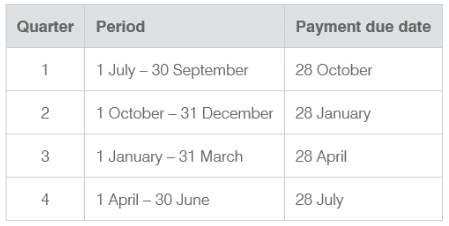
If you have questions, please contact us.

McAdam Siemon Business Advisors .… Adding value, every step of the way.

Self Education – What can you claim?

The Australian Taxation Office have released a new draft ruling on self-education expenses. We revisit the deductibility of self-education expenses and what you can and can’t claim.

If you undertake study that is connected to your work you can normally claim your costs of that study as a tax deduction – assuming your employer has not already picked up your expenses. There is also no limit to the value of the deduction you can claim. While this all sounds great and very encouraging there are still issues to consider before claiming your Harvard graduate degree, accommodation, and flights as a self-education expense.

Clients are often surprised by what cannot be claimed. Self-education expenses are not deductible if you are undertaking the education to obtain a new job or something not connected to how you earn your income now. Take the example of a nurse’s aide who attendees university to qualify as a registered nurse. The university degree and the expenses associated with degree are not deductible as the nursing degree is not sufficiently connected to their current role as a nurse’s aide.

The ATO have recently released a new draft ruling on self-education expenses. While the ruling does not introduce new rules, it does reinforce what the ATO will accept…and what they won’t.

Personal development courses

While not always the case, one of the key challenges in claiming deductions for self-development or personal development courses is that the knowledge or skills gained are often too general. Take the example of a manager who is having difficulty coping with work because of a stressful family situation. She pays for and attends a 4-week stress management course.

In that case, the stress management course is not deductible because the course was not designed to maintain or increase the skills or specific knowledge required in her current position.

When your employment ends part the way through your course

If your employment (or your income earning activity) ends part the way through completing a course, your expenses are only deductible up to the point that you stopped work. Anything from that point forward is not deductible (that is until you obtain a new role and assuming the course remains relevant).

Overseas trips with some work thrown in

Overseas study tours are deductible in limited circumstances. If you are travelling overseas, you need to prove that the dominant purpose of the trip is related to how you earn your income. Factors that help demonstrate this include the time devoted to the advancement of your work related knowledge, the trip not being merely recreational, and that the trip was requested by or supported by your employer. The ATO are strict on this. Take the example of a senior lecturer in history at a University. He takes a trip to China with his wife while on leave over the Christmas break to update his knowledge on his area of academic interest. While his job does not require him to undertake research, he incorporated some of the 600 photos he took and some of the learnings from the tour into the courses he teaches. Despite having a relationship to work, the trip is not deductible as, while relevant in some ways to his field of activity, it is incidental to the overall private and recreational nature of the trip.

Overseas conference with some recreation thrown in

We’ve all had them. Conferences where you spend a few days in sessions and then a day (or more) of touring or golf. When the dominant purpose of the trip is related directly to your work, then the ATO are more accommodating. If the leisure time, for example an afternoon tour organised by the conference, is incidental to the conference itself, then you can claim the full conference expenses.

Where you are extending your stay beyond the conference dates and this isn’t considered incidental, then you apportion the expenses and only claim the portion related to the conference. Let’s say you attend a conference for four days, then spend another four days on holiday. Assuming the conference is directly related to your work, you can claim your expenses related to the conference (assuming they were not picked up by your employer), and half of your airfare (as it’s a 50/50 split on how you spent your time between the conference and recreation).

Not fully deductible? Part of the course might qualify

If a particular course is not entirely deductible, a deduction may still be available for some of the course fees where there are particular subjects or modules in that course that are sufficiently related to your employment or income earning activities. In these cases, the course fees would be apportioned. Take the example of a civil engineer who is completing her MBA. While the MBA itself may not have a sufficient connection to her engineering role to be fully deductible, her expenses related to the project management subject she took as part of the degree could qualify.

Interaction with government assistance

If your course is a Commonwealth supported place, you cannot claim the course fees. But, the deductibility of course fees are not impacted merely because you borrow money to pay for those fees, for example a full-fee paying student using a government FEE-HELP loan to pay for course fees.

A warning on large claims

There is no limit on the amount you can claim as a self-education expense but the ATO is more likely to target large self-education expenses. For anyone who has completed post graduate study you know that these expenses can ratchet up very quickly, particularly when you add in any other expenses such as books or travel. It’s important to ensure that there is a clear connection between your current job or business activity and the self-education expenses before you claim them.

Airfares incurred to participate in self-education, provided you are not living at the location of the self-education activity, are deductible. Airfares are part of the cost of undertaking the self-education activities.


30% tax on super earnings above $3m

Treasury has released draft legislation to enact the Government’s plan to increase the tax rate on earnings on superannuation balances above $3m from 15% to 30% from 1 July 2025. This is the final step before the legislation is introduced into Parliament and a step closer to reality.

The draft legislation appears largely unchanged from the Government’s original announcement.

The proposed calculation aims to capture growth in total super balance (TSB) over the financial year allowing for contributions (including insurance proceeds) and withdrawals. This method captures both realised and unrealised gains, enabling negative earnings to be carried forward and offset against future years.

The ATO will perform the calculation for the tax on earnings. TSBs in excess of $3 million will be tested for the first time on 30 June 2026 with the first notice of assessment expected to be issued to those impacted in the 2026-27 financial year.

From a planning perspective, for those with superannuation balances close to or above $3m, it will be important to explore the implications to your personal situation – there is no one size fits all strategy here and what is best for you will depend on your circumstances. Superannuation, even with the increased tax, remains a tax efficient vehicle.

$20K deduction for electrifying your business

Electricity is the new black. Gas and other fossil fuels are out. A new, limited incentive nudges business towards energy efficiency. We show you how to maximise the deduction!

The small business energy incentive is the latest measure providing a bonus tax deduction to nudge the investment behaviour of small and medium businesses, this time towards more efficient energy use and electrification. Fossil fuels are out, gas is out, electricity is the name of the game.

Legislation before Parliament will see SMEs with an aggregated turnover of less than $50 million able to claim a bonus 20% tax deduction on up to $100,000 of their costs to improve energy efficiency in the business. But, the tax deduction is time limited. Assuming the legislation passes Parliament, you only have until 30 June 2024 to invest in new, or upgrade existing assets.

How much?

Your business can invest up to $100,000 in total, with a maximum bonus tax deduction of $20,000 per business entity. The energy incentive is not provided as a cash refund, it either reduces your taxable income or increases the tax loss for the 2024 income year.

What qualifies?

The energy incentive applies to both new assets and expenditure on upgrading existing assets. There is no specific list of assets that can qualify. Instead, the rules provide a series of eligibility criteria that need to be satisfied.

First, the expenditure incurred in relation to the asset must qualify for a deduction under another provision of the tax law.

If your business is acquiring a new depreciating asset, it must be first used or installed for any purpose, and a taxable purpose, between 1 July 2023 and 30 June 2024. If you are improving an existing asset, the expenditure must be incurred between 1 July 2023 and 30 June 2024.

If your business is acquiring a new depreciating asset the following additional conditions need to be satisfied:

  • The asset must use electricity; and
  • There is a new reasonably comparable asset that uses a fossil fuel available in the market; or
  • It is more energy efficient than the asset it is replacing; or
  • If it is not a replacement, it is more energy efficient than a new reasonably comparable asset available in the market; or
  • It is an energy storage, time-shifting or monitoring asset, or an asset that improves the energy efficiency of another asset.

If you are improving an existing asset the expenditure needs to satisfy at least one of the following conditions:

  • It enables the asset to only use electricity, or energy that is generated from a renewable source, instead of a fossil fuel;
  • It enables the asset to be more energy efficient, provided that asset only uses electricity, or energy generated from a renewable source; or
  • It facilitates the storage, time-shifting or usage monitoring of electricity, or energy generated from a renewable source.

What doesn’t qualify?

Certain kinds of assets and improvements are not eligible for the bonus deduction, including where the asset or improvement uses a fossil fuel. So, hybrids are out. Solar panels and motor vehicles are also excluded.

In addition, the following assets are specifically excluded from the rules:

  • Assets, and expenditure on assets, that can use a fossil fuel;
  • Assets, and expenditure on assets, which have the sole or predominant purpose of generating electricity (such as solar photovoltaic panels);
  • Capital works (such as buildings and structural improvements);
  • Motor vehicles (including hybrid and electric vehicles) and expenditure on motor vehicles;
  • Assets and expenditure on an asset where expenditure on the asset is allocated to a software development pool; and
  • Financing costs, including interest, payments in the nature of interest and expenses of borrowing.

What does qualify?

The legislation contains a few examples of what would qualify:

  • Electrifying heating and cooling systems
  • Upgrading to more efficient fridges and induction cooktops (for example replacing gas cook tops)
  • Installing batteries and heat pumps
  • Installing an electric reverse cycle air conditioner instead of a gas heater
  • Replacing a coffee machine with a more energy efficient coffee machine if the manufacturer’s electricity consumption information supports this – keep the documentation!
  • Thermal storage that can store heat or cold from a renewable source
  • Solar thermal hot water system (assuming it meets the other criteria)

The legislation to implement the energy incentive is before Parliament. We’ll keep you updated on its progress.

If you intend to make a major outlay to take advantage of the bonus deduction, talk to us first just to make sure it qualifies.

ATO scams

The ATO is seeing an increase in fake emails, phone calls and text messages claiming to be from the ATO.

If you think a phone call, SMS, voicemail, email or interaction on social media claiming to be from the ATO is not genuine, do not engage with it.  Never click any links or open attachments.

The people behind these fake accounts are trying to steal your personal information, including phone numbers, email addresses and bank account information.

The ATO will never send you SMS links to their online services or ask for your bank details. Delete the email or SMS and block the account.

To report scams, take a screenshot of the account and email the information to ReportScams@ato.gov.au

What changed on 1 July 2023

Employers & business

  • Superannuation guarantee increases to 11% from 10.5%
  • National and Award minimum wage increases take effect.
  • The minimum salary that must be paid to a sponsored employee – the Temporary Skilled Migration Income Threshold – increased to $70,000 from $53,900.
  • Work restrictions for student visa holders reintroduced to 48 hours per fortnight.
  • The cap on claims via the small claims court procedures for workers to recover unpaid work entitlements increases from $20,000 to $100,000.
  • Energy Bill Relief Fund for small business kicks in – it will apply to your energy bills if you meet the criteria.
  • Sharing economy reporting to the ATO commences for electronic distribution platforms.

Superannuation

  • Superannuation guarantee increases to 11%
  • Indexation increases the general transfer balance cap to $1.9 million.
  • Minimum pension amounts for super income streams return to default rates.
  • SMSF transfer balance event reporting moves from annual to quarterly for all funds.

For you and your family

  • The new 67 cent fixed rate method for working from home deductions – make sure you have a record of when you work from home. The ATO won’t accept a simple “I work from home every Wednesday” x 8 hours calculation.
  • Access to the first home loan guarantee expands to “friends, siblings, and other family members.”
  • The Medicare low income threshold has increased for 2022-23.
  • The child care subsidy will increase from 10 July 2023 for families with household income under $530,000. See the Services Australia website for details.
  • New parents able to claim up to 20 weeks paid parental leave.
  • Access the age pension increased to 67 years of age.

Important: 1 July 2023 wage increases

For employers, incorrectly calculating wages is not portrayed as a mistake, it’s “wage theft.” Beyond the reputational issues of getting it wrong, the Fair Work Commission backs it up with fines of $9,390 per breach for a corporation. In 2021-22 alone, the Fair Work Ombudsman recovered $532 million in unpaid wages recovered for over 384,000 workers.

On 1 July 2023, award rates of pay and the National Minimum Wage increased by 5.75%.
It is critically important that all employers review their payroll systems and ensure they are applying the correct rates and Awards.

The National Minimum Wage applies to workers not covered by an Award or registered agreement. From 1 July 2023, the National Minimum wage has increased to $23.23 per hour ($882.80 per week for a full time employee working a standard 38 hours week).

For casuals, the minimum wage including the 25% casual loading is a minimum of $29.04 per hour.
For workers under an Award, adult minimum award wages increase by 5.75% applied from the first full pay period on or after 1 July 2023. Proportionate increases apply to junior workers, apprentice and supported wages.
In addition, the superannuation guarantee increased from 10.5% to 11% on 1 July 2023.
If the employment agreement with your workers states the employee is paid on a ‘total remuneration’ basis (base plus SG and any other allowances), then their take home pay might be reduced by 0.5%. That is, a greater percentage of their total remuneration will be directed to their superannuation fund. For employees paid a rate plus superannuation, then their take home pay will remain the same and the 0.5% increase will be added to their SG payments.

Cents per kilometre increase

The cents per kilometre rate for motor vehicle expenses for 2023-24 has increased to 85 cents.

If you have questions about how any of these changes may affect you or your business, please contact us.

McAdam Siemon Business Advisors … Adding value, every step of the way.

ATO Rental Property Blitz

The Australian Taxation Office (ATO) has launched a full-on assault on rental property owners who incorrectly report income and expenses.

The ATO’s assessment, based on previous data matching programs, is that there is a tax gap of around $1 billion from incorrect reporting of rental property income and expenses. And, they would like that back now please.

As a result, banks and other financial institutions will be required to hand the ATO residential investment loan data on an estimated 1.7 million rental property owners for the period from 2021-22 through to 2025-26.

The data collected will include:

  • identification details (names, addresses, phone numbers, dates of birth, etc.)
  • account details (account numbers, BSB’s, balances, commencement and end dates, etc.)
  • transaction details (transaction date, transaction amount etc.)
  • property details (addresses, etc.)

In addition to identifying whether landlords are declaring their residential investment property income at all, the data matching program is looking specifically at how rental property loan interest and borrowing expense deductions have been reported in the rental property schedules, and whether net capital gains have been declared for property used to generate income.

Banks are not the only source of data. In a complimentary program, the ATO is targeting rental property management software. Over the last decade, much of the financial management of residential rental property has moved online, facilitated by various platform providers. The ATO will require these rental property software providers to provide details of property owners including their bank details, income, expenses and the amount of those expenses, and details of their associated rental properties and agents. Data collection of the estimated 1.6 million individuals in this data program will cover the period from 2018-19 to 2022-23.

With that, let’s recap on the common problem areas:

Claiming interest and redrawing on the loan

The interest component of your investment property loan is generally deductible. However, if you redraw on your invest loan for personal purposes, interest on this portion of the loan will not be deductible. This means that interest expenses will need to be apportioned into deductible and non-deductible parts and repayments will often need to be apportioned too. If the redrawn funds are used to produce investment income, then the interest on this portion of the loan should be deductible.

Borrowing costs

You can claim a deduction for borrowing costs (typically over five years) such as application fees, mortgage registration and filing, mortgage broker fees, stamp duty on mortgage, title search fee, valuation fee, mortgage insurance and legals on the loan. Life insurance to pay the loan on death is not deductible even if taking out the insurance was a requirement to get finance. If the loan is repaid early or refinanced, the whole amount including mortgage discharge expenses and penalty interest can often be deductible.

Repairs or maintenance

Deductions claimed for repairs and maintenance is an area that the Tax Office always looks closely at so it’s important to understand the rules. An area of major confusion is the difference between repairs and maintenance, and capital works. While repairs and maintenance can be claimed immediately, the deduction for capital works is generally spread over a number of years.

Repairs must relate directly to the wear and tear resulting from the property being rented out. This generally involves a replacement or renewal of a worn out or broken part – for example, replacing damaged palings of a fence or fixing a broken toilet. The following expenses will not qualify as deductible repairs, but are capital:

  • Replacement of an entire asset (for example, a complete fence, a new hot water system, oven, replacing a shower curtain with a glass wall, etc.)
  • Improvements and extensions.

Also remember that any repairs and maintenance undertaken to fix problems that existed at the time the property was purchased are not deductible.

Small Business Energy Incentive

In a pre-Budget announcement, the Government has committed to a Small Business Energy Incentive Scheme that offers a bonus tax deduction of up to $20,000.

The Small Business Energy Incentive encourages small and medium businesses with an aggregated turnover of less than $50 million to invest in spending that supports “electrification” and more efficient use of energy.

Up to $100,000 of total expenditure will be eligible for the incentive, with the maximum bonus tax deduction of $20,000 per business. Eligible assets or upgrades will need to be first used or installed ready for use between 1 July 2023 and 30 June 2024 to qualify for the bonus deduction.

If your business is contemplating upgrading to improve energy efficiency, it’s worth waiting to see the detail of the proposal. We’ll bring you more details of the scheme and how your business might benefit as soon as they are released.

What will the ATO be asking about your Holiday Home?

Taxpayers claiming deductions on holiday homes are in the ATO’s sights.

The ATO is more than a little concerned that people with holiday homes are claiming more deductions than they should and have published the starting questions they will be asking to scrutinise claims:

  • How many days was it rented out and was the rent in line with market values?
  • Where do you advertise for rent and were any restrictions placed on tenants?
  • Have you, your family or friends used the property?

The problem is blanket claims for the holiday home regardless of the time the home was rented out or available for rent. You will need to apportion your expenses if:

  • Your property is genuinely available for rent for only part of the year.
  • Your property is used for private purposes for part of the year.
  • Only part of your property is used to earn rent.
  • You charge less than market rent to family or friends to use the property.

The ATO has also indicated that deductions might be limited if a property is only made available for rent outside peak holiday times and the location of the property (or other factors) mean that it is unlikely to be rented out during those periods.

The regulator is also likely to be suspicious if the owner claims that the property was genuinely available for rent during peak holiday periods but wasn’t deriving any income during those periods. This might indicate that the property was really being used for private purposes or that the advertised rental rate was unrealistic.

Whether a property is genuinely available for rent is a matter of fact. Factors that help demonstrate a property is genuinely available for rent include;

  1.   It is available during key holiday periods,
  2.   Kept in a condition that people would want to rent it,
  3.   Tenants are not unreasonably turned away,
  4.   Advertised in ways that give it broad exposure to possible tenants, and
  5.   The conditions are not so restrictive that tenants are unlikely to rent the property.

Future earnings for super balances above $3m taxed at 30% from 2025-26

The Government has announced that from 2025‑26, the 15% concessional tax rate applied to future earnings for superannuation balances above $3 million will increase to 30%.

The concessional tax rate on earnings from superannuation in the accumulation phase will remain at 15% up to $3m. From $3m onwards, the rate will increase to 30%. The amendment applies to future earnings; it is not retrospective.

80,000 people are expected to be impacted by the measure.

The announcement doesn’t propose any changes to the transfer balance cap or the amount that a member can have in the tax-free retirement phase.

The ‘Super’ Wars

A consultation paper released by Treasury has sparked a national debate about the role, purpose and access to superannuation ahead of the 2023-24 Federal Budget.

What is the purpose of superannuation? At first glance, the consultation released by Treasury in February titled Legislating the objective of Superannuation sounds innocuous enough. The consultation seeks to anchor future policies relating to superannuation to a legislated objective:

The objective of superannuation is to preserve savings to deliver income for a dignified retirement, alongside Government support, in an equitable and sustainable way.

But what seems self-evident has opened a Pandora’s Box of what superannuation is not. If superannuation is to “preserve savings”, that is, restricting access to superannuation savings to retirement only, by default it is not a means of accumulating wealth in a concessionally taxed environment. It is not a strategy to manage intergenerational wealth. The definition would also prevent initiatives such as the COVID-19 early access scheme used widely during the pandemic to give those in financial distress access to quick cash (over 3 million people withdrew $37.8 billion from their superannuation funds). And, it is not a method of purchasing a home sooner.

As an aside, the Treasurer points out that the average super balance in Australia is $150,000 – taking account of all those with a super balance including new entrants into the workforce. For those 65 and over, the average balance is around $400,000 across all income brackets.

Superannuation and national building

The second component of the Treasury consultation is nation building. At a recent speech, the Treasurer stated, “to my mind, defining super’s task as delivering income for retirement isn’t to narrow super’s role in our economy…it’s to elevate it, and broaden it.” The consultation states:

“There is a significant opportunity for Australia to leverage greater superannuation investment in areas where there is alignment between the best financial interests of members and national economic priorities, particularly given the long‑term investment horizon of superannuation funds.”

The compulsory superannuation guarantee (SG) was introduced in 1992 at a rate of 3% rising to 9% by July 2002. Now, Australia’s superannuation pool has grown from around $148 billion in 1992 to over $3.3 trillion. It now represents 139.6% of gross domestic product (GDP) and is projected to grow to around 244% of GDP by 30 June 2061. Australia’s pool of pension assets is now one of the largest in the world, and the fourth largest in the OECD.

The consultation does not define how this ambition would be achieved.

*The Treasurer has ruled out changes to the existing early access hardship provisions for super.

The Federal Budget is released on 9 May 2023. Look out for our update with all the relevant news to you, your business and your super.

1 July 2023 Super Balance Increase but no Change for Contributions

The general transfer balance cap (TBC) – the amount of money you can potentially hold in a tax-free retirement account, will increase by $200,000 on 1 July 2023 to $1.9 million. The TBC is indexed to the consumer price index each December.

The TBC applies individually. If your transfer balance account reached $1.7m or more at any point before 1 July 2023, your TBC after 1 July 2023 will remain at $1.7m. If the highest amount in your account was between $1 and $1.7m, then your cap is proportionally indexed based on the highest ever balance your transfer balance account reached.

That is, the ATO will look at the highest amount your transfer balance account has ever been, then apply indexation to the unused cap amount.

But don’t worry, you don’t have to calculate this yourself, you can see your personal transfer balance cap, available cap space, and transfer balance account transactions online through the ATO link in myGov.

The caps on the contributions you can make into super however, will remain the same. That is, $27,500 for concessional contributions and $110,00 for non-concessional contributions. The contribution caps are linked to December’s average weekly ordinary time earnings (AWOTE) figures.

Full throttle in 2023

In a volatile market, keeping to a strategy, or let’s face it creating one, can be tough.

The downside of not taking time out for your strategy is that there is a tendency to keep a short-term focus at an operational level to try and pick quick wins to generate financial returns. Sometimes in the process, this short-term focus undermines longer term value and returns.

Here are our ‘must dos’:

Know what your position is

A business health check is an analysis of the current state of your business. It is an analytical review of its operation with view to providing a broad overview of operating performance and identifying potential issues. Understanding your position will reveal your risks and capacity to develop.

Know what to look for

Once you know your position, the next question is what are the measures that are going to give you the best insight into business performance. In a volatile market, this information will give you what you need to make informed decisions at any one point in time.

Be prepared to make quick decisions

If you know your position and have the data you need, be prepared to make quick decisions and take the first mover advantage. If you have the two elements above, you have your radar for identifying opportunities and mitigating risk. Most businesses are simply a replication of what they see. While the pandemic and market instability is difficult, we have also seen a wave of innovation as people adapt to find solutions.

Don’t bank on a single opportunity

If COVID has taught us anything it is that things change, and we need to adapt and change with the circumstances. While one single opportunity might make all the difference, an overreliance on one product, service, or methodology of delivering those products and services, exposes you to risk.

Understand your end game

What are you aiming for? Family empire? Fast growth and sale? Sustainable growth and sale as a retirement plan? Public listing? Even if you plan on simply running and growing your business for decades to come, that is a decision. Your end game and your progress towards that end game impacts your structure, focus, and decision making.

Document your strategy

Document your strategy – knowing it in your head is not enough. This does not have to be an onerous War & Peace approach. It is understanding what you are aiming for, and breaking that down into measurable objectives, then into measurable outcomes and timeframes (preferably actionable against rolling 90 day plans). This approach also makes management meetings a lot more meaningful.

If you are looking to improve your business performance, please contact John Siemon on 07 5443 5833 to discuss.

Is ‘downsizing’ worth it?

From 1 January 2023, those 55 and over can make a ‘downsizer’ contribution to superannuation.

Downsizer contributions are an excellent way to get money into superannuation quickly. And now that the age limit has reduced to 55 from 60, more people have an opportunity to use this strategy if it suits their needs.

What’s a ‘downsizer’ contribution?

If you are aged 55 years or older, you can contribute $300,000 from the proceeds of the sale of your home to your superannuation fund.

Downsizer contributions are excluded from the existing age test, work test, and the transfer balance threshold (but are limited by your transfer balance cap).

For couples, both members of a couple can take advantage of the concession for the same home. That is, if you and your spouse meet the other criteria, both of you can contribute up to $300,000 ($600,000 per couple). This is the case even if one of you did not have an ownership interest in the property that was sold (assuming they meet the other criteria).

Sale proceeds contributed to superannuation under this measure count towards the Age Pension assets test. Because a downsizer contribution can only be made once in a lifetime, it is important to ensure that this is the right option for you.

Let’s look at the eligibility criteria:

You are 55 years or older (from 1 January 2023) at the time of making the contribution.

  • The home was owned by you or your spouse for 10 years or more prior to the sale – the ownership period is generally calculated from the date of settlement of purchase to the date of settlement of sale.
  • The home is in Australia and is not a caravan, houseboat, or other mobile home.
  • The proceeds (capital gain or loss) from the sale of the home are either exempt or partially exempt from capital gains tax (CGT) under the main residence exemption, or would be entitled to such an exemption if the home was a post-CGT asset rather than a pre-CGT asset (acquired before 20 September 1985). Check with us if you are uncertain.
  • You provide your super fund with the Downsizer contribution into super form (NAT 75073) either before or at the time of making the downsizer contribution.
  • The downsizer contribution is made within 90 days of receiving the proceeds of sale, which is usually at the date of settlement.
  • You have not previously made a downsizer contribution to super from the sale of another home or from the part sale of your home.

Do I have to buy another smaller home?

The name ‘downsizer’ is a bit of a misnomer. To access this measure you do not have to buy another home once you have sold your existing home, and you are not required to buy a smaller home – you could buy a larger and more expensive one.

SMSF reporting changes from 1 July 2023

If you have an SMSF with a total balance of less than $1 million, from 1 July 2023 you will need to report quarterly to the ATO instead of annually. Previously, SMSFs with a balance under $1m reported annually at the same time as lodging the SMSF annual return.

Get in touch with one of the team at McAdam Siemon Business Advisors if you would like to discuss any of the matters raised in these articles – Ph. 0754 435 833.

Can I claim my crypto losses?

The ATO has released updated information on claiming cryptocurrency losses and gains in your tax return.

The first point to understand is that gains and losses from crypto are only reported in your tax return when you dispose of it – you sell it, convert it to fiat currency, exchange it for another type of asset, buy something with it, etc. You cannot recognise market fluctuations or claim a loss because the value of your crypto assets changed until the loss is realised or crystallised.

Gains and losses from the disposal of cryptocurrency should be reported in your tax return in the year that the disposal occurred.

If you made a capital gain on crypto that was held as an investment and you held the crypto for more than 12 months then you may be able to access the 50% Capital Gains Tax (CGT) discount and halve the tax you pay.

If you made a loss on the cryptocurrency (capital loss) when you disposed of it, you can generally offset the loss against capital gains you might have (unless the crypto is a personal use asset). But, you can only offset capital losses against capital gains. You cannot offset these losses against other forms of income like salary and wages, unfortunately. If you don’t have any capital gains to offset, you can hold the losses and carry them forward for another future year when you can use them.

If you earned income from crypto such as airdrops or staking rewards, then these also need to be reported in your tax return.

And remember, keep records of your crypto transactions. The ATO has sophisticated data matching programs in place and cryptocurrency reporting is a major area of focus.

How high will interest rates go?

The RBA lifted the cash rate to 1.85% in early August 2022. The increase comes a few weeks after Reserve Bank Governor Philip Lowe told the Australian Strategic Business Forum that “…we’re going through a process now of steadily increasing interest rates, and there’s more of that to come. We’ve got to move away from these very low levels of interest rates we had during the emergency.” He went on to say that we should expect interest rates of 2.5% – how quickly we get there really depends on inflation.

Inflation is now forecast to reach 7.75% over 2022 before trending down. We’re not expected to reach the RBA’s target inflation rate range of 2% to 3% until the 2023-24 financial year.

For businesses, the rate increase has a twofold effect. It is not just the rate rise and the higher cost of funds in their borrowings. That by itself is significant but at this stage, if anything, it is the lesser issue. The more significant impact comes from negative consumer sentiment and the flow through effect on sales and cash flow.

  • In general, your debts should not exceed around 35-40% of your assets. There will be some exceptions to this with new business start-ups and first home buyers.
  • Review the cost of cash in your business, reviewing rates, and the configuration and mix of loans to ensure you are not paying more than you need to.
  • If possible, avoid or reduce private debt as well as business and investment debts. You can’t get tax relief on your private debt.
  • Keep an eye on debtors and don’t become your customer’s bank.

As interest rates increase and consumer spending decreases it is even more important to closely monitor your business results and cashflow regularly and set budgets.

The team at McAdam Siemon can help you with this.

MSBA staff training day

On Friday 29 July 2022 we held an all staff training day at Pelican Waters resort.

Guest speakers included Westpac Bank’s digital security team and Ed Ross, co-founder of TradeMutt a social enterprise workwear company.

A reminder of what changed on 1 July 2022

Business

  • Superannuation guarantee increased to 10.5%
  • $450 super guarantee threshold removed for employees aged 18 and over
  • Small business GST and PAYG tax instalments lowered (the total tax liability remains the same, just the amount the business needs to pay through the year is lowered)
  • ATO guidance on how profits of professional firms are structured comes into effect introducing new risk criteria
  • New guidance on unpaid trust distributions to corporate beneficiaries comes into effect that may treat some unpaid distributions as loans and trigger tax consequences

Individuals

  • Superannuation guarantee increased to 10.5%
  • Work-test repealed for those under 75 to make or receive non-concessional or salary sacrifice super contributions (the work test still applies to personal deductible contributions)
  • Age for downsizer super contributions reduced to 60 years and older
  • Value of voluntary super contributions that can be withdrawn under the First Home Saver Scheme increased to a total of $50,000
  • New ATO guidelines on trust distributions come into effect primarily impacting distributions to adult children
  • Home loan guarantee scheme extended to 35,000 per year for first home buyers and 5,000 per year for single parents
  • Australia’s minimum wage increased.

Tax Time Targets

The ATO has flagged four priority areas this tax season where people are making mistakes.

 With tax season almost upon us the Australian Taxation Office (ATO) has revealed its four areas of focus this tax season.

  1. Record-keeping
  2. Work-related expenses
  3. Rental property income and deductions, and
  4. Capital gains from crypto assets, property, and shares.

In general, there are three ‘golden rules’ when claiming tax deductions:

  • You must have spent the money and not been reimbursed.
  • If the expense is for a mix of work related (income producing) and private use, you can only claim the portion that relates to how you earn your income.
  • You need to have a record to prove it.

1.0  Record keeping

101 of working with the ATO is that you can’t claim it if you can’t prove it. If you are audited, the ATO will disallow deductions for unsubstantiated or unreasonable expenses.

2.0 Work-related expenses

To claim a deduction, you need to have incurred the expense yourself and not been reimbursed by your employer or business, and the expense needs to be directly related to your work.

Claiming work from home expenses

If you claimed work from home expenses last year and returned to the office this year, then there should be a reduction in your work from home claim. The ATO will be looking for discrepancies.

If you are claiming your expenses, there are three methods you can use:

  • The ATO’s simplified 80 cents per hour short-cut method – you can claim 80 cents for every hour you worked from home from 1 March 2020 to 30 June 2022. You will need to have evidence of hours worked like a timesheet or diary. The rate covers all of your expenses and you cannot claim individual items separately, such as office furniture or a computer.
  • Fixed rate 52 cents per hour method – applies if you have set up a home office but are not running a business from home. You can claim 52 cents for every hour and this covers the running expenses of your home. You can claim your phone, internet, or the decline in value of equipment separately.
  • Actual expenses method – you can claim the actual expenses you incur (and reduce the claim by any personal use and use by other family members). You will need to ensure you have kept records such as receipts to use this method.

3.0 Rental property income and deductions

For landlords, the focus is on ensuring that all income received, whether long-term, short-term, rental bonds, back payments, or insurance pay-outs, are recognised in your tax return.

If your rental property is outside of Australia, and you are an Australian resident for tax purposes, you must recognise the rental income you received in your tax return (excluding any tax you have paid overseas), unless you are classified as a temporary resident for tax purposes. You can claim expenses related to the property, although there are some special rules that need to be considered when it comes to interest deductions. For example, if you have borrowed money from an overseas lender you might be subject to withholding tax obligations.

4.0 Capital gains from crypto, property or other assets

Crypto and capital gains tax

A question that often comes up is when do I pay tax on cryptocurrency?

If you acquire the cryptocurrency to make a private purchase and you don’t hold onto it, the crypto might qualify as a personal use asset. But in most cases, that is not the case and people acquire crypto as an investment, even if they do sometimes use it to buy things.

Generally, a CGT event occurs when disposing of cryptocurrency. This can include selling cryptocurrency for a fiat currency (e.g., $AUD), exchanging one cryptocurrency for another, gifting it, trading it, or using it to pay for goods or services.

Each cryptocurrency is a separate asset for CGT purposes. When you dispose of one cryptocurrency to acquire another, you are disposing of one CGT asset and acquiring another CGT asset. This triggers a taxing event.

Transferring cryptocurrency from one wallet to another is not a CGT disposal if you maintain ownership of the coin.

Record keeping is extremely important – you need receipts and details of the type of coin, purchase price, date and time of transactions in Australian dollars, records for any exchanges, digital wallet and keys, and what has been paid in commissions or brokerage fees, and records of tax agent, accountant and legal costs. The ATO regularly runs data matching projects, and has access to the data from many crypto platforms and banks.

If you make a loss on cryptocurrency, you can generally only claim the loss as a deduction if you are in the business of trading.

ATO refocus on debt collection

The ATO has not pursued many business tax debts during the pandemic and allowed tax refunds to flow through even if the business had a tax debt.  That position has now changed and the ATO has resumed debt collection and offsetting tax debts against refunds.

If you have a tax debt that has been on-hold, expect the ATO to offset any refunds against this debt, and take steps to actively pursue the payment of the debt.  Small business account for around two thirds of the total debt owed to the ATO. If you have a tax debt, it is important that you engage with the ATO to work out how this debt will be paid.

SG rate and rate increase

No change to the legislated superannuation guarantee rate increase. The SG rate will increase to 10.5% on 1 July 2022 and steadily increase by 0.5% each year until it reaches 12% on 1 July 2025.

Quote:

“Almost everything worthwhile carries with some sort of risk, whether it is starting a business, whether it’s leaving home, whether it’s getting married, or whether it’s flying in space”.

Chris Hadfield, astronaut

The 120% deduction for skills training and technology costs

It’s a great headline isn’t it? Spend $100 and get a $120 tax deduction. Days after the Federal Budget announcement that businesses will be able to claim a 120% deduction for expenditure on training and technology costs, we started receiving marketing emails encouraging us to spend now to access the deduction.

But, there are a few problems. Firstly, the announcement is just that, it is not yet law. And, given the Government was in caretaker mode for the Federal election, we do not know the position of the incoming Government on this measure. And, even if the incoming Government is supportive, we are yet to see draft legislation or detail to determine the practical application of the measure.

So, what was announced?

Technology Investment Boost

A 120% tax deduction for expenditure incurred by small businesses on business expenses and depreciating assets that support their digital adoption, such as portable payment devices, cyber security systems, or subscriptions to cloud-based services, capped at $100,000 per annum.

We have received a lot of questions about the specific expenditure the boost might apply to, for example does it cover website development or SEO services? But until we see the legislation, nothing is certain.

Skills and Training Boost

A 120% tax deduction for expenditure incurred by small businesses on external training courses provided to employees. External training courses will need to be provided to employees in Australia or online, and delivered by entities registered in Australia.

Some exclusions will apply, such as for in-house or on-the-job training and expenditure on external training courses for persons other than employees.


What’s changing on 1 July 2022?

A series of reforms and changes will commence on 1 July 2022 for businesses. Here’s what is coming up:

 Superannuation guarantee increase to 10.5%

The Superannuation Guarantee (SG) rate will rise from 10% to 10.5% on 1 July 2022 and will continue to increase by 0.5% each year until it reaches 12% on 1 July 2025.

If you have employees, what this will mean depends on your employment agreements. If the employment agreement states the employee is paid on a ‘total remuneration’ basis (base plus SG and any other allowances), then their take home pay might be reduced by 0.5%. That is, a greater percentage of their total remuneration will be directed to their superannuation fund. For employees paid a rate plus superannuation, then their take home pay will remain the same and the 0.5% increase will be added to their SG payments.

$450 super guarantee threshold removed

From 1 July 2022, the $450 threshold test will be removed and all employees aged 18 or over will need to be paid superannuation guarantee regardless of how much they earn. It is important to ensure that your payroll system accommodates this change so you do not inadvertently underpay superannuation.

For employees under the age of 18, super guarantee is only paid if the employee works more than 30 hours per week.

Profits of professional services firms

The ATO has been concerned for some time about how many professional services firms are structured – specifically, professional practices such as lawyers, accountants, architects, medical practices, engineers, architects etc., operating through trusts, companies and partnerships of discretionary trusts and how the profits from these practices are being taxed.

New ATO guidance that comes into effect from 1 July 2022, takes a strong stance on structures designed to divert income in a way that results in principal practitioners receiving relatively small amounts of income personally for their work and reducing their taxable income. Where these structures appear to be in place to divert income to create a tax benefit for the professional, Part IVA may apply. Part IVA is an integrity rule which allows the Tax Commissioner to remove any tax benefit received by a taxpayer where they entered into an arrangement in a contrived manner in order to obtain a tax benefit. Significant penalties can also apply when Part IVA is triggered.

A new method of assessing the level of risk associated with profits generated by a professional services firm and how they flow through to individual practitioners and their related parties, will come into effect from 1 July 2022. Professional firms will need to assess their structures to understand their risk rating, and if necessary, either make changes to reduce their risks level or ensure appropriate documentation is in place to justify their position.

Lowering tax instalments for small business – PAYG

PAYG instalments are regular prepayments made during the year of the tax on business and investment income. The actual amount owing is then reconciled at the end of the income year when the tax return is lodged.

Normally, GST and PAYG instalment amounts are adjusted using a GDP adjustment or uplift. For the 2022-23 income year, the Government has set this uplift factor at 2% instead of the 10% that would have applied. The 2% uplift rate will apply to small to medium enterprises eligible to use the relevant instalment methods for instalments for the 2022-23 income year:

  • Up to $10 million annual aggregated turnover for GST instalments, and
  • $50 million annual aggregated turnover for PAYG instalments

The effect of the change is that small businesses using this PAYG instalment method will have more cash during the year to utilise. However, the actual amount of tax owing on the tax return will not change, just the amount you need to contribute during the year.

Trust distributions to companies

The ATO recently released a draft tax determination dealing specifically with unpaid distributions owed by trusts to corporate beneficiaries. If the amount owed by the trust is deemed to be a loan then it can potentially fall within the scope of the integrity provisions in Division 7A. If certain steps are not taken, such as placing the unpaid amount under a complying loan agreement, these amounts can be treated as deemed unfranked dividends for tax purposes and taxable at the taxpayer’s marginal tax rate. The ATO guidance deals specifically with, and potentially changes, when an unpaid entitlement to trust income will start being treated as a loan depending on the wording of the resolution to pay a distribution. The new guidance applies to trust entitlements arising on or after 1 July 2022.


The ATO’s Attack on Trusts and Trust Distributions

Late last month, the Australian Taxation Office (ATO) released a package of new guidance material that directly targets how trusts distribute income. Many family groups will pay higher taxes (now and potentially retrospectively) as a result of the ATO’s more aggressive approach.

Family trust beneficiaries at risk

The tax legislation contains an integrity rule, section 100A, which is aimed at situations where income of a trust is appointed in favour of a beneficiary but the economic benefit of the distribution is provided to another individual or entity. If trust distributions are caught by section 100A, then this generally results in the trustee being taxed at penalty rates rather than the beneficiary being taxed at their own marginal tax rates.

The latest guidance suggests that the ATO will be looking to apply section 100A to some arrangements that are commonly used for tax planning purposes by family groups. The result is a much smaller  boundary on what is acceptable to the ATO which means that some family trusts are at risk of higher tax liabilities and penalties.

ATO redrawing the boundaries of what is acceptable

Section 100A has been around since 1979 but to date, has rarely been invoked by the ATO except where there is obvious and deliberate trust stripping at play. However, the ATO’s latest  guidance suggests that the ATO is now willing to use section 100A to attack a wider range of scenarios.

There are some important exceptions to section 100A, including where income is appointed to minor beneficiaries and where the arrangement is part of an ordinary family or commercial dealing. Much of the ATO’s recent guidance focuses on whether arrangements form part of an ordinary family or commercial dealing. The ATO notes that this exclusion won’t necessarily apply simply because arrangements are commonplace or they involve members of a family group. For example, the ATO suggests that section 100A could apply to some situations where a child gifts money that is attributable to a family trust distribution to their parents.

The ATO’s guidance sets out four ‘risk zones’ – referred to as the white, green, blue and red zones. The risk zone for a particular arrangement will determine the ATO’s response:

White zone

This is aimed at pre-1 July 2014 arrangements. The ATO will not look into these arrangements unless it is part of an ongoing investigation, for arrangements that continue after this date, or where the trust and beneficiaries failed to lodge tax returns by 1 July 2017.

Green zone

Green zone arrangements are low risk arrangements and are unlikely to be reviewed by the ATO, assuming the arrangement is properly documented. For example, the ATO suggests that when a trust appoints income to an individual but the funds are paid into a joint bank account that the individual holds with their spouse then this would ordinarily be a low-risk scenario. Or, where parents pay for the deposit on an adult child’s mortgage using their trust distribution and this is a one-off arrangement.

Blue zone

Arrangements in the blue zone might be reviewed by the ATO. The blue zone is basically the default zone and covers arrangements that don’t fall within one of the other risk zones. The blue zone is likely to include scenarios where funds are retained by the trustee, but the arrangement doesn’t fall within the scope of the specific scenarios covered in the green zone.

Section 100A does not automatically apply to blue zone arrangements, it just means that the ATO will need to be satisfied that the arrangement is not subject to section 100A.

Red zone

Red zone arrangements will be reviewed in detail. These are arrangements the ATO suspects are designed to deliberately reduce tax, or where an individual or entity other than the beneficiary is benefiting.

High on the ATO’s list for the red zone are arrangements where an adult child’s entitlement to trust income is paid to a parent or other caregiver to reimburse them for expenses incurred before the adult child turned 18. For example, school fees at a private school. Or, where a loan (debit balance account) is provided by the trust to the adult child for expenses they incurred before they were 18 and the entitlement is used to pay off the loan. These arrangements will be looked at closely and if the ATO determines that section 100A applies, tax will be applied at the top marginal rate to the relevant amount and this could apply across a number of income years.

The ATO indicated that circular arrangements could also fall within the scope of section 100A. For example, this can occur when a trust owns shares in a company, the company is a beneficiary of that trust and where income is circulated between the entities on a repeating basis. For example, section 100A could be triggered if:

  • The trustee resolves to appoint income to the company at the end of year 1.
  • The company includes its share of the trust’s net income in its assessable income for year 1 and pays tax at the corporate rate.
  • The company pays a fully franked dividend to the trustee in year 2, sourced from the trust income, and the dividend forms part of the trust income and net income in year 2.
  • The trustee makes the company presently entitled to some or all of the trust income at the end of year 2 (which might include the franked distribution).
  • These steps are repeated in subsequent years.

Distributions from a trust to an entity with losses could also fall within the red zone unless it is clear that the economic benefit associated with the income is provided to the beneficiary with the losses. If the economic benefit associated with the income that has been appointed to the entity with losses is utilised by the trust or another entity then section 100A could apply.

Who is likely to be impacted?

The ATO’s updated guidance focuses primarily on distributions made to adult children, corporate beneficiaries, and entities with losses. Depending on how arrangements are structured, there is potentially a significant level of risk. However, it is important to remember that section 100A is not confined to these situations.

Distributions to beneficiaries who are under a legal disability (e.g., children under 18) are excluded from these rules.

For those with discretionary trusts it is important to ensure that all trust distribution arrangements are reviewed in light of the ATO’s latest guidance to determine the level of risk associated with the arrangements. It is also vital to ensure that appropriate documentation is in place to demonstrate how funds relating to trust distributions are being used or applied for the benefit of beneficiaries.

Companies entitled to trust income

As part of the broader package of updated guidance targeting trusts and trust distributions, the ATO has also released a draft determination dealing specifically with unpaid distributions owed by trusts to corporate beneficiaries. If the amount owed by the trust is deemed to be a loan then it can potentially fall within the scope of another integrity provision in the tax law, Division 7A.

Division 7A captures situations where shareholders or their related parties access company profits in the form of loans, payments or forgiven debts. If certain steps are not taken, such as placing the loan under a complying loan agreement, these amounts can be treated as deemed unfranked dividends for tax purposes and taxable at the taxpayer’s marginal tax rate.

The latest ATO guidance looks at when an unpaid entitlement to trust income will start being treated as a loan. The treatment of unpaid entitlements to trust income as loans for Division 7A purposes is not new. What is new is the ATO’s approach in determining the timing of when these amounts start being treated as loans. Under the new guidance, if a trustee resolves to appoint income to a corporate beneficiary, then the time the unpaid entitlement starts being treated as a loan will depend on how the entitlement is expressed by the trustee (e.g., in trust distribution resolutions etc):

  • If the company is entitled to a fixed dollar amount of trust income the unpaid entitlement will generally be treated as a loan for Division 7A purposes in the year the present entitlement arises; or
  • If the company is entitled to a percentage of trust income, or some other part of trust income identified in a calculable manner, the unpaid entitlement will generally be treated as a loan from the time the trust income (or the amount the company is entitled to) is calculated, which will often be after the end of the year in which the entitlement arose.

This is relevant in determining when a complying loan agreement needs to be put in place to prevent the full unpaid amount being treated as a deemed dividend for tax purposes when the trust needs to start making principal and interest repayments to the company.

The ATO’s views on “sub-trust arrangements” has also been updated. Basically, the ATO is suggesting that sub-trust arrangements will no longer be effective in preventing an unpaid trust distribution from being treated as a loan for Division 7A purposes if the funds are used by the trust, shareholder of the company or any of their related parties.

The new guidance represents a significant departure from the ATO’s previous position in some ways. The upshot is that in some circumstances, the management of unpaid entitlements will need to change. But, unlike the guidance on section 100A, these changes will only apply to trust entitlements arising on or after 1 July 2022.

Cryptocurrency

The creation, trade and use of cryptocurrency is rapidly evolving.

The reporting of cryptocurrency profits is under the microscope this year.  The ATO matches data from designated service providers to individual’s tax returns to ensure they are reporting any profits or losses.

As tax agents we are now getting notifications from the tax department that certain clients may be trading in cryptocurrency.

If you are involved in acquiring or disposing of cryptocurrency, you need to be aware of the tax consequences which vary depending on the nature of your circumstances.  It is imperative that you maintain appropriate records to assist with the calculation of any gains or losses made on your transactions.

If you would like to discuss some options for the electronic recording of your cryptocurrency transactions please contract our office so we can discuss with you the best solution.

We are excited to continue doing what we do best – adding value to your business journey, every step of the way.

New Director ID Scheme

As we pride ourselves on keeping our clients up to date with the most recent news within the financial and business sectors, below is information that is relevant if you are a current company Director or may be in the future.

As part of the 2020 Budget Digital Business Plan, the government announced the full implementation of the Modernising Business Registers Program (MBRP). The aim of the MBRP is to unify the Australian Business Register (ABR) and the 31 registers administered by ASIC onto a contemporary digital registry system. This will be called the Australian Business Registry Services (ABRS).

The MBRP will include the introduction of a director identification number (director ID). A unique identifier that all directors will need to apply for and keep forever, very much like a Tax File Number.

What this means for you?

As this is not proposed to be launched until later in the year, there is nothing you need to do right now.

All existing directors appointed before 31 October 2021 will need to apply before the end of the 12-13 month grace period.

All new directors after the grace period has ended will need to verify and apply for a director ID before they are appointed as a director.

How do you apply?

Once the ABRS have confirmed they are ready, there will be 3 ways to verify your identity and apply for the director ID:-

  •  Digital Application
  •  Phone Application
  •  Paper Application

As more information becomes available we will keep you informed and advise any action that may be required.

We are excited to continue doing what we do best – adding value to your business journey, every step of the way.

2021 COVID-19 Business Support Grant Requirements

The Queensland Government announced a $5,000 Business Support Grant for those impacted by the lockdown from Saturday, 31 July 2021. Your business does not have to be in the local government areas locked down to be impacted by it.

How to apply

Applications open 12pm (midday), 16 August 2021.

You will need to apply online with supporting evidence through the Queensland Rural and Industry Development Authority (QRIDA) portal.

Eligibility

To be eligible, your business or not for profit organisation must:

  • employ staff (employees must be on your payroll and does not include any business owners)
  • be registered for GST
  • have Queensland headquarters (i.e. your principal place of business is located in Queensland) and have been trading in Queensland on 31 July 2021
  • have an annual payroll of not more than $10 million
  • have an annual turnover of over $75,000 during any of the 2018–19, 2019–20 or 2020–21 financial years
  • demonstrate the business or not for profit organisation was directly or indirectly impacted by a lockdown event
  • demonstrate or declare a reduction in turnover of 30% or more during a nominated 7-day period compared to the same period in 2019 by either
    • Provide an accompanying Independent Financial letter in the correct format from a qualified accountant or
    • Financial documents such as BAS returns, ATO records, sales turnover, payroll to prove that you meet the business criteria and have had a 30% drop in revenue.

You can also use the online eligibility checker. 

How we can help

If you would like us to prepare the Accountants supporting letter we will advise the cost upfront.  We will be applying a 30% discount to the fee.

We look forward to working closely with you, every step of the way.

2021 COVID-19 Support Grants Queensland

Eleven Queensland local Government areas were declared a Commonwealth hotspot on 31 July 2021. If you are impacted, there is assistance available to you and your business.

Area – The City of Brisbane, Moreton Bay Region, Redland City, Logan City, City of Ipswich, Shire of Noosa, City of Gold Coast, Lockyer Valley Region, Scenic Rim Region, Somerset Region and Sunshine Coast Region
Date of declaration – 1 August 2021
Disaster payment accessible from 7 August 2021

For my business:-

The Queensland Government has announced a $5,000 Business Support Grant for those impacted by the lockdown from Saturday, 31 July 2021. Your business does not have to be in the local government areas locked down but impacted by it.

How to apply

Applications are made online through Business Queensland. Applications open mid-August.

Eligibility

The full eligibility details, and details of how to evidence the 30% reduction in turnover, are not available as yet. We will let you know as soon as the details are released.
The grant is limited to businesses with:

  •  Turnover of more than $75,000 per annum, and
  • Annual payroll in Queensland of up to $10 million

For me:- 

There are two payments accessible to individuals: the COVID-19 Disaster Payment; and, the Pandemic Leave Disaster Payment.

How to apply for support

You can apply for the COVID-19 Disaster Payment or the top-up income support payment through your MyGov account if you have created and linked a Centrelink account. Apply for the Pandemic Leave Payment by phoning Services Australia on 180 22 66.

COVID-19 Disaster Payments

The COVID-19 Disaster Payment is a weekly payment available to eligible workers who can’t attend work or who have lost income because of a lockdown and don’t have access to certain paid leave entitlements. If you are a couple, both people can separately claim the payment.

Sole traders may apply for COVID-19 Disaster Payment if you are unable to operate your business from home. However, you will not be eligible if you are also receiving a state business grant such as the NSW 2021 COVID-19 Business Grant or JobSaver.

Timing of the payment

The disaster payment is generally accessible if the hotspot triggering the lockdown lasts more than 7 days as declared by the Chief Medical Officer (you can find the listing here). From 2 August 2021, payments will apply from day one of the lockdown and will be paid in arrears once claims open (previously, the payment only applied from day 8 of a lockdown).

How much is the payment?

The COVID-19 disaster payment amount available depends on:

  • How many hours of work you have lost in the week, and
  • If the payment is on or after the third period of the lockdown.

Disaster payment amounts from 02 August 2021:
Between 8 and 20 (or a full day of work) hours lost – $450.00
20 or more hours of work lost– $750.00

The payment applies to each week of lockdown you are eligible. On 29 July 2021, the Prime Minister stated that the COVID-19 disaster payment will not be taxable.

Pandemic Leave Disaster Payment

The Pandemic Leave Disaster Payment is for those who have been advised by their relevant health authority to self-isolate or quarantine because they:

  •  Test positive to COVID-19;
  • Have been identified as a close contact of a confirmed COVID-19 case;
  • Care for a child, 16 years or under, who has COVID-19; or
  • Care for a child, 16 years or under, who has been identified as a close contact of a confirmed COVID-19 case; or
  • Care for a person who has tested positive to COVID-19.

How much is the payment?

The payment is $1,500 for each 14 day period you are advised to self-isolate or quarantine. If you are a couple, you both can claim this payment if you meet the eligibility criteria.

Eligibility

The payment is taxable and you will need to declare it in your income tax return.

We look forward to working closely with you to help you get through this lockdown, every step of the way.

2021 Taxable Payments Annual Report Reminder

2021 Taxable Payments Annual Report (TPAR) due 28th August.

The ATO have expanded the list of industries that are required to lodge a TPAR report so if you are on of the below industries please ensure you have either lodged the TPAR report yourself or contacted us to organise lodgement by the due date of the 28th August.

Building and Construction Services
Cleaning Services
Courier Services
Road Freight Services
Information Technology (IT) services
Security, Investigation or surveillance services
Mixed services (a business that provides one or more of the services listed above)

This report contains details about payments that are made to contractors for providing services. Contractors can include subcontractors, consultants and independent contractors. They can be operating as sole traders, companies, partnerships or trusts.

The details you need to report about each contractors are ABN, their name and address, and gross amount you paid them for the 2021 financial year.

If you would like assistance from McAdam Siemon Business Advisors in completing or lodging your TPAR report than please contact us ASAP so we can ensure lodgement by the due date.

2021-22 Budget Highlights

With effect from 1 July 2021 / Immediate Effect:

Tax rates for individuals have remained same for 2021-22:

Tax Scale 2021-22  
Taxable Income Tax On This Income
$0 to $18,200 Nil
$18,201 – $45,000 19c for each $1 over $18,200
$45,001 to $120,000 $5,092 plus 32.5c for each $1 over $45,000
$120,001 to $180,000 $29,467 plus 37c for each $q over $120,000
$180,001 and over $51,667 plus 45c for each $ over $180,000

The Government is retaining the low and middle income tax offset (LMITO) in 2021-22 worth up to $1,080 for individuals or $2,160 for dual income couples.

Temporary full expensing will now be available until 30 June 2023. Temporary full expensing allows eligible businesses with aggregated annual turnover or total income of up to $5 billion to deduct the full cost of eligible depreciable assets. Assets must be acquired from 7:30pm AEDT on 6 October 2020 and first used or installed ready for use by 30 June 2023.

Temporary loss carry-back will also be extended by one year. This will allow eligible companies to carry-back tax losses from the 2022-23 income year to offset previously taxed profits as far back as the 2018-19 income year. Companies with aggregated annual turnover of up to $5 billion can apply tax losses incurred during the 2019-20, 2020-21, 2021-22 and now the 2022-23 income years to offset tax paid in 2018-19 or later years. The tax refund will be available to companies when they lodge their 2020-21, 2021-22 and now 2022-23 tax returns.

With effect from later years:

From 1 July 2022, individuals aged 67 to 74 will no longer be required to meet the work test when making, or receiving, non-concessional superannuation contributions or salary sacrificed contributions. However, access to concessional personal deductible contributions for individuals aged 67 to 74 will still be subject to meeting the work test.

Part-time workers earning less than $450 a month from an employer will finally be eligible to receive superannuation on those wages. This means employers will have to pay all their employees’ super, no matter how few hours they work.

Families earning more than $189,390 will have the $10,560 annual subsidy cap for childcare removed, under changes set to come into effect in July 2022.

The Government will allow taxpayers to self-assess the effective life of certain depreciating intangible assets for tax purposes, rather than being required to use the effective life currently prescribed by statute. This will apply to eligible assets acquired following the completion of temporary full expensing, which has been extended and will now end on 30 June 2023.

Hotel Energy Uplift Program

Hotel Energy Uplift Program

The Hotel Energy Uplift Program will run over one year from 2020-21 to 2021-22. The program provides grants to support small and medium hotels to reduce their energy use, improve energy productivity and deliver carbon abatement.

Close date: 01 Apr 2021 05:00 PM AEDT.

What do you get: Grants from $10,000 to $25,000.

Who is this for: Small to medium sized hotel, motel or serviced apartment complex with 1 to 99 guestrooms that are advertised to, and available to be booked by, members of the public on a nightly basis

Overview
The objectives of the program are to assist hotels to:

  • Upgrade equipment to reduce energy consumption
  • Upgrade the building fabric to save energy, such as improving windows, drapes or insulation
  • Undertake energy management activities and assessments, such as energy audits and engineering feasibility studies for energy efficiency upgrades
  • Invest in energy monitoring and management systems.

There is $10.2 million available for this grant opportunity.
You must complete your project by 30 June 2022.

To be eligible you must:

  • have an Australian business number (ABN)
  • be a small to medium sized hotel, motel or serviced apartment complex with 1 to 99 guestrooms that are advertised to, and available to be booked by, members of the public on a nightly basis where a:
  • ‘guestroom’ is not in or on a residential property or plot
  • ‘guestroom’ is not a tent or a caravan
  • ‘guestroom’ is not a room in a youth hostel or a business that provides dormitory-style accommodation (for example to farm workers or school groups)

Applying:
To apply, you must submit your application through the online portal. You’ll need to set up an account when you first log into the portal. The portal allows you to apply for and manage a grant or service in a secure online environment or we can apply for the grant for you with the information you provide to us.

Please visit the link below for further information or please contact us to discuss.
https://business.gov.au/grants-and-programs/hotel-energy-uplift-program

Audit Shield Service

We have recently joined with Accountancy Insurance to help protect our clients by promoting their tax audit insurance cover product, Audit Shield.

The Australian Taxation Office (ATO), State revenue departments (Payroll tax, Workcover) and other government revenue agencies are increasingly active in conducting audits, enquiries, investigations and reviews in response to lodged client returns.

Audit Shield provides for the payment of professional fees, incurred by you, when audits and official enquiries are initiated by the Australian Taxation Office (ATO) where you are compelled to act or respond.

It is also not just for business owners and SMSF’s. Individual taxpayers who have rental properties and those with excessive work related deductions also face scrutiny.

There is no obligation to proceed with this product, however we consider Audit Shield as a proactive offering with any payments being tax deductible.

We will soon post another update providing further information about how to be protected by this service.

As always, our aim is to add value to your business, every step of the way.

JobMaker Hiring Credit

JobMaker Hiring credit is available to businesses who hire new employees aged between 16 and 35 years old and meet certain criteria.

Key Information

  • Applies to new employees hired created between 7th October 2020 to 6 October 2021
  • Employers will be reimbursed up to $200 a week for eligible employees 16 to 29 years old
  • Employers will be reimbursed up to $100 a week for eligible employees 30 to 35 years old
  • You can not claim JobMaker if you are receiving another Job Subsidy (e.g. JobKeeper)
  • Eligible employees can only claim JobMaker from one company
  • You must have an increase in the number of employees compared to your figures at 30 September 2020 so you can’t fire someone to then hire someone younger and eligible.
  • Your payroll must have increased compared with the July to September quarter 2020

Employer Eligibility

  • Hold ABN
  • Up to date with tax lodgements
  • Registered for PAYG withholding
  • Reporting through Single Touch Payroll (STP)
  • Have adequate records showing the paid hours of the eligible employee

Eligible Employees

  • Must have received JobSeeker, Youth Allowance or Parenting payment for at least 1 month in the previous 3 months of being hired.
  • Must work minimum 20 hours per week on average over the reporting period
  • Can be on a Permanent, Fixed or Casual basis
  • Must be in the 1st year of employment with your company

When to Claim

  • Will be claimed quarterly in arrears from the 1st February 2021.
  • You will need to report quarterly to receive payment
  • Registrations will open from 7th December 2020 through ATO online services

We are here to help. If you have any questions or would like assistance please don’t hesitate to contact one of the team.

Our New Client Portal

Welcome to our Client Portal

A better way to send, receive and sign documents
We have recently installed a portal to enhance our service to you.

Benefits to you
Unprecedented access to data, such as financial statements and income tax returns

  •  Access your relevant documents 24/7
  • Better security than email
  • Easily transfer files to us – no need to deliver your accounting data file or scanned documents to our office, simply upload from your location
  • Ability to sign documents electronically and have the signed document automatically sent back to us

 Accessing the Portal for the first time 
When we send you documents for the first time, you will receive an email invitation from us to access the portal.

Click on the link in the email and this will take you to an area to enter your password. Once you have entered your password, you will be redirected to the portal login page and from here you can access your documents and preview or download as needed.

Please note each person needs their own individual email address.

You can also upload files to us
The portal is accessed from this URL – https://portal.hownowhq.com

Documents can be uploaded to the portal for us to access. From the documents tab, you can select upload file which will open file explorer, select the file(s) you wish to upload and click open.

We are excited to continue doing what we do best – adding value to your business journey, every step of the way.

Single Touch Payroll (STP) and Superannuation Guarantee Charge (SCG) Late Payments

It is now compulsory for all employees to be registered for STP, which for every pay run automatically forwards information to the taxation department.
The information provided also includes any SGC liability for your employees and when these are paid.
SGC payments are due within 28 days for the end of the quarter.

Quarterly payment due dates for super payments

When a due date falls on a weekend or public holiday, you can make the payment on the next working day.

If you fail to pay the full amount of super within this time, or pay late, a shortfall arises the consequences are:

Superannuation Liability

If you haven’t paid the instalment the outstanding amount needs to be remitted to the tax department by completing the prescribed form.   If you have paid the super late you can apply the amount as an offset against the outstanding amount but still must complete the same form.

Nominal Interest

Interest is charged at 10% on the outstanding balance from the time the SGC was due to be paid.

Administration Fee

The tax department charges a $20 fee per employee, per quarter.

The entire SGC amount (Super, Interest, and Admin fee) is not tax deductible. 

What you can do to avoid this problem:

  1. We are recommending that superannuation liability be paid monthly.  At least if something does go wrong the outstanding amount is likely to be 1/3 of the value.
  2. Put funds aside each week if possible into a separate bank account, same as we recommend for the GST.
  3. As most superannuation payments go through a clearing house ensure you pay early  enough for the funds to reach the employees super account. We recommend payment at least 7 days prior.
  4. Ensure that your business has an employer nominated fund (default fund) for new employees that are slow to provide superannuation details. The ATO does not accept a lack of information as a reason to pay late or not pay.
  5. If you are aware that you will not be able to make the SGC payment on time or have paid late contact us to discuss options.  From experience the tax department will negotiate a repayment arrangement, particularly if you are proactive in contacting them.

If you any questions regarding SGC please do not hesitate to contact the team.

Why Choosing The Right Business Accountant Is Important For Your Success

The Right Accountant

Will become a trusted colleague you can depend on, someone who offers advice and guidance and adds value to your business right from the start. And if you expect your company to grow, it’s a good idea to hire a professional accountant at the beginning rather than later on. It’s even better if they’ve worked extensively in same industry as yours as that helps them understand the unique needs of your business.

Having started in Noosa in 1996 – in the foothills of management rights – McAdamSiemon are recognised as management rights and motel industry specialists, and have been entrusted by hundreds of clients to handle their business advisory, taxation, accounting and financial goals for more than 20 years.

The growing team understand the complexities of the management rights and community titles sector, and in addition to offering a broad range of general accounting services including business structuring for asset protection and tax, they understand the minutiae of the rules and regulations and are able to look at things differently.  As one of the original partners, and with over 28 years in public practice, Rob McAdam said:

“One of the biggest challenges facing businesses now is the pace of change and the introduction of technology that business owners must embrace to stay competitive. The need for real time information so that the right decisions can be made in time is critical.  At McAdam Siemon we place emphasis on simplicity, continuity and personal attention by combining the experience and proficiency of a large organisation with the accessibility of a personal advisor.


Resort News Article Cont…

Contact Us


    This site is protected by reCAPTCHA and the Google Privacy Policy and Terms of Service apply.

    Looking To Buy?

    Thinking about entering the world of Hotel/Motel ownership then the people with the most connections in Australia and New Zealand are Resort Brokers.  They are a family run business with over 30 years experience, with the next generation of the family who are successfully taking the reins.

    Why receipt bank is a must for business owners

    As much as we hate to admit it, the best business owners and executives can drop the ball on occasion. This is particularly true of the little things, which can be easily overlooked.

    When it comes to keeping track of business expenses, even the most attentive and mindful can fall behind. Physical receipts and invoices can easily be misplaced before you set foot back in the office. Hunting around for them causes headaches, wastes time and hurts productivity.

    When a business or its employees don’t stay on top of filing receipts, it usually results in paying more tax than you need to. That hurts. Not just your bottom line, but it feels bad to lose more of your hard-earned money. Thankfully, there is a way for you to keep your money and your productivity without going insane trying to stay on top of filing or scanning paper receipts.


    The old, manual way

    Traditionally you had to collect and collate your paper receipts. The problem with that, more often than not, is something comes up and you get disrupted. A little distraction creeps in and you leave the receipt behind, forget about it entirely, or it disappears before you can store it safely with the rest.

    But there’s another problem. The data from the documents that do make it to your stash need to be entered into spreadsheets. This too is fraught with potential problems. There are common issues like repetitive entries and human error. There’s also the opportunity cost and wasted productivity of having someone copy information into a spreadsheet, when it can be done quicker and more reliably by a machine. And let’s not forget the time lost trying to track down those lost and misplaced receipts. Wasting human potential on something so unproductive is bad business management. Given modern solutions, it’s just not an efficient use of your own time or your employees’.

    There are a lot of downsides to the old way. It served a purpose once when everything was done by hand. Today it’s a relic. Businesses set up to take advantage of modern automation will overtake those still operating traditionally as they make better use of their time.


    The new, automated way which saves time and money:

    Receipt Bank is a mobile app that helps small- and medium-sized business owners and employees save time and boost their efficiency when it comes to processing receipts. Instead of worrying about keeping track of receipts and then entering information by hand, Receipt Bank does it all for you. All you need to do is take a photograph of the receipt. That’s it—you’re done.

    The app then goes to work using sophisticated optical character recognition (OCR) to convert the photo into meaningful information for Xero. No manual work, no fiddling with paper receipts, no time wasted.

    The app is available on both iOS and Android devices, meaning you can send receipts and invoices no matter where you are using your phone. There’s never an inconvenient time or place.

    It’s designed for any sized team. You can add team members and give them different levels of access, approvals and expense reports that match their role in your business. You can even set up rules that tell Receipt Bank where and when to send transactional information, suppliers and payment methods. Using the app doesn’t mean you have to change your entire process.

    In just a few seconds you can accomplish what used to take a substantial amount of time. That’s an impressive productivity gain. There’s no risk of losing the receipt because you capture it the very moment you get it. With the information saved straight to the cloud, you won’t suffer from any issues relating to duplicate or lost information either.

    If you think this sounds nice but you’re worried about security implications, Receipt Bank protects your data with 256-bit SSL encryption. That’s ‘geek speak’ for bank-level data security.

    In short, Receipt Bank offers a service that automates your receipt-based bookkeeping and saves you and your employees time.

    In an age of automation and efficiency, time is far too valuable to be spent handling receipts and manually entering data into spreadsheets. Automated bookkeeping gives your team more time to do the creative and uniquely human activities that make a real difference to your clients and your bottom line. The less time you can spend on bookkeeping, and the more time you can spend growing your business, the better off you will be.

    Still relying on email? Enhance team communication with these tools…

    The world has changed. Work has changed.

    The possibilities provided by cloud and mobile technologies are beyond what most people would even have considered possible just a decade ago.

    But have you adapted and updated your systems to keep up with — and take advantage of — these exciting and fast-moving changes? Or are you still determined to drive the steam engine?

    You may not realise it but if you’re still emailing and Cc-ing and Bcc-ing the whole office in on messages — and this is your main (or only) internal team communication method — then you are still puffing away on the steam engine.

    You’re left behind while everyone else is taking fast bullet trains to get to their destinations safely and more effectively; you’re relying on out-dated technology.

    The McKinsey 2012 Social Economy report found that:

    ● The average corporate user spends about 25% of the workday answering and sending email
    ● 25% to 30% of time spent on email could be saved if the main communication channel was switched to a social platform

    Most businesses could use a little more time and productivity back in 2012. What about now?

    Years later and the bottom line is this: If you run a team of professionals that needs to collaborate on work, you need to start taking advantage of the many tools available beyond simple email, in order to be more productive.

    There is an array of project management, collaboration, chat, and email enhancement tools that help your team communicate more efficiently and get work done more effectively.

    So what tools are available – and how, specifically, can they help you be more productive?

    Chat and messaging tools

    Chat tools allow you to securely and privately talk to individual team members or interact with the whole team.

    There’s no writing emails, no waiting for emails to be read, no wondering if people have read what you wrote or received attachments…it’s all a lot more direct, real-time, and collaborative.

    You attach relevant links and files as you go, virtually rendering email defunct for some organisations in terms of internal communications. Some organisations even use chat tools as the main interface and communication channel with clients.

    Below is a brief overview of a few of the most popular ones.

    ● Slack

    Slack is built for communication between everyone from freelancers to large enterprises. It has customisable real-time messaging, archiving, and also search… from mobile or desktop devices running Windows, Mac, or Android.

    It features built-in internal and external sharing options, open channels, file sharing, notifications, and there is flexible file browsing and integration with Google Docs and Dropbox.

    Free versions are available, which are great for freelancers.

    ● Hipchat

    Hipchat is designed specifically for chat amongst team members in small and medium businesses. Available for Windows, Mac, Android, and Linux, it is fully customisable.

    The app offers easy screen sharing, secure guest access, SSL encryption for security, simple file sharing, and unlimited chatrooms.

    A free version is available; a paid version offers more functionality (such as video calling) for a small monthly charge.

    ● Telegram

    Telegram is a free app, regardless of the amount of chats stored (unlike Slack). It also offers similar features to Slack but with unlimited search history. It only works off mobile.

    A great feature of Telegram is secret chats, by which you can share sensitive information like passwords. Privacy is a big deal. It also offers audio notes – another cool feature.

    Being open source, there is a support community to back it up.

    Collaboration tools

    Collaboration tools go beyond simple chat tools. They may include a chat component to them but their key function is to organise work and to make collaboration on projects and project management easier.

    As the nature of work has changed with the mobile and cloud revolution, more people work remotely than ever before.

    Nowadays, it’s not just the travelling salespeople who aren’t based in the office. The office itself might not even exist!

    Collaboration tools allow remote teams to work together as if they were at adjacent desks in the office – often from opposite sides of the world. This is partly what has enabled the wholesale hiring of freelancers in many businesses.

    Below is a brief overview of just a few of the most popular from the many collaboration platforms available.

    ● Basecamp

    Basecamp is a cloud-hosted project management platform. Created 10 years ago, it is one of the most established and popular online suites available, with many millions of users. It is capable of looking after large enterprises or small businesses.

    Simple to learn, reliable, and full-featured, it’s easy to organise people, delegate tasks, and monitor the progress of projects.

    ● Trello

    This is another of the leading project management tools available but different in design to Basecamp. It uses a ‘kanban’ board set up.

    Within these boards (projects), a series of cards represent tasks. These cards can be used to invite team members to, in order to assign tasks and track the progress of a project, and to categorise work in relation to the project. Simple to use and reasonably priced.

    ● Wrike

    Wrike is another project management tool that allows you to prioritise assignments and monitor updates in real time.

    It assists with task management, has an interactive timeline, allows document collaboration and discussions in tasks, and can be used on iPhone and Android as well as desktop.

    Wrike can also be integrated with email, Google Docs, and Dropbox.

    ● Asana

    Asana is another of the most popular project management tools to replace the need for email.

    It makes team communication and collaboration easy, with the ability to easily create projects and tasks, and to follow the progress of projects.

    Team members can be added to projects and tasks, with files shared and messaging made easy between them. It is compatible from both desktop and mobile devices.

    ● Podio

    Podio has a dedicated following of over 400,000 teams and makes communication, organisation, and project workflows simple.

    This customisable tool is suitable for small and medium business, as well as freelancers. It has a strong social core, with activity streams featuring comments, likes, and status updates. Anyone with a company email address can join and collaborate on a thread.

    Email integration tools

    Email may still have a place in your business, even with social tools being introduced. But, like with an old car that still gets you from A to B, it may need a few accessories to do its job efficiently.
    There are several email tools that can jazz it up and help email to better meet the requirements of a modern business.

    Email should no longer be treated as the sole communication tool; instead, it needs to interact with the social tools you introduce.

    Email inboxes need to be unified and shared across teams and no longer designed as separate silos of info for individuals: email needs to be integrated into the new reality of a collaborative, information-sharing platform.

    Here are just two of the great tools available – a simple search on Google will suggest more:

    ● Karbon

    Karbon is actually is actually a workflow management application, with a focus on the accounting industry. It helps accounting firms manage client work and email communications.

    One of its main features is email triage: This allows all emails to enter into a single repository to be assigned out as work comes in: a much more efficient way of organising emails than the traditional individual account set up.

    ● Hiver

    Hiver is another tool that helps you manage your email better. Effectively it turns Gmail into a help desk, bringing all the features you need for your help desk right into your Gmail account.

    It is able to rapidly delegate emails so that communication becomes more seamless and customers receive better, more streamlined service.

    Collaboration: there’s no time like the present

    During the 90s and noughties, email became an indispensable business tool. Now, however, it is replaceable.

    In fact, in many cases it needs to be replaced as it ends up wasting too much employee time and damaging productivity.

    The beauty of most of the chat, collaboration, and email enhancement tools detailed above is that many of your staff will already be familiar with how to use them.

    They are probably using similar social apps for chat and messaging in their private lives. This creates a low barrier of entry that should be embraced by businesses: very little training is required!

    Of course, you will need to create some usage guidelines but simplicity is key here: Most of these tools are so easy to use that you can literally implement a new system and have people using it to collaborate almost immediately.

    If you would like assistance in selecting the right chat or collaboration platforms for your business, one of our qualified professionals can help. Simply contact us here.

    9 ways for small business owners to keep the taxman happy

    When Benjamin Franklin said that the only things certain in life were “death and taxes” most people didn’t consider that they may be closely linked.

    But problems with taxes can lead to the death of your small business unless you take steps to keep the taxman off your back.

    With sales meetings, recruitment, salaries, cashflow issues, marketing, suppliers, and a whole string of other things for small business owners to worry about, there’s no need to add the taxman to the list.

    A robust financial system that keeps the tax authorities happy should be the foundation that underpins your business – allowing you to focus on the multitude of other issues that require your attention.

    The specific requirements set out by your tax authority will differ by location but many of the basics remain the same wherever you are.

    And most authorities are currently tightening the rules and clamping down on tax cheats and tax avoidance.

    Nine of the most important general guidelines are detailed below: wherever you’re located, whatever your business size, and whatever industry you’re in, these will help you identify red flags in your tax setup:

    1. Understand all the tax requirements – or find someone who does

    Do you think your tax affairs are simple? They’re probably not. Ninety-nine percent of small business owners don’t fully understand tax legislation – so it’s important to seek specialist help.

    The temptation a business owner is to try to look after everything yourself. With tax, this can be a false economy: not only can it take ages to get to grips with what you need to do; it’s likely that you’ll miss something important. And the taxman will be on your back!

    2. File returns on time

    The general rule is to file tax returns within twelve months of the end of your accounting period but this may vary with location.

    Good planning in your business will ensure that you’re ready for the process; you know when it’s coming, have scheduled time to do it each year, and don’t end up scrambling around at the last minute to avoid penalties.

    3. Keep consistent & accurate records

    You should already understand the importance of accuracy and consistency: quite apart from generating the management reports to make good business decisions, the tax authorities love you for it too.

    Being consistent and accurate will help you flag any changes that affect your tax liability and explain any changes that raise questions from the tax authorities.

    If you have some bookkeeping experience, you may be able to manage this yourself with user-friendly cloud software like Xero and Quickbooks Online. Otherwise, it’s best to have a certified bookkeeper or accountant keep your accounting records up to date.

    4. Keep the ‘evidence’ together

    Keep the receipts and invoices for business expenses together. Most business owners know they should do this but it’s surprising how many find themselves scrambling around looking for receipts when the time comes to do tax returns.

    And even when they do find the receipts, they don’t know what they relate to.

    Keep it organised. All tax authorities want to know that there is sufficient documentation to justify business expenses. Receipts don’t have legs. Your own inefficient system is responsible for losing them or causing confusion about their origin.

    One of the benefits of using a cloud computing app such as Xero is the ability to take a photo of a receipt with your smartphone to ‘scan in’ an expense receipt straight into Xero; or you can use specialist apps that integrate with Xero such as Receipt Bank or Expensify.

    5. File business & personal expenditure separately

    It’s easy to confuse business and personal expenditure. Unfortunately, it’s one of the quickest ways to get offside with the tax authorities.

    By keeping them separate, you can see at a glance what you can deduct and what you can’t: that means two separate (probably electronic) filing systems. Don’t be tempted to think “I’ll sort them out when the time comes for my tax return”. You’ll forget or cause delays.

    6. If you’re a cash-based business, take extra steps

    For small business owners such as tradespeople, who often get paid in cash, take extra steps to keep things transparent. You can guarantee that you will be on the taxman’s radar at some point.

    For income, keep additional records to back up bank deposit records, such as cash register printouts or manual records of daily sales that can be matched to the bank records.

    One of the benefits of moving your accounting systems to the cloud, is the ability to do things faster and easier with paperless processes. For example, trades-based businesses can use apps like ServiceM8 to quote and invoice in the field and even take electronic payments on site.

    If you’re thinking, “I prefer to be paid in cash,” the ‘cash economy’—where a business does not declare all its income in order to reduce profits and therefore tax—is not such a great idea. Your business will be more valuable when it comes time to sell it if you have always shown all your sales revenue ‘on the books’.

    7. Create a clear policy for employee reimbursement

    Tax auditors want to know that you’re following the regulations with regards to employee reimbursement for travel, mileage, personal expenses, etc. They also want to know that expenses are appropriately signed off within the business to indicate that the business accepts liability.

    Document a clear policy that determines what employees can claim for and how they go about claiming it. Make sure that this is clearly communicated to all employees.

    8. Plan for your tax bill

    There’s no room for surprise tax bills on the path to success. Tax is generally predictable and consistent. This means that you can – and should – plan for it in advance.

    Sit down with your tax professional, understand what’s coming and when, and create a fund that can be used to pay the bill when it arrives. Maybe lock away a set sum every month. That way there are no nasty surprises ahead.

    9. Never avoid the letters

    Just because your tax authority writes to you asking questions or requesting records, it doesn’t necessarily mean the worst. Never avoid or delay answering these questions, as they don’t go away.

    Answer in a timely fashion – there will normally be an expected response date detailed on the letter. Don’t go beyond this.

    Take some tax advice and answer the questions to the best of your abilities. Most tax issues can be solved relatively easily if they are dealt with before they spiral out of hand.

    Don’t get caught out by non-compliance with tax or it can cost you and your business. Get the right tax advice from the start and follow the tips above to keep the taxman happy.

    If you need any specialist tax advice for your business, contact one of our advisors to talk it through.

    Business owners: 3 proven steps for setting achievable goals

    A: “My goal is for my business to win more new clients.” 

    B: “My goal is for my business to take on 12 new clients by June 30 next year.” 

    Which of the above goals is more likely to be achieved?

    If you chose B, you’d be right. It shows serious intent about achieving a goal by placing numbers and dates on it. If you chose A – well, hopefully by the end of this article you will have changed your mind.

    So, what are the goals for your business in the next 30, 90, 365 days? And how can you go about setting goals that are more likely to be achieved?

    With the turn of the year or during a slower period in business, it’s a good idea to take stock of where you are now, recalibrate, and set new goals for where you want to be.

    But whether you actually achieve those goals will depend largely on whether you are doing three things that many business owners are not currently doing…

    If you’re not following the three guidelines revealed below, your so-called ‘goals’ may simply be a collection of wishes.

    The difference between wishes and goals

    Non-specific goals that are not written down and cannot be broken down into definite actions are essentially wishes.

    Wishes are fine – for children. They can be wild and wacky, unbound by logic. But they should occupy no space in the minds of business owners. It’s no use saying: 

    “I wish my business could achieve a million-dollar turnover.” 

    “I wish my business had more competent sales staff.” 

    “I wish my business had fewer competitors.”

    If you haven’t set proper goals, you are pinning your hopes on wishes. You can’t plan your business around them. You can’t commit to them.

    When asked what their goals are, almost everyone will say “I want to be happy, healthy, and prosperous.” This is fine and sounds good on a New Year’s greeting card – but they are general wishes rather than actual goals.

    Similarly, almost all businesses want to either increase revenue or reduce costs; or both. These are not goals either. They are just business realities.

    Well-considered goals should be the basis of every business plan. They create the foundation of your work activities over the coming days, weeks, and months. They are what spur the necessary actions. They should shape your daily activities and provide the direction for where your business is heading.

    You commit to making them happen and this commitment needs to be taken seriously.

    Shape your goals correctly and all this is possible. By committing to doing the three things outlined below, you will start creating actionable, achievable goals that help your business to thrive… 

    1. Create S.M.A.R.T. goals

    There is a lot of information out there on goal setting. You can go and try to read it all or you can cut to the chase.

    Make SMART goals: that’s not just a convenient or clever name. It’s a really simple acronym to remember and apply every time you create a goal.

    It means the following:

    • SPECIFIC – your goal should be no longer than 15 words and be aimed at something very specific;
    • MEASURABLE – you must know when you’ve achieved your goal: that means you need to make it measurable by including numbers;
    • ACHIEVABLE – make sure that the goal can be achieved in the timeframe you set (see the final point);
    • REALISTIC – make sure you have the right tools and resources to complete the goal;
    • TIMED – include actual dates rather than a timespan. With a date, you are more likely to commit and work towards that specific day and take the action necessary.

    Simply by focusing on the above with every goal you set, they will be easier to commit to and to achieve.

    But there are two other guidelines you should follow to really create perfect goals…

    2. Write each goal down

    If you did a snap survey of the population and asked them what their written goals were, most would stare back blankly at you. Around one percent might be able to show you a set of written goals.

    With business owners, they might pull out a business plan…but unless that includes a set of goals that are clearly defined, specific, measurable, achievable, realistic, and timed, they are also falling short.

    Those who write down their goals have over an 80 percent higher success rate of achieving them than those who don’t.

    In a much-referenced Harvard Business School study of MBA students in 1979, it was found that three percent of the class had both written goals and a plan. When they were resurveyed 10 years later, this three percent was making ten times more than the remaining 97 percent of the class!

    The bottom line is that to be truly effective, goals must be written. Only then will you commit to the necessary actions. 

    3. Focus on the activity – not the goal

    If you’re a rugby union player lining up a conversion kick after a try, is it best to focus on the scoreboard or the goalposts?

    Ultimately, the goal is to win the match by getting the highest amount of points on the scoreboard. However, if you focus on that (the end goal) you’ll miss the kick…and be less likely to achieve the end goal!

    To achieve a goal, you need to focus your sights on the specific actions necessary to complete it. Only then will you kick the goals.

    Now apply this to your own business: break each goal down until all that is left is the action required.

    For instance, say it’s the end of December now. If your main goal is to generate 10 new sales by 30th March, what does that mean in terms of activity?

    When you consider the end goal, that may seem tough; a real challenge.

    But start breaking it down:

    • How many proposals do you have to write to get 10 sales? 40?
    • How many sales meetings do you need to have to generate 40 proposals: 80?
    • How many calls do you need to make to set up 80 meetings: 240?
    • How many business days are there between now and the target goal date: 80?
    • How many calls do you need to make each business day to arrange meetings: 3?

    The goal that once seemed so far off (10 new sales) now seems far more achievable because you know the precise daily action required to accomplish it: three calls to prospects per day is not scary at all. And you know that by taking this activity, you will reach your target.

    See how this works?

    Remember – without following the three guidelines above, your so-called ‘goals’ may be no more than wishes.

    By setting real goals you have positive, purposeful, reachable signposts for the future of your business; rather than simply being reactive, you are in control of your own direction and destiny.

    This is important stuff! Follow the steps outlined and you can make a big difference to your business in a relatively short space of time – if you are prepared to commit to the actions.

    Business owners: A brief guide to valuing your small business

    Thinking of selling? Or just curious to know the value of your business in case you do decide to put it on the market at some point?

    Many business owners are well-wide of the mark when placing a value on their prized asset. They overvalue it and under-prepare for their exit, believing in a huge potential for their business that buyers unfortunately don’t see.

    Your business is only worth what someone is willing to pay for it!

    Having an inflated price fixed in your head can seriously hold up your exit strategy. Awareness of the factors considered in determining business value will help you avoid nasty surprises when you do take the plunge.

    Some factors are obvious; others not so. Some you have control over; and others you don’t.

    Understanding what influences business value enables you to take informed actions to increase it in the coming months or years.

    Below is a boiled-down guide to ten of the most important considerations…

    1. Reasons for selling

    Why are you selling the business? If you’re forced to sell (and this is known by the buyer), the value of the business naturally falls.

    Selling due to owner illness is a good example where you are in a poor bargaining position when it comes to selling.

    Try to give yourself as long as possible to negotiate before you sell; rapid, forced sales will ultimately be detrimental.

    2. Size of business

    With all other things being equal, smaller businesses are often viewed as higher risk than larger, more established companies.

    The very fact that the business has more employees and generates higher revenues may be seen as a sign that it is strong. After all, it must have survived difficulties in the market in the past and possesses the people and processes that have created an environment for growth.

    A larger business tends to indicate stability — and prospective buyers like to see this.

    3. Longevity of the business

    How many years has your business been operating?

    While potential is a very important factor in determining value, so is a strong track record over many years.

    If you can demonstrate years of strong performance, steady cash flow, and an established loyal customer base generating stable recurring revenues, you are ticking many potential buyer boxes.

    Businesses that have been trading for a year or two are far higher risk, even if they are performing well. They may be simply riding the market or a particular trend.

    4. The nature of your business’s assets

    If you run a manufacturing business, your tangible assets are much greater than most office-based businesses and this is a factor in its value.

    If everything else is equal, building ownership, hardware, machinery, and stock make a business much easier to value than one where intellectual property is the main asset.

    In reality, the value of a business depends upon many other factors that office-based businesses may score well with (such as customer loyalty, IP, brand strength, etc.)… so this factor needs to be balanced against the others mentioned here.

    For a simple ‘asset valuation’ of your business, add up the tangible assets, subtract the liabilities, and that’s it!

    5. The key financials: EBIT

    What are your business’s earnings before interest and tax (EBIT)?

    Any prospective buyer will want to know this figure as the most common basis for calculating the value of a business.

    It essentially puts a figure on your profit. This includes all the expenses in the business, except interest and income tax expenses.

    Another way to put it is: the difference between operating revenues and operating expenses.

    A multiple of EBIT is a common method of valuing a business. For example, a 3 times EBIT multiple for a business with an EBIT of $400,000 gives a $1.2M valuation.  Or a 5 times multiple on an EBIT of $500,000 gives a valuation of $2.5M.

    What is considered a ‘normal’ EBIT multiple to use for valuation purposes?

    This will vary between industries and is affected not only by the factors listed in this article, but also by market sentiment. For example, in a ‘bull market’ when there are a lot of buyers, valuations are higher and a business could attract a buyer willing to pay a 10 times EBIT multiple. That same business within a different market environment, with a less bullish sentiment many only attract a 3 times EBIT multiple.

    Clearly, timing matters.

    6. Future performance & projected cash flows

    While past performance can demonstrate financial stability (very important), it’s future performance potential that will get buyers’ eyes lighting up.

    It’s important to be able to show growth potential. With this in mind, how well does your business attract new customers and boost cash flow?

    Is it retaining customers effectively so that cash flow and revenue remain healthy — or are customers dropping off the back as quickly as new ones are loaded onto the front?

    7. Your specific industry sector

    Your industry sector is important for two main reasons.

    Firstly, selling your business at a boom time for your industry will naturally be beneficial over selling it during a depressed time. If you’re in the mining sector and the industry takes a hit, the business value is likely to decrease. Similarly, a prolonged drought might affect the value of your business if you’re in the agricultural sector.

    For more of an idea on your specific industry, speak with us or a business broker experienced in your industry sector. You will be able to access data about recently-sold businesses to get an idea of valuations in your sector.

    Secondly, some industry sectors have industry-wide ‘rules’ that do not necessarily apply to other sectors. For instance, the number of outlets is usually key for a real estate agency business; and customer numbers are key for a mobile phone company.

    8. Structure of the deal

    The way the sale is structured may affect the price you sell for. Flexibility to fit in with the needs of the buyer may help you command a higher overall price.

    There are different ways to structure a deal, affecting the amount of tax payable and the debt service: an ‘all cash’ sale will usually mean a lower value than seller financing.

    Here are some basic guidelines:

    • Seller financing: businesses sold without any seller financing generally sell for 10% to 15% less.
    • Stock sale/Asset sale: selling stock means a single capital gains tax for you but the buyer may prefer an asset sale to reduce income tax.
    • Allocation of sales price: consulting expenses are tax-deductible to the buyer so they may value a business more with a high allocation to consulting; you, as the seller, may want to limit the allocation to consulting because you will pay the ordinary income tax rate on it.
    9. The cost of access to capital in the market

    When interest rates are high, investors borrow less. It’s the rule of the market.

    This naturally has an effect on the value of your business as there are fewer potential buyers; and any interested parties may drive a harder bargain than when capital is cheaper and more available, as the perceived risk is higher.

    10. Other ‘intangibles’ in the business

    The value of any business will also depend on other more subjective, intangible factors. These may change with the perceptions of different buyers and may be harder to quantify:

    • How crucial is the owner to the success of the business?
    • Is it located favourably?
    • Is the business highly dependent on a few customers?
    • Are customer and supplier relationships strong and likely to last?
    • Is the management team and staff strong — and likely to stay if the business is sold?
    • Does the business have intellectual property of great value (trademarks etc.)?
    • Are systems, processes, and procedures clearly defined and documented?
    • What is the business’s reputation in the market?
    • Is it favourably placed against competitors?
    • How marketable is the business?
    Focus on what you can control!

    Now you have an idea of the main factors involved in valuing your business, what are the next steps?

    Beyond being prepared and making sure that all your paperwork is in order (including cash flow statements, historical and projected profit and loss statements etc.) make sure you have an exit strategy planned.

    This should be flexible enough that you are not in the position of HAVING to sell for less than you would like.

    Focus on the factors that you can control rather than those you cannot. This will help you get your business into the best possible health for when the right opportunity comes along.

    5 small businesses marketing strategies that are more effective than word-of-mouth

     “I get all my business from word-of-mouth marketing.”

    “I’m a referral business.”

    “I don’t have the budget for marketing.”

    “I’m just too busy to market my business!”

    If you find yourself saying any of the above, it’s likely that you experience considerable peaks and troughs in your small business.

    Why?

    Because it means that you are not actively pursuing marketing to generate leads and opportunities for your business. There is no steady flow of new business to help even out the peaks and troughs – so you are either flat-out busy or twiddling your thumbs.

    When times are good, it seems like everything is in place and your business is a resounding success.

    More often than not, however, the leads dry up and there is nothing churning away in the background to generate new opportunities. No mechanism is in place to bring new prospects in to help you grow.

    But the bills still need to be paid.

    That’s why EVERY small business should be investing in marketing, regardless of size, turnover, or budget.

    There’s nothing wrong with word-of-mouth leads. In fact, they’re wonderful! It’s just that you are reliant upon others. You are not in control of your own destiny. You are essentially playing a game of hope.

    Word-of-mouth leads and referrals should be considered the icing on the cake – not the cake itself.  Build a strong ‘base’ from the right ‘ingredients’ and you have a creation that will sustain your business for years to come!

    But if you just have the icing, there will be periods when you inevitably go hungry!

    Here are five ideas that will help you bake something to create a consistent flow of opportunities to protect your business from famine in the years ahead…

    1. Build a client referral marketing system

    Word-of-mouth marketing needs systemising or it is just a game of hope. It’s all well and good waiting for referrals to come to you but you can achieve much more by implementing a simple system

    To do that, go through these steps:

    • Get clear on your value proposition – what your business provides that others’ do not and why people should choose your business.
    • Trim your existing client list – you may need to shed some low-value or ‘problem’ clients to focus your time on higher value clients and new business.
    • Segment your database by value, how long they have been with you or what stage of the sales funnel they have reached.
    • Set expectations from day one – when a prospect signs up, set the expectation by telling the client that you will speak with them in the future to request referrals.
    • Ask the question– if you feel awkward asking for referrals, start by asking your closest clients for details of two businesses that would benefit from your services.
    • Get creative – include a line in your email signature or arrange special events for clients – and ask them to bring two business associates along.

    Show your appreciation with a verbal or emailed ‘thank you’ – or take it a step further and send a card. 

    2. Get smarter with LinkedIn

    LinkedIn is the world’s largest database of professionals. Somewhere in the region of 500,000 professionals use the platform. It’s free to use – or low-cost for paid membership.

    Depending on your type of business, it’s possible to make LinkedIn the hub of all your marketing activity at very low cost. It will take a bit of time but if you focus on the following areas, you will have a head start on the many other LinkedIn users:

    • Get crystal clear on what’s unique about your business and who exactly you’re serving (your target audience).
    • Optimise your profile to focus on exactly what you do and your value proposition – and include your main keywords. Focus your summary on talking to your target audience.
    • Grow your network by connecting with your target audience
    • Engage with this growing network by liking/commenting/interacting in groups and posting status updates and links to valuable content.

    The two mistakes that many business owners make are:

    • Treating LinkedIn as a peer-to-peer network – wasting time talking to other industry professionals rather than potential clients; or
    • Treating it as a sales platform – and losing their network by trying to sell straight off.

    LinkedIn is a superb marketing platform for small businesses to generate a steady flow of leads if you get the strategy right as per above.

    3. Put resources into SEO marketing

    Search Engine Optimisation (SEO) marketing can be time-consuming – but it is essential for getting found by your target audience.

    SEO is the process of optimising your online content for the search engines (Google, Bing, Yahoo etc.) This includes your website’s standard pages, but also its blog posts, and anything else you have published online—such as videos—that can be found through ‘organic search’. (Organic search means ‘free search’, as opposed to paid search such as Google AdWords or Facebook Advertising).

    Understand the basics of keywords and SEO – then hire reliable and recommended SEO professionals to look after your campaigns.

    It is unlikely that you will have the time or expertise to effectively manage your own campaigns but your SEO professional should be able to guide you with on-page SEO (keyword placements), off-page SEO (link-building etc.), and the content required to improve search rankings.

    If you take informed and consistent action, results will come. Think long term with SEO – and if you are largely targeting your local market, be sure to optimise well for local search.

    4. Reach out with email marketing

    If you have spent time and resources to connect with prospects online (on LinkedIn, Twitter, etc.), and offline (at various networking events), you will rapidly build a large database of potential clients.

    How do you reach out regularly to these prospects and stay top of mind?

    As well as through your activity on LinkedIn, you can get your prospects’ permission to include them in your newsletter marketing and in email marketing campaigns for other offers you may present from time to time.

    Well-written email marketing campaigns have the power to convert prospects into customers – or at least move them along the sales funnel so they are closer to signing up.

    Get professional copywriting assistance here to increase open rates, click-throughs, and conversions.

    5. Build authority with content marketing

    Nothing beats regular, original, relevant content for improving the relationships with prospects. And, in the long term, that’s what marketing is all about.

    Why?

    If you focus on the main questions going through your prospects’ minds, you establish authority status. It builds trust and confidence and you will be top of mind when they are ready to sign up for the types of services you offer.

    That may not be today or tomorrow – it could be six months down the track or even longer. But this longer-term marketing activity will pay dividends in the future, as part of a multi-pronged marketing strategy.

    The types of content you can focus on include:

    • Articles that answer key questions in clients’ minds
    • Blog posts about industry changes
    • How-to or FAQ videos
    • Infographics that succinctly provide useful data and concepts
    Market your small business – no excuses!

    There are literally no excuses for not marketing a business.

    No time? Make time.

    No budget? You don’t need it.

    Don’t know how? You do now.

    Don’t need it? You will.

    Got enough leads? You soon won’t.

    Marketing is the key to bringing a steady flow of opportunities in – and leads are the lifeblood of any small business. With a good sales system to convert leads, you have new revenue, healthy cash flow, and growth.

    But generating leads can be an awkward subject for accounting and financial professionals with little to no marketing or sales experience. It’s easier to rely on leads coming to you than to go out hunting for them.

    Don’t confuse marketing with sales: marketing is the process by which you bring in leads. It doesn’t need to be salesy. Sales is the process of converting leads into revenue.

    Remember that your word-of-mouth leads always have the potential to completely dry up. Such passive marketing is dangerous and stressful for any small business owner: suppliers still need to be paid and things can quickly go south if the cash flow dries up.

    Get proactive and market your business on multiple fronts and you have a much better chance of not only maintaining a healthy cash flow but growing your business for the future.

    If you need assistance with developing marketing for your small business, get in touch with us and we’ll be able to point you in the right direction, as we know a number of marketing specialists in different areas.

    Paper-less secure? Why businesses are moving to electronic signatures

    “Signing on the dotted line.” It wasn’t all that long ago that phrase meant signing pen-on-paper. Increasingly these days it can also mean signing on-screen with a stylus—or even with your finger tip!—or by using your computer and keyboard.

    So why have many businesses moved to using electronic signatures? What are the advantages over using pen-on-paper for signatures on agreements?

    In a word, efficiency. Electronic signatures provide efficiency gains at every point of the legal document process: from distribution, to storage, security and retrieval. 

    Why are businesses now finding the use of paper-based contracts and legal documents so inefficient?

    First, paper agreements have to be mailed or couriered for signature, or be signed in person. This is a waste of time and resources for all parties due to the postage/delivery or travel involved. More importantly, it causes delays. Slowing things down is the last thing you want when your prospect or customer is about to sign a contract with you. You want your business processes to happen with velocity. Paper slows things down.

    And that’s when everything goes to plan. If there’s a mistake, error or adjustment to be made, the delays get worse: the document has to be edited, re-printed and re-checked before it’s ratified and re-sent. More delays. More work and wasted resources for you, your employees and the other signatories.

    And the costs of using paper for your legal documents doesn’t stop there.

    You also need to hide the files away from prying eyes and protect them from flames, flood and other dangers. Sure, you need to do that with your electronic records too, but off-site storage is a cinch with cloud-based and remote servers. To safeguard paper documents against potential destruction requires still more time and expense in creating and storing backups.

    However, just storing the paper documents securely and making copies of them isn’t the end of the inefficiency: Next comes the issue of retrieval.

    You can’t keyword search paper. So if a dispute or uncertainty arises in the future, you need access to the documents. This can mean you either waste a great deal of time searching for documents—we know of cases where days have been spent trawling through paper archives, looking for important documents—or you set up and use a document archival system to organise your files beforehand.

    All of these actions come with costs.

    Primarily time, money and opportunity costs. Everyone involved—you, your employers, customers, prospects and suppliers—all have more valuable things they could be doing.

    The good news is that it doesn’t have to be this way anymore.

    Introducing electronic signatures

    Electronic signature tools allow documents to be signed online, eliminating or reducing these paper-related inefficiencies. An added benefit of using these paperless tools for document signing is that they also come with other advantages too, beyond the efficiencies.

    But what about the legality of electronic signatures?

    To set the record straight, electronic signatures are legal in Australia, Canada, China, the U.S., and Europe, along with many other countries. This has been the case for more than a decade now. Because e-signatures are legally equivalent to paper-based signatures, it’s no surprise businesses are increasingly making the switch to digital signatures.

    5 good reasons to use electronic signatures in your business

    1. Lightning fast turnaround — no traveling, no meeting. 

    Links to documents containing legal agreements can be sent via email without meeting in person. No more checking schedules and organising a time to meet—not to mention travelling and physically meeting—just to sign the documents. No more sending contracts to be ratified and returned again via snail mail.

    This means a document can be sent and returned at a time convenient to both parties from the moment it’s ready.

    In addition to the time and monetary costs of meeting, you can also bring clients and suppliers on board sooner. This eliminates the possibility that they change their mind before entering into a formal agreement.

    2. Your documents are legal, encrypted and securely stored. 

    Electronic documents are actually superior to paper in relation to security. Digitally signed documents are embedded with the details of those who signed them (typically including IP address, time, date, email address and geographic location). Electronic signatures can also prevent tampering or unlawful modification. This makes them not just court-admissible but highly effective legal documents with a comprehensive audit trail.

    You don’t get that with paper.

    “But what about hackers?” you ask. “Online storage and security seems like I’m just asking for trouble.” Well electronic signatures also beat paper on those grounds too. Even if a hacker managed to get past the high security on the servers where your documents are stored, they’re encrypted with some of the most secure technology available. These encrypted versions are unreadable (and therefore useless), to anyone without a supercomputer and a substantial amount of time at their disposal. Only you as the document creator and parties you share it with (those you sent the document link to), can access the file. Nice.

    3. Errors can be easily corrected.

    Think about what happens when there’s an error or revision to be made with a paper-based document. It needs to be modified, reprinted, distributed to each party, checked again for changes, signed and returned. Compare that to simply marking an adjustment as approved in the digital document, or uploading an updated and corrected version to be checked and signed.

    Imagine the time and money you can save over a month, year or several years when document changes can be implemented and distributed to relevant parties in seconds.

    4. It will save you time and money.

    There are costs to using electronic signature services. However, unless you are party to just a small handful of contracts per year, you will spend far more resources on coordinating meetings, traveling, storage, security and retrieval processes than a subscription to an electronic signature service.

    Not to mention you’ll stop losing to competitors who can close deals in minutes rather than days.

    5. You can access your documents on demand.

    While your documents are well protected and made exceptionally difficult for hackers to get to, they are available and accessible to you and other signatories.

    This means if you need to confirm an agreement, double-check terms or produce them for a court, you can do so simply by logging in. No messing around with filing systems required. 

    “But what about the risks?” 

    No matter which method you choose there is always some potential danger that you cannot be one hundred percent protected against. Electronic signatures are securely stored and encrypted. Although they are well protected it is possible that security breaches can occur.

    But compare that with the risks of traditional storage? There’s theft, fire, water and even absent minded misplacement to contend with.

    Digital is not perfect. But it is safer than traditional methods.

    If you’re sold on the idea of using electronic signatures, the next logical question to address is…

    Which electronic signature tool should you choose?

    Popular choices for electronic signature tools include:

    If you’re into comparing the benefits and features of particular apps, evaluate those four to find the one that best suits your business.

    If that’s not your thing and you want a shortcut to making your decision, consider the following:

    • If ‘rock-solid’ security and protection is your highest need, go with DocuSign. While each of the apps listed above takes security seriously, none goes to the extreme lengths DocuSign does to keep your information safe and secure.
    • However, if app integration and other features such as sales proposals and quotes are relevant to your business, PandaDoc and Adobe Sign are definitely worth looking into.

    No matter which electronic signature app you choose, your signing process will become much more streamlined and your documents better protected than traditional paper methods can offer.

    If you’d like some guidance on which electronic signature tool would be the best fit with your existing apps, get in touch and we’ll be happy to explain your best options.

    Key Person Insurance: How to lessen the blow when your business loses a linchpin

    As much as you try to share skills, knowledge and information in your company, you probably have some people who are key to your business’ success.

    It might be a Director or the CEO, whose vision made it a success in the first place. It might be your star salesperson, or someone in your IT area who knows the system backwards. It could even be someone who doesn’t create any revenue but does a fantastic job of boosting your company’s reputation or perhaps running your admin and back office systems.

    Now, what would happen if you suddenly lost one of those key people?

    And if you think it would never happen because they love your business so much, think again. Sure they may not resign. But they might decide to start a family and want to leave the workforce. Or what if they suffered a major illness or injury, or even passed away?

    In addition to the obvious issue of lost productivity and their contribution to the business, you also have to spend time (and money) to recruit and train a replacement. And losing such a key person in your company could even affect your reputation and credit standing.

    Could your business survive until you find someone who can fill their shoes?

    Key Person Insurance can help you get back on your feet

    Key Person Insurance can give you the financial support you need while you’re getting back on your feet. It can offset both your costs (e.g. hiring temporary help or recruiting and training a replacement) and your losses (e.g. not being able to do as much business until they finish their training).

    It can also help with:

    • business succession planning
    • protecting your company’s equity value
    • agreed funding to purchase the equity
    • continuity of equity value for the surviving spouse
    • funding re-payments of any capital loans or personal guarantees
    • meeting requirements for bank business loans
    • salary packaging benefits (depending on the person’s taxation affairs).

    And you can take out a policy (which is usually tax-deductible) on anyone you feel is a key person in your company.

    How much should I insure them for?

    You can set the policy amount to be anything from $500,000 to $10 million. Of course, the amount you specify will depend on the size of your company and the person you’re insuring.

    The amount can be calculated in a few ways, including:

    • the ‘replacement cost method’, which is based on the cost is to replace the key person
    • the ‘contributions to earnings method’, which is based on the percentage of their earnings towards your company’s revenue
    • the ‘multiples of income method’, where their current salary is multiplied to determine their value.
    Protecting your partners (and their partners) with a Buy/Sell agreement

    What if the key person happens to be your partner in the company? Yes, the Key Person Insurance may well cover the finances involved in buying your partner’s shares from their family. But do you really want to be negotiating a deal at such an emotionally trying time?

    Having a Buy/Sell Agreement in place can save everyone from a lot of anguish. It’s a legally binding agreement that determines what will happen to each stakeholder’s shares if they suffer a major illness or injury, or pass away.

    It has two parts:

    • The Disposal Mechanism (also known as a Business Will), which states what happens if a partner leaves the business due to death or disability. It usually contains a valuation method.
    • The Funding Mechanism, which funds the Buy/Sell Agreement. This is where you would find the details of the Key Person Insurance policy taken out for each partner.
    How do I arrange Key Person Insurance?

    Before you take out Key Person Insurance you should first speak with your business advisor about the overall approach and then get into the details with an insurance broker. You need to make sure you get the cover you need without paying for the cover you don’t need. We can guide you in this area.

    After all, it may well be the key to your company’s survival.

    High staff turnover? 5 steps to reduce employee drain…

    As a business owner, do you or your managers spend a lot of time recruiting, conducting exit interviews, and onboarding new staff?

    When the ‘revolving door’ in and out of your business doesn’t stop revolving, it can impact so many parts of the business that it soon becomes a priority to address the problem.

    A high staff turnover rate doesn’t just impact those doing the hiring. It is damaging for general motivation, performance and productivity; it may lead to negativity in the workplace culture; the cost of hiring eats into profits; training and development costs go through the roof; and, worst of all, the chaos that can result from a constant flow of new faces in the business flows outwards to customers – and may cause them to look elsewhere.

    So what can you do about this?

    Well, say you want to improve performance in the workplace. It makes sense to understand the main reasons why employees are unmotivated and underperforming.

    Similarly, if we want to improve staff retention, it makes sense to examine the reasons why people leave their jobs.

    In recent years Gallup polls have found the same reasons for leaving have tended to come up again and again.

    While there may be some unique circumstances in your own business that contribute to the problem, focusing on the following five steps will help address the main concerns…

    1. Provide strong and inspiring leadership

    Poor leadership consistently tops the list of why employees leave. There seems to be a lot of truth in the saying that people don’t leave jobs — they leave their bosses.

    We’ve all had the experience: you’re feeling a bit under the weather, the alarm rings, and you’re faced with a choice: struggle out of bed and make it into work against your best judgment — or stay put.

    Your choice is often determined by your boss. You’re much more likely to stay in bed if you don’t give two hoots about him or her.

    So, unless you’re able to position inspiring leaders at the heads of your teams, this mentality spreads across the entire organisation. Are your leaders providing the support, guidance, and mentoring that employees look for?

    Do they have the emotional intelligence and people management skills to really lead people – or are they in a leadership position based purely on technical skills and experience?

    It’s worth noting that it’s the perception of your employees that counts here. You may think you have great leaders in place but if people are heading out the door in droves, it could be the first place to look.

    2. Pay strict attention to employee needs

    Unless you have a system of gathering employee feedback, you probably don’t understand the needs of your employees. You may think you do but in reality it’s just guesswork.

    An annual performance review is not going to cut it. Face-to-face meetings between leaders and employees need to be frequent, forward-looking, and based on constructive ideas for development; rather than infrequent, based on past performance, and only considering KPIs.

    Unless there is an effective feedback system in place, you may never know when problems are brewing before it’s too late – and people start heading for the doors. In short, get closer to your employees.

    3. Develop career paths and opportunities for growth

    Unless you offer your employees a realistic opportunity of advancement, they will quickly try to find an organisation that does.

    A perceived ‘dead end’ job with lack of opportunities for development is highly de-motivational and generally gets people looking around, sooner or later.

    People want to grow and develop themselves — this is natural within all of us.

    Once you understand your employees’ goals, it’s important as leaders to help develop people and set them on the right path to achieve these goals. In professional terms, this means some sort of career path.

    It’s considered unfashionable in some quarters to stay with a company for an entire career nowadays — and it’s true that ‘job hopping’ is much easier than it used to be. But many companies seem to encourage talent drain by not providing a compelling enough reason for employees to stay.

    People require direction, hope for the future, meaning in their work, recognition, opportunity, and challenge — these are all strong motivators.

    4. Provide more flexibility in the work environment

    People are more aware than ever about the importance of their own wellbeing.

    They realise that sedentary lifestyles and stress contribute to a range of other factors in leading to poor health.

    Many employees are looking for more flexible work environments that allow them to strike a better work-life balance; everyone is familiar with the available mobile technology, which means they don’t necessarily have to be in the office to be at work.

    When they are in the workplace they want it to be more inspiring and conducive to a healthy lifestyle: standing desks, places to workout, and so on.

    Rather than asking your employees to sacrifice personal needs to fulfil the requirements of the job, design the job around changing lifestyles that are more mobile, flexible and geared towards healthy living.

    5. Focus on improving your workplace culture

    Do you promote a culture of recognition, accountability, engagement, transparency, reward, positivity, and success — or do your people cast envious glances towards the competition?

    In some workplace cultures, the opposite dominates: silos develop and conflict, secrecy, fear, threat, and negativity all lead to de-motivation, which in turn leads to a decline in both performance and the employee experience of actually coming to work.

    Your top employees naturally gravitate towards positivity and harmony and are unlikely to hang around in an environment they perceive as toxic or harmful to their growth.

    Build teams that cultivate a positive culture through connectivity, empowerment, engagement, and a sense of fun. 

    Final thoughts

    There will always be a turnover of staff in a business. But surprisingly perhaps, money is not usually the main reason for leaving.

    It’s obvious that you should be paying employees well for the work they do; and you can’t do much about employees leaving to go travelling, fulfilling a long-held ambition, starting a family or moving to the other side of the country.

    However, many of the main reasons for employees leaving can be addressed at the source by every employer.

    Resist the temptation to think that high staff turnover is simply a sign of the times; with the immediate and temporary nature of social media, some business owners accept poor staff retention as the ‘new norm’. They believe that people are simply ‘job hoppers’ nowadays.

    However, as a leader you can take action to stop the talent drain: by focusing on the above five actions, you will start to close the gap between where you want to be and where you actually are now.

    4 apps to stop late payments affecting your business’ cash flow

    Debtors and late-payers—the bane of every business owner.

    No matter how profitable your business is, it won’t survive without good cash flow. If you can’t pay your bills on time, you may end up trading while insolvent. And that’s not just bad business—that’s illegal.

    But to do that, you need your clients to pay their bills on time. And that’s something you can’t always rely on. Sometimes they forget. Sometimes they don’t have the money. And sometimes they just decide they don’t want to.

    Unfortunately, you don’t get out of paying your bills simply because they haven’t paid theirs. So you have no choice but to:

    1. find out which clients are behind with their payments
    2. contact those clients and ask them to send through their payment.

    Depending on how many clients you need to contact, that could take a while. And that’s assuming they pay up the first time you ask. What if you have to remind them several times? It can add up to a lot of time—time you’d be far better off spending on your business.

    Fortunately, you can now use software to automate the entire process. Once you link it to your accounting system it will automatically search for any late-paying customers and send them a personalised reminder about their overdue payment.

    Here are some of the apps currently available.

    Chaser

    Chaser sends your debtors reminder emails that look like personal emails from you. Merge fields in your email templates bring in information such as the customer name, invoice number and amount.

    You can create differently worded templates for use with different customers so that the wording is appropriate for each relationship. You could choose to have formal wording with some customers, and more informal wording for those customers you have a closer relationship with.

    You can select which days of the week to send out your debtor reminder emails and if a customer has more than one outstanding invoice, the system is smart enough to include mention of each invoice in the one email, rather than send one email per invoice.

    Another time-saving feature is that Chaser will attach a PDF copy of the invoice(s) to the reminder email. That saves you time and speeds up payments because your customers don’t have to go searching for invoices.

    Chaser also makes it easy to see the ‘chasing conversation’—the history of payment reminder emails—without you having to search through your inbox to work out what happened with a particular invoice. All invoice and payment-related information is displayed on the one screen.

    Chaser works with Xero accounting software.

    Debtor Daddy

    Debtor Daddy lets you set up a series of reminder emails to automatically send to customers both before and after the due date.

    You can base your reminders on a number of different (debt) “collector” personas (“Audrey adds humour to her reminders”, “Harry is no frills, no nonsense, straight up and down”, etc.), and then tailor the wording of the emails used by each collector. You can then assign different collectors to different customers which not only customises the wording of the emails, but also the number and timing of reminder emails.

    Debtor Daddy makes it easy to filter your outstanding invoices on how overdue they are, and from the Hit List view you can action further communication, change Collectors, see what reminders have gone out and what’s due to go out tomorrow, this week and so on.

    Debtor Daddy works with Xero, MYOB and QuickBooks.

    ezyCollect

    If you’d like to send emails and SMS reminders to late-paying customers, then check out ezyCollect. It also lets you set up postal and telephone reminders, send a pre-approved legal letter and escalate the debt to a collection agency. You can even perform credit checks.

    It includes a schedule (and adds the phone calls you need to make to customers), graphs and reports to see how much debt you’ve managed to recover.

    ezyCollect works with Xero and MYOB.

    Late Fee Manager

    If your Terms and Conditions include fees or interest charges for late payment, Late Fee Manager might be just what you need. As well as sending reminders to late-paying customers, it will calculate and automatically apply to the original invoice any late fees or interest charges.

    Late Fee Manager works with Xero and QuickBooks.

    This is by no means a complete list of what’s available. There are plenty of others, including Web Ninja Collect, InvoiceSherpa, xocashflow and Debtze. And they all offer a free trial, so you can try them all and decide which one will work best for your business.

    To save you time in this process, we can advise you on which debtor management app is likely to be the best fit for your business based on the accounting app you are already using, or are considering switching to. Get in touch with us and we’ll make a time to sit down with you to run through your best options in this area.

    You can’t afford to have late-paying customers putting your business’ cash flow at risk. And now, thanks to these software packages, you won’t need to.

    How to pay less tax, boost your super and ease into retirement

    Two things first up: (1) If you want to (or have to) work past the age of 55, you need to read this article; or (2) If you know someone else who that applies to, please forward them this article or a link to it.

    They’ll thank you for it.

    There are now ways you can ease into retirement, tap into your super before you fully retire, save tax and potentially boost your super as you do it.

    Before this legislation came in, people had to fully retire and leave the workforce before they could access their super. These days, the ‘cold turkey’ approach to retirement where all of a sudden one Monday you’re fully retired, is far less common.

    It makes sense, for many, to instead gradually transition to retirement.

    There are various reasons people may want to continue working past the age of 55, including:

    • Many of us actually enjoy our work including the social and mental stimulation and don’t want to take up travelling, lawn bowls or the fully retired lifestyle just yet;
    • Others want to avoid the shock to the system of full retirement and prefer to gradually reduce their working hours so they can adjust over time to a different lifestyle;
    • And there’s the obvious one: Financial reasons. Many people don’t have enough super or other investments accumulated that they can stop work altogether at age 55 and not suffer a big drop in income.

    So continuing to work at least part-time past the age of 55 makes sense for many people.

    It also makes sense for our economy. With the ageing population and fewer people in the traditional working years age bracket, the government has introduced various legislation to encourage people to stay active in the workforce.

    One of these measures is called Transition To Retirement (TTR).

    TTR allows you to wind back your work hours and reduce your income from that source, but then offset that with an income stream from your super.

    The purpose of this article is not to give advice as such—as there are a number of variables to consider for each person’s circumstance, so you will need to sit down with your advisor here to discuss TTR further—but rather to make you aware of the main considerations so you can determine if you qualify.

    You can use a TTR pension in one of two ways:

    1. You can keep working full-time and boost your super; or
    2. You can choose to work fewer hours and use your super to lessen the drop in income.

    Either way, that’s a nice deal.

    People who are unaware that they can access a TTR pension while they continue to work past age 55 stand to pay many thousands of dollars of tax needlessly.

    Here’s how you can avoid that happening to you or your loved ones…

    Firstly, some terminology: Your ‘age pension age’ differs from what’s called your ‘super preservation age’. The latter is age after which you’re allowed to access your super.

    You can use this ASIC Super and pension age calculator to work out your preservation age. Just enter your month and year of birth and then click the Female or Male button.

    Do that now, then continue…

    Here’s how to determine if you can use a Transition To Retirement pension:

    1. You have hit your preservation age; but
    2. You are under the age of 65; and
    3. You are still working.

    If you can tick all those boxes, you can withdraw 4% to 10% of your super each financial year.

    Note that you cannot withdraw money as a lump sum.

    Also note that not all super funds allow you to do this, and if that’s the case with your fund(s), you might need to change super funds if you want to take advantage of the TTR measures. We can help with that process.

    So if all three of those above points apply to you, you should contact us as soon as possible to make a time to go through the specifics of your circumstances, your super fund’s TTR options and a number of other very important details. We’ll make it easy for you and will make the paperwork happen.

    There’s more we could share with you here about TTR, but rather than burden you with all those details, we figure that’s what you want us to handle for you!

    TTR is one of the smartest retirement strategies available. It makes sense to take advantage of it if you can.

    What a disaster: How smart businesses avoid devastation when disaster strikes

    Disasters. They happen. In personal lives, and in business.

    That’s not being negative, that’s being real.  Every day disasters affect families and businesses somewhere in the world, but it always seems to happen to someone else, doesn’t it?

    Touch wood.

    Then every once in a while something happens a bit closer to home—a disaster hits someone you know, and it’s a sobering reminder of what could happen.

    One of the most common phrases uttered by those who experience disaster in their lives is, “I always thought this was the sort of thing that happens to someone else, not to me.”

    Often that’s followed by a saddening story of how they were unprotected and unprepared. Their life or their business is devastated. They’ve lost everything.

    Disasters are like lightning strikes. They happen and they’re random.

    So, in many ways, it’s wise to accept that disasters are inevitable.

    But—and here’s the key point—devastation is optional. Especially in relation to businesses.

    That’s why every business—whether large or small—needs a Disaster Recovery Plan (DRP).

    DRPs are not only for large corporations or those businesses located in areas prone to natural disasters like floods, cyclones, or earthquakes.

    Ask yourself, what would happen if your customers could not contact your business for several days? What would be the consequences? Lost customers? Unhappy customers? A tarnished reputation from people complaining to their friends in social media?

    The good news here is that you can mitigate the consequences of such an event, through planning.

    This is increasingly important in a world that expects services to be always-on and where tolerance of downtime is at an all-time low.

    According to Markel UK:

    • 65% of small and medium-sized enterprises don’t have a disaster recovery plan
    • 87% of companies that lose access to their corporate data for more than seven days go out of business within a year

    7 days, and you’re gone. Now that’s sobering.

    These days in such a connected world, a disaster needn’t be a dramatic event like an earthquake, a flood, or fire, though these are good examples of potential disasters.

    A ‘disaster’ can refer to any negative event that seriously impacts your business. It might be a long outage, equipment failure, or being hacked, for instance.

    What you need to do is make sure that ‘disaster’ does NOT refer to your reputation or your sales figures!

    So how will your business respond?

    Small and medium-sized businesses must find a way to create disaster recovery plans with limited resources available. Let’s look at how to achieve that…

    5 steps to ensure disaster does not mean devastation

    Below are five steps you can take to ensure that you survive a disaster… and enable the mission-critical elements of your business to resume as quickly as possible.

    1. Create a disaster recovery ‘manual’

    The first step is to detail the basic information that everyone in the company needs to know if there is a disaster.

    Create a manual that provides an overview of the main goals of the plan, so that everybody is clear on its high priority status. In it, stress the impact that a disaster could have on the business, focusing on the mission critical elements.

    This important first step will involve internal meetings with key personnel where you assess what is most at risk, establish critical systems/functions/processes, and decide who should do what in the event of a disaster.

    Remember that DR may involve hardware, software, networking equipment, power supply, internet connectivity, and testing. Detail all these elements.

    Make sure that you list everyone who would need to be contacted in an emergency, and include out-of-work contact details.

    The list should also include emergency management agencies (if applicable), along with major clients, contractors, and suppliers.

    2. Document the required responses in order of priority

    List the responsibilities of each employee and detail the required order/timing of each response: the most important emergency response actions should be listed first.

    This will likely depend on your assessment of costs/impact undertaken in the first step.

    Include a diagram of the entire network and recovery site to help people visualise what needs to happen. Provide maps and directions if necessary.

    Also include any necessary safety elements for your employees. You need to protect against injury on the premises and consider their ability to return to work after a disaster.

    It’s important to make all instructions as clear as possible so that people understand their roles in full. Include documentation from equipment vendors if necessary.

    3. Test your DR plan

    Your disaster recovery plan is not complete without comprehensive testing. Many things can go wrong and it would be no use if it failed in the real world – so test it for gaps or elements that could be improved.

    This will provide valuable emergency training for your staff. Create a training schedule and ensure that everyone attends by avoiding scheduling conflicts; test the response to a dry run of a disaster and measure what works well and what can be improved.

    Report back on this and test again if any changes are implemented.

    4. Create a client data back-up plan

    Prevention is always better than cure. With data playing such an important role in most businesses these days, the need to regularly backup client data is not negotiable.

    Even if compliance regulations don’t demand it, you must ensure that your client’s confidential data is backed up online and offline. The data should be accessible from outside your normal place of work.

    Consider the potential cost to your business’s reputation if you experienced a data breach. By adequately planning to avoid a disaster such as this, you will minimise the threat.

    5. Arrange emergency office space if necessary

    If your business would be incapable of operating close to normal without emergency office space, consider an arrangement for backup space in another location to your main office.

    While this may sound expensive, some firms provide this service specifically for small business budgets.

    This would provide a means of accessing key data and remaining in communication with customers and suppliers in the event of a serious physical disaster like a flood or fire.

    So what’s your next step, before you take these five…?

    While a disaster recovery plan may sound like a large undertaking for a small business, the consequences of not having one do not bear thinking about.

    Remember that the majority of businesses that fail to respond well to a disaster situation end up going under.

    Your DR plan should be a ‘living’ document that is updated regularly with current information on the steps that need to be taken in the event of an emergency.

    If you would like help in putting a disaster recovery plan together for your business, one of our professionals can help you out. Get in touch with us here: 07 3421 3421.

    Selling your management rights business? Six quick tips for successful letting appointments

    Looking to put your management rights business on the market?

    This is rarely a straightforward process. So, in the interests of a smooth, incident-free transition, it’s important to ensure your business is in the right condition for sale.

    Letting appointments with the unit owners are a particular area of preparation that I see being regularly overlooked by the business owner.

    The importance of letting appointments

    The letting appointments documents are extremely important to any management rights business as they are essentially the only vehicle by which a property manager can derive income from a unit owner.

    These forms appoint the manager as an agent of the owner; they lay out a variety of services with the set fees that will apply.

    Letting appointments can be entered into for a specific one-off period or on an ongoing basis.

    Note that there are important differences between old legislation forms (PAMD 20a) and new legislation forms (Form 6).

    The main six areas to focus on with letting appointments

    I recommend to managers and clients who are looking to sell their businesses to conduct an ‘audit’ of their letting appointments.

    The proposed purchaser of your business will ensure that their own specialist accountant reviews all letting appointment forms as part of the verification process. So why not get them right from the start?

    Focus your audit on ensuring that the following is in order:

    1. The property owners’ details are correct and current.

    2. Your licence details are correct for all forms you have prepared.

    3. The agreement is a continuing agreement or, if a single appointment, the term has not expired.

    4. The agreement is assignable. In the case of the new forms, they are automatically assignable, whereas one of the old forms needs to contain a correctly executed assignment clause.

    5. The agreement is signed and dated by the property owner and manager.

    6. The fees and charges detailed in the agreement are consistent with what is currently being charged in your system.


    Need assistance with your letting appointment audit?

    The above details can all impact the income of your business – and therefore its sale value. Yet they are all-too-common oversights from managers looking to sell their management rights businesses.

    If you need assistance with an audit of your letting appointments, we can help – please contact our office.


    Purchasing management rights or an accommodation business? Are multipliers worth the fuss?

    People are, of course, always looking to get the best deal when purchasing management rights or accommodation businesses.

    I often get asked, “Is the multiple correct and am I paying too much?”

    Multipliers are used in conjunction with net profit to determine the value of a management rights business.

    But how much attention should you be paying to multipliers when purchasing management rights? Should you focus on other aspects that are more in your control?

    Purchasing management rights? The market dictates the multiple…

    My view has always been that the market will dictate the multiple. I am not a valuer and, as such, multiples are not my area of expertise, so I have no view on whether the multiple is correct or not.

    My advice when purchasing management rights is to look at it from many angles to work out if it is a good deal or not. Each case is unique and should be treated as such, on a case-by-case basis.

    From a financial perspective, even prior to looking at complexes, you need to ascertain how much money you are willing to spend.

    Consider the following two questions, in particular:

    • How much cash/equity do you currently owe/control?
    • How much money are you willing to borrow?

    You should speak to your specialist MR business banker or broker for details on lending capacities.  But notice I use the phrase ‘willing to borrow’ not ‘able to borrow’. These are two distinctly different things and being able to borrow the money does not necessarily mean you should do it.

    The business cash flow needs to be able to support the borrowings as well as your return on equity and wages. If this is not possible, then you have either borrowed too much money or paid too much for the complex.

    Other steps to ensure your management rights purchase is successful

    Prepare cash flow projections for the first few years, based on the profit and loss reports provided by the vendors and any other information they are willing to provide (your accountant can assist at this stage).

    From an environmental point of view, look at the complex surrounds and common areas you will be responsible for. Discuss the hours of work required to manage this.

    Some managers will enjoy larger grounds and physical work but others may not. Higher prices may be paid for easier-to-manage properties and vice versa.

    Make sure your own efforts are factored back into the finances, so that you are adequately compensated for your time. Also ensure the body corporate salary is adequate for the tasks required.

    Investigate the rental pool to ascertain the ownership and potential in the complex. A complex with a greater potential for growth in the rental pool may attract higher prices from astute purchasers but beware and do your homework.

    From a business point of view, purchasing management rights in a complex of owner-occupied properties can be difficult to change, even for the most experienced managers.

    Don’t get too hung up on multipliers: do your homework to get a management rights deal that works…

    As you can see, there are many factors that determine if you’re “getting a good deal” when purchasing management rights.

    I have only mentioned a few above and it’s not always all about the financials. You need to think beyond multipliers and consider the purchase from all angles.

    Purchasers may be willing to pay premiums for prestige, potential, or ease of living. It is up to you to determine what you’re willing to pay for and what is the appropriate return on your investment.

    When financial verification doesn’t stack up: Your 3 options

    You’ve spent so much time and effort tracking down the perfect business and the ideal location for you to get started… so what happens when you get hit by the hammer-blow: the financial verification side of things doesn’t stack up?

    This can be so frustrating. You’ve ticked off all the following from the must-do list:

    • Arranged finance from a specialist management rights finance broker/banker
    • Engaged a specialist management rights solicitor to aid in the purchase process
    • Engaged a specialist management rights accountant (me, of course J)
    • Established business structures and signed contracts

    Then your specialist management rights accountant undertakes the financial verification process and the profit is less than the agreed profit stipulated in the contract for sale.

    You’ve spent considerable money on all these specialists and the business profit is less than expected. So what now??

    Three options when financial verification fails

    It’s a surprisingly common situation for a purchaser to find themselves in.

    There are many reasons for the profit not being as high as expected – and they’re not all as sinister as you might first think.

    For instance, there are different periods of review, non-specialist accountants preparing sales figures, vendors preparing sales figures, poor record-keeping, letting pool numbers, and others.

    You essentially have three options in this situation:

    1. Proceed with the contract/purchase

    If there is only a small difference and you assess that you’re still happy with the return for the money you’re investing, you might proceed as per the contract terms.

    You will need to discuss this with your specialist finance broker/banker to ensure that you still have the capacity to borrow the same amount of money for the purchase. But there should be no reason why you cannot proceed with the contract unchanged.

    2. Negotiation

    This is the most common path of action. Say the profit comes in at $10,000 under; you can request a reduction of $10,000 using the originally agreed profit multiplier.

    The vendor and the purchaser will negotiate and generally meet somewhere in the middle. The purchase price is altered and the purchase process moves on.

    3. Contract termination

    If the profit is significantly less than the contracted figure, you may want to terminate the contract.  Generally, negotiation will be pursued prior to this, to see if you can agree contract alterations with the vendor. If there is no agreement, termination will ensue.

    This is the least favourable outcome for both parties as everyone has invested significant time and resources in getting a deal to this stage.


    If you find yourself in this situation as a purchaser, remember you have options and assess the situation in your best interests. Take into consideration all the time and effort it took to get to this stage and the reasons you signed the contract in the first place.

    A wannabe entrepreneur’s guide to starting a business

    Starting a business is part science, part art, and a large part hard work! It can get lost in all the excitement but you need to get the balance right.

    Approximately 20 percent of all small businesses fail in their first year; and your chances of your business making it to five years are around 50/50.

    One thing is for sure: leaving your success up to chance is not an option. Get clear on where you want to take your business and how you are going to get there.

    Reasons small businesses fail include the following:

    • No market need for their products or services
    • Lack of cash flow
    • Not having the right team in place
    • The competition doing it better
    • Pricing and cost issues
    • Lack of a business model to follow
    • Poor sales and marketing ability

    So what are the essentials needed for your business to thrive? How do you ensure your business doesn’t fall away due to one of the above — or any other reason?

    By asking the right questions from the start. The following will get you thinking along the right lines from day one…

    1. How passionate are you about this?

    It sometimes gets lost in all the calculations but you should LOVE what you are about to start.

    Is it something that you can see yourself doing in five or ten years? If not, maybe you need to look elsewhere.

    Passion is what keeps you going through rough times. It sustains you and ensures the necessary energy goes into the venture. There will be difficulties in the years ahead but passion will see you though.

    1. Do you really need to quit your ‘real’ job yet?

    A healthy obsession with your business idea is fine. But it can blind you and cause you to make hasty and unnecessary decisions.

    Some business owners give up their jobs before they start their businesses. They may be better advised to keep the job (and the steady salary) and start their business as a small side venture—often referred to these days as ‘a side hustle’—at first.

    There are 168 hours in a week. If you’re passionate about your new venture, spending a few extra hours a week on it won’t seem like extra work!

    Save the financial stresses caused by a business HAVING to support you from day one.

    1. Who are you partnering with?

    If you are partnering with someone in your business, make sure that it works for you both. If you complement each other and it makes the business stronger, great!

    If not, then why are you going into business together?

    A business is not the place for a ‘marriage of convenience’. If you take that path, it won’t be long before problems rear their head.

    1. You can’t do everything — who is going to help?

    How are you going to find the people that help you run your business?

    Doing everything yourself might seem like a cost-saver at first but soon you’ll realise that it’s a false economy — and it will lead to burnout.

    Hire professionals to ease the load: a business accountant (not only a tax accountant), a legal contact, a personal assistant, and a marketing assistant are some basic requirements. To avoid paying full-time salaries, outsource to the right professionals.

    1. Do you understand your competitors and the market?

    Passion alone won’t sustain your business. You need a clear understanding of the niche you are entering.

    Who are your competitors? Is there room for another business like yours? If so, how will you stand out — Service? Price? Quality?

    If you are breaking new ground, have you established that there is a genuine need for what you offer? Be sure that it’s not just you who thinks it’s a great idea?

    Be clear on your target audience and who is going to buy from you.

    1. How will you structure your business?

    Establishing the right legal structure for your business is also a basic requirement.

    Your options will vary depending on the type of your business and your family situation, but seek advice from a qualified accountant experienced in providing structuring advice to get the fundamentals in place.

    The business structure you choose will affect taxes, administration, liability, and employee setup, amongst other aspects of your business, so it can be an expensive mistake to not get this right from the outset.

    1. How will you fund your business?

    Mapping out the capital available to you should be part of any business plan: the start-up money may come from savings, friends, family, business partners, investors, venture capitalists, or through bank loans.

    Get clear on how you will raise enough to get your business going, what your weekly and monthly ‘cash burn’ will be until you reach cash flow break-even point (after which the business funds itself), and then, establish how you are going to manage your cash flow in the coming months and years.

    1. How will you market and sell your products or services?

    Sales and marketing are two areas that will help to define the success (or otherwise) of your business. Take advice on the best marketing channels — both online and offline.

    Also, if your sales skills are poor, make sure you hire someone who can close the deals that will bring new customers into your business.

    Many new business owners have already established some relationships to provide initial wins — but what do you do when these dry up? You need a healthy ongoing pipeline of leads and prospects.

    1. Are you getting the right advice from the right accountant?

    Business owners should be on top of their taxes, payments, and accounts; and keep a tight handle on outgoing expenditure.

    A good accountant can advise you on this, as well as helping you identify opportunities to grow your business as you mature.

    Make sure you have chosen an accountant you can work with and who has experience advising businesses like yours, as this will be a crucial relationship that shapes the future of your business.

    Chances of success are actually relatively high if you ask the right questions before you start your new business venture. Many new business owners get caught out by the unexpected because they have not planned properly with cash, personnel, market research or other key factors.

    Start by asking the above questions and go in with your eyes open!

    Does your business have poor cyber security? Here are 11 ways password manager apps improve your security and save you time

    Cloud computing and web-based apps have undoubtedly improved business efficiency. But once you and your team start using various online apps, one aspect quickly becomes inefficient (not to mention downright annoying): having to repeatedly enter usernames and passwords to log in.

    It’s bad enough having to enter a multitude of login credentials when you first open the apps each morning. But many apps automatically log you out if you haven’t been using them for a few minutes. And while it’s a nice security feature, it means you have to repeat the entire process whenever you take a breather.

    Wouldn’t it be great if a ‘master control’ app could automatically enter your username and password whenever an app asked for them? Of course, you’d have to log into the master control app first, and that login process would have to be very secure. But just imagine how much time and frustration it could save.

    The good news is that, to quote an all-too-familiar phrase, “There’s an app for that”. In fact, there are quite a few password manager apps available.

    And you really should be using one.

    Why you shouldn’t enter your passwords any other way

    “But I don’t need a password manager app,” you say. “I use the same username and password for all my logins, so it’s pretty easy to remember.”

    Congratulations. You have become what’s known in the online world as “a hacker’s dream”.

    Why? Because once a hacker figures out your username and password on one site, they can use the same username and password to access every other site you use. And before you assume they couldn’t possibly know the other online sites you use, they can run a program that tries your username and password on hundreds—if not thousands—of sites in a matter of minutes. It’s not a question of whether they’ll find those other sites. It’s only a question of when.

    “But it’s more convenient doing it this way,” you might say.

    Sure it is. For now. But you may think differently when every online system you use—online banking, email, social media, etc.—has been compromised.

    Even if you discover the security breach straight away, it can still take months—if not years—to recover. You could lose your savings, your business, or even your identity.

    But there’s no point creating different usernames and passwords for each site if you’re just going to put them on sticky notes. Whether it’s a physical one on your whiteboard or an electronic one in your computer, they’re still incredibly easy to find and use without your knowledge.

    How about storing them in a note-taking app such as Evernote or OneNote? Without any form of encryption, these apps aren’t much better than the sticky note app on your computer.

    And for goodness sake, don’t email them to yourself so you can use a keyword search to find them. Not only will they be stored without any encryption, your email can easily be intercepted and read.

    So, unless you have a perfect memory and can type incredibly fast, the only real solution to having unique, secure passwords is to use a password manager app.

    Here are six reasons you should use a password manager app.

    1. You’ll no longer be “a hacker’s dream”. With password managers you only need to remember the username and password for the app. Then, whenever you access a secure website, it will look up the username and password you created for the site (which are securely stored online) and enter them automatically.

    Because you don’t need to remember them all you can use a different username and password for each site, which is far more secure than using the same one for them all.

    And if someone gets access to one of the sites you use, they still won’t be able to access any others.

    2. You can use more secure passwords. The most secure passwords use a combination of upper- and lower-case letters, numbers and special characters. But when you have to remember them (and type them in over and over again), it’s tempting to use simple passwords that are less secure.With a password manager, you can make them as long and complex as you want because it’s the password manager app that remembers them all and types them in for you. It can even create new passwords automatically, such as “Sp?45AqG&&l6p#BzK”.

    These random, nonsensical passwords are far more secure than the names of your pets, family members, favourite movie or other commonly used passwords. And the chances of hackers guessing your password, even with the software they use to generate them automatically, is extremely low.

    All you need to do is choose a strong password for your password manager.

    3. Your login details will be encrypted. If you’re worried whoever created the password manager will have access to all your usernames and passwords, relax. All of your information is encrypted (scrambled), and only the strong password you use to log in can decrypt (descramble) that information. It’s the same level of security used with Internet banking, and a lot more secure than sticky notes.

    4. You can use two-factor authentication for even better security. Let’s say someone works out the username and password you use for a website. That means they can log onto the site, enter your details and they’re in, right?Not if you’ve set up two-factor authentication. Instead they’ll be asked to provide another piece of information only you can provide. It could be a random code to your mobile number via SMS, or one only your phone can generate. It may even ask for your fingerprint via your smartphone.

    And without that other bit of information, they won’t get access.

    Two-factor authentication can be used not only on websites, but also the password manager itself. And while some people find the extra step inconvenient, it’s an added layer of security that’s well worth considering.

    5. You can share passwords more securely. Let’s say you need to give a staff member or contractor access to financial or other sensitive data (a common scenario when working with freelancers and remote workers). One option would be to give them a username and password, which they would enter to access the information. But what’s stopping them from writing them on a sticky note, or emailing the details to themselves (or worse, someone else)?

    With a password manager you can set them up with a password that is never revealed to them. It will log them in, but they never see what it is, and therefore can’t share it or even write it down.

    6. You can revoke a person’s passwords instantly. When people leave your organisation for whatever reason, you need to make sure they can no longer access your information. If they’ve written their passwords down somewhere you have no choice but to manually change or remove the password on every system they had access to.But with a password manager you can revoke all of their logins easily—and instantly.

    Which password manager should you choose?

    As mentioned earlier, there are quite a few password manager apps and services now available. And while their features, quality of security provided and ease of use may vary, they all offer similar benefits.

    Some of the more popular password managers include:

    The best choice for business use is a password manager such as LastPass Enterprise, which lets you set up users and teams based on your own organisation. You can then grant and revoke login access to those users and teams as necessary.

    LastPass also has a Free plan (for use on one device) and a Premium plan that syncs your login details across all your devices.

    And of course, you can use password managers for your own personal logins as well. You’ll get the same benefits as you do in your business, but at a fraction of the cost. (Most password manager services offer free ‘personal’ accounts.)

    In either case, you’ll need to spend a bit of time setting everything up. But here are five ways a password manager will save you time in the long run.

     1. You’ll save time logging in: Imagine logging into your computer first thing in the morning, grabbing a coffee, and coming back with all your web apps open and you logged into every one of them.That’s what a password manager can do for you. It can open each web app and log you in without you needing to enter a single password (or even remember one).

    And once you experience it for yourself, you’ll wonder how you ever lived without it.

    2. You’ll save time logging in after being inactive. As mentioned earlier, a lot of web apps log you out automatically when you haven’t used them for a while. It’s good for security, but not much fun when you have to keep logging in.But with a password manager, you can be logged in again with just a couple of clicks. No usernames or passwords to type in. You may not even need to click the Submit button. It can do it all for you.

    3. You’ll save time providing usernames and passwords to new team members: Depending on your type of business, a new team member may need dozens of logins. Setting them all up is not only tedious, but also a waste of time.But with a password manager you can put logins to all the necessary sites in a folder and then give the team member access to every site in that folder in one step.

    4. You’ll save time completing web forms: Completing a web form to attend an event, download an ebook or purchase a product can be time-consuming (not to mention tedious). Most password managers let you create form profiles so you enter your details (such as credit card information and postal addresses) in seconds rather than minutes.

    5. You’ll be able to log in from other devices: Ever needed to log in to a web app at home or while travelling only to realise the passwords you need are stored on your computer at work?Most password managers let you sync your login details across multiple devices, and even access them online, which means as long as you have your smartphone or access to the Internet you’ll be able to log into those web apps.

    How to get started with a password manager

    If you love evaluating apps and technology, check out the apps mentioned earlier and see which one best fits your needs.

    But if you want to start using a password manager straight away, choose LastPass. It lets you have a Free or Premium plan for your personal accounts and an Enterprise plan for your business. You can even link your personal and business LastPass accounts so all your logins are in the your own LastPass view. This saves you having to log in and out of separate LastPass accounts whenever you need to switch from a business-related web app to a personal one.

    And don’t worry. Even when you link your personal and business LastPass accounts,  team members using your LastPass Enterprise account still won’t be able to see or access your personal logins.

    It really is the perfect combination.

    Social media hype or substance? Are Twitter and Facebook relevant to business owners?

    Isn’t Twitter a waste of time? Isn’t Facebook for the kids?

    Not anymore.

    It’s true that Twitter and Facebook started out with very ‘non-business’ objectives. The founder of Twitter actually did invent it so you could tell everyone you were going to the shop to get some milk; and anyone who has seen the movie The Social Network knows about the very lowbrow origins of Facebook.

    Other social media platforms include LinkedIn, Google+, YouTube, Pinterest, Instagram, Snapchat, Foursquare, Quora, Tumblr, Vine, Flickr and MySpace, among others.

    In recent years savvy marketers and business owners have worked out how to use social media VERY effectively for communicating with the market place, in a new way.

    Traditional marketing, like advertising, is a monologue. A one-way conversation, coming from the advertiser. There’s no interaction in a TV or newspaper ad.

    Modern marketing—including social media—is about engaging in a dialogue with people. It’s about creating two-way, value-adding conversations (albeit, online ones) with people who are interested in what you do: your ‘followers’, ‘friends’ and ‘connections’. It’s about helping them, listening to what they have to say, and letting them know about useful, relevant information.

    This creates a sense of community and stronger relationships. Certainly stronger than any advertising can ever create. We have entered a whole new era, and social media is not just reshaping the marketing landscape, but it’s changing journalism and media, and is even acting as a catalyst for social change, allowing people to combine their collective voice. We’ve witnessed that in world affairs, for example in Egypt where Facebook was used to organise protests.

    If you’re still not convinced that your business should actively get involved with Twitter, Facebook, LinkedIn, Google+ or other social media platforms, consider the flipside.

    Can you afford not to at least monitor Twitter, for example, to see what is being said about your industry, your business, you? Using social media management software like TweetDeck, HootSuite or SproutSocial you can efficiently monitor your various social media accounts using the one app to display your feeds from a number of different platforms, notifying you when people mention you, your brand, reply to you, ‘favourite’ or ‘like’ your updates and posts, and so on.

    We think it makes sense for any business to monitor what’s being said about them—and about their competitors—in social media.

    We also know of many success stories of small business owners who are using Twitter, Facebook and LinkedIn as a very effective way to generate referrals and to drive traffic to their website.

    Social media works if you learn how to work it.

    Obviously the purpose of this article is not to teach you how to use these tools. That would take a book or complete course, not an article.

    Its purpose is to open your mind to the possibilities—if it hasn’t been opened already—of how your business can learn to use and benefit from social media as part of your business’ marketing mix.

    To start you along that learning curve, take a few minutes to watch this Socialnomics video. The statistics mentioned in it are phenomenal.

    At the 1-minute mark you’ll see a quote by best selling author Erik Qualman, “We don’t have a choice on whether we DO social media, the question is how well we DO it.”

    And at the 3:50 mark, “Social Media isn’t a fad, it’s a fundamental shift in the way we communicate.”

    We are just starting on the path of learning how to best use social media, and by no means are we proclaiming any degree of expert competency. (Yet!)

    The question, we believe however, is not whether your business should use social media, but how should your business best use social media.

    Personal insurance for business owners: your 5 best options

    It’s easy to be wise after the event. Taking out certain types of personal insurance is being wise before the event!

    What happens if you’re in a bad accident and need to take an extended period off work to recover? Or you were left permanently disabled – or worse? What would happen if you got sick and needed around-the-clock care for a few months?

    The more you have, the more there is to lose.

    But there‘s a whole suite of personal insurance products available today to protect what you have. And, while wedding insurance (yes, it exists) might not be top of your list, there are at least five types of insurance you might want to consider as a business owner.

    Each of the following will provide important protection and peace of mind for you and your family, in the event of an accident, a disaster, or simple bad luck befalling you…

    1. Life insurance

    This is about protecting your family, should the worst happen to you.

    Life insurance policies pay a tax-free lump sum or annuity to those you nominate as the beneficiaries, if you pass away. This helps loved ones maintain their standard of living and ensure they can cover their debts in the event of your death.

    In addition to helping to cover the funeral costs, a life insurance pay out should cover the mortgage or rent, provide a source of income for a spouse or partner you leave behind, and cover other assorted expenses that arise.

    You may even be able to arrange a pension through your life insurance – this is worth considering if your self-funded retirement plans are not on track.

    2. Health insurance

    In additional to any available government aid for health care, it’s also a very good idea to take out personal health insurance if you own a business – especially if you spend time out of the country on business.

    Business owners get sick, just like everyone else. The stress of being the business owner can often complicate matters but it helps to know that the costs of care and treatment are looked after.

    Coverage may extend to family members – an additional benefit of private health insurance.

    With health care costs covered and access provided to quality care in or out of the country, one potential cause of stress is reduced.

    3. Long-term disability insurance

    Say you have an accident and are rendered disabled temporarily or permanently. It’s not just the costs of care you need to think about – it’s the potential loss of income from a business that depends on you being there.

    Disability insurance covers you with a monthly payment to compensate for part of the lost income during the period of disability.

    While it’s primarily designed for employees, business owners may also claim it – but you may need to provide tax returns or profit and loss statements that demonstrate expected income.

    You can also look at business overhead expense (BOE) disability insurance, which covers all business expenses if you become disabled. This includes rent, utilities, salaries, payroll taxes, accounting fees, etc.

    It means one less thing to have to worry about in the event of a bad accident or serious injury.

    4. Critical illness (‘trauma’) insurance

    Another supplement to health insurance is critical illness (or ‘trauma’) insurance.

    This covers you with a lump-sum payment should you be diagnosed with a serious health condition such as cancer, stroke, heart condition etc.

    However, depending on the provider, ‘critical illness’ has different definitions and you usually need to survive your condition for 15-30 days before a payment will be made.

    This insurance goes over and above the costs of medical care, which your health insurance covers. It provides useful funds for other expenses incurred during the period of illness or recovery, including the possibility of funding the lost income if your spouse has to stop work to care for you.

    5. Key Person Insurance

    What would happen to your business if a key employee, partner or director suffered a major illness, injury or death? Could your business sustain the sudden loss of a key technical employee or a star salesperson? How much disruption and cost would be incurred?

    If there is anyone in your business whose know-how or overall contribution is uniquely valuable and it would be difficult and time-consuming to replace them, you should consider Key Person Insurance.

    This is insurance on the life or health of any employee where the policy can offset the costs (for example, hiring a temporary replacement or recruiting a permanent successor) and losses (such as decreased business performance until successors are trained), which the business may experience when a key person suddenly departs.

    Like many insurances, the cost of a Key Person Insurance policy is insignificant compared with the potentially business-threatening disruption that losing a key person incurs.

    Be wise before the event…

    It only takes one serious event to knock you back financially in life. Your savings can be left looking paltry against serious medical bills or unexpected support costs.

    Whatever stage in life you’re at, as a business owner it makes sense to take precautions for your own peace of mind now and in the future.

    While most people consider the common personal insurances (like comprehensive car insurance or home and contents insurance) to be ‘must haves’, the more optional ‘nice to have’ nature of the above insurances means that many people fail to protect themselves in these areas.

    You can purchase these insurances as separate policies and some providers bundle policies together and provide discounts.

    The five options above are not exhaustive but they should help you narrow down your priorities. Just remember – you still need to read the fine print before signing up! We know it can be a little baffling with so many providers, so many options, and so much fine print, but just get in touch with us and we’ll be happy to point you in the right direction with these important insurances.

    Where did it go?: Taking the mystery (and pain) out of managing your money

    Most people will quite literally earn millions of dollars in their lifetime. Yet many people struggle financially and live from one pay period to the next.

    With the ageing population and many Baby Boomers now continuing to work—at least on a part-time basis—past the traditional retirement age, people are working more years than ever. Even if a person works only 40 years, at average earnings, that’s a lot of money.

    It is said, “Money talks”, but for many, all it ever says is, “Hello, and Good-bye”.

    Have you ever found that the month lasts longer than the money? Or have you ever got your tax return and looked at all the money you have earned over the past 12 months and then thought, “Where has it all gone?”

    You’re not alone. And the good news is, now there’s a simple solution.

    There’s a great quote from Charles Dickens’ book David Copperfield where the character Mr. Micawber says to Copperfield, “Annual income twenty pounds, annual expenditure nineteen nineteen and six, result happiness. Annual income twenty pounds, annual expenditure twenty pounds ought and six, result misery.

    This is so true, regardless of the income level.

    Yet keeping track of what you spend your money on, for many, is too hard, too laborious. The benefits of doing so are obvious to anyone, yet the discipline to keep all your receipts, enter the information into a program like Quicken Personal or MS Money (or just to write it into a paper ledger), and keep that going consistently over time is beyond most of us.

    Well … and here’s the good news … what if a piece of software could track and categorise what you spent your money on, but it involved very little effort by you?

    Imagine the clarity you’d get if you knew exactly how much you have spent and what percentage of your income is going on the various areas including mortgage/rent, vehicles, groceries, schooling/education, eating out, entertaining, mobile phones and internet, medical and pharmaceutical, and so on.

    For most people, it would be a real eye opener.

    It is said that knowledge equals power.

    That is very true when it comes to your personal finances.

    Once you can objectively see exactly how your lifestyle and your habits—that is, you—are spending your money each year, and month-to-month as you go, you then have the power to make decisions on where you can change your spending (and saving!) habits.

    In this information age and electronic era, many of us use credit cards, debit cards and EFT when buying things. We have now reached a point for the first time in history where more money is exchanged electronically than through cash transactions.

    That’s a lot of transactions. And it’s a lot of data.

    This data is available to be analysed on a societal basis, industry basis, business basis and … a personal basis.

    And that’s where a brilliant tool comes into play: Xero Cashbook

    Here’s how it works …

    Xero Cashbook is online software. It’s the non-tax-tracking version of the Xero software used by businesses.

    It analyses and categorises all your electronic transactions to give you a snapshot of your complete financial position in an instant. This also organises a view of all your bank accounts and credit card accounts in one place. Very handy.

    This is precisely what a lot of people have been waiting for: An easy way to track and control your finances.

    Xero Cashbook categorises your spending and saving, so you can tell whether your money is being used for essentials or you’re splashing out on other things.

    If you are concerned about security, Xero protects your financial data with 128-bit SSL encryption, the same as online banking. Your data is well protected.

    You can also invite people you trust, such as your spouse, accountant or other financial advisor, to access your Xero reports for free. This means that as your advisors we can see the true picture of your finances and spending habits, and help you stay on track.

    This allows us to help you plan ahead and make the most of your money.

    You will never before have felt so in control of your personal finances.

    Being web-based, rather than being stuck on one computer like traditional software, you can access Xero from home, work and even on your smartphone such as an iPhone and Android device.

    If you’d like us to step you through getting set up with Xero Cashbook, or their Xero equivalent for Business, or both, get in touch and we’ll hand hold you through the process. It’s not difficult, and once your bank accounts are set up, it happens automatically from there.

    The way we see it, the more clients we help keep track of their finances in such an easy way, the more clients who will prosper and find financial happiness instead of financial misery, to paraphrase Dickens’ Mr. Micawber.

    Your next step … Call us on 07 3421 3421 or email us on cpa@mcadamsiemon.com.au to make a time to meet and discuss your options. We’ll then outline the costs so you know exactly what lies ahead.

    It’s time to stop saying “good-bye” to so much of your money each year!


    8 apps that make creating quotes and proposals faster (and more effective)

    When a prospective client asks you for a quote, it’s a powerful opportunity to make a sale. In fact, with the right response you may be able to ‘seal the deal’ almost immediately.

    But if you take your time to respond, provide wildly different quotes for similar work, or otherwise send bad signals about your business, you could easily lose that client. Which is a pity, because it seemed they really wanted to do business with you.

    That quote (or proposal, which we’ll get to in a moment) is where you can win the client over and get the sale.

    Or lose them both.

    The good news is that technology can now help you respond to prospective clients quickly and consistently, and show them just how capable and competent your business really is.

    Software packages are now available that can automatically generate quotes and proposals. They even include templates you can quickly edit instead of having write the entire document from scratch—great for proposals that vary widely from client to client.

    But while these software packages are becoming more and more sophisticated, they can only send a quote or proposal to someone who asks for one. And people won’t ask unless they recognise the value in your service.

    Quotes or Proposals — Which best suits your business?

    While automation is one way to streamline your business processes, it might be worth considering whether quotes or proposals are really working for you and serving a useful function in your business.

    A quote is usually just a list of products or services, their quantities and the total price. But a proposal also:

    • acknowledges the issue from the client’s perspective
    • outlines a proposed, actionable solution.

    Quotes are the standard for most industries because they’re quicker and easier to produce. And for those selling goods predominantly in retail (physical and digital), a quote is probably all the client needed. Chances are they’ll just be comparing your price to that of your competitor, and whoever has the lowest one wins the sale.

    But in an industry such as ours, you often need to communicate how you’ll help a potential client, and why you’ll be of value to them. As explained earlier, you need to acknowledge their issue, and show them how you’ll solve it with a great solution. And for that, you’ll need to send them a proposal.

    But unlike the quote, where they’ll be weighing up your price against your competitor’s, they’ll be weighing up your price against the benefits you’ll be giving them.

    Yes, proposals take more time and effort to produce. You have to know your clients, understand their problems, and come up with ways to help them. But proposals also make it easier to make a sale, because instead of just giving them a product or service you’re actually solving their problem.

    Whether it’s quotes or proposals that make sense for your business, drafting and sending them can still be time consuming — even with the help of templates.

    Fortunately, automated quote and proposal software can help you prepare and submit them much quicker, which frees up your time for more productive tasks. It can also reduce turnaround times and the need to train new team members, and give your business an air of professionalism.

    5 reasons to use software that automatically generates quotes and proposals

    1. Producing quotes and proposals manually is a huge time sink

    Your team members’ time is worth too much for them to be creating these documents—especially quotes. After all, other than the quantities, prices and addressee every quote is pretty much the same, isn’t it? Wouldn’t they be better off spending the time reaching out to prospects, checking in with past and current clients, or delivering extra value?

    Automation allows more time for high-touch, creative and innovative activities, which all require a human touch.

    2. It signals your business as being capable and quick to act

    Automating your quotes and proposals means you can get it to the prospect sooner. And that shows not only competency, but also that you respect their time. Nobody likes to be kept waiting.

    Within minutes your prospect can be reading your professionally laid out document full of comprehensive information without any errors or unclear/undefined elements. Add a good call to action, and it will be a no-brainer for the client to accept.

    3. It enables faster turnaround

    Quotes and proposals help you and your client understand each other, and formally document:

    • the product or service you’re providing
    • the cost to receive your product or service
    • any relevant terms and conditions.

    They also put the ball in the client’s court. Once they have your quote or proposal, they need to make a decision. And so the faster you can give them one, the less time they have to investigate alternatives or reconsider.

    Of course, they can still look into competitors after they get your quote. But they won’t be doing it beforehand. And if it meets their expectations (i.e. you can solve their problem for a price they’re happy with), they can accept it without spending any more time looking around.

    Perfect.

    4. It can help with branding

    By using software to generate your quotes and proposals, you’ll be consistent with both your presentation and pricing strategy.

    Some clients will come from word-of-mouth, and so quoting different prices to different prospects for similar services could raise a few eyebrows. People may think you don’t have any pricing strategy and just make it up as you go along, which makes you look unprofessional.

    Giving your document a consistent look is also important. Your logo, colour palate, website design, stationery design and vehicle signage all influence people at a subconscious level. It increases trust, and boosts your reputation in the eyes of your prospects. And your branding should flow through to your quotes and proposals to ensure they look clean, crisp and are an integral part of your business.

    5. You won’t spend as much time training new staff

    With automation software you’ll spend less time training new team members, as most of the document is produced automatically. All you’ll need to teach them is how to use the app to make any necessary adjustments or additions for special cases.

    As you can, there are many advantages to using software that can automatically generate quotes and proposals for clients. So why isn’t every business using it?

    Some business owners think the software will limit their ability to make modifications because everything is generated automatically. Of course, some people might say, “Well that’s the price of eliminating mistakes and getting it presentable and consistent”. But the software will often take this concern into account by letting you add a ‘miscellaneous’ field to the template where you can make amendments or comments. Some templates even include one by default.

    Another concern is how the software will get the information it needs to generate the quotes and proposals. Fortunately, nearly all of the software packages will integrate with at least one CRM. And for those that don’t integrate directly, the third-party app Zapier can probably link them together.

    Automation software that’s currently available

    Here are just some of the software packages that can automatically generate quotes and proposals:

    Proposable lets you query clients and respond to their questions with inline comments—useful for high-touch businesses or those dealing with detailed and specific services.

    They all integrate with a number of CRMs. However, as part of your evaluation you should confirm which ones will integrate with your CRM (or allow a connection via Zapier).

    There are plenty of reasons to automate your quotes and proposals. The time you could save (and reinvest in wiser, more productive avenues) is just one aspect that makes it worth considering. Add to that the boosted reputation and sales figures (thanks to the quick turnarounds), and automation quickly becomes an option you can’t afford to ignore.


    3 reasons a personal budget is vital for achieving financial goals

    If a business owner said to you that they run their business without a budget, what would you think? You’d think they were incompetent. Or perhaps lazy? Or both?

    But what do most families do?

    When you think about it, a family is actually a mini business. There is income, there are expenses and there is, hopefully, something left over to invest and to enjoy.

    So why don’t most families operate to a budget?

    After all, a personal budget helps you to see your financial direction and helps you stay (or get back!) on track. It’s a great comfort.

    One reason some people don’t put together a budget is a feeling of overwhelm, of being too busy, of feeling like life is too complex to keep track of all that.

    Well the good news is we can handhold you through the process and make it easy for you.

    But before we look at the ‘how‘ aspects, let’s consider 3 more reasons why a personal budget is such an important tool to help you achieve your financial goals and dreams.

    1. Most of your money is already spoken for long before you get it

    The money you earn has already been promised to keep the electricity on, make the loan repayments and pay for the insurance. Most of what many people think of as budgeting is really honouring the commitments you have already have.

    Now since we are all honest people and plan to pay these bills, the first step is to track these bills and see what is left over for your day-to-day living.

    2. Your day-to-day living money is spread all over the place…

    Some of your day-to-day living money is in the bank. Some is in your purse or wallet. Some is with your partner or children if you have them.

    You need a simple system that allows you to track day-to-day expenses such as fuel for your car, shopping and your discretionary spending expenses.

    We suggest you don’t attempt to keep track of every cent of your day-to-day living money. It’s not worth the effort for the benefit you’d get out of that level of detail.

    Instead, you need to identify your main day-to-day expenses and make allowance for all other minor day-to-day expenses as a total expense.

    Here’s a key: You need a system that is so easy to use that you keep using it.

    You can track these day-to-day expenses by entering them into a spreadsheet, or better yet, use a tool such as Pocketsmith or Pocketbook that can automatically pull in bank feeds to save you a lot of data entry.

    3. The Number 1 reason people give up on their budgets is that they don’t have the right attitude

    It’s ALL in the attitude!

    Have you ever attempted to budget and given up in frustration? What is the reason your budgeting attempt failed? What will make you stick to it?

    Think about this…

    One of the top reasons—if not the top reason—so many people give up at budgeting is attitude. If you think of it as a penny-pinching sacrifice instead of a means for achieving your financial goals and dreams, how long are you likely to stick with it?

    It’s like the difference between going on a diet and eating healthily. One is negative and restrictive; the other is positive and allows you to indulge every now and then and yet still achieve your goals.

    To increase your chances of success, work on your attitude first.

    Many people refuse to budget because of budgeting’s negative connotation. If you’re one of them, try thinking of it as a ‘spending plan’ instead of a ‘budget’. Once you’ve attempted to budget and failed, the bad feelings associated with any type of failure can keep you from trying again. Don’t give up!

    The cold hard reality

    Let’s face it. Money is a tool that enables you to reach your goals in life. But the cold hard reality is that until you know where your money goes, you can’t make conscious decisions about how to use this tool effectively.

    A budget (or spending plan!) shows you exactly where your money goes and provides a clear plan that lets you save for the things that are important to you: a new house, a new car, a comfortable retirement, a tertiary education, high quality health care, travel, or whatever your particular goals and dreams happen to be.

    And that’s exciting.

    Whatever YOU decide you want to save for and achieve, you can. With the right attitude, a focus and a (spending!) plan.

    Avoid This Pitfall

    There are several universal budgeting concepts that every successful budget will include, but one of the most important features of a successful budget is for it to be easy to use and suitable for your needs.

    Don’t try to use a generic, complex, one-size-fits-all budget. A simpler approach makes it easier to stay committed. If you stick with a realistic, effective budget long enough, the rewards will keep you motivated. In the meantime, do whatever it takes to keep yourself going.

    The 3 steps for effective personal budgeting (spending planning!) are:

    • Build a Budget,
    • Track Income and Spending, and
    • Compare Budget to Actual.

    Once you start budgeting with a positive attitude, you will see the difference a budget or spending plan can make in your life.

    Your next step … Call us on 07 3421 3421 or email us on cpa@mcadamsiemon.com.au to make a time to meet. We’d love to discuss this with you and help you to get on track towards achieving your financial goals.

    Business owners: Are you inadvertently putting your family home at risk?

    As a business owner, there are plenty of things you need to manage, and two of the most important of these are assets and risks.

    In other words, building your wealth and protecting your wealth.

    There’s no point building a lot of wealth if the way you have things structured behind the scenes means that someone could take your assets away from you.

    Sadly, many business owners are in precisely this predicament, without knowing it!

    Following are some crucial concepts that, if you as a business owner don’t understand them and put protective measures in place, your family home (and all personal assets of you and your family) are at risk of being lost if someone decided to take legal action against your business.

    Consider these facts…

    • Your business faces unpredictable risks through interaction with employees, customers/clients and creditors.
    • This means there is potential to be sued by a variety of parties. Where there are agreements in place, sometimes disagreements later result. This is life. It makes sense to accept that, and plan and protect yourself, rather than hope it never happens.
    • Litigation, sadly, is increasing each year, largely driven by lawyers offering ‘no win, no fee’ services.
    • This encourages people to ‘have a go at you’ through legal action. They have nothing to lose, after all.
    • This means you need to ‘build a wall’ between your business risks and your personal assets otherwise you risk losing it all.
    • This ‘wall’ protects you and your family from losing assets such as your house or personal investments, if your business was to be sued.
    • The wall is created by clever use of companies, trusts and also deciding who within a married couple, for example, should and should not be a Director of each company. This is a key point. One seemingly simple mistake in this area can cost a family their house.
    • The standard type of will puts your family’s assets at risk, because if the person who dies holds the family’s personal assets in their name, ownership of these assets will revert to the person who through their Directorships in the business, is at a much higher risk of being sued.

    This presents significant risk.

    So what can you do about it?

    If you haven’t looked at your asset protection structure in the past 12 months, you need to make that a priority. 

    Then this should be reviewed annually. 

    Why?

    As your life changes, your asset protection strategies—your ‘wall’—needs to be checked that it is still appropriate.

    As part of this process we also ensure your wills and estate planning are in order. Remember, the standard type of will can bring down your wall.

    In addition to wills, there are other important documents to have in order such as an enduring power of attorney. This is a legal document that can give someone else—the person you choose—the power to make personal or financial decisions on your behalf.

    You see, it is far more common for someone to become incapacitated through accident or trauma such as stroke, than it is to suddenly die. If this happens to you, you may not be able to communicate your wishes and make decisions when you need to.

    The consequences of this are dire and tragic.

    Why?

    It’s all about choices and about ensuring you protect your family and your assets. Without sound asset protection and effective wills and estate planning in place, the legacy you have been working so hard to build may not end up in the hands of the people you intend.

    The potential tragic nature of this type of scenario is why we feel so passionate about asset protection and estate planning … because it’s all about protecting the families we serve.

    If you’re anything like our many other clients who have these structures in place, we think you’ll find the costs of ‘building these walls’, so to speak, relatively minor compared to the protection they give you and your family.

    Your next step … Call us on 07 3421 3421 or email us on cpa@mcadamsiemon.com.au to make a time to meet and discuss your options. We’ll then outline the costs so you know exactly what lies ahead.

    Your 9 point checklist for paying less tax this year (and why this checklist will be useless to you in a few weeks’ time)

    Time is running out.

    If you want to take a few simple preventative measures to minimise or defer how much tax you will pay for this Financial Year, you need to do two things:

    1. Read the following 9 point checklist, then
    2. Call or email us as soon as possible so we can make a time to sit do with you to assess which of these preventative measures can be done for you in your circumstances.

    Depending on your situation, this tax planning process could save you many thousands of dollars. That’s cash in your bank account, rather than the Tax Office’s.

    After all, why pay one more dollar in tax than you have to?

    I’m sure you have better uses for your money, such as investing in your future or just investing in the here and now and rewarding yourself with a little ‘lifestyle indulgence’.

    Now … to the checklist. Tick each item you think is relevant to you:

    ❑ Review debtors Your income tax is payable on any invoices you’ve issued, even if you haven’t been paid. Don’t pay tax on any invoice you know won’t ever get paid. Review the list of those who owe you money and write off those ‘bad debts’ now.

    ❑ Review your stock levels The value of your closing stock directly affects your business profit, the higher your stock value the higher your profit and tax. Review and identify any obsolete or old stock and scrap it or re-value it to its correct value. Individual items of stock can be valued at cost, market value, or replacement value.

    ❑ Review your business assets Write off any obsolete asset and claim its remaining book value now. There are also new ways assets can be depreciated, called pooling, that will increase the depreciation expense. This isn’t suitable for all business, but it is worthwhile reviewing.

    ❑ Defer income — A simple tip that can defer a lot of tax for you If your cashflow allows, you may consider deferring some of your invoices until July. If the income was not invoiced this financial year, it can’t be taxed this financial year. Before taking this option we recommend having a budget to manage these months income and expenses. We can help you with that.

    ❑ Review your invoices issued If you have invoiced someone in advance for services you will provide in the next financial year, then you may not have earned that income in this tax year. That income may belong in the year you provide the service. Again, this is something we can work out with you when we meet for tax planning.

    ❑ Pay the June quarter superannuation Superannuation if paid on time is deductible when paid. Since you have to pay the 9.5% superannuation by 28 July, bring it forward a month and pay it now and claim the deduction now. Why wait a whole year to reduce your tax?

    ❑ Using all of your superannuation cap If maximising your superannuation is part of your retirement plan, then don’t forget to contribute as much as you can into your super fund. We can guide you as to how much you can contribute. It’s a missed opportunity not to do this each year.

    ❑ Employee bonuses Bonuses to employees are deductible when the business has committed to paying them and it is not subject to any discretion. So finalise and sign off on the bonuses to be paid and reduce this year’s tax.

    ❑ Capital Gains Tax (CGT) Minimising your capital gains tax is often about timing. Ensure the asset has been owned for at least 12 months. If you already have a capital gain, are there any investments making a loss you can sell? Do you qualify for any capital gain rollover relief concessions? (Again, we can guide you here.) CGT is a whole topic on its own, and the potential savings are so great, it is definitely an area in which you should seek our guidance.

    If you ticked any of the above items, then we need to talk. And soon.

    Call us now on 3421 3421 (Brisbane) or 5474 8955 (Sunshine Coast) or email Rob, Sam, Peter or Myself to make a time to meet and discuss your tax planning options.

    Business Owners: Are you an entrepreneur? Or just a technician?

    “You need to work on your business, not just in your business.”

    Made popular by The E-Myth Revisited author Michael Gerber, it’s advice I’m sure you’ve heard dozens of times over the years (I certainly have). But despite being told over and over again, many small business owners still don’t seem to truly understand what it means.

    Continue reading “Business Owners: Are you an entrepreneur? Or just a technician?”

    Business owners, so you think you’re insured properly: 5 things to check

    Whoever said, “You can never have too much insurance” obviously never had to pay the premiums. Still, there’s no denying the fact you need it to protect your business and its assets.

    So you probably have building and contents, public liability and public indemnity insurance. But what else should you get cover for? What else can you get cover for?

    Continue reading “Business owners, so you think you’re insured properly: 5 things to check”

    Unmasking liability: 6 signs that contractor is really your employee

    In a lot of situations, hiring a contractor to get a particular job done makes perfect sense. It may require expertise or skills none of your employees has. You may only need someone for a short timeframe to clear a backlog of work. Or maybe you just want to avoid having to go through a formal recruitment process.

    But be careful. Even though you hired them as a contractor, the Australian Taxation Office (ATO) may actually see them as an employee. And the penalties for disguising an employee as an independent contractor (known as “sham contracting”) can be up to $51,000 per instance.

    So how can you tell whether your latest recruit is an employee or a contractor? Well, here are some of the major differences between the two.

    1. Where and how they work

    An employee is considered part of the business, and in most cases works on the premises (unless they’re telecommuting). They generally have to accept any work assigned to them, and can’t ask someone else. And they have do the work themselves.

    A contractor, on the other hand, runs their own business. And while they may be asked to work on the premises, they can work pretty much anywhere they can get the work done. They can also sub-contract or delegate the work to someone else.

    1. How they’re paid

    Employees are paid regularly for the time they work, by the item or activity they complete, and/or a commission.

    Contractors have a contract stating the work they’ll do (but not how they’ll do it), and for how much. And while they can ask for partial payment up-front, they’re generally paid when that work is completed.

    1. Tools of the trade

    Employees are given all the tools they need to do their job, whether it’s computers, earthmoving equipment or anything in between. If they need something else to do their job, the employer either buys it, reimburses them or gives them an allowance.

    A contractor will have their own set of tools, which they use to perform the work they’ve been asked to do. If they feel they need another tool, either to complete the job or to do it more efficiently, they use their own money to purchase it.

    1. The risk factor

    Employees aren’t under any financial risk while they’re working. They don’t make a profit or a loss–the company does.

    But contractors can make a profit or a loss on every job they do. If they finish the job quickly, they’ll still be paid the same amount than if they took their time. But if the job takes longer, or they have to put in more work because the job was done poorly, they could well make a loss.

    1. Entitlements

    Employees are entitled to receive superannuation contributions from their employer, which gets paid into a nominated superannuation fund. They are also entitled to paid leave (e.g. annual leave, personal/carer’s leave, long service leave), or a loading in lieu of leave entitlements if they’re casual employees.

    Contractors are generally responsible for paying their own superannuation, although in certain situations they may be entitled to receive superannuation contributions. And they don’t receive any paid leave.

    1. Tax

    Employees have tax deducted from their pay by their employer, whereas contractors pay their own tax (including GST) directly to the ATO.

    Of course, the distinction between employee and contractor isn’t always so cut-and-dried. A contractor may have all of their equipment supplied, or get paid every fortnight. They may even receive superannuation contributions.

    Fortunately the ATO has come up with an Employee/Contractor Decision Tool to help make the distinction. By answering a series of questions, you can quickly see whether the ATO sees your latest recruit as an employee or a contractor.

    Paying someone as a contractor when they’re actually an employee can have serious consequences for your business. As well as the financial penalties, your business may end up with a bad reputation that drives both customers and potential employees away.

    So use the ATO’s decision tool and if still in doubt, get in touch and we’ll help you make sure your contractor isn’t really an employee.

    The 4 most common mistakes with management rights audits

    Another year has almost passed and many businesses are considering audits.

    Here we look at a few of the most common mistakes companies make with their management rights audit… but first a quick industry update.

    Management rights: Industry update

    From our perspective the industry is still maintaining a healthy level of activity.

    I think everyone would agree it has subsided from the lofty heights of the past couple of years but this reduction in activity has been driven by a number of factors: in particular, banks have tightened their lending criteria.

    Purchasers can still get finance but the process seems to be a little longer and purchaser analysis is more stringent – not necessarily a bad thing.

    Body corporates have become more aware of their power in the purchasing process and are exercising it more readily now. Some would say ‘over zealously’ at time, but this is the world we live in now.

    Lastly, the oversupply to the market, especially in the inner city suburbs of Brisbane, has forced a slowdown. This was expected and will rectify in time. However, there will be casualties along the way.  If you are located in these areas, get ready to bunker down for the long run!

    4 common mistakes with a management rights audit

    Audit is sometimes regarded as just something we have to do to maintain our licence. But taking the right approach to a management rights audit is important; otherwise it can waste a lot of your time.

    Licensees have various opinions and approaches to audits and audit visits. We believe it should be a very positive process that allows for education as well as compliance outcomes.

    Most of our lessons come from mistakes we have made and as long as we learn from these we can move forward.

    So we have compiled a list of the most common mistakes we are finding with management rights audits this year:

    1. Non-trust money not being withdrawn

    Funds collected into the trust account that do not relate to the agency relationship between you as manager and the owner of the unit are classed as ‘non-trust money’.

    These funds must be withdrawn from the trust account to your general account within 14 days of receipt.

    An example of this is gardening charges that you charge a tenant, which they deposit as part of the weekly rent.

    (Act reference – Agents Financial and Administration Act 2014 section 18 No other payments to trust account).

    1. Late EOM reconciliation

    Your EOM reconciliation must be prepared within five days after the end of the following month.  The date for the end of month reconciliation must also be the last day of the month – not the day the reconciliation is prepared.

    (Act reference – AFA Regulation 2014 section 17 Trust Account Cash Book Reconciliation)

    1. Bank transaction receipts not printed

    We find many cases of bank transaction receipts not being printed when funds are disbursed from the trust account. A bank transaction receipt must be printed and filed for auditing purposes.

    (Act reference – AFA Regulation 2014 section 14 Payments By Electronic Funds Transfer)

    1. Trust account receipts with incorrect information

    Licensees are forgetting to sign the receipt upon completion and a lot of the receipts are missing two dates on the receipt: when the trust money was received and when the trust account receipt was completed.

    (Section 9 – AFA Regulation 2014)


    If you would like to discuss your upcoming management rights audit or any of issues relating to your business or the industry, please don’t hesitate to contact your auditor or our management rights team: 07 3421 3421.

    Small business, big decisions: Why savvy business owners ‘rent’ CFO-level experience

    Larger businesses have a Chief Financial Officer (CFO) on staff. But what can small and medium sized businesses do in this regard?

    Clearly, larger businesses can afford an in-house CFO. But it goes beyond an affordability issue: Large, successful businesses also understand how crucial the CFO role is to their business performance.

    The CFO in a business:

    • Keeps a close eye on the numbers and trends,
    • Alerts management when preventative actions are required,
    • Helps management create sound forecasts and plans,
    • Ensures the cash inflows and outflows are managed well so the business never runs out of cash or needs to borrow in haste,
    • Reports on revenues achieved compared with targets,
    • Gives solid information on a range of Key Performance Indicators (KPIs) to the business decision makers, and also
    • Helps management with decision making.

    This is management input that all businesses require regardless of their size. But how can small and medium sized business access CFO-level input and guidance?

    The answer: You out-source it. You get a part-time, out-sourced CFO until you can afford one full-time.

    That’s where we play a role for many of our business clients.

    Our ‘Your CFO’ service has been developed with input from our clients to make sure it’s the ideal mix of support services and affordability.

    As your CFO we roll our sleeves up and work with you in management meetings throughout the year on:

    • Cash flow – Efficient management of cash flow to provide cash for saving or investing in growth
    • Profitability – Identifying key drivers of profit and focusing on these
    • Business value – Growing a valuable and saleable business asset
    • Structure management – Staying on top of risk and taxation issues

    As business owners we all need to measure and monitor Key Performance Indicators (KPIs). That is, the handful of numbers that really matter in running our business.

    It is also important that you have a ‘KPI dashboard’ to display your KPI targets compared with your current KPI performance. This helps tremendously in monitoring and managing your business’ performance and, ultimately, hitting your targets.

    As your outsourced CFO, we will bring to each meeting that we conduct with you clear financial reports, easy-to-understand KPI information, as well as our commercial experience to interpret the information, make suggestions and help guide your decision making.

    Items we’ll discuss each meeting include:

    • Profit (historical and future)
    • Cash flow (historical and future)
    • KPIs: A mixture of focusing on Lead Indicators which drive performance and Lag Indicators that measure the outcomes
    • Marketing activity and effectiveness
    • Operational efficiencies such as work-in-progress or workflow
    • Financial indicators such as debtors, inventory, stock turn (depending on your industry and type of business)
    • Team efficiencies, knowledge management, morale and safety.

    By helping with your forward planning for achieving the next period’s targets, and by being a sounding board for you as you strive to meet your targets, our ‘Your CFO’ service and support gives you a crystal clear focus for what needs to be done to achieve the goals of your business.

    Your next step … Call us on 07 3421 3421 or email us on cpa@mcadamsiemon.com.au for a no cost and no obligation meeting to discuss how we can work with you as your outsourced CFO. We’ll outline for you what’s included and what costs are involved so you can see how the service can be comfortably included in your budget.

    Exit Plan: How a succession plan can save your business (and protect your family)

    While everyone wants their businesses to be successful and operate for a long time, you may not necessarily want to remain at the helm.

    At some point, you may want to pass the business on to your children, or to someone else in the company. You may want to sell your share to your business partner. Or you may want to sell the business to another person or company, and retire on the proceeds.

    Ideally, you will choose the timing and method of your exit from the business. However, the way life unfolds sometimes, business owners do not always have a choice in what happens, or when.

    For example, what would happen if you or your business partner suddenly passed away or became incapacitated?

    That’s a stressful enough time for everyone as it is, without having the business (and the financial well-being of the families involved) suffer as a consequence.

    To ensure the future of your business, and to cater for loved ones, you need to plan for a range of possible exit scenarios.

    This is what’s known a Business Succession Plan.

    Every business needs a succession plan, just as every person needs a professionally prepared Will and Estate Plan.

    Horror stories happen. Don’t be one of them.

    You may not think you need a succession plan. After all, you may have children old enough to take over the reins. Or perhaps you have people in your company who’d love to run the business.

    But without a business succession plan, anything could happen.

    Imagine this scenario…

    A business with two partners or shareholders suddenly experiences the loss of one of the partners in a car accident. Without a succession plan in place, the surviving partner automatically goes into business with the deceased partner’s spouse. They might have had a great relationship on a personal basis, but running a business together and making financial decisions changes the nature of the relationship, instantly. The partners may not agree on the direction of the business, the growth plans for the business, or on how much various people in the business should be paid.

    It’s a recipe for conflict.

    Or perhaps the surviving spouse wants nothing to do with the business and wants to be bought out of the business as soon as possible.

    But what if the surviving business partner does not have the available funds to buy the remaining share in the business, despite being offered a very reasonable price.

    They’re stuck. The business–and their stress levels–will suffer.

    So, what can you do to avoid such horror stories?

    Passing on the baton

    So who will be your successor? Will it be someone in your family? A senior employee of your company? Another business owner?

    While you may want to “keep it in the family”, it might not be such a good idea with research showing that more than 65% of family businesses fail in the hands of the second generation and another 20% fail when the business passes to the third generation.

    Your successor needs two things above anything else: a passion for the business and the skills to run it. And while you can bring them on board early to learn the skills, passion is something you can’t create for them. They either have it or they don’t.

    If it turns out someone in your family is passionate about the business, and they have the skills needed to run it (or can learn them), then great. But if that’s not the case, you may be better off handing the baton on to someone else.

    Plan early, plan often

    So when should you create your business succession plan? According to Craig West, chief executive and president of the Australian chapter of the Exit Planning Institute, you should have started about two years ago.

    In an interview with Startup Smart, West says it can take up to two years to get a business ready for sale, and to find the right buyer.

    “It takes 18 months to two years to exit successfully. If you do it quicker, you’ll leave money on the table,” he says.

    So if you don’t have a succession plan in place for your business, you need to get started now. (If you’re not sure how to get started, get in touch so we can help.)

    And like nearly all business documents, a succession plan needs to be kept up-to-date. Families grow and mature, employees come and go, and your plan needs to take all of that into account. There’s no point in planning to appoint a son who’s lost interest in the business, or a senior employee who has since left the business. Review your plan annually.

    But first things first… you need to document your Business Succession Plan.

    We can guide you in developing an effective succession plan and also ensure you have insurances in place that, for example, can fund the purchase of a deceased or incapacitated partner’s share in a business.

    A well thought out and properly funded (insured) Business Succession Plan will make sure the business can continue to operate as smoothly as possible, and conflicts between surviving business partners and spouses, avoided.

    You’ve worked hard to build your business. Don’t let it all fall apart once you move on.

    Making things happen: 3 books to transform your effectiveness

    Success in business requires a number of essential ingredients. A sound strategy. A robust business model. Effective planning. Strong financial control and bookkeeping. A good team. Great systems. Measurement. Focus.

    But you know what? Even all those elements are not enough without this skill: Execution.

    Call it “Getting Things Done”, making things happen, the action habit, extreme focus… call it what you like, for many entrepreneurs it’s what separates mediocre from magic. It’s the difference between a business that plods along from one year to the next, and one that grows, evolves, impresses, enriches.

    Execution is a skill. Sadly, we’re not taught it at school. (Gee, but we all use those good ol’ quadratic equations each day!) The good news is that, as adults, we can go out and find the information and principles of effective execution, then apply them. Daily.

    To fast track you on your journey towards becoming brilliant at execution, here are some books that we highly recommend that you not only read, but you study, practice, live by:

    Read (or listen) to those books, and your mind will be permanently re-wired. Obstacles and frustrations will become Projects, Tasks, or Wildly Important Goals. And you’ll have a pragmatic framework for achievement and creating the change you want in your business.

    And in your life. It’s powerful stuff.

    We’d love to hear of your favourite books on this ‘execution’ topic. After you read (or if you have already read) any of the books above, please share with us the key principles and practices that have made the biggest difference to you in terms of “getting things done” and executing your ideas.

    Why a good cash flow can be more important than a big profit

    There’s a saying in business, “You can go broke making a profit.” And another, “Cash is king. Profit is theory.”

    As you know only too well, you don’t pay rent, meet payroll or pay your bills with profit.

    You pay them with cash.

    A business can make a lot of sales, have a book full of orders, have delighted customers and clients, have a great reputation, be growing, and yet still go broke.

    Why? Cash flow.

    The business might be profitable on paper, but have no money left in the bank. They become insolvent.

    A growing business is often hungry for cash … hungry for inputs so it can make the business’ outputs, be they physical products, services or a combination of both.

    The tragedy in this is that cash flow crises can often be averted. They can be predicted, planned for, and then contingency measures put in place.

    For example, if a business has seasonal effects where some months are busier than others, or if a business knows it has some jumps in expenses or fixed costs approaching—such as moving to a larger premises or hiring more staff to cope with growth—then these expenses can be planned for and compared with the planned income in those months.

    Which would you prefer to do?

    (A) Call your bank manager and ask for a short-term loan or increase in overdraft when you are urgently in need of the cash (and therefore stressed, and desperate, and not in a great frame of mind to negotiate good terms), or

    (B) Call your bank manager 6 months in advance and meet with him or her to explain the coming cash crunch, the reasons behind it, and plan for the funding in a calm, relaxed, totally-in-control manner?

    Not only would you get the loan, you’d impress the bank manager and strengthen the relationship for further funding, should it be needed to support your growth.

    The bank manager would see you are a professional operator with a planned approach to your business, not a fly-by-the-seat-of-your-pants operator. (They see a lot of those. They don’t like doing business with them.)

    Apart from the relationship with your bank, there’s the immediate effect of sleeping better at night.

    We all seek a level of certainty to comfort us. Knowing what lies ahead in business and planning your cash flow gives you a peace of mind and confidence in your day-to-day work that will rub off on those around you…

    …in your workplace and at home. It’s a good feeling.

    This is one of the reasons we are so passionate about helping our clients put together cash flow forecasts, to help them keep their business on track and to avoid any stressful, unpleasant surprises in the coming months.

    It doesn’t matter whether a business is a one-person hairdressing or lawn mowing business, or a 10 person, 20 or 200+ person business.

    Every business needs a cash flow forecast.

    Running your business without a cash flow forecast is like driving a car at night along a dark country road with only your normal headlights on. It’s hard to see what lies ahead. Some wildlife might come right out in front of you, leaving no time for you to react. CRASH!

    On the other hand, a cash flow forecast is like driving along that country road with high beam on. You can see so much more. You can drive with much more confidence. Less stress. And avoid the CRASH!

    Another thing we often find in helping our clients build realistic cash flow forecasts, is that we can spot problems and make suggestion that help improve the business’ cash cycle. This puts money in your bank account.

    For example, a combination of negotiating better terms with suppliers, tightening up or at least clarifying and enforcing your business’ own credit terms, and reducing stock holding and waste can have a powerful positive effect on your cash flow.

    So, if a cash flow forecast is so crucial, why do many businesses not have one?

    Simple. Business owners get busy. Busy pleasing customers or clients. Busy dealing with staff. Busy paying suppliers. Busy generating sales.

    Also, it’s easy to get ‘too close’ to your own business. “You can’t see the forest for the trees,” as the saying goes.

    Having an independent and fresh pair of eyes come in and look at your business—especially cash flow which is its life blood—allows opportunities for improvements to be identified. Things that are there, but difficult for the business owner to see amidst the ‘busy-ness’ of it all.

    So, what should do about it? Call us. Take action. A cash flow forecast costs less than you think.

    It’s time to turn those high beams on!

    Your next step … Call us on 07 3421 3421 or email us on cpa@mcadamsiemon.com.au to make a time to meet and discuss your options. We’ll then outline the costs so you know exactly what lies ahead.

    A 9-point checklist for paying less tax (providing you act quickly)

    [et_pb_section admin_label=”section”][et_pb_row admin_label=”row”][et_pb_column type=”4_4″][et_pb_text admin_label=”Text”]

    Time is running out.

    If you want to take a few simple preventative measures to minimise or defer how much tax you will pay for this Financial Year, you need to do two things:

    1. Read the following 9 point checklist, then
    2. Call or email us as soon as possible so we can make a time to sit do with you to assess which of these preventative measures can be done for you in your circumstances.

    Depending on your situation, this tax planning process could save you many thousands of dollars. That’s cash in your bank account, rather than the Tax Office’s.

    After all, why pay one more dollar in tax than you have to?

    I’m sure you have better uses for your money, such as investing in your future or just investing in the here and now and rewarding yourself with a little ‘lifestyle indulgence’.

    Now … to the checklist. Tick each item you think is relevant to you:

    ❑ Review debtors. Your income tax is payable on any invoices you’ve issued, even if you haven’t been paid. Don’t pay tax on any invoice you know won’t ever get paid. Review the list of those who owe you money and write off those ‘bad debts’ now.

    ❑ Review your stock levels. The value of your closing stock directly affects your business profit, the higher your stock value the higher your profit and tax. Review and identify any obsolete or old stock and scrap it or re-value it to its correct value. Individual items of stock can be valued at cost, market value, or replacement value.

    ❑ Review your business assets. Write off any obsolete asset and claim its remaining book value now. There are also new ways assets can be depreciated, called pooling, that will increase the depreciation expense. This isn’t suitable for all business, but it is worthwhile reviewing.

    ❑ Defer income — A simple tip that can defer a lot of tax for you. If your cashflow allows, you may consider deferring some of your invoices until July. If the income was not invoiced this financial year, it can’t be taxed this financial year. Before taking this option we recommend having a budget to manage these months income and expenses. We can help you with that.

    ❑ Review your invoices issued. If you have invoiced someone in advance for services you will provide in the next financial year, then you may not have earned that income in this tax year. That income may belong in the year you provide the service. Again, this is something we can work out with you when we meet for tax planning.

    ❑ Pay the June quarter superannuation. Superannuation if paid on time is deductible when paid. Since you have to pay the 9.5% superannuation by 28 July, bring it forward a month and pay it now and claim the deduction now. Why wait a whole year to reduce your tax?

    ❑ Using all of your superannuation cap. If maximising your superannuation is part of your retirement plan, then don’t forget to contribute as much as you can into your super fund. We can guide you as to how much you can contribute. It’s a missed opportunity not to do this each year.

    ❑ Employee bonuses. Bonuses to employees are deductible when the business has committed to paying them and it is not subject to any discretion. So finalise and sign off on the bonuses to be paid and reduce this year’s tax.

    ❑ Capital Gains Tax (CGT). Minimising your capital gains tax is often about timing. Ensure the asset has been owned for at least 12 months. If you already have a capital gain, are there any investments making a loss you can sell? Do you qualify for any capital gain rollover relief concessions? (Again, we can guide you here.) CGT is a whole topic on its own, and the potential savings are so great, it is definitely an area in which you should seek our guidance.

    If you ticked any of the above items, then we need to talk. And soon.

    Call Rob, Sam, Peter or myself or email us to make a time to meet and discuss your tax planning options.


    John Siemon

    Partner

    [/et_pb_text][et_pb_text admin_label=”Text” background_layout=”light” text_orientation=”left” use_border_color=”off” border_color=”#ffffff” border_style=”solid”]

    For An Obligation Free Discussion

    [/et_pb_text][et_pb_text admin_label=”Text” background_layout=”light” text_orientation=”left” use_border_color=”off” border_color=”#ffffff” border_style=”solid”] [gravityform id=”1″ title=”false” description=”false”] [/et_pb_text][/et_pb_column][/et_pb_row][/et_pb_section]

    Why business budgeting is more about being accountable, than it is about accounting

    For many, the word ‘budget’ is about as appealing as the word ‘diet’.

    It seems to imply what you will go without, rather than what you will achieve.

    To a successful business owner, however, the word ‘budget’ has a very different meaning.

    It’s more like a map than a diet. It’s an outline of where you want to take the business, and what you need to achieve to get there.

    Running a business without a budget is like a ship’s captain setting off on a voyage without a map. Sounds ridiculous, doesn’t it. Who would do that?

    Yet this is, figuratively speaking, what many business owners do.

    Successful business owners, on the other hand, not only set clear targets and budgets each year, they monitor them closely each month, even each week, and adjust them as they go throughout the year.

    Here are 3 compelling reasons your business needs a budget, now:

    One: If you don’t know where you’re going, how do you know you’re not already there?

    If you’re not satisfied with how your business is performing, unless you set clear goals for where you want to take it, it’s probably as good as it is ever going to get. At best, it will just meander along, subject to the whims and vagaries of the economy and general market conditions.

    The good news is that your business doesn’t need to meander along.

    The first step in charting a clear course for growing and developing your business is objectively measuring ‘where it’s at’ right now.

    And the numbers do tell a story.

    For some, they act as a wake up call. For others, they just confirm the journey’s starting point.

    It’s paradoxical that a large part of the value in a business budget is not in the numbers themselves. It’s in the realisation and acceptance of where you are and where you want to be.

    The numbers are just the signposts for the journey.

    A factual look at the numbers that describe where your business is right now takes away all the subjectivity, opinions and ‘reasons’ (often excuses, disguised as reasons).

    This is the naked truth.

    In fact, it is like standing on the scales, naked, looking at yourself in a full length mirror. That may or may not be a pretty sight!

    For your business, these factual numbers are the sales, the variable costs, the margins, the overheads, and, lastly, the profit. After all your work, this is the reward you’re left with.

    Then comes the first of a series of ‘hard questions’…

    • Are you happy with that profit?
    • Is it worth it? Or are you dissatisfied? Then …
    • What do you want those figures to look like?

    Answer those questions, and you’ve just described where you want to be. Congratulations! You have charted your course, which is the first step to ensuring your success.

    Two: What’s more important to treat? Symptoms or causes?

    As you well know, sales don’t just happen. Costs don’t drop just because you want them to. Sales and costs are a result of other underlying factors. Put another way, they are symptoms of causes.

    The business budgeting process quantifies the symptoms, and by asking a series of ‘What leads to this number?’ questions, it also identifies the underlying causes.

    For example, underlying factors contributing to a sales (revenue) figure could include:

    • the number of calls made,
    • the number of customers walking through the door,
    • the percentage of conversions of enquiries or walk-ins to sales, the dollar value of the average transaction, or simply
    • where your marketing is targeted.

    These are all called drivers. The sales figures are simply a result of these drivers. Costs are no different.

    For example, the rent paid may be a result of the storage you need for your stock levels. Wages costs may be blowing out as a result of overtime paid but underlying that may be inefficient staff. Or a lack of clear processes. Or both.

    So in reality what came first was not the sale or the cost, but their underlying drivers. The budgeting process forces you to name and to quantify these underlying drivers.

    That’s one of the most valuable aspects of preparing your budget. Not the budget itself, per se, but identifying your business’ drivers.

    Why?

    Because then you can focus on improving them.

    That’s what will produce the improved results in your business. No focusing on last quarter’s figures. That’s history.

    It’s more fun to create history. And that is, in essence, what you are doing when you are in your own business. You are captain of your own destiny, and you can steer it in any direction you want.

    Note that word … direction. A key point is to have one.

    You will enjoy how effectively the budgeting and planning process will get you crystal clear on your direction.

    Three: Budgeting is not about accounting. It’s about being accountable.

    Once you are clear on the handful of drivers that creates your business’ results, the next question is…

    What are you going to do about it?

    Your budget won’t just give you a monthly sales target, for example, it will help you quantify the drivers that will produce the result.

    For example, if next month’s sales target is $120,000, that end-result figure is not your focus. Not on a day-to-day basis. Knowing the underlying drivers, your focus will instead become, for example:

    • 25 calls per day (Driver No.1)
    • At 80% conversion rate (Driver No.2), with
    • Each customer buying an average of $300 worth of products (Driver No. 3).

    Now you and your staff have a clear focus and are 100% accountable.

    That’s good for them, and good for you and your business.

    People in a business want a clear scoreboard and a ‘game to play’ so they know whether or not they are winning. Research has found that a lack of measurement in a job is demotivating to a staff member. Patrick Lencioni’s book ‘3 Signs of a Miserable Job’ gives some great examples of this.

    Knowing these drivers, and quantifying a target for each you can then ask questions like:

    • Have the 25 calls been made today?
    • If not, why not? Is the target realistic?
    • Does the team need training?
    • Do they need better telephone equipment or dialing software?
    • Or just more focus?
    • Or guidance on what their task priorities should be?
    • Or a combination of these?
    • Are we being effective and converting 80% of the calls?
    • Again, if not, why not?

    You can then decide to improve skills, or systems, or attitude, or all three!

    As you can see, the power of the budget is in the process of preparing it, and then the budget itself is a tool to hold you accountable to the measurable indicators you’ve chosen.

    An added layer of accountability is… us.

    We work with a number of clients where, on either a monthly or quarterly basis, we act as a sounding board and independent party to ask you the hard questions about the drivers and the results. This focuses your mind, allows you to form a clear Action Plan to improve results, and then increases your chances of success because you know you need to report in to us next time.

    It’s a powerful process that you’ll enjoy due to the focus it creates and, in turn, the results that focus achieves in your business.

    To take more control of your business and its performance, get in touch to make a time to come in and see us. Depending on the size of your business, we might work out that a quarterly process might work best (and be the most feasible, cost-wise), or your business might be at a point where monthly guidance would be ideal.

    Either way, we’ll outline your options and your costs so you know precisely what’s involved.

    We look forward to helping you chart your course, helping to get a clear direction, and then keeping you and your business on course.

    After all, you won’t end up at the ideal destination by drifting.


    Peter O’Rielley

    Partner

    Changes to Superannuation Rules – $1.6 million transfer balance cap

    In this ever-changing financial environment, it seems that service charges are forever on the rise – which leads to the age-old question, “How do I inform the owners?”.

    In truth, it’s a little more involved than simply informing the owners. While the question might best be answered by a solicitor, the position of the Office of Fair Trading (OFT) is that the best practice for advising owners about updated fees calls for the most direct approach.

    That means personal notification—rather than having the news buried in a general issue newsletter—where it might easily go unnoticed.

    How you can notify and renegotiate

    Owners would be required to respond one way or the other (either negatively or positively), a non-response cannot be taken as acceptance. There must be a clear provision for the owner’s signature and a date, so that a manager has proof that the appropriate person was notified and accepted the updated fees for the new owner agreement.

    One possibility is to make an announcement on the monthly statement sent to the owner, advising him or her about the inclusion of a new addendum on the statement, which calls for their immediate attention.

    It should be remembered that under the Property Occupations Act, any units which still operate under the old PAMDA 20a Form, must move to the latest version of Form 6 in cases where changes are made to owner agreements—including increases to owner agreement fees.

    The Office of Fair Trading and its Judiciary

    As you read through the Property Occupations Act (POA) and its regulations, you will occasionally see the term ‘Maximum Penalty’, which may apply to non-compliance or breaches of the Act. Terminology used by the Office of Fair Trading implies that a wide range of actions can potentially be taken when dealing with breaches of the POA, and that the maximum penalty will not necessarily be sought.

    OFT Compliance officers identify three separate categories of offenses: those of carelessness, those of recklessness, and those of dishonesty.

    • ‘Careless’ offenses include administrative oversights which have little or no financial impact, and which have already been rectified.
    • ‘Reckless’ offenses are considered to be more serious, because these do carry a financial impact, and must therefore be corrected at the very earliest opportunity.
    • ‘Dishonest’ offenses are self-explanatory, and must be reported immediately to the OFT, as they require immediate rectification.

    Where to learn more about updating owner agreement fees?

    As part of the continuing education of licensees, the OFT will be conducting informative seminars in locations all along the east coast. These seminars will provide excellent educational opportunities for managers new to the industry, and will also serve as great refresher courses for veterans.

    The OFT provides education on an ongoing basis through its Web-site and YouTube channel.


    Changes to super contribution limits: How it will affect you

    [et_pb_section admin_label=”section”][et_pb_row admin_label=”row”][et_pb_column type=”4_4″][et_pb_text admin_label=”Text”]

    It’s that time again.

    With the 2016 Federal Budget came several shake-ups, in particular the changes to contribution limits. With many other changes announced in the budget now passed by Parliament, you can have more certainty when it comes to planning your Self-Managed Super Fund (SMSF). Especially regarding the SMSF contributions you might wish to make to your fund.

    The Government is lowering both the concessional (pre-tax) and non-concessional (after-tax) contribution limits as of 1 July 2017.

    Knowing this—and with tax time fast approaching—it’d be wise to start getting your financial ducks in a row.

    SMSF contribution limits

    One of the original proposed measures which received a lot of comment and caused concern, was the $500,000 lifetime non-concessional contributions (after-tax contributions) limit. This proposed measure was dropped and replaced with a $100,000 annual limit on after-tax contributions.

    Pre-tax contributions will be limited to $25,000 for all taxpayers, beginning on 1 July 2017. Below is a summary of the changes for both concessional and non-concessional SMSF contributions.

    After-tax contributions

    The $500,000 lifetime limit has been dropped in favour of a $100,000 annual cap. The rules allow the opportunity to bring forward three years of contributions – making it possible to contribute $300,000 in one year.

    For the 2016/17 year, it is still possible to make a contribution of up to $180,000 for one year, or to bring forward three years’ contributions – so you are able to make a contribution of up to $540,000. If you do not use this full limit of $180,000 or $540,000 in the 2016/17 year, then you will be limited to the $100,000 annual, and $300,000 bring-forward caps for future years.

    Where the bring-forward of contributions has been triggered before 1 July 2017, transitional contribution caps may apply. If you have a balance of $1.6m or more in your SMSF at 1/7/2017, then you will not be able to make further after-tax contributions.

    When approaching the $1.6m cap, care will need to be taken with the bring-forward rules, as these are restricted by the new $1.6 million balance restriction.

    Pre-tax contributions

    The concessional contributions cap is lowered to $25,000 per year for all taxpayers as of 1 July 2017. Taxpayers who were aged 49 or over on 30 June 2016 can make up to $35,000 in pre-tax contributions in 2016/17. Those aged under 49 on 30 June 2016 can make up to 30,000 in pre-tax contributions in 2016/17.

    Some of these changes may require you to adjust your SMSF contributions strategies going forward. This will most likely be the case if you have a superannuation balance of over or close to $1.6 million, or were planning on making contributions to superannuation in the next few years that exceed these new limits.

    How we can help you with your SMSF contributions

    If you are concerned that the Government’s changes to contributions for superannuation are going to affect you, please feel free to get in touch to arrange a meeting. We’ll discuss your situation in more detail and find a solution that works for you.

    [/et_pb_text][et_pb_button admin_label=”Let’s Talk” button_url=”https://www.mcadamsiemon.com.au/contact/” url_new_window=”off” button_text=”Let’s Talk” button_alignment=”center” background_layout=”light” custom_button=”on” button_text_color=”#33cccc” button_letter_spacing=”0″ button_use_icon=”default” button_icon_placement=”right” button_on_hover=”on” button_letter_spacing_hover=”0″ button_border_width=”4″ button_font=”|on|||on” /][/et_pb_column][/et_pb_row][/et_pb_section]

    Updating Fees and Charges for Owner Agreements – Best Practices

    In this ever-changing financial environment, it seems that service charges are forever on the rise – which leads to the age-old question, “How do I inform the owners?”.

    In truth, it’s a little more involved than simply informing the owners. While the question might best be answered by a solicitor, the position of the Office of Fair Trading (OFT) is that the best practice for advising owners about updated fees calls for the most direct approach.

    That means personal notification—rather than having the news buried in a general issue newsletter—where it might easily go unnoticed.

    How you can notify and renegotiate

    Owners would be required to respond one way or the other (either negatively or positively), a non-response cannot be taken as acceptance. There must be a clear provision for the owner’s signature and a date, so that a manager has proof that the appropriate person was notified and accepted the updated fees for the new owner agreement.

    One possibility is to make an announcement on the monthly statement sent to the owner, advising him or her about the inclusion of a new addendum on the statement, which calls for their immediate attention.

    It should be remembered that under the Property Occupations Act, any units which still operate under the old PAMDA 20a Form, must move to the latest version of Form 6 in cases where changes are made to owner agreements—including increases to owner agreement fees.

    The Office of Fair Trading and its Judiciary

    As you read through the Property Occupations Act (POA) and its regulations, you will occasionally see the term ‘Maximum Penalty’, which may apply to non-compliance or breaches of the Act. Terminology used by the Office of Fair Trading implies that a wide range of actions can potentially be taken when dealing with breaches of the POA, and that the maximum penalty will not necessarily be sought.

    OFT Compliance officers identify three separate categories of offenses: those of carelessness, those of recklessness, and those of dishonesty.

    • ‘Careless’ offenses include administrative oversights which have little or no financial impact, and which have already been rectified.
    • ‘Reckless’ offenses are considered to be more serious, because these do carry a financial impact, and must therefore be corrected at the very earliest opportunity.
    • ‘Dishonest’ offenses are self-explanatory, and must be reported immediately to the OFT, as they require immediate rectification.

    Where to learn more about updating owner agreement fees?

    As part of the continuing education of licensees, the OFT will be conducting informative seminars in locations all along the east coast. These seminars will provide excellent educational opportunities for managers new to the industry, and will also serve as great refresher courses for veterans.

    The OFT provides education on an ongoing basis through its Web-site and YouTube channel.


    Why modern business means cloud-based business


    “The cloud” is a phrase that means something very different these days, due to the increasing use of cloud computing. But what exactly is cloud computing? And is it a good option for small businesses?

    First, a quick definition. Without getting lost in ‘geekspeak’, cloud computing simply means both the software apps you use and your data are stored on remote servers on the Internet, rather than ‘locally’ on your computer’s hard drive or your own server(s).

    That idea—of the data not physically being in the same place as you—used to sound scary to many. What about security? What about the risk of losing your data? Surely it’s best to have your data on a computer you can see and touch on your own premises?

    Well, that’s out-dated thinking these days.

    Counter-intuitively, your data is likely to be more secure when stored in a cloud app, compared with storing it yourself on your own computer or server on your premises.

    Why is that?

    Security

    Your own IT security is likely to be far less robust than that of a cloud app provider. If you access the Internet and use email, then you’re vulnerable even if you don’t use any cloud-based apps. Hackers can access the data on your computer or local network simply due to the fact that you have Internet access. It’s like a door. And they often know how to pick the lock.

    Reputable cloud app providers, on the other hand, use solid security measures such as SSL certificates that support—sorry, some geekspeak coming up—256-bit SSL (Secure Sockets Layer) encryption. This is the same level of encryption used by online banks.

    Let’s face it: This bank-grade security protocol is likely to be far more secure than your own computer and IT security protocols.

    Theft

    Another advantage of having your apps and data stored “in the cloud” is that if your computer, server, smartphone, tablet or other device you use is lost or stolen, your data is safe because it’s not on the device. It’s in the cloud, stored securely behind encrypted passwords.

    And your data is far more valuable than hardware. Hardware is easily replaced. Data is not.

    Disaster

    This same “you can relax because your data is in the cloud” factor also applies to disasters such as flood and fire. A business using cloud-based computing could have its premises burn to the ground overnight and continue “business as usual” from another location as long as they had access to the Internet. (At least from a customer, financial, accounting, human resources/personnel and other business data perspective. Clearly it does not apply to physical operational aspects of a business.)

    Hardware

    Computer hard drives are like car engines. It’s not a question of if they will ever break down, but rather when they will break down. That’s why we all diligently do daily data backups, right? And we all take these backups off-site each day, don’t we? And we all do weekly tests where we restore the backups to ensure the backups are working as intended?

    No? Really? That’s bad. Shame on you.

    And yet it’s precisely what most small businesses fail to do.

    That’s another great aspect of cloud computing. No more data backups to do. The cloud app providers back up your data automatically and they simultaneously store your data in multiple locations around the globe. This means that if one of their buildings was subject to, for example, a catastrophic earthquake, your data would be safe because it is also stored in different cities, on different continents.

    But even if technology got to a point where computer hard drives never failed, there’s one thing they always do, eventually: fill up. They run out of space.

    And that’s a major inconvenience with the old-school approach of storing data locally rather than in the cloud: You have to (or you have to pay IT providers to) move data across to new hard drives or servers, and reinstall the various apps and databases. It’s an expense and a disruption.

    With cloud computing you can kiss that inconvenience goodbye.

    Software

    For many small businesses, when they fully adopt cloud computing they can reach the “no IT person required” stage. By that, we mean you won’t need an IT contractor to come on site to upgrade servers, maintain databases, fix software conflicts and so on, all of which is the norm when running old-school desktop apps and local servers.

    Why is that?

    With cloud-based apps there is no software to install. No software updates or “patches” to install. You just log in to each app and it’s always up to date. Nice.

    The one exception

    There is one exception here of course. If your business is in a region where you do not have reasonable Internet speed (e.g. 5 Mbps or more) with reliable connections, then cloud computing is not for you. Not yet.

    Technology continues to evolve in this area, and it won’t be long until every business on the planet has Internet speeds that support cloud computing.

    Here’s where cloud computing gets exciting…

    While the security, risk and convenience aspects of cloud computing are worthwhile, they are not the most exciting and compelling benefits of cloud computing to a business owner.

    Let’s look at some of the “wow” aspects of cloud computing.

    Efficiency via Data Flows

    Every business wants to be more efficient. It saves money. Saves time. And it allows you to provide even better service.

    By adopting cloud computing and building an “app ecosystem” for your business you can eliminate a number of inefficiencies where data is being manually re-entered into multiple systems.

    Your data can seamlessly flow from one app (area of your business) to the next without the added step of manual data entry. Manual data entry is not only an expense and an inefficiency that slows down your business processes, it introduces the opportunity for error.

    Work to eliminate all manual data entry in your business. If you see anyone in your business manually entering data into an app, you should question why it’s being done. Look for ways that data could automatically flow into that system from another app where the data is already stored.

    App Ecosystem Example

    Imagine your business has fully embraced “the cloud”, and has connected various apps so data flows automatically from one app to the next.

    Let’s say someone then searches Google for your type of business, product or service. They find your website. They see something on your site they would like to access, such as a PDF document with helpful information in it. They enter their email address and perhaps their first name in order to receive it.

    They are now in your business’ marketing database and Contact Relationship Management (CRM) system. And they did the data entry.

    Over the following few weeks this prospective customer or client receives email updates and e-newsletters from your business that gradually educate and build trust with the prospect simply by being helpful and sharing relevant hints and tips  based on what they previously downloaded.

    And this happens automatically thanks to your marketing automation app such as Infusionsoft.

    The prospective customer then clicks on a link in an email and comes back to your business’ website. They’re ready to talk to someone, so they enter their information into the Contact Us web form. This time they enter their last name and their telephone number.

    This data also flows straight into your business’ CRM.

    Next, you’re speaking with them on the telephone and they like what they hear. They request a quote or proposal. You use a cloud-based proposal creation app (such as Proposify) that integrates with your CRM to automatically pull in the prospect’s information. You click a few boxes on screen to select the product and service options to include in the proposal.

    You click a button and the proposal goes to your prospect via email.

    They open the email, click on the link to the electronic proposal and view it online. They decide to go ahead so they click Accept, sign it digitally (on screen) and then enter their credit card details to purchase.

    This automatically adds them as a customer to your cloud-based accounting app such as Xero It also enters their credit card details into your secure eCommerce payment processing platform linked to your marketing automation app. And then your payment processor (e.g. eWAY) processes the credit card transaction.

    Xero automatically emails them an invoice marked as Paid, and the live bank feed will bring in the transaction ready to be reconciled (matched) to the invoice within 24 hours. So your bookkeeping and accounting is up to date, and yet no-one in your business had to enter—let alone re-enter—any data.

    You have a new customer, the money is in your bank account, and you’re ready to deliver.

    The purchase also triggered a fulfilment list and email instructions to your relevant team members, and added the job to your workflow (job tracking) system.

    Your business is amazingly efficient. You move with velocity thanks to data flows. You amaze your prospects and customers with your service, and impress them with your tech savvy. You’re saving tens of thousands of dollars a year on old school IT and administration approaches that would require a additional staff and contractors.

    You’re a modern, cloud-based business. And you’re loving it.

    Where to start with ‘going to the cloud’

    The process of going to the cloud starts with deciding on your cloud-based accounting and CRM systems. That’s because your financial and customer data are crucial, and will receive and send data to and from your other operational areas.

    Your ideal accounting system and CRM platform will depend on your type of business and the apps you already use. Building your business’ app ecosystem is one of the most important areas for any business owner or entrepreneur to focus on.

    That’s why we love advising businesses as they move to the cloud.

    If you’d like to sit down with us and have a chat about your move to the cloud, get in touch to make a time.

    Going to the cloud is no longer an option for a modern, competitive business.

    Cash Machine: 7 Reasons to Stop Treating Your Business as an Automated Teller Machine

    Think back to the days before you started your business, when you were working for a boss. Chances are you were rewarded for your hard work with a regular salary. It may not have always been the same amount, but it came through like clockwork. And for the next week, month or however often you got paid, you’d do your best to make it last.

    But now you are the boss, and so you don’t need to be restricted to a set salary, do you? You can simply draw money out of the business whenever you need it, right?

    Wrong.

    7 good reasons to pay yourself a regular salary

    As a business owner, here are seven reasons why you should pay yourself a regular salary instead of treating your business like an automated teller machine.

    1. It’s what you’re used to.

    When you first started working for someone else, you couldn’t ask the boss for more money whenever you ran out. All you could do was hold out until the next time you got paid. And having a regular income also made it easier to budget for your income and expenses, manage your money, and save up for a mortgage or investment.

    So why change now?

    1. Much of the money in the business’ bank account is already spoken for

    It’s easy to think all the money sitting in your business’ bank account is yours. After all, it’s your business, isn’t it?

    But that money actually belongs to the business—not you personally—and is needed to cover things such as:

    • Salaries and wages
    • Paying contractors and suppliers
    • Stock purchases
    • Equipment
    • Rent and utilities
    • Future tax payments

    It doesn’t matter how profitable your business is. If the money isn’t there to pay the bills when they’re due, your business is as risk of becoming insolvent (i.e. you have more commitments and bills to pay than cash or available funding to pay them with).

    Having sufficient cash flow is vital for any business. And it’s far easier to manage cash flow when you have predictable expenses you can plan around—including your salary.

    1. You need money to grow your business

    A growing business is a cash-hungry business. As it grows you may need to move it to a larger premises or invest in new staff or technology to grow your capacity. Even if you can keep a lid on your fixed expenses, your business may require an increase in variable inputs such as materials.

    And all this ties up cash.

    So whatever your growth plans, you’ll need enough money in reserve to fund them. And that’s on top of the money you need to keep the business running at its current level.

    As you can see, knowing exactly what cash is flowing in and out of your business, and saving as much of your profits as you can to build up your cash reserves, is important for a growing business.

    But if you keep ‘raiding the till’ whenever you’re short of cash, you’ll never know how much cash you have in reserve, or when you have enough funds to initiate the next stage in your growth plans.

    1. You won’t be risking ‘lifestyle creep’

    The lifestyle we lead is largely dictated by the amount of money we have readily available. So if your business does particularly well one week and the bank balance is up, you might be tempted to draw a little extra money and spend it on dinner at a fancy restaurant, a weekend away, a new ‘toy’ or some other indulgence.

    It’s okay to spend money in these ways if it’s a bonus for achieving a certain result or milestone in your business. But these bonuses should still be within the planned and documented salary and remuneration package the business pays you.

    If you’re not disciplined in this area, it doesn’t take long for these indulgences to become part of what you consider a ‘normal’ part of your lifestyle, and so you start drawing extra cash on a regular basis.

    And that’s not good for the health of your business.

    By living off a regular salary (and nothing more) instead, you’ll learn to live happily within your means, which is a key to building wealth.

    1. You’re more likely to fly under the taxman’s radar

    Governments’ tax departments are used to people being paid a regular salary. It’s generally how things work. And by giving yourself a regular salary, you’ll be seen as just another salary earner and be more likely to fly under the radar.

    If, on the other hand, you start drawing large amounts from your business at irregular intervals, you may raise a few eyebrows with the governments’ tax auditors. And that’s never a good thing.

    1. You could be creating a tax liability for your business

    When wage and salary earners are paid, the employer must withhold and set aside a portion of their pay as tax, which is periodically paid to the government on the employees’ behalf.

    When you withdraw money from your business, it’s not ‘free money’ (i.e. tax-free). These amounts need to be properly accounted for as:

    • wages/salaries
    • drawings or a loan from the business
    • dividends (a portion of your profit) depending on your business structure.

    Your actions here could be building up a potential debt that will need to be paid at some point. And that debt could lead to severe cash flow problems down the track, especially when it comes time to sell the business.

    You’re much better off accounting for, setting aside and paying taxes as they fall due. It will not only help your business, but also the quality of your sleep.

    1. You’ll more easily qualify for mortgages and other loans from the banks

    When it comes to assessing a person’s ability to service a potential loan, banks much prefer consistently earning wage and salary earners to sporadically earning self-employed business owners.

    The bank wants to know you can comfortably service the loan each month, and by paying yourself a regular salary you’ll have the payslips and bank statements to show a steady cash flow history.

    So the sooner you set this up in your business, the better.

    A successful business is a great way to create creation and accumulate wealth. But don’t disadvantage yourself by presenting a poor case to the banks when applying for a mortgage or other type of loan.

    How much should you pay yourself?

    As you can see, there are many good reasons to pay yourself a regular salary instead of continually raiding the till. The question is, how much should you pay yourself?

    That’s a question we can help you answer.

    Obviously you need to pay yourself enough money to cover your basic living and lifestyle requirements. The last thing you want is to be stressing about your personal finances, especially when you’re trying to make business decisions.

    But it’s not a good idea to pay yourself too much in salary—even if the business can easily afford the cash flow. Depending on your business structure, there are probably more tax-effective ways to receive income from your business, such as dividends.

    Every business and person’s situation is different in this regard, so it’s important to get one-on-one advice in this area. Don’t view this article as personal advice to you—it’s not. We’re simply opening your eyes to the many benefits of paying yourself a consistent salary as a business owner.

    To work out the right amount to pay yourself regularly, you’ll need to consider things such as:

    • What your business’ cash flow can comfortably pay you on a regular basis
    • What you feel you’re worth (e.g. if you were employed by someone else)
    • What will let you achieve your personal and family wealth creation goals, such as paying off your mortgage and building your investment portfolio
    • Tax considerations so you pay yourself the optimum amount to meet your needs without needlessly paying too much personal income tax
    • The business’ projected profitability for the financial year. (Your shareholding percentage and dividend policy on withdrawing profits or retaining and reinvesting profits in the business will determine your projected profit dividend.)

    As you can see, it makes sense to get professional advice on calculating your salary as a business owner. We’ll help you work it out by taking into account your current business and personal situation. We’ll also set up payroll systems to automatically create and distribute the necessary tax-related paperwork each pay period.

    You enjoy being your own boss.

    Now it’s time to also enjoy being your own employee.

    Business Owners: How to Eliminate the Administrivia of Saving and Filing Receipts

    article-20-image-3-450px

    They say only two things are certain in life: death and taxes. For a lot of people, there’s also a third certainty in life: the pain of keeping track of every receipt when it’s time to do the taxes.

    How many times has your bookkeeper asked you for a receipt (that you swore you stuffed somewhere in the wad of receipts in your wallet) that you’ve then had to scramble and search everywhere to find?

    You think to yourself: “I’ve got better things to do than this,” and you’re right. It’s a waste of your precious time that you could otherwise be investing in the growth of your business or maybe even going on a shopping spree and filling your wallet with a fresh wad of receipts!

    Thankfully there are now some pretty cool apps out there that can take the pain out of tracking your receipts. Read on to see a list of the top four apps below.

    Traditional bookkeeping is dead. Live bank feeds killed it.

    Keeping on top of the books is hard. But what’s even harder is making good business decisions without real-time and accurate financials. If you want real-time financials, you need a real-time (cloud-based) accounting package like Xero,  or MYOB Online.

    The hallmark of cloud accounting is the live ‘bank feed’ functionality, where your bank transactions are automatically imported daily, which eliminates the majority of the tedious data entry associated with traditional bookkeeping.

    This not only saves time and labour cost, it also allows you to have accurate numbers on your business – especially when you get into the habit of matching your bank transactions to your bills and invoices on a regular basis and asking us for support when you need it.

    Automatic vs Automagic

    We need to be realistic about the efficiency gains of using the cloud. Although your bank transactions are automatically imported into Xero, for example, your financial data can still be inaccurate because of two reasons:

    1. Not matched: Errors in matching your bank transactions correctly to bills, invoices etc. The other thing to make sure of is the applicability of tax/GST. Making a systematic error with your account and/or tax/GST coding can quickly throw your financials out of whack. Not sure if money you’ve invested should be revenue or a loan? What about tax, is that an expense or a liability? Learning the basics goes a long way. Take the time to watch self-help videos online or ask your accountant for help if you’re unsure.
    2. Not documented: Not having the supporting documentation for your expenses – by law you are required to keep proper written evidence for business expenses that are deducted from your taxable profit. This will save you from getting pushed around by the tax man if you’re ever randomly selected for an audit.

    Ideally, you want your scanned receipts to ‘live’ in your accounting software so all your information is in one place. But isn’t it incredibly time-consuming to scan each individual receipt and then attach it to the respective transaction?

    Thankfully not.

    Receipt-keeping add-on apps such as Receipt Bank or Shoeboxed can help by ‘automagically’ pushing your receipts from their software into Xero.

    Bookkeeping on cruise control

    If you’ve ever been on a long road trip, you know how helpful it is to switch on cruise control so you can worry less about maintaining the right speed and focus more on steering. Using a receipt-keeping app is the cruise control of your accounting toolbox!

    The core benefit of using a receipt-keeping app (there will be slight differences in your workflow depending on which add-on you choose) is that you’re able to ditch the scanner and forget about manually dragging and dropping your receipts in your accounting software.

    The top two reasons for using a receipt-keeping add-on are:

    1. Your receipts are read by an intelligent machine (and often double-checked by a human) and the information is recognised via optical character recognition (OCR). This means you have to enter a lot less of the data in your receipts (i.e. date, amount, tax etc.)
    2. The receipt-keeping add-on is able to learn ‘rules of thumb’ for allocating your expenses to their corresponding expenses categories. For example, you can teach the app to allocate every digital receipt for Google to your computer expenses account category.

    Here a four popular apps for you to consider integrating with your accounting software:

    • Shoeboxed: Their name is inspired by the good ‘ol days when you would cram your mountain of receipts in a shoe box and hand it over to your accountant to worry about (and probably delegate the data entry to the junior). Instead, you send your receipts via Shoeboxed’s ‘magic envelope’ and they process and verify all your receipts and get them ready for you to push to your accounting software. You also have the added option of using the smartphone app to take a snap of your paper receipts or email your receipts to your Shoeboxed digital inbox.
    • Receipt Bank: This is a user-friendly alternative that has the same functionality as Shoeboxed (except there is an extra charge if you decide to use the postal option). Another handy option is using the Dropbox integration that automatically synchronises with Receipt Bank which means you retain ownership of your data if you ever decide to stop using the service.
    • Entryless: A ‘no-frills’ low cost alternative to Receipt Bank and Shoeboxed that allows you to email your receipts to your digital receipts inbox.
    • Expensify: This app will help you keep track of your receipts, but it’s geared towards viewing and approving your employees’ submitted expense claims. Expensify also allows you to track billable time.

    If you’re falling asleep behind the bookkeeping wheel because of boring manual data entry, it’s time we had a chat about how paperless receipt-keeping solution can shift you into cruise control.

    Get in touch to make a time for us to have a chat about your receipt handling systems. If we do it over a coffee, it’ll be our shout. (And we’ll scan the receipt!)

    How to Win in the Game of Business: Lead vs Lag Indicators

    article-19-image-2-450px

    The principles behind winning in business and winning in sport are similar in many ways.

    Take tennis, for example. If you’ve ever watched a match on television, you’ll know that along with all the hitting, running and grunting there are a lot of numbers involved.

    And we’re not just talking about the score here. Each player’s performance can be measured in other ways—percentage of first serves in, points won at the net, number of unforced errors on forehand versus backhand, and so on.

    But while the statisticians may love all those details, everyone else is just interested in the score, right?

    You might not be interested. But the players certainly are.

    Admittedly they may not know the percentages down to the decimal place. But they’ll know if they’re making too many mistakes at the net or wasting their first serves. And they’ll change their game accordingly—by staying at the baseline or slowing down their first serves a bit—to fix the problem.

    Yes, the score is important. After all, the players obviously want to win. But the only way the players can actually change their winning percentage is to change how they play.

    And it’s the same when you’re a business owner. You business may actually have several scores—number of sales, profit made, etc. But while they’re a great way to keep track of how your business is doing, you can’t do much about them once they’re available.

    They are—quite literally—history.

    They’re what we call “lag indicators” (or sometimes “results KPIs”). And apart from putting them in your reports and sharing them with your stakeholders, there’s not much else you can do with them. They’re done.

    What you should be more interested in are the things you can change. These are what we call “lead indicators” (or sometimes “activity KPIs”), and can lead to improved results for your lag indicators (your score).

    For example, if you want to increase the number of sales your business makes, you might want to measure things such as:

    • Your website traffic
    • Your website’s conversion of visitors to buyers or email opt-ins
    • The size of your marketing database of contacts
    • Email campaign open rates and click-through rates
    • How many sales telephone calls you make each week
    • How many sales meetings you have each week
    • Your conversion rate of enquiries to quotes/proposals or sales (depending on your business model)

    And for profits, you might want to measure:

    • How much it costs you in materials to produce each unit (or service)
    • How much time and labour cost it takes to produce each unit (or service)
    • How many units are being returned by the customer, and so on.

    Once you know what your lead indicators are, you can tweak them to see how much they affect your lag indicators.

    For example… Improve your site’s SEO to improve website traffic. Increase the number of sales calls you make each month. Give your existing customers an incentive to tell their friends about your business. Look for efficiencies in your production line so you can produce your items more quickly.

    The beauty of focusing on your lead indicators is that when you improve them, then your lag indicators—the scoreboard—will improve as a natural flow-on effect.

    And lead indicators are things you can control this month. This week. Today. With measurement of your performance in these areas you can refine your activities and feel a greater sense of control in ‘improving the scoreboard’.

    Lead and lag indicators are both vital measures of how your business is doing. But by looking after the lead indicators you’ll be keeping your eye on the ball when it really matters, rather than looking at the scoreboard of what has already happened.

    Ask yourself, what lead indicators are you focusing on improving this month? How are you looking at that data? Do you have real-time dashboards and weekly or even daily reports on these lead indicators?

    If not, we should talk. We can set up lead indicator tracking for you which is the surest way we know to improve your business’ scoreboard.

    Visit to our Indian Team.


    Visit to our Indian Team.

    In mid July I visited our team in Ahemedabad, India.   Ahemedabad has a population of around 7 million and is the sixth largest city in India.


    It was great to meet the team and get an opportunity to sit down with them, and visits the offices and see the out sourcing operation that is currently providing services to the US, UK, Australia and New Zealand.
    The team work only for us, using our systems and procedures.  They are incredibly professional and well trained accountants, with a very strong knowledge of Australian accounting standards and tax law. The company, Bck Offis, is a subsidiary of one of India top accounting practices.
    It was not all work and I got the opportunity to visit some amazing temples and taste a lot of the regional food which was fantastic.

    However the best part of travel is getting to meet the locals.


    I have to thank Namit, Hardik, Punit and the rest of the team for making me feel so welcome and showing me some of their amazing city.
    I look forward to returning.

    Recently we welcomed 2 staff members to the McAdam Siemon team.

    Olivia has joined the McAdam Siemon team in the position of Reception to gain experience whilst she completes her accounting qualification.


    Olivia has a background in Criminology and Criminal Justice and has worked with multiple community services organizations. Olivia also has experience in accounting administration having worked for a private accounting firm in the past.

    She has recently taken on completing a Master of Professional Accounting as she wishes to pursue a career in Tax Accounting.

    She brings with her a passion for customer service and a keen interest in tax accounting.

    Madeline joins the team as an Undergraduate Accountant.


    Currently completing her final semester at the University of the Sunshine Coast, Maddy will be assisting Samantha O’Rielley in our bookkeeping department.

    Preparing your Management Rights for Sale


    Preparing your Management Rights for Sale

    This week the RAAS group held a conference in order to educate all those interested in preparing their business for sale.  A range of speakers from different specialties, [Accounting, Legal & Banking], were invited to speak to the group at the Maroochydore Surf Club.  Peter O’Rielley from our firm was invited to provide that specialist advice.  From all reports the conference was well attended and participants took the opportunity to educate themselves on some of the issues that need to be considered when preparing for sale.  If you were unable to make the conference but would like to hear more about how McAdam Siemon can assist in this area, then please give Peter a call.

    Updated Form  6 from 1 August 2016


    imgres-1

    Updated Form  6 from 1 August 2016
    Version Number will change to Form 5

    The Office of Fair Trading (OFT) has released another version of the Owners Agreements [Form 6] commencing 1 August and replaces the previous version.

    The previous version lasted only 1 month, so please take note, it will be superseded when issuing new owner agreements from 1 August.

    All previous PAMDA 20A’s and Form 6’s that have been issued prior to this date of course remain in effect and can continue to be relied upon.

    Therefore, any new agreement you enter with new owners, the Form 6 that you are required to complete from 1 August 2016, must be on the latest “Form 6 V5 1 August 2016” in order to be valid.

    Click here to access this form

    New ASIC fees for the 16/17 year


    New ASIC fees for the 16/17 year.

    To Register a New Company

    $469.00 (was $463.00)

    Late lodgement fees

    If paid within 1 month after payment due date –$76.00 (was $75.00)

    If paid after 1 month of payment due date –$316.00 (was $312.00)

    Annual Review Fees

    Proprietary company –$249.00 (was $246.00)

    Special Purpose Company –$47.00 (was $46.00)

    Change Company Name

    $387.00 (was $382.00)


    Voluntary Deregistration
    $38.00


    Ransomware Alert

    Ransomeware Alert

    Earlier this month, we were alerted by our IT guy regarding a computer virus raring its’ ugly head again.  This virus comes in an email format and has an attachment that if opened is a virus with ransomware.  This is where the virus locks your entire system and you have to pay a Ransom for it to be unlocked. He has advised that in most cases these viruses can cause huge amounts of damage and down time for our business.

    We suggest that you check with your IT Provider that they have implemented policies to lock down systems and also implemented multi – layer protection and ensure good backups.

    Employer Alert


    Empolyer Alert 

    The end of the financial year is only days away

    Employer Alert

    As an employer you need to:

    1. Provide PAYG Payment Summaries to your employees by the 14th July 2016.
    2. Please ensure you send the ATO, your PAYG withholding payment summary annual report by the 14th August 2016.
    1. Use the latest tax rates to calculate employee withholding tax from 1st July 2016. While there have been no changes to tax rates for 2016/17, to check the latest rates, go to ato.gov.au/taxtables
    1. Ensure your accounting software payroll rates are updated from the 1st July 2016 and the file is ready for the first pay run of the 2017 year.
    1. All employee Superannuation Guarantee Charges have been met for the 2015/16 financial year. Please note the June Quarter SGC is due by the 28th July 2016.


    If you have any questions on your EOFY obligations to the ATO, please do not hesitate to contact us.

    Payroll End of Year Processing in Xero

    Xero – Year end Payroll procedure – Payment Summaries and Lodgement with ATO

    It’s That time of year again, end of year and time to process your PAYG Payment Summaries.

    Following a step by step process, your payment summaries can be generated and issued to the ATO using your Xero.

    xero-gold-partner-logo-hires-RGB

    Payroll End of Year Processing in Xero

    Step 1:

    Checking your payroll settings

    • Select Settings from the main toolbar. Go into General Settings
    • Organisational Settings

    Check the details are correct, make sure the Trading Name is the correct name, as this is what will show on the payment summaries

    • Save and close
    • Select Settings from the main toolbar. Go into Payroll Settings
    • Organisation – Check the correct accounts are linked to Pay Items
    • Pay Items – Check pay items have been set up as the correct type
    • Check the W1 checkbox settings are correct in the pay items; this can be found by selecting the individual Earnings Name and editing the earnings rate
    • Select Payroll from the main toolbar
    • Employees
    • Check each employee for accuracy (TFN, DOB, and Address)

    Step 2:

    Pre-Reconciliation Checks

    • Check all pay runs for the financial year have been posted
    • Check all wages have been paid through the business bank account
    • Check the payment dates for the pay runs march those to the bank payments

    Step 3:

    Reconciling payroll totals to general ledger accounts 

    • Select Reports from the main toolbar. On into Reports
    • All Reports
    • Payroll Activity Summary report
    • Check that the following items match


    In your Payroll Activity Summary In your General Ledger Summary
    Total Earnings Should match Total Wages & Salaries
    Total Super Should match Total Superannuation
    Total Tax Should match Total PAYG Withholding Payable


    If any of the balances don’t match check your pay run history to find the pay run with the error and process any necessary adjustments.

    Step 4:

    Identify & correct errors

    Make corrections for any discrepancies found.

    • If any adjustments need to be made, a new pay run will have to be processed.
    • Use an unscheduled pay run to make any corrections to a processed pay run.
    • You can adjust a pay run for missed pay items, or reverse and re-enter an incorrect wage item.
    • You can also use an unscheduled pay run to process a negative pay run to reverse incorrect wages & taxes.
    • You can go back 8 pay periods from the current date when adjusting a processed pay run.

    Step 5:

    Employee payment summaries

    • Select Payroll from the main toolbar.
      • Go into Employees
      • Payment Summaries
    • Check that your organisations name, ABN & postal address information is correct.
    • Enter the Signatory name & add the contact number, then select Confirm & Continue
    • Select the Financial Year Ending
    • Review the Gross payment, PAYG, allowances and amounts allocated based on your payroll data
    • Identify & fix any payment summary errors
    • Enter any RFBA from your fringe benefits tax return to each employee if applicable
    • Enter any additional Lump Sum amounts paid if applicable
      • You can preview the payment summaries before you publish
    • Select all employees
    • Select Publish
      • Once you have published the payment summaries select ‘Send to employee”
      • You can now print them PDF or email them to your employees 

    Lodge the report to the ATO through Xero 

    • Select Payroll from the main toolbar.
      • Go into Employees
      • Payment Summaries
    • Select Confirm & Continue
    • Select all employees and select File Now
    • Select the Authorisation to File declaration check box
    • Select File Now

    The annual report is filed at the ATO if all payment summaries are accepted. If it can’t be filed, you will need to fix the relevant payment summaries & submit the file again.

    Once you have sent the annual report to the ATO, your end of year payroll process is complete.

    Warning on Bank advice to business owners

    images

    Warning on Bank advice to business owners

    Some banks are advising customers with business accounts to transfer excess cash to pay down the business owner’s home loan.  While it might sound like common sense to use the excess cash in your business, there are significant potential problems for business owners who do this.
    Money in your business account is the money of the business, not your personal cash.  You can’t just take it out and move it around at will, even if it is your business.

    If you run a company, there are a set of tax rules called Division 7A that apply.  Division 7A is a particularly tricky piece of tax law designed to prevent business owners accessing funds that have not been taxed at their individual tax rate – only the corporate rate.  While these amounts are often debited to the shareholder’s loan account in the financial statements, Division 7A ensures that any payments, loans, or forgiven debts are treated as if they were dividends for tax purposes unless there is a valid shareholder loan agreement in place.

    So, if you take money out of your company bank account to pay down your personal home loan, this amount might be treated as a deemed dividend.  That is, you need to declare this amount in your personal income tax return and the dividend is not frankable. This means that even though the company might have already paid tax on this amount, you will be taxed on it again without the ability to claim a credit for the tax already paid by the company (basically leading to double taxation).


    If you have taken money out of the company account for personal purposes you can either pay back the amount or put a complying loan agreement in place before the earlier of the due date and actual lodgement date of the company’s tax return for that year.  To be a complying loan agreement the agreement requires minimum repayments to be made over a set period of time and the minimum benchmark interest rate to apply – currently 5.45%. The rules are also very strict when it comes to loan repayments because these can actually be ignored if it looks like you are planning to borrow a similar or larger amount again from the company.

    A similar issue can also arise if you transfer funds from a trust bank account, especially where that trust already owes amounts to a related company in the form of unpaid distributions.

    The material and contents provided in this publication are informative in nature only.  It is not intended to be advice and you should not act specifically on the basis of this information alone.  If expert assistance is required, Please do not hesitate to give us a call.

    (Courtesy: The Knowledge Shop)

    Budget 2016 – Superannuation

    images

    Budget 2016 – Superannuation

    Last week, in his budget speech, Federal Treasure Scott Morrison put forward a number of proposed changes to superannuation.

    Here is a brief roundup of what the proposal are.

    • Lifetime cap on non-concessional contributions
    • Concessional contributions cap reduced
    • 30% tax on super for high income earners
    • Tax free super balances capped at $1.6m
    • Tax deductions on super contributions expanded

    You can see by the dates to take effect only the lifetime cap on non-concessional contributions has an immediate impact.

    If you are planning to make a non-concessional contribution to your super fund prior to 30 June 2016 and have made previous contributions of this nature please contact us to ensure you don’t breech this cap.

    Regarding the other changes they will not take effect until 1 July 2017, so there is plenty of time to plan.

    Remember, proposals are not set in stone and could change as legislation passes through parliament.

    Once these changes are passed we recommend you strategically review how these changes impact your current circumstances.

    If you require assistance with this do not hesitate to contact myself or Susan Stainwald.

    Sunshine Coast: 07 5474 8955

    JOHN SIEMON

    John Siemon

    (Partner)


    Lifetime cap on non – concessional contributions

    Applies to all non – concessional contributions made on or after 1 July 2007
    Date of effect: 7.30 pm (AEST) on 3 May 2016

    • The current contributions cap will reduce to $25,000 from 1 July 2017.

    A lifetime $500,000 non-concessional contributions cap will be introduced from Budget night.

    The current system of annual non-concessional contributions of up to $180,000 per year (or $540,000 every three years for individuals aged under 65), will be replaced with this new lifetime cap.

    The lifetime cap will take into account all non-concessional contributions made on or after 1 July 2007 and will commence at 7.30 pm (AEST) on 3 May 2016.  Contributions made before commencement will not result in an excess.  However, excess contributions made after commencement will need to be removed or will be subject to penalty tax.  The cap will be indexed to average weekly ordinary time earnings.

    The lifetime cap is available up to age 74.


     Concessional contributions cap reduced

    Date of effect: 1 July 2017

    • The current concessional contributions cap will reduce to $25,000 from 1 July 2017.

    Age: Under 50
    Current concessional gap: $30,000
    From 1 July 2017: $25,000

    Age: 50 & over
    Current concessional gap: $35,000
    From 1 July 2017: $25,000


    30% tax on super for high income earners

    Date of effect: 1 July 2017

    At present, individuals with combined income and superannuation contributions of more than $300,000 pay an additional  contributions tax of 15% on concessional contributions. From 1 July 2017, this income threshold will reduce to $250,000.


    Tax free super balances capped at $1.6m

    Date of effect: 1 July 2017

    A new $1.6 million cap will apply to how much can be transferred into a retirement phase account. Earnings on amounts within the account will continue to be tax-free.  Transfers in excess of this $1.6 million cap (including earnings on these excess transferred amounts) will be taxed in a similar way to the tax treatment that applies to excess non-concessional contributions.

    Where an individual accumulates amounts in excess of $1.6 million, they will be able to maintain this excess amount in an accumulation phase account (where earnings will be taxed at the concessional rate of 15%).

    Members already in the retirement phase with balances above $1.6 million will be required to reduce their retirement balance to $1.6 million by 1 July 2017.  Excess balances for these members may be converted to superannuation accumulation phase accounts.

    The amount of cap space remaining for a member seeking to make more than one transfer into a retirement phase account will be determined by apportionment.


    Tax deductions on super contributions expanded

    Date of effect: 1 July 2017

    All individuals up to age 75 will be able to claim an income tax deduction for personal superannuation contributions from 1 July 2017.  This effectively allows all individuals, regardless of their employment circumstances, to make concessional superannuation contributions up to the concessional cap – partially self employed, employees whose employers don’t offer salary sacrifice arrangements, etc.This is a sensible move, which means that it will no longer be necessary for individuals to pass a 10% test in order to be able to claim a deduction for personal superannuation contributions.  Currently, an individual can only claim a deduction for personal contributions where less than 10% of their adjusted income for the year relates to employment activities.  The 10% test can make it difficult for people who have started their own business to make deductible superannuation contributions where they also have part-time work.

    (Source: The Knowledge Shop)

    SuperStream deadline: June 30

    If you have one employee but less than 19, You must be Super Stream ready by 30 June 2016, McAdam Siemon Business Accountants Upper Mt Gravatt, Noosa Heads & Maroochydore. Specialising in Accounting, Taxation, Management Rights, SMSF Administration, Business Advisory, Business Valuations , SuperStream

    SuperStream deadline: June 30

    • Are you and your small business ready for the changes?
    • Do you have 19 or fewer employees?
    • Are you an SMSF Trustee? Self-managed super funds (SMSFs) must be able to receive employer contributions and the associated data electronically.
    • APRA – regulated funds


    From1 July 2016, the ATO’s SuperStream standards are set to be enforced.

    A reminder:

    • If you are a larger employer, you should already be using SuperStream

    A Brief Overview

    SuperStream was introduced by the Government as a part of the Stronger Super reforms. This new standard requires employers to pay and report contributions to superannuation funds electronically. Both the payment and the reporting will need to be completed on the same day.

    • These measures don’t apply to individuals who are making personal contributions direct to their superannuation funds, only employers. 

    SuperStream will make it easier for you

    • You need to use SuperStream when paying employees super.
    • With SuperStream contribution payments are made electronically and you can pay all your employees super; sending all their information through one channel; saving you time and effort.

    You should have already started transitioning by choosing an option to make super contributions electronically:

    • Your pay role system
    • Your super funds online system, or
    • The Small Business Super Clearing House (SBSCH). This is a free service administered by the ATO whereby you can make super guarantee contributions as a single payment to the clearing house and it distributes the payments to the employees fund/s.
    • Outsource to payroll/salary packaging provider
    • Accountant or bookkeeper
    • Some banking institutions

    Please give us a call if you need some advice regarding these options.

    Next: You need to collect the following information on your employees:

    • Their Tax File Number (TFN) and,
    • A Unique Super Identifier (USI)
    • Super fund ABN
    • A Unique Superannuation Identifier (USI) (APRA regulated funds only)
    • For employees who have selected a SMSF for their contributions, they will also need to provide their Fund’s Bank Account details and Electronic Service Address (ESA)

    Once his is done, these details must be entered into your preferred system.

    Start using SuperStream as soon as this process is completed so that any problems can be solved before 30 June, 2016.
    For new employees, the ATO has updated the Super Choice form to include collection of the extra information required.

    If you any questions on how SuperStream will change the way you make super contributions for employees, please contact McAdam Siemon.

    Brisbane: 07 3421 3421

    Sunshine Coast: 07 5474 8955


    Using EOFY to strengthen your business

    McAdam Siemon Business Accountants Upper Mt Gravatt, Noosa Heads & Maroochydore. Specialising in Accounting, Taxation, Management Rights, SMSF Administration, Business Advisory, Business Valuations , Management Rights specialist accountants

    Using EOFY to strengthen your business

    (source: Sean O’Meara) 

    With the end of the financial year quickly approaching it is critical that small business owners use this time to make a strong plan for the year ahead. It is vital to analyse your business and try to find any opportunities and improvements that can be made, no matter how small they may seem.

    The additional administration time required at EOFY can make the lead up to 30 June extremely stressful. So the keep your business goals in check. Here are some strategies that will improve your business to maximise your growth in 2016/2017.

    It’s time to review your businesses situation 

    You are probably already using reporting throughout the year to track your revenue, gauge your sales trends etc but it is important to take a second look at how your business performed on the whole and compare this to previous years.

    “By looking at year-on-year sales and revenue we can see how public holidays or seasonal changes affect the business and enables us to do more accurate forecasting, rostering and budgeting for the year ahead. It also helps us make informed decisions on whether to spend now or later,”

    Take advantage on the low interest rates

    Interest rates remain low so it could be an opportunity to invest in capital equipment and paying off debts. 

    Review business partners and suppliers

    Ensure you are getting an excellent price for quality products. New businesses keep coming into the market, so be sure to do your research and renegotiate with your present partners and suppliers.

    Your customers are probably reviewing their own strategic plan and making changes for next year so don’t forget to let them know that their business matters to you.

    Take a long – term view of your cashflow 

    • How is your cashflow?
    • Is your business seasonal, with peaks and troughs?

    Do some advanced planning -review your budget and anticipate what may happen in the year ahead. It may be all that is needed to free up liquid assets and ensure ongoing profitability. This is the best way to ensure you have safeguards in place to keep your business afloat during low times. 

    Capitalise on tax breaks 

    • Have you any expenses that can be pre-paid?
    • Think about maximising your superannuation contributions to the relevant caps.
    • Consider investing in areas that will support your business; new equipment and/or technology that will provide your business with greater efficiencies and productivity The Government still has an immediate tax deduction on assets coasting less than $20,000.

    Don’t hesitate to give us a call if you would like to discuss anything EOFY’s.

    Kind regards

    The Team at McAdam Siemon

    Pushing too hard with deductions!

    In 2014, a Sydney man had to pay a hefty penalty after the ATO discovered he was falsely claiming thousands of dollars on work related expenses.

    McAdam Siemon Business Accountants Upper Mt Gravatt, Noosa Heads & Maroochydore. Specialising in Accounting, Taxation, Management Rights, SMSF Administration, Business Advisory, Business Valuations , Management Rights specialist accountants, If you push too hard the tax man will get you.

    If you push too hard with deductions the taxman will get you.

    This guy worked as a salesperson and under the conditions of his employment he was able to work from home. He was advised by a Registered Tax Agent.

    The dispute arose out of an audit of his tax affairs triggered by his 2010 tax return in which he declared a taxable income of $21,377, and claimed deductible items to the value of $97,162.

    The ATO disallowed various tax deductions for the 2011 and 2012 financial years.

    The tax office also imposed a penalty on the basis that he or his agent had “failed to take reasonable care or comply with tax law when claiming work related expenses”.

    The sales person disputed this and took the matter to the Administrative Appeals Tribunal.

    Here are examples of some of the expenses he tried to claim deductions for:

    • Thousands of dollars for secretarial services completed by his son. (His son was around 7-years-old at the time)
    • Thousands of dollars of groceries as work related expenses (The groceries included cheese in a can and 39 packets of Monte Carlo biscuits.
    • Clothing, rubber soled shoes, dry cleaning, sunglasses, broad rimmed hat and sunscreen (just to name a few!)
    • Home office expenses
    • Other work related expenses

    To read the full rulings click on the link below.

    To find out more, please contact us

    So, what are the deductions you can claim?

    (Source: ATO, 14 March, 2016)

    When completing your tax return, you’re entitled to claim deductions for some expenses, most of which are directly related to earning your income.

    To claim a work-related deduction:

    • you must have spent the money yourself and weren’t reimbursed
    • it must be related to your job
    • you must have a record to prove it (there are some limited exceptions)

    If the expense was for both work and private purposes, you can only claim a deduction for the work-related portion.

    Follow the links below for specific deductions you can claim:

    The staff at McAdam Siemon will get your deductions right because we have the checks and balances in place.


    If you have one employee but less than 19

    126_superstream_a

    If you have one employee but less than 19, You must be Super Stream ready by 30 June 2016

    • Do you have 19 or fewer employees?
    • Are you an SMSF Trustee? Self-managed super funds (SMSFs) must be able to receive employer contributions and the associated data electronically.
    • APRA – regulated funds

    From 1 July 2016, the ATO’s SuperStream standards are set to be enforced.

    A reminder:

    • If you are a larger employer, you should already be using SuperStream.

    A Brief Overview

    These new rules require employers to pay and report contributions to superannuation funds electronically. Both the payment and the reporting will need to be completed on the same day.

    • These measures don’t apply to individuals who are making personal contributions direct to their superannuation funds, only employers.

    SuperStream will make it easier for you. 

    • You need to use SuperStream when paying employees super.
    • With SuperStream contribution payments are made electronically and you can pay all your employees super; sending all their information through one clearing house; saving you time and effort.
    • Providers must be approved by the ATO and are listed on the ATO website.

    You should have already started transitioning by choosing an option to make super contributions electronically: 

    • Your payroll system
    • Your super funds online system, or
    • The Small Business Super Clearing House (SBSCH). This is a free service administered by the ATO whereby you can make super guarantee contributions as a single payment to the clearing house and it distributes the payments to the employees fund/s.

    Next: You need to collect the following information on your employees. 

    • Their Tax File Number (TFN) and,
    • A Unique Super Identifier (USI)
    • Super fund ABN
    • For employees who have selected a SMSF for their contributions, they will also need to provide their Fund’s Bank Account details and Electronic Service Address (ESA)

    Once this is done, these details must be entered into your preferred clearing house site.

    For new employees, the ATO has updated the Super Choice form to include collection of the extra information required.

    Start using SuperStream as soon as this process is completed so that any problems can be solved before 30 June, 2016.

    If you any questions on setting up SuperStream super contributions for employees, please contact McAdam Siemon.

    GOLFING GREATNESS


    Golfing greatness….
    We all strive for it don’t we?

    Well I do anyway!  That perfect round where everything drops and you split the fairway every time.  I have been trying for close to 17 years for that one round and it still eludes me; not from lack of trying I might add, probably more so the lack of ability hinders me.

    I love golf. I’m a golf tragic and happy to admit it! I would probably prefer to talk about golf with someone than pretty much anything I can think of.

    So when the opportunity came about to become involved with the Australian PGA; its members and the golfing industry; I jumped at the chance.

    Last year PGA Australia undertook a program on behalf of its members to offer a network of preferred service providers to the industry.  I was part of an intense two – day program exploring the golfing industry as a whole and how it could be better serviced.

    The main focus was on PGA Australia members, which include, touring (playing) pros, coaching pros, pro shop owners, and general golfing retailers and support sectors.  This was a valuable process and built on the knowledge of the industry I had already accumulated.  Further work with PGA Australia followed and has resulted in McAdam Siemon Pty Ltd becoming a registered preferred supplier to the golf industry.

    In order to build on this foundation, it was necessary to get the word out on the street, to promote the services to the industry.  What better way to do it than through a PGA member.

    We chose to sponsor Matthew Field, who has been a PGA member for a number of year now and is searching for his break on tour.  Matt has played in a number of events around Australia and internationally.  Matt is also a key member of the Golf Queensland team and organises many of the events for amateur golf around the state.  We welcome Matt to the McAdam Siemon Team and wish him all the best for the coming year. We hope it is a successful one for him!!

    If you would like to read more about Matt and his adventures visit his website at mattfieldgolf.weebly.com.

    I have already had the pleasure of working with a number of PGA members so far and the experience has been fantastic.
    The industry seems to be growing to high levels and it takes professional members with great knowledge, skill and attitude to succeed.

    I hope to offer valuable ongoing support to the industry and its members for years to come, and maybe sneak a few extra rounds in here and there!

    If you ever want to chat about Golf, drop me a line.

    Happy Golfing

    Jordan Spieth World #1 (Left)  Matthew Field (Right)

    GST Ruling on Reimbursements


    McAdam Siemon Business Accountants Upper Mt Gravatt, Noosa Heads & Maroochydore. Specialising in Accounting, Taxation, Management Rights, SMSF Administration, Business Advisory, Business Valuations , Management Rights specialist accountants.


    GST Ruling on Reimbursements

    A decision has recently been handed down by the Administrative Appeals tribunal (AAT) regarding the claiming of tax credits where a property manager was acting on behalf of a property owner.
    The agent in the case had been claiming GST credits on expenses they had paid on behalf of the property owner that were related to the maintenance and care of the owner’s property.

    The AAT has stated as there is an agency relationship’ between the real estate manager and the owner of the property, any expenses paid to 3rd parties on behalf of the owner of the property could not be claimed as credit on the activity statement (BAS).
    These GST credits (GST on purchases) were not allowed to be claimed for these transactions by the agent. The owner would be allowed to claim the GST credit – if the owner of the property was registered for GST. If they are not – the GST credit is lost, and increases the expense claimed on the tax return.

    By way of example – the manager of a resort hires a contactor to make repairs to a unit of $1100.00 inclusive $100 GST. This $100 is not allowed to be claimed by the manager of the resort on their BAS. This is to be put into trust accounting software as a GST free purchase. Correspondingly, any reimbursement made to the manager by the owner of the unit must be treated as GST free sale.
    By treating this transaction as a GST free purchase in the trust accounting software, it will be then entered into the Managers MYOB/Xero program without GST, insuring that there is no GST being claimed when the BAS is being prepared!

    If you would like to discuss your current treatment of reimbursable expenses please don’t hesitate to contact our office for assistance.

    2016 represents the 20th year of McAdam Siemon

    Well Christmas seems but a distant memory and Easter is just around the corner (I think Hot Cross buns hit the stores on 6 January), kids are back to school and the year is well and truly underway.

    imgres


    2016 represents the 20th year of McAdam Siemon when John  and I opened our doors on 1 January 1996 at Kangaroo Point and a hole in the wall at Noosa Junction with 4 staff. 

    Today we operate out of Upper Mt Gravatt, Noosa Junction and have just opened an office in Buderim.  Sam Hodgetts joined us as a partner in 2013, having started work in the Noosa Office and 12 staff.

    It has been an amazing 20 years with us still acting for clients from our inception.

    John, Sam, and I certainly appreciate and never underestimate the loyalty shown by our clients through the good times and bad. (luckily lots more good times.) 

    This year the team at McAdam Siemon will be focusing on working with our clients so that they can focus and achieve your goals.

    To help you achieve this we have developed a number of tools that will allow you to have a better understanding of your business and focus that is required. 

    1. Breakeven analysis

    2. Using your accounting package effectively and efficiently to save time and money. 

    3. Tax planning tool

    4. Fathom – to truly understand your business and set goals 

    We will discuss these in more detail in future newsletters and of course our experienced team will discuss them in more detail when they meet with you. 

    We look forward to our continued close working association with you.

    Book keeping service

    McAdam Siemon Business Accountants Upper Mt Gravatt, Noosa Heads & Maroochydore. Specialising in Accounting, Taxation, Management Rights, SMSF Administration, Business Advisory, Business Valuations and more, MS Bookkeeping Solutions, V

    As the digital world continues to change at a seriously fast pace we recognised the need to establish a book keeping service for our clients to ensure that they are using the correct accounting package effectively and efficiently for their business to save time and money. 

    The book keeping service is charged at book keeping rates and everything is fix price upfront  (we don’t use timesheets) 

    The services we offer you are: 

    1. Establish and set up accounting package
    2. Training
    3. Ongoing book keeping services from monthly reconciliations to full service (payroll, debtors, creditors reconciliations)

    Our experience to date is that clients have either been able to take back the book keeping service, saving them thousands of dollars, to reducing staff due to increased efficiencies. 

    Samantha O’Rielley heads our book keeping division and is a qualified accountant. 

    She is an accredited Xero accountant with many years’ experience having run her own bookkeeping business.   

    Please feel free to contact her to discuss your bookkeeping needs.

    Phone: 07 5474 8955

    February 2016 Testimonial

    ” Having been a small business owner for over 10 years the time and cost of doing BAS every quarter was considerable. Xero has been a great introduction to our business not just in reducing time and cost but the reporting available really helps us manage our cash flow and the support and training from McAdam Siemon and especially Sam O’Rielly has been fantastic “

    “Brant Dillon”

    Tax file numbers (TFN)

    images

    Forwarding documents with Tax file numbers

    As you would be aware Privacy laws were significantly strengthened a couple of years ago with substantial penalties for both individuals and corporations who breach the rules.
    One of the areas covered is dealing with tax file numbers.
    It is now assumed that sending of emails is not a secure form of communication.  The tax department is taking a stronger stance on the sending of documents with TFN’s and there are cases of where tax agents have had their licences cancelled because of privacy breaches.
    Our system does allow for tax returns to be printed with the TFN’s left out
    For this reason we have established the following rules:

    1. No document will be emailed with TFN’s attached
    2. Any document that requires the TFN to be retained will either be posted or uploaded to our secure portal area which you can access via a password.
    3. Annual tax returns, if been emailed, will be sent with no TFN’s attached however your name, entity details will be shown to confirm that the return provided is the correct one.

     
    If you have any questions or concern please do not hesitate to contact one of the team at McAdam Siemon.

    Brisbane: 07 3421 3421

    Noosa Heads: 07 54748955

    Buderim: 07  5408 4622
     

    A new office in Buderim

    McAdam Siemon Business Accountants Upper Mt Gravatt, Noosa Heads & Maroochydore. Specialising in Accounting, Taxation, Management Rights, SMSF Administration, Business Advisory, Business Valuations. New office

    We are excited to let you know that McAdam Siemon has a new office in Buderim, saving a huge commute for those of you that travel a long way to visit our Noosa office.

    This will allow us to provide you with services more conveniently.

    Susan and Adam will be working from the Buderim office  and John will be there each Wednesday or when appointments are made.

    For those of you that like to meet either John, Sam or myself at the coast and this office is closer to you, please don’t hesitate to make your appointments with us at Buderim.

    Middy’s Complex
    Shop 16
    29 Main Street
    Buderim  Qld  4556

     There is off street parking available.

    Are you thinking about buying a franchise?


    Are you thinking about buying a franchise?

    Before you do, you should assess whether or not you are the right kind of person to own a business.

    • Have you a passion for a particular type of business?
    • Are you dissatisfied in your present occupation?
    • You would like to work more flexible hours, more or less?
    • You want to be your own boss?
    • Will the pressures of a new business affect your significant others? Research shows that franchisees with highly supportive families perform better than those that don’t have this.
    • Do you have a strong desire to build wealth?
    • Do you have an ability to be creative and entrepreneurial but remain within the boundaries of a brand or a system?
    • Do you know how to lead a team?
    • Do you have strong organisational skills?
    • How much money are you thinking of investing?

    The list goes on ……..

    McAdam Siemon understands that a franchise business has unique features that differ from other businesses.

    For that reason, we have established a franchising division and are members of the Franchising Accountants Network, so timely and accurate advice can be provided to you.

    So that you can make informed decisions, we have a structured approach to the way we deal with franchising from buying through to selling.

    These have been specifically designed for the franchise industry sector and you will be advised of the costs upfront.

    If you would like to discuss buying into a franchise, do your due diligence first, and/or give Rob a call to find out how I can help you.

     Upper Mt Gravatt: 07 3421 3421

    Random ATO Audits 2016


    imgres-9

    Random ATO Audits  2016

    The ATO has decided not to reduce their random audits in 2016. They have now confirmed that random audits will recommence.
    The compliance program will be physically audited, targeting 600 individuals and small businesses and focusing on underreporting and tax evasion.

    There is good news for some though.

    The ATO has contacted 500,000 taxpayers advising that their tax returns will not be subject to further review. This ATO project is aimed at taxpayers with straight – forward affairs and a taxable income of less than $180,000.
    The ‘certainty letter’ is an assurance that the ATO will not review the return unless they find evidence of deliberate avoidance or fraud.

    What is a ‘certainty letter’?

    This year the ATO is sending letters to some taxpayers as part of a trial to confirm their 2014-15 tax return is finalised.

    Record Keeping for Tax Purposes


    images-3 

    Frequently our clients ask us these questions with regards to record keeping for tax purposes.

    • How long should I keep my records
    • Is it acceptable to keep my records in an electronic format, or are paper copies sufficient?
    • Why should you keep records?
    • How do I know what records I should keep?

    How long are you required to keep your records? 

    Generally speaking, all of your evidence must be kept for five years from the date you lodge your tax return:
    i.e. If you lodge your 2015 tax return on 1 December 2015 any records associated with that return (generally) can be destroyed on 2 December 2020.

    However: 
    ·      If you acquire or dispose of an asset (e.g. shares or a rental property, dividend reinvestment statements) – 5 years after it is certain that no capital gains tax event can happen.
    ·      If you are in a dispute with the ATO – 5 years from the date you lodged your tax return and the dispute is finalised.

    The Australian tax system relies on taxpayers self-assessing, so what do you need to keep?

    As far as the ATO is concerned, you can store your documents in either format. Remember though…

    •  If you keep paper copies they must be a true and clear reproduction of the original.
    • If you keep your records electronically, we strongly recommend that you keep backup copies – what if your hard drive is corrupted?

    Why should you keep records?

    • To provide written evidence of your income and expenses.
    • To help you or your tax agent prepare your tax return.
    • To ensure that you are able to claim all your entitlements.
    • In case the ATO asks you to prove the information you provided in your tax return.

    What records should you keep? 

    • Any payments you have received.

    •  Any expenses related to payments you have received.
    • When you have acquired or disposed of an asset (shares or rental property)

    • Any tax deductible gifts, donations and contributions.

    You may also need to keep records in some other categories, or for other members of your family – for example, if you receive the family tax benefit.

    You may decide not to keep particular records – for example, because you expect to claim for only a small amount of business travel. If it turns out that you travel more than you expected during the year, you may be limited to a smaller claim than if you had kept more records.

    If you are unsure about whether to keep or destroy a record please do not hesitate to give one of the team at McAdam Siemon a call.

    Kind regards

    Rob McAdam, McAdam Siemon Accountants

    Rob McAdam


    Thinking about investing?

    McAdam Siemon Business Accountants Upper Mt Gravatt, Noosa Heads & Maroochydore. Specialising in Accounting, Taxation, Management Rights, SMSF Administration, Business Advisory, Business Valuations and more.

    Thinking about investing, but worried about market conditions? 

    Daniel Green may have the solution.

    Whilst it’s true that interest rates for investment loans are generally higher, there are very competitive loan options still available to you. By setting up a Principal and Interest (P&I) loan for your investment, you can enjoy similar low rates to those normally offered to an owner occupier.

    Many investment loans are interest only, meaning over the period of the loan, the amount owing to your lender will remain the same. With a P&I loan your repayments are calculated on the total loan amount and interest, meaning when you are ready to sell or reinvest, the value of your loan will have decreased.

    This could mean increased buying power for your next investment, and more cash available when you sell.

    Any taxation matters regarding your investment property should be discussed with a tax professional.

    So give Daniel a call today, to discuss making your finance and investment goals a reality.

    (O7) 3899 2866

    http://www.greenfinancegroup.com.au/

    5 Essential Elements of Business Success

    What succeeds in Business land?


    Recently I joined a interested group involved in franchising for drinks, nibbles and networking event hosted by Peter McLaughlin, (Director of redchip Lawyers); on behalf of FAN.

    We heard from Peter McLaughlin & Peter Knight, Founder of the Franchise Accountants Network and his business partner Katie Groom. They spoke about the 5 Essential Elements of Business Success

    It was an enjoyable and informative couple of hours we all had, hosted in redchips’ sensational architecturally designed premise.


    What were the 5 Essential Elements of Business Success that were talked about?


    1. Adaptability

    “It is not the strongest of the species that survives, nor the most intelligent that survives. It is the one that is most adaptable to change”

    Charles Darwin

    One of the franchisors in the room had recognised “That if you fail for adapt, your business will pay the price”.

    • Does the bore of social media come to mind?
    • Have you investigated the use of cloud based accounting software. We have a number of case studies that show significant cost savings and real time financial data.
    • Do you keep a watch on the economy?
    • Is your business up to date with technology?

    2. Planning

    Think about this: “Doing things right vs Doing the right thing”

    When it comes to business is there a difference in doing the right thing and doing things right? You need to do the right thing in your business as a business owner for it to flourish and grow.

    • Where is your business heading? Your likes vs dislikes.
    • How do I get to where I want my business to be?

    Essentially you need a Business Plan.

    Rather than try and plan out for the next 12 months break your plan down into 4 x 90 days per year (less than 100 if you hate large numbers). Your BAS is due every 3 months, so this is a great time for a review.

    FAN publish weekly business tips which will help you: http://franchiseaccountants.net.au/

    3.Business & Financial Disciplines

    Regular weekly meetings are a must. Which day works for you?

    These meetings get the team focused on achieving the goals for the week and dealing with any issues.

    It is also recommended that a monthly meeting looking at the 3 key elements of your business:

    • Sales & marketing
    • Operations & productivity
    • Business & financials

    4. People Development

    How are you developing your team (staff & associate staff) to make them more productive?

    Why bother with staff training when it can be expensive and they might leave? Because your staff are your primary customers. Creating a great culture in your business will be very rewarding.

    Training is a must because it:

    • improves loyalty –  staff need to feel valued
    • builds productivity –  insufficient staff training can increase how much value you are getting from your staff which can increase your costs.
    • helps attract new employees – have you thought about a staff succession plan?

    The suggestion on the night was once or twice a year take some time to assess your “people development” Is the culture/vision of your business on track?

    5. Sales

    While number 5 this is the most important one.

    Without sales everything else is meaningless.

    Your business should constantly be in sales mode.

    The whole perspective of your business should be being proud of the services you provide to your customers – that special moment between you and your customers.

    This is the special moment that will influence whether your client or potential clients will decide to do business with you!

    Whilst we practice the 5 Essential Elements across the range of our businesses…..

    It was a great reminder on how important these elements are.

    If you have hit a stumbling block in any of these areas or would just like to touch base, please give me a call:

    07 3421 3421

    Rob McAdam


    I trust my Accountant: why can’t they advise me about an SMSF?

    I trust my Accountant: why can’t they advise me about an SMSF?

    Written for McAdam Siemon Pty Ltd, by Eric Walters FCPA(FPS) FAICD


    The short answer is – they can, BUT….

    Over the past several years, particularly following the Global Financial Crisis (also popularly referred to as: the GFC, the Great Recession, the global credit crunch), the rules and regulations around the provision of advice in relation to financial products have been tightened somewhat: and the regulations dealing with the necessary qualifications and experience of those delivering such advice have resulted in changes in licensing for Accountants as well as increased regulation for financial planners generally.

    Whilst the previous provisions (the ‘Accountants’ exemption’) were more often recognised in the breach (‘ignored’) than complied with, the new rules which come into full effect on 1 July 2016 are far more onerous on accountants. Hence it is likely that there will be some reluctance on the part of most accountants to provide even the most basic of advice about whether to start, or indeed to continue, a self-managed superannuation fund (an SMSF) – once they understand how these new rules apply.

    Under the Accountants’ exemption, accountants could advise about forming an SMSF – but could not advise about rolling existing superannuation accounts into that SMSF; nor about how to invest the contributions received by the SMSF.

    In a change that took effect on 1 July 2014, this exemption is being phased out in favour of a limited licensing regime: accountants who extend their already broad range of expertise to qualify for the granting of the limited licence will need to undertake additional study – and maintain their new skills and knowledge with ongoing professional education.

    Under the limited licence, accountants will be able to (amongst a limited range of compliance and associated ‘administrative’ matters) –

    • Advise on the establishment of an SMSF;
    • Advise on the formulation of an Investment Strategy;
    • Provide general information about investment assets – but NOT any specific shares, property of managed fund products; and
    • Provide general information about the various types of personal life insurance – but NOT about any particular insurance company’s product offering.

    ….and so, in view of the onerous conditions applicable to attaining the limited licence; and the justifiable approach of ASIC in supervising this rapidly expanding area of their responsibility – it is not surprising that many accountancy practices elect to outsource their SMSF advisory tasks to comprehensively-licensed financial planners.

    Our position

    McAdam Siemon Pty Ltd has operated under the Accountants’ exemption in the past, but since the incorporation of SmartChoice SMSF Administrators Pty Ltd (‘SmartChoice’, as an associated entity of the accountancy practice), refers all requests for advice in relation to SMSFs and their administration to that company.

    One of the partners, John Siemon, is a director of SmartChoice: he is qualified and holds a limited advice licence. John will be supported by Susan Stainwald (who works in SmartChoice) who is currently undertaking the requisite licensing process. Under this arrangement, investment advice is often referred to financial planning specialists as appropriate to the circumstances of each SMSF.

    ASIC: the Regulator for Financial Advice participants

    Whilst the administration compliance of SMSFs is monitored by the ATO, financial planning advice generally is regulated by ASIC. As SMSFs are considered a financial product, advisers dealing with such an entity – whether accountants holding a limited advice license, or comprehensively-licensed financial planners, must be mindful of ASIC’s requirements in administering the legislation and regulations prescribed by the Federal Parliament.

    In a couple of recent information papers (INFO 205 and INFO 206), ASIC has provided detail as to what they will be checking on in relation to advice that is provided to trustees of SMSFs, regardless of the license status of the person providing the advice: respectively they deal with the disclosure of ‘risks’ and ‘costs’ to trustees and the members of SMSFs.

    Summaries of the above-referenced Information Sheets are attached below: for full details – and for related reading on the ASIC website, refer to the following links: INFO205 and INFO206.

    All of the matters covered by these Information Sheets from ASIC are able to be dealt with by a comprehensively – licenced financial planner and/ or by an Accountant holding a limited financial planning licence: the Accountants’ exemption will not allow the provision of such advice by an unlicensed Accountant.

    Review of your SMSF decision

    If you have been considering either –

    • moving your superannuation accumulations into a self-managed environment, or
    • wanting to review the wisdom of continuing with your SMSF,

    John Siemon, is a director of SmartChoice: he is qualified and holds a limited advice licence. John is supported by Susan Stainwald, who is currently undertaking the requisite licensing process. Under this arrangement, investment advice is often referred to financial planning specialists as appropriate to the circumstances of each SMSF.

    Call our office on 1300 366 316 to make an appointment to meet with John to gather the information necessary to formulate advice on the matter:

    Eric is a Director and Financial Planner at Continuum Financial Planners Pty Ltd: their website has articles on superannuation matters and SMSF particularly – click the link to access these.


    DISCLAIMER: The information contained in this article is general in nature and does not take into account personal circumstances, financial needs or objectives. Before acting on any information, you should consider the appropriateness of it and any relevant product having regard to your objectives, financial situation and needs. In particular, you should seek appropriate financial advice and read relevant Product Disclosure Statements or other offer documents prior to acquiring any financial product.


    Trust account operations in management rights.


    Trust account operations in management rights.


    Real Estate Trust Account Licensees not only handle money on behalf of property owners but also need to remain compliant under the Act on daily basis.
    The Property Occupations Act commenced in December 2014, since then we have observed a number of common contraventions licensees have trouble with. This month we cover some of these areas and provide some tips for you to avoid potential contravention and penalties.

    • Licensee owning a property in the complex and running it through the trust account
    • Correct details not on the trust account receipts
    • Finalising end of month before the actual end of month


    Licensee owning a property in the complex and running it through the trust account
    When a licensee owns a property in the complex they manage and rent it out, some of the time the manager will utilise the trust account and software package to manage rent receipts for their unit.  This practice is prohibited under the Act.
    Licensee’s Trust accounts should only contain transactions on behalf of an owner with a signed appointment. The transactions of the licensee owned unit is considered non-trust money. To avoid contraventions the licensee should operate all transactions for their unit through an account other than your trust account and remove this ledger from your software package operation.
    Act Reference – Section 18 of the Agents Financial Administration Act 2014 – full Act: https://www.legislation.qld.gov.au/LEGISLTN/ACTS/2014/14AC018.pdf

    Correct details not on the trust account receipts
    The Trust Account Receipt form must be used when receipting trust money.  With the new legislation there have been some additions to these forms licensees should be aware of.  Any system auto-generated forms should be reviewed to ensure correct details are on the receipt form.  Older versions of trust account software will not have these changes and in most cases an update to your software will be required.
    Regulation 9 of the Agents Financial Administration Regulation 2014 listed out the requirements in the trust account receipt form. You can follow this link for full Act: https://www.legislation.qld.gov.au/LEGISLTN/SLS/2014/14SL246.pdf

    Below are some mistakes we commonly observed:

    • Agent’s licence number not correctly shown;
    • The date –
      • the trust money was received not shown; and
      • the process date of the receipt not shown;
    • The name of the person completing the receipt form not shown.

    Finalising end of month before the actual end of month
    When it comes to end of month, licensees should always include all transactions on the last day of the calendar month, then perform the EOM procedure within the first five days of the following calendar month.
    Even if the last date of month falls on a public holiday or non-business day, and it is unlikely there will be further transactions in the trust account, licensees must still perform the EOM within five days after the end of the month.
    Act Reference – Regulation 17 of the Agents Financial Administration Regulation 2014 – full Act: https://www.legislation.qld.gov.au/LEGISLTN/SLS/2014/14SL246.pdf

    To find out more, please contact our office or your audit team member.

    There has been a lot of discussion about China lately

    search

    There has been a lot of discussion about China lately .

    Courtesy of The Knowledge Shop
    Free Trade Agreements, financial stability and growth and the impact on the Australian economy, and Chinese investment in Australia.  With the help of our international contacts, we explore the impact of China on Australia and give some context to the debate.
    According to Austrade, one in every three Australian export dollars earned is from sales of goods and services to China.  On top of that, 80 per cent of the value of Australia’s export growth in 2013-14 was from trade with China.  It’s not surprising then that we have a fixation with the welfare and continued consumption of Australian goods and services by China and China’s rising influence on the Australian economy.

    Chinese growth – an insider’s view
    China’s economic growth has been spectacular: until recently growing at around 10 per cent per annum from a low economic base to arguably the leading global economy.  While construction and infrastructure projects were the primary drivers of growth, the opening of the Chinese economy to foreign investment in the late 1970s saw it become the ‘factory of the world.’  The fuel to drive this growth was a massive growth in Chinese consumption of resources – steel, iron ore, copper – you name it China needed it.  You can see this consumption growth reflected in Australia’s export statistics.
    With an increase in wealth came an increase in consumerism with a growing middle class.  And, with a growing middle class came a property boom with many Chinese able to afford better housing.
    Demand for housing escalated and development after development was launched, many snapped up within hours of launching.
    The cost of this success was a rapid increase in the cost of living, high property prices fuelled by speculators, and corruption.
    With the global financial crisis, demand for China’s goods started to decline creating excess capacity, factory and company closures, and staff lay-offs.  Banks were then asked to reduce their loan exposure and Government projects scaled back.  Starved of funds some companies sought funding from underground banks – shadow funding – paying extreme rates of interest that further aggravated the slow down and excess capacity.

    Looking forward
    The People’s Bank of China recently reported that it expects economic growth to be 6 – 7 per cent over the next three to five years – although businesses on the ground will tell you it’s lower than this at about 5.8 per cent.  Interest rates were cut for the sixth time in 12 months in late October to try and hit growth targets.

    CLIENT FOCUS – Beach Road Holiday Homes

    CLIENT FOCUS – Beach Road Holiday Homes

    Stunning architecturally designed, eco friendly holiday homes in an idyllic bush setting.

    Take the road less travelled, leave the hustle and bustle of Hastings Street behind, take the ferry and come over the river to the Noosa North Shore and explore the natural side of Noosa at Beach Road Holiday Homes

    Fringed by native bushland, unspoilt beaches and pristine waterways and situated at the gateway of the Cooloola-Great Sandy National Park,  Beach Road  Holiday Homes allow you to get back to nature without sacrificing 5 star accommodation.   Our luxury, architect designed and eco inspired  homes, sleeping from 2 to10 guests, offer an unparalleled opportunity to relax, rejuvenate and enjoy in an idyllic setting.

    Reconnect with family or friends to enjoy good food and wine, spend time with the kids;explore the surrounding bushland; or for the more energetic, enjoy a game of tennis. Beach Road Holiday Homes is the perfect family and friends reunion venue, with all the facilities to make it a memorable occasion.


    Book now for the festive season.

    Client Focus – Little Kickers

    Client Focus – Little Kickers Qld 

    • Have you got young kids and would like them to play  soccer?
    • Has your child a birthday coming up and you would like something different to do?
    • The holidays are coming up – Why not think about enrolling your young kids in a holiday course.


    Little Kickers provides fun and safe soccer classes for boys and girls aged 18 months up to 7th Birthday, in venues around Brisbane, Gold Coast and Sunshine Coast (free trial classes are available). They also offer day care programmes, holiday courses and birthday parties. Their motto is play not push and we are proud to offer this fantastic programme which has been created to get kids interested in sport by way of imaginative play.
    Contact Name: Karen Tannoch-Bland
    Website: http://www.littlekickers.com.au
    Phone: 07 3299 3361

    Staff Training

    Are you doing enough staff training?

    Staff Training McAdam Siemon

    Source: Kate Groom, Smart Franchise

    Staff training is the responsibility of every business owner. But many people we meet don’t seem that interested in it. And their business pays the price!

    As a business owner or manager, you’re responsible for your staff doing things the way you want them to. If you’re not happy with what they’re doing it’s up to you to change it.

    Better skilled and trained people are more productive. They are more efficient in their tasks and capable of dealing with more complex issues.

    If you have any questions, comments, suggestions, please don’t hesitate to contact us at any time. We look forward to hearing from you.

    Welcome to our new responsive and interactive website

    Welcome to new web practice - McAdam Siemon Accountants Web Practice

    We’re thrilled to announce the launch of our new responsive and interactive ‘web practice’ at http:/www.mcadamsiemon.com.au

    While our former site served us well, it was important to deliver a better user experience to you, bringing more intuitive navigation and a more simplified way to discover the products and services that we can offer to you. Your feedback is both welcomed and encouraged.

    Our new home has a fresh and modern appearance with a user-friendly browsing experience. Our aim is to keep you up to date on matters affecting your business and family life. You can now access information on any of your electronic devices.

    We have made improvements throughout site and put a greater emphasis on our breadth and depth of services, across all our business areas.

    Our new site enables us to lead the way in how we communicate with you, through regular updates that demonstrate our expertise and experience across industry sectors.

    Commencing next week, we will share brief but valuable insights in our McAdam Siemon newsletters to help you keep in touch with interesting business news, information from the ATO, ASIC etc, fun things we are up to as a firm and perhaps the occasional massive, personal challenge that one of our team take on.

    Please like and follow us on your favourite social media sites, Facebook,Twitter and LinkedIn – We will be posting interesting facts each Monday to Friday.

    If you have any questions, comments, suggestions, please don’t hesitate to contact us at any time. We look forward to hearing from you.

    Yours sincerely

    Rob McAdam
    Brisbane: 07 3421 3421

    Sunshine Coast: 07 5474 8955 

    Bookkeeping Solutions


    imgres


    McAdam Siemon would like to welcome a new member of staff, Samantha O’Rielley.

    Samantha is CPA qualified and is vastly experienced in providing Bookkeeping solutions to small and medium sized business and has previously owned her own bookkeeping business.

    Sam has joined our team to provide a bookkeeping service at bookkeeping rates.  The service includes the implementation and training on cloud based software such as Xero & MYOB.

    In short, cloud software allows the business owner to have advisors [usually Accountants and Bookkeepers] to have live access to your books.  At McAdam Siemon we are finding a rapid demand for clients to convert from their current software program across to cloud software and for those starting up their business, its simply the goto solution for Bookkeeping requirements.

    If you want to know more about converting your business to cloud software, give Samantha a call 07 5474 8955, or contact us to make an appointment..  Samantha can provide you with a recommendation on what product best suits your business.

    In addition to this, Samantha can also map out what is needed to make the switch to cloud software, prepare your cloud file to be ready for use and to organise for any immediate training or ongoing bookkeeping support services.  Fees will be fixed and quoted upfront, to provide you with certainty.

    CPA Xero MYOB Quickbooks Accounting Software

    Superannuation for contractors

    June 2015

    Management Rights News – Superannuation for contractors

    Recently we had a case whereby two contract workers approached the ATO stating that they believed they should be paid superannuation by our client.  Consequently the ATO instructed a superannuation audit.

    Whilst the outcome was a favourable one, not the least because the two contractors withdrew their statements on the eve of the deadline to respond, the business owner dutifully completed the 27 page document canvassing all 43 questions.

    Employee versus Independent Contractor

    As you would surmise, by the size of the ATO’s line of questioning, there are many facets looked at when determining the true relationship of the payer and worker.  No one point on its own will determine the outcome of the business owners’ superannuation obligation but rather it’s the totality of the relationship that is tested.

    Here are some of the more common factors that business owners across the board must consider when determining their obligations under the Act.

    Is the contractor genuinely carrying on their own business or are they simply working for you in your business?  Let’s look at some of the relevant factors.

    Is there a contract – Whilst a legally drafted contract signed by both parties is best practice, the courts and therefore the ATO do recognise that contracts might be verbal.  Verbal agreements though, are subject to dispute, so for the avoidance of doubt, a signed written contract is the recommended option.

    Level of Control – Contractors generally maintain a high level of discretion as to how the work is to be performed and sets their own hours.  A worker operating under the direction and control of the payer is likely to be an employee.

    Results – A worker who contracts to produce a result or a product rather than being paid an hourly rate is more likely to be considered a contractor.  Being paid an hourly rate is akin to being employed.

    Delegation not Substitution – A worker that truly has the power to delegate the work to either an employee of theirs or to other sub-contractors without the business owners say so or permission is more likely to be a contractor.  Furthermore, the payment should be to the original contracted worker, who then in-turn on-pay’s the worker, who actually carried out the work.

    Example:- a contract cleaner Brett, arranges with the consent of the business owner for another cleaner, Liz to take his spot for the day.  The business owner then pays Liz for her services.  This arrangement is not truly delegation, but rather substitution.     

    Risk – A contractor bears the commercial risk and responsibility for poor workmanship or injury sustained in the performance of the work and usually has their own insurance to cover risks.  By contrast, under an employer/employee relationship, the party deemed to be an employer is the one that generally bears all the commercial risk.

    Assets – A contractor provides their own equipment and assets and incurs their own expenses to complete the work, whereas an employee generally performs the work on the payers’ premises using equipment provided by the payer.

    The ATO website contains useful decision tools that provides guidance on this issue.

    Please view the links below.

    Video

    Questionnaire

    For more detailed advice, please do not hesitate to contact us to make an appointment.

    Or call us

    Brisbane: 07 3421 3421

    Sunshine Coast: 07 5474 8955


    Small business – expanding accelerated depreciation

    small business depreciation
    Small business – expanding accelerated depreciation

    The Government has proposed to expand accelerated depreciation for small businesses with an aggregated annual turnover of less than $2 million. The instant asset write-off threshold increased to $20,000 (up from $1,000). This allows you to immediately deduct the business use portion of a depreciating asset that costs less than $20,000.

    Screen Shot 2015-05-19 at 6.47.38 pm

    If you have a question about this and how it affects your business, please call us:

    Sunshine Coast:07 5474 8955

    Brisbane:07 3424 3421

    How to use the EOFY to strengthen your business

    EOFYs blackboard

    How to use the EOFY to strengthen your business

    Many small business owners fall into the trap of managing business operations in a routine way without looking at their “side mirrors” or “blind spots” where new opportunities might come into view. However, with the End of Financial Year just around the corner, it’s crucial small business owners use this time to take stock and analyse the business to try and find small opportunities or improvements that could be made, and make a strong plan for the year ahead.

    It can be hard enough to run a small business at the smoothest of times, but the additional administration burden at EOFY can make the lead up to 30 June an extra busy and stressful time of year for many owner-operators. However, in order to keep your business goals in check, it pays to be aware of the strategies and opportunities that will improve your business and maximize growth over the next 12 months.

    Here are six ways that SMEs can use the EOFY to strengthen their business.

    Screen Shot 2015-05-19 at 6.47.38 pm

    10 ESSENTIAL TASKS FOR EOFY

    Tax time

    10 ESSENTIAL TASKS FOR EOFY

    With the end of the financial year fast approaching, it’s time for small business owners to complete bookkeeping, tax returns for 2014-15 and begin planning for 2015-16.

    Putting the hard work in now can help you get your business organised and work smarter in the year ahead.

    Screen Shot 2015-05-19 at 6.47.38 pm

    To find out how we can help you prepare for the new financial year, please call us on:

    Sunshine Coast – 07 5474 8955

    Brisbane – 07 3421 3421

    Asic Changes if you are late lodging , you will pay late fees

    ASIC Changes

    Ticks

    Annual Company Statement Review fees for Proprietary companies will increase as of 1 July 2015 from $243.00 to $246.00 per year.

    Annual review fees for special purpose companies (i.e trustee for a superannuation fund) have increased from $45.00 to $46.00 per year.

    Late fees for late payment of annual reviews for either of these types of company have increased also.

    • If a payment is received within 1 month after the due date, the fee has risen from $74. to $75.
    • If a payment is received more than 1 month after the due date the fee has risen from $308. to $312.

    Deregistering a company will remain unchanged from 2014 – $38.

    If you have a question about this and how it affects your business, please call us:

    Sunshine Coast:07 5474 8955

    Brisbane:07 3424 3421

    Are you running out of cash?

    OLYMPUS DIGITAL CAMERA

    Managing cash flow is a problem faced by businesses of all sizes, particularly those on a strong growth path or with large value orders.  June is the best time to take a breath, sit down and plot out your cash flow requirements for the new financial year.  A little planning now could save you time and money.

    The worst time to try and borrow cash is when you are desperate for it.  Effectively, you have no negotiating power and are stuck in the position of having to complete make or break deals.

    The impact of time

    A lot of people get profit and cash flow confused.  And that’s why you may have asked your accountant or yourself that question, “If I’m making all this profit where is it?”

    One part of the answer is the timing impact that occurs in most businesses between when the profits are made and when the cash is required to meet day-to-day operating.

    Let’s have a quick look at some of the areas of your business where there are timing impacts:

    • You decide to supply some of your customers on credit and so you open a number of credit accounts. The sales you make this month are not paid for until the end of the following month. Immediately, you have created a 30-60 day timing difference between your sales (creating the profit) and the receipt of the payment (your cash flow).
    • Your sales have some seasonal fluctuations such as Christmas time. In order to have your stock on the shelves when you need it you need to purchase it two months before the start of the sale period. Your suppliers give you 30 day credit terms. Even allowing for this, you probably have your money tied up in the stock about 45 days after you have paid your suppliers. And if for any reason you don’t sell all of the purchased stock then you will be funding it for a longer time period.
    • Your rent on your premises is paid monthly and in advance. So even before you have made any sales and earned any profit you need to outlay some of your monthly operating costs.

    By understanding that the timing of your cash flow could be quite different to your business trading you will recognise the need to plan for the movements in your cash flow.

    The only solution here is to find out where things are really up to and then see if the business can be put back on track in a reasonable time frame.

    Craig and Karen may need to look at some additional funding. This could include specific funding to cover the fitout of the new stores that were paid for out of working capital.  They may also need to have a talk to the ATO and work out a payment program to bring things up to date. This is something they need to review with their adviser.  Most of all they need to get a strong accounting system in place and a good management information system.  If they don’t their empire will quickly be at risk.

    The do’s and don’ts of cash flow management

    Do:

    • Have sufficient capital in place to start your business and manage its growth
    • Keep track of where you are up to on a weekly basis
    • Control your debtors and stock. They’re good to have but they need to keep turning over into cash
    • Keep up to date cash flow budgets and management information systems
    • Match your borrowings to the asset life they are funding – long term assets need long term borrowings
    • Always allow for your tax debts. Under the GST business tends to collect a lot more tax than it previously used to
    • Look at your funding options. There may be more ways to manage your position than you think

    Don’t:

    • Take your eye off your cash flow. It wont manage itself
    • Don’t simply rely on your bank balance to know where you are up to
    • Risk credit on bad credit risks. Have limits and controls in place
    • Get caught over trading. You can only afford to grow to the extent that you can finance
    • Pay for today’s expenses with tomorrow’s sales. You need adequate capital

    Completing your cash flow plan

    The key to cash flow planning is to:

    • Identify where the money comes from in your business; and
    • When you can expect it to arrive.

    Once you have done this write down all of the months of the year and start to plot out how much money will arrive in each month and where it will come from.  To do this you need to:

    1. Identify any money you are planning to invest in your business over the coming year
    2. Know if you are planning to borrow any money
    3. Estimate your sales for the coming year
    4. Work out how long it will take for your customers to pay you
    5. Identify any other money that is likely to come in to the business and when

    For assistance with your cash flow planning contact either myself, John or Sam, today.

    Or call:

    Brisbane: 07 3421 3421
    Noosa Heads & Maroochydore: 07 5474 8955

    Kind regards,

    Rob McAdam
    Partner

    Please note: The material and contents provided in this publication are informative in nature only.  It is not intended to be advice and you should not act specifically on the basis of this information alone.  If expert assistance is required, professional advice should be obtained.

    Accelerate your cashflow

    In a typical business your cash cycle looks something like this.

    Accelerate your cashflow diagram

    While this can vary slightly from business to business the difference would usually only be in the addition or subtraction of one piece of this cycle. In our model you start your business by investing cash, firstly in your plant and equipment, and then into stock. Next you make some sales, converting your stock into debtors. Once you are paid by your debtors it turns back into cash and the cycle begins again.

    The more you can accelerate your cash cycle the faster you turn your profits into cash and the easier it is to manage your liquidity position.

    Here are some tips to manage cash flow:

    • Plant & Equipment – don’t have too much money tied up here. Avoid surplus plant and don’t invest in plant that is significantly in excess of your capacity requirements. Sometimes it is a good idea to lease plant rather than having a lot of your capital tied up in this area. If you have surplus plant to your requirements consider selling it and turning the asset back into cash.
    • Stock – be careful about how much capital you have tied up in stock. Generally the more times you can turn your stock over in a year the more efficient and profitable you will be. Also avoid holding obsolete or slow moving stock. You should be aiming to have your stock levels as low as possible without impacting on the efficiency of your business.
    • Debtors – this is an area where lots of businesses have their cash tied up. You need to be on constant alert here and really police this area. Once you have agreed trading terms with a customer, ensure they stay within them. If you allow them to drift out not only are you incurring additional costs but you are also risking a bad debt – and that can really be costly to your business.

    Here are a few ideas to help accelerate your cash flow cycle:

    • Buy stock on a consignment basis
    • Arrange with your suppliers to hold stock for you with the capability to deliver within a day or so of order
    • Keep good records on your stock position so you know exactly when you need to order replacement stock
    • If you have seasonal stock then be prepared to adjust your price toward the end of the season to avoid having to hold over the surplus stock
    • Unless there are significant quantity discounts for buying volume stock only purchase what you know you will need within the immediate future
    • Encourage customers to pay cash on delivery (COD) rather than operate on an account
    • Offer settlement discounts for account customers who will pay you within seven days
    • Avoid opening accounts for small customers or those who only buy from you on an occasional basis
    • Allow your customers to buy from you using their credit card
    • Always issue your invoice immediately on completion of the job
    • Be prepared to stop supply if a customer does not pay you within agreed trading terms
    • Always complete credit checks when you are opening new customer accounts

    Call or Contact us us if you would like some more information.

    Brisbane: 07 3421 3421 (Rob & Sam)

    Sunshine Coast: 07 54748955 (John)


    Why discounting can be a dirty word

    Post-Three-Dirty-Words

    The single most overused marketing strategy to bring customers through the door is discounting.

    While this can be an effective strategy, for some businesses it generates a price war that they cannot afford to sustain.

    Take the entrance of a new retailer in a shopping centre.  They specialise in one type of product that is also sold as part of the range of a major retailer also located in the shopping centre.  The new retailer opens at a discount to attract customers into the shop.  The major retailer not only matches but further discounts to prevent loosing customers.  For many, this is the start of a pricing war that the small retailer is unlikely to win.

    Then there is the example of a business where the volume of sales drops off.  The automatic response is to drop the price of the stock to attract customers.

    There is nothing wrong with discounting strategies if that’s what fits your business.  If you are using it as a strategy to bring in cash flow – be careful. If you don’t understand its effect then you can cause a disaster in your business and its profitability.  This is because discounting creates a leverage impact on profits.  Essentially by discounting you are giving some or all of profits away.  The key is to understand the impact and just how far you can go.

    Consider the following example – a business with a 30% gross profit margin who offers a 25% discount (certainly nothing unusual about that in today’s market) requires a 500% increase in sales volume just to maintain its same position – and in almost all cases that’s just not going to happen.  The result generally is the business trading below its break even point and generating losses.

    While discounting can be a short term strategy it should be used carefully and with as part of an overall marketing strategy.

    Call or Contact us us if you would like some more information.

    Brisbane: 07 3421 3421 (Rob & Sam)

    Sunshine Coast: 07 54748955 (John)


    Rob starts Kokoda Trail

    The Kokoda Trail (96km) is one of the world’s great treks.
    Challenging!
    Educational and

    Liberating!

    It is rated the hardest sea level walk in the world and I now know why.

    Kokoda

    You measure the days in number of hours up or down not the kilometres walked.Each day presents it’s own challenges both physically and mentally.Having walked the track over 8 days, from Kokoda to Owens Gate, I would rate it the hardest challenge I have attempted.

    I was with a group of 6 other trekkers and our fearless team leader (Dan). While we did not know each other at the beginning, by the end of the trek we were a close team prepared to help each other on the track, share a story and laugh at the end of a hard days walking, and listen with awe at the story of the WW2 battle as told by our leader.

    If at any time you felt tired or sorry for yourself, we all just remembered what the diggers and Fuzzy Wuzzy Angels dealt with in WW2.

    Otti my Porter, was a 20 year old local who probably weighed slightly more than my 2 legs combined, and he did not leave my side the whole trip, saving me from countless falls in the slippy  and uneven ground.

    He has walked the track 4 times.

    The porter and locals are an amazing group of people, very quite, happy and we were treated

    to their beautiful singing at night.

    The highlights of the trip for me were:

    My fellow trekkers and the porters

    The amazing country we walked through

    The service we held at Brigade Hill were approximately 45 diggers died in a battle to hold their position against over whelming odds;

    Meeting the last living Fuzzy Wuzzy Angel and seeing Dan stand to attention and salute him.


    I came off the track 6kg lighter but in awe of what the diggers had done those many years ago.

    Would I do it again – unlikely

    Was it worth it – every step up and every step down.


    Do you own a residential or commercial investment property?

    If so, are you claiming all the tax deductions that you are entitled to?

    In a recent article (Issue 36, 2014) published by BMT Tax Quantity Surveyors and a recent release by the tax department, that2.5m property investors claimed deductions relating to their rental property in the 2011 – 2012 income year.

    Of these, just over 1 million claimed an average capital works deduction of $2,029; whilst just over 1.7 million claimed an average deduction for plant and equipment of $1,139.

    Based on their data from the BMT Tax depreciation schedules, the average claim in the first year is $10,100, and then $7,350 per year on average over the first 10 years of owning a property.

    When we are preparing your tax returns and you have a rental property, we will be checking that you are firstly able to claim a capital works deduction (building) or plant and equipment depreciation (hot water system, carpets).

    If nothing has been claimed previously in your returns, we will discuss your options.

    BMT deduction assessment
    Purchase price First year deductions Five year cumulative Average annual cash return*
    New unit $450,000 $12,800 $55,040 $4,073
    Old unit (1970) $450,000 $6,900 $28,980 $2,145
    New 3 BR house $600,000 $11,200 $48,160 $3,564
    Old 3 BR house (1970) $500,000 $6,000 $25,200 $1,865

    Significant deductions are usually available despite a property’s age.

    *(First five years, calculated on a 37% tax rate).

    The average annual cash return will vary depending on your tax rate in a particular year.

    When we are preparing your tax returns and you have a rental property we will be checking that you are firstly able to claim a capital works deduction (building)or plant and equipment deprecation (hot water system, carpets), and if nothing has been claimed previously discussing your options.

    Call or Contact us us if you would like some more information.

    Brisbane: 07 3421 3421 (Rob & Sam)

    Sunshine Coast: 07 54748955 (John)c


    Are you interested in Self Managed Super Funds (SMSF’s)?

    Our licensee, SMSF Advice, is a subsidiary of the AMP Group and in partnering with them we are able to draw on in-depth knowledge of the financial services industry. We can leverage a wide range of plans, tools and training to ensure we deliver the best possible .

    Visit: http://www.smartchoicesmsfadmin.com.au

    4 key tools for successful business management

    tools

    These are the four things every business should have!

    Operating budget

    You need to know what the year is going to look like. How much profit you will make, when you will be making your profit and how your income and expenses are likely to move about. Without this you will be under prepared for the year and need to manage by gut instinct or reaction to events as they occur. Get your budgets in place and then you can track performance against expectation.

    Capital expenditure budget

    This is about understanding and identifying how much you are likely to need for capital purchases throughout the year. This might be replacements or new plant or equipment required because of business growth or change.  Most businesses have capital expenditure requirements but many don’t plan for them.  When they occur they can disrupt your cash flow. Plan ahead. They are an essential part of your cash flow budget.

    Cash flow budget

    You absolutely need this. Cash is king and there is plenty of evidence that the Australian Taxation Office and large suppliers are taking a tougher approach on collections. Your cash flow budget needs to flow on from your operating and capital expenditure budgets.  You need to forecast the timing of money flowing in and out of the business.  Make sure you include things like tax payments, loan repayments and dividends.  And, plan around the cycles that can occur with BAS payments. If you are going to be tight for cash at some time in the year, talk to your bank early up.

    KPIs (Key Performance Indicators)

    These are a great way to manage the business. What are the key indicators that show your business is on track? It might be the number of enquiries, machine hours for a production business, on time delivery, customer complaints, or staff turnover. For most businesses you can measure performance around six KPIs. They are the key influencers of your business’s operating performance and should be capable of being easily tracked and managed. If you haven’t used them before give it a try.

    For assistance to get your business running at its strategic best this financial year, please contact either myself, John or Sam today to arrange a time for us to work with you on your business’s budget and KPI planning.

    Sincerely,
    Rob McAdam
    Partner

    Does your business measure up?

    Tape-measure-300x224

    Knowing where your business is up to day to day is an essential piece of management information. Too many business owners get caught out believing that their business is doing ok or getting by, only to find out that the reality is a different story.

    Good measurement systems are not difficult to establish and the start of the financial year is a good time to put in place or fine tune your existing systems to deliver reliable and useful information.  Where it gets hard is when you are trying to play catch up, finding out where all the pieces are and trying to build them into your system when you need them. Your measurement systems need to provide you with both financial tracking and management information.

    Here are the key elements of a good system:

    • Operating budgets and cash flow forecasts to map out what you expect to happen over the coming year.
    • Track your actual position and measure it against your expectations. To achieve this you need to have in place an accounting system that tracks your operating performance and tells you whether you are making profits or losses.
    • Track your cash flow position. The maturity of your business and its growth cycle will determine how often you need to track information.For example, in a start up business or a business growing quickly, the general rule is to track cash daily and profits monthly.

    Once your systems are in place to track the numbers the key then is to know what to look for.   Don’t fall into the trap of tracking the numbers in absolute terms. You should be tracking them against your expectations. As an example, it is not uncommon for a high growth business to make losses and have negative cash flow.  These results are not necessarily bad news.  If they are following the forecasts that you previously signed off on, then this is ok.  What you are looking for is variance from the forecasts and trends against forecasts.  You need to be concerned where there are significant adverse departures from your forecasts.

    From a financial perspective these systems will provide a foundation level of information; but what about some effective business or management information?

    Every business should be managed around some key performance indicators (KPIs). These provide fast and reliable guides on business performance.  As an example, if you are a retailer you can reliably predict business performance around customer traffic and conversion rates. So a KPI for you could be the number of people coming into the shop each day and the conversion rate on those customers.

    The strength of KPIs is that they are easy to access, reliable in their predictive results and can be produced in quick time. They give you instant access to what is happening in your business.

    Most SME businesses can be tracked and managed effectively on six KPIs.  More doesn’t mean better.  The key is to identify the areas of your business which are most likely to impact business performance.  So, a part of the question is what are the key fundamentals to your business? What are the key business drivers and what are your critical success factors? Work through these and the KPIs will quickly identify themselves.

    Once you have your financial management system in place and your business performance measurement system in place you have access to both financial and non financial information that will not only tell you where your business is up to but where it is heading.  This type of information separates businesses that are well managed from those that hope they will make it.

    For advice and assistance on managing your information systems, contact us today.


    Top Things To Do and Review Before 30 June

    Here’s our list of the top things you need to do and review before 30 June arrives:

    1. Write-off bad debts. To be a bad debt, you need to have brought the income to account as assessable income, and given up all attempts to recover the debt. It needs to be written off your debtors’ ledger by 30 June. If you don’t maintain a debtors’ ledger, a director’s minute confirming the write-off is a good idea.

    2. Trading Stock. Write off any stock that is damaged or obsolete. Complete a stock take (if you are not using the simplified trading stock rules) and remember that stock can be valued at the lower of cost, replacement, or net realisable value. You can use different methods for different stock items.

    3. Review your asset register and scrap any obsolete plant. Check to see if obsolete plant and equipment is sitting on your depreciation schedule. Rather than depreciating a small amount each year, if the plant has become obsolete, scrap it and write it off before 30 June. Small Business Entities can choose to pool their assets and claim one deduction for each pool. This means you only have to do one calculation for the pool rather than for each asset. It also allows you to claim an immediate deduction for depreciating assets that are bought for less than $1,000.

    4. Repairs, consumables (office stationery etc), trade gifts or donations. To claim a deduction for the 2014/2015 financial year, consider paying for any required repairs, replenishing consumable supplies, trade gifts or donations before 30 June.

    5. Pay June quarter employee super contributions if you want to claim a tax deduction in the current year. The next quarterly superannuation guarantee payment is due on 28 July 2015. However, some employers choose to make the payment early to bring forward the tax deduction instead of waiting another 12 months.

    6. Superannuation. Don’t forget yourself. Superannuation can be a great way to get tax relief and still build your wealth position. Your personal or company sponsored contributions need to be received by the fund before June 30 to ensure deductibility.

    7. Capital gains and losses. Neutralise the tax effect of any capital gains you have made during the year by realising any capital losses that you have. These need to be genuine transactions in order to be effective for tax purposes. It may be possible to contribute assets with unrealised losses to superannuation in order to do this.

    8. Directors’ fees and bonuses. Declare them before 30 June and providing the company is absolutely committed to them, you are entitled to the deduction even if they have not been paid. Again, a director’s minute is a good idea. The directors and employees only need to declare this income in the year of receipt although they need to be formally notified of their entitlements by 30 June.
    9. Management fees. Where management fees are being charged between related entities, make sure that the charges have been raised by June 30. Where management charges are used, make sure they are commercially reasonable and there is documentation to support this position. If any transactions are being undertaken with international related parties then the transfer pricing rules need to be considered and the ATO’s expectations in relation to documentation will be much greater. This is an area that the ATO are placing under greater scrutiny.

    For Your Business

    Trustees must make a decision on distributions by 1 July

    Trustees need to decide on distributions of trust income by 30 June (at the latest) to ensure that beneficiaries are presently entitled to trust income for tax purposes. Trustees used to have until 31 August to make a decision but this administrative concession has been removed. If the ATO is not satisfied that the resolutions have been made in time then the risk is that the trustee or default beneficiary will be taxed on all of the trust income.

    Defer your income

    If possible, defer your income until the new financial year. In particular this can work for service based businesses or where you are billing your clients on a progress payment basis. Make sure that you can manage any cash flow effects that come with this one.

    Manage your capital gains and losses

    Remember that capital gains trigger on the date of the contract not the date of payment. Also, capital losses can only be written off against capital gains. So, if you are selling assets that will trigger a capital gain try and delay the contract until 1 July unless you have some capital losses that you are able to offset against.

    Please contact either John, Rob or Sam, if you would like further information.

    Minimise year end opportunities and minimise risks

    The end of the financial year will be here before you know it.

    In this end of financial year update, we have summarised some of the key ways you can minimise your tax and reduce your tax risks prior to 30 June.

    Plus, to ensure you are prepared for the new financial year, we’ve outlined some of the key issues you should be aware of.

    Key Dates

    Key Dates

    Your End of Financial Year Obligations

    Consider this Financial ‘house-keeping’:

    Software

    Before rolling over your accounting software for the new financial year, make sure you:

    • Prepare your financial year end accounts. This way, any problems can be rectified and you have a ‘clean slate’ for the 1025/2016 year. Once rolled over, the software cannot be amended.
    • Do not perform a Payroll Year End function until you are sure that your payment summaries are correct and printed. Always perform a payroll back-up before you roll over the year.

    PAYG Payment Summaries

    You need to provide all of your staff with their PAYG Payment Summary on or before 14 July 2015. This includes any staff that left your employment during the 2014/2015 financial year.

    The ATO imposes penalties for the late lodgement of their PAYG Summary Statements with penalties of up to $2,750.

    The annual PAYG Summary Statement for the year ending 30 June 2015 needs to be lodged with the ATO on or before 14 August 2015.

    Reportable Fringe Benefits on PAYG Payment Summaries

    Where you have provided fringe benefits to your employees in excess of $2,000, you need to report the FBT grossed-up amount on their PAYG Payment Summary. This is referred to as a “Reportable Fringe Benefit”(RFB) amount and you will notice that a label is included on the PAYG Payment Summary for this purpose.

    You might not need to do a stocktake – using the simplified trading stock rules

    Small Business Entities (operational businesses with an aggregated turnover below $2 million) have access to a range of tax concessions. One of these concessions is the simplified trading stock rules. Under these rules, you can choose not to conduct a stocktake for tax purposes if there is a difference of less than $5,000 between the opening value of your trading stock and a reasonable estimate of the closing value of trading stock at the end of the income year. You will need to record how you determined the value of trading stock on hand.

    If you would like to take advantage of the simplified trading stock rules, call us today to make sure you are eligible to use the simplified rules and to talk through how to use them properly.

    Are you interested in Self Managed Super Funds (SMSF)?

    SMSF Strategic Advice

    We are excited to announce that McAdam Siemon is expanding its service offering and are now able to provide a much wider range of advice, including SMSF advice.

    To date our SMSF advice offer (via Smart Choice SMSF Administrators) has been structured to provide administration and accounting services to our clients. This is largely a compliance service to ensure your fund is established correctly and meets all the legal requirements. Due to Government regulatory changes accountants are now required to be licensed to provide any SMSF advice. (via Smart Choice SMSF Strategies Pty Ltd)

    As we are always looking for a way to improve our service offering, we have decided to become fully licensed. This will not only enable us to provide SMSF advice but expand our advice services more generally.

    So what does this mean for you?

    This will be different for every client, dependant on your individual needs and circumstances. It essentially means we now have a wider range of services we can offer you. This doesn’t mean we will be selling you financial advice products, it simply means we now have the ability and expertise to provide strategic advice if it’s of interest to you.

    We have included a table of how our services will be structured in future. You might notice some services previously provided by the accounting business have moved across to the advice area. This enables us to provide more comprehensive advice and ensures we are compliant with any legal requirements.

    As part of the regulatory change we were required to either hold the license ourselves or become authorised with another license holder, we chose to affiliate ourselves with SMSF Advice, a leading licensee in the market.

    Our licensee, SMSF Advice, is a subsidiary of the AMP Group and in partnering with them we are able to draw on in-depth knowledge of the financial services industry. We can leverage a wide range of plans, tools and training to ensure we deliver the best possible advice to you in the most efficient way.

    Are you interested in Self Managed Super Funds (SMSF's)?

    What’s next?

    If you have any specific questions or would simply like to know more about the options available to you, please contact the Partner or Client Manager who looks after you for a confidential discussion regarding your needs.

    Do you own a residential or commercial investment property?

    If so, are you claiming all the tax deductions that you are entitled to?

    In a recent article (Issue 36, 2014) published by BMT Tax Quantity Surveyors and a recent release by the tax department, that2.5m property investors claimed deductions relating to their rental property in the 2011 – 2012 income year.

    Of these, just over 1 million claimed an average capital works deduction of $2,029; whilst just over 1.7 million claimed an average deduction for plant and equipment of $1,139.
    Based on their data from the BMT Tax depreciation schedules, the average claim in the first year is $10,100, and then $7,350 per year on average over the first 10 years of owning a property.

    When we are preparing your tax returns and you have a rental property, we will be checking that you are firstly able to claim a capital works deduction (building)or plant and equipment depreciation (hot water system, carpets).If nothing has been claimed previously in your returns, we will discuss your options.

    Do you own a residential or commercial investment property?

    When we are preparing your tax returns and you have a rental property we will be checking that you are firstly able to claim a capital works deduction (building)or plant and equipment deprecation (hot water system, carpets), and if nothing has been claimed previously discussing your options.

    The average annual cash return will vary depending on your tax rate in a particular year.

    If you have any questions, please contact us.

    CEO Training Day

    On Tuesday 5 August, we organised a CEO training day for a group of eight clients to come together and discuss some of the key issues that they were dealing with, within their businesses.

    Some of the issued covered were –

    • Determining Key Performance Indicators and setting up meaningful reporting for senior management
    • Budgeting and cash flow
    • Looking at marketing from a strategic (or Why) perspective.

    We were also extremely lucky to be given the opportunity to be taught how to combat shoot and then be run through some scenarios to test out our skills.

    The tie back to business was Striving for Excellence. The problem is not making a mistake but learning and correcting the mistake – so you are a little closer to perfection.

    We also learnt there was a pain penalty for getting it wrong on the day.

    As one of the participants emailed me:

     To Dave and Neil, thanks for allowing us to participate in this training that is usually restricted to professional people that protect our country. You guys very obviously do a great job in training them and I particularly like the way you relate a lot of the training scenarios to our everyday battles in business, it puts an intense perspective on reasons to strive for perfection, thanks.

    As part of the day $700 was donated to Tewantin Rotary club – Kids Breakfast program.

    Sam and I would like to thank all the participants for their openness and contribution on the day and to Dave and Neil for allowing to participate in the unique experience.

    Tax Audits are on the increase are you prepared?

    We are noticing an increase in tax office audit activity over the last 6 months.

    The area’s most likely to be audited are:

    • Cash economy businesses
    • Businesses with continued losses
    • People who have things missing, such as;
      • Documents lodged that are incomplete
      • Non-lodgement of documents
      • Non-remittance of payments
    • Super funds that continuously report breaches when audited.
    • Mismatches between reported data and third party data.

    The ATO uses benchmarking and data matching when determining which business are to be audited.

    Benchmarks such as key financial ratios are used to compare businesses against each other. They are updated annually and are a method of risk assessment for audit selection.  The benchmarking results are published on the tax department website.

    The ATO uses data matching to identify any anomalies. Such data matching includes merchant data, motor vehicles (expensive cars vs affordability based on disclosed income), real estate, PayPal/eBay, gambling (government organisation reports) and offshore transfers.

    The ATO does recognises that audits can be very expensive and disruptive for a client this however does not necessarily mean that you will not be audited. The costs generally blow out if your paper work is not easily accessible or ties back to key issues. In our experience they also impose tight timeframes to forward requested information back to them.

    There are two types of audits:

    • Desk audits
    • Field audit

    Desk audits are of a limited scope and short turnaround time, generally dealing with lodgement risks. We generally see these with BAS lodgements and a refund or payment is generated that is outside the normal  BAS reported. These audits are often conducted by compliance staff who generally follow set procedures.

    Field audits are more complex, whereby the organisation will receive a questionnaire for completion prior to a meeting. It is recommended that both clients and their accountants be proactive and deal with any issues they identify following completion of the questionnaire. An interim report is generally issued following a field audit which provides an opportunity for the client to raise issues with conclusions reached by the ATO. These issues are considered and a final report is issued.

    How to prevent an audit:

    • Make sure you are not attractive audit candidates
    • We will advise you if we believe your business is outside of benchmarks / business norms
    • Maintain proper records

    How to prepare for an audit:

    • Have consistent processing for handling your records
    • Proper documentation – instill good habits in your business
    • Businesses are individual – there are often explanations for how each business is run, so make sure that these are documented
    • Keep on top of lodgements and debt
    • Should you receive an audit letter don’t ignore hoping it will go away – it won’t.  Much better to be proactive rather than reactive.

    The proper management of audits can significantly reduce the long term financial impact on clients.

    Should we receive an audit notification we will help you deal with the tax department in a proactive manner and try to identify any areas of risk on a year by year basis as we prepare your financials and tax returns to ensure you have the documentation to support the position taken.

    I encourage you to read more about our Benchmarking Services.

    Please view the ATO Small Business Benchmarks

    Some highlights for the new financial year

    Overseas assets & income? Why the ATO wants you!

    The ATO is heavily targeting individuals that have assets and income from overseas. A month ago, the ATO announced an amnesty, called Project DO IT, that allows people to declare unreported assets and income they have received from overseas. These voluntary disclosures have already raised over $13 million in back taxes.

    Now, the ATO are backing up that amnesty with a new datamatching program to target those who have not voluntarily declared foreign income. The data matching program will troll through information from overseas tax authorities on Australians with offshore investments and bank accounts; information from Australian and foreign banks on fund flows, interest and account balances; information from informants about offshore accounts, and money transfers to and from offshore bank accounts.

    The bottom line is that if you don’t declare income you receive from overseas that you should be paying tax on in Australia, and the ATO catch you, you can expect little mercy.  Don’t assume that just because your foreign income is genuinely not subject to tax overseas that it is not taxable in Australia.

    If you suspect you might have a problem, talk to us today to assess your position and manage your approach.

    Employers paying Superannuation Guarantee!

    Employers can expect a renewed focus from the ATO on superannuation guarantee (SG) payments made to employees. With the increase in the SG rate from 9.25% to 9.5% on 1 July 2014, employers will need to make sure that payments are made on time and that the calculations are accurate. Just be aware that the increase in SG does not necessarily reduce the take home pay of employees. In many cases employee contracts are ‘base plus superannuation’. In this case, the employer absorbs the increased SG rate not the employee.

    Are your contractors really employees?

    The ATO continues to enjoy a high success rate challenging the treatment of contractors under the superannuation guarantee (SG) legislation.  Despite recent comments made by the Government that the ATO should ‘relax’ its approach to contractors, the ATO has no reason to simply walk away from such a potentially lucrative revenue stream – why would they when the law is on their side?

    As there is no real time limit on the recovery of outstanding SG obligations, business owners need to take a proactive approach reviewing arrangements to ensure that the business is not exposed to material liabilities – the start of the new financial year is a great time to do this.

    The underlying issue is often that employers take the contractor relationship at face value – that is, what the piece of paper describing the relationship actually says.  The reality is quite different as the law is based on the character of the relationship not what is stated in writing.  So, if your business has contractors (or you are a contractor) performing the same role as an employee, then it’s possible the ATO will classify them as employees for SG purposes.

    A genuine independent contractor who is providing personal services will typically be:

    • Autonomous rather than subservient in their decision making;
    • Financially self-reliant rather than economically dependent upon the business of another; and
    • Chasing profit (that is a return on risk) rather than simply a payment for the time, skill and effort provided.

    There are a number of tests that can apply to help determine the status of a contractor-such as control, whether the worker has been hired to produce a result, the ability for them to freely delegate work to someone else, risk exposure, ownership of tools and equipment, and the treatment of business expenses, etc.

    Employers cannot contract out SG responsibilities by adding fail safe clauses in contracts; and there is no certainty that a contractor using an interposed entity (for example setting up a company and operating through it), is fool proof.

    Clear out the old! New Year house keeping

    Here is the essential checklist to prevent last year overflowing into this year:

    • Reconcile your GST control account.
    • Does the income declared in your BAS for the last year reconcile to your annual income?
    • Check that the minutes for all director and trustee resolutions pre June 30 are documented and signed off.
    • Make sure your stock take has been completed and documented.
    • If you have paid management fees to a related entity during the year, ensure that all of the tax invoices have been documented and that there is a reasonable commercial basis for the charges applied.
    • Where dividends have been declared to manage Division 7A loan payments, ensure that there are letters on instruction on the file that the dividend is to be credited against the loan account. Dividend statements will need to be completed.
    • If you have cross border related party transactions, make sure you have your transfer pricing file completed with all the requirements signed off.
    • Review all contractors for the year going forward to ensure they would not be deemed as employees.
    • Get your operating budget completed for the year.
    • Get your cash flow budget in place.
    • Check the adequacy of your funding arrangements with your bank.
    • Check that you meet any loan covenants that you have with the bank at June 30.

    Please contact the team at McAdam Siemon if you would like further information.

    Top 5 simple tax saving strategies

    Planning on giving to charity?  Make a donation now and claim the deduction this year. If you donate monthly to charities, think about paying the full year’s worth of donations upfront and take the deduction now.

    Operate through a company? If you operate through a company structure and the company has advanced you money during the year or paid expenses on your behalf, then work out whether you are going to repay the loans or put in place a complying loan arrangement. If you already have loan agreements in place from prior years, make sure that you make the minimum repayment (including interest) before June 30.  If the company normally declares a dividend to cover these loan repayments, make sure the dividend is declared and set-off against the loan balance before 30 June.

    Are your salary sacrifice agreements still relevant? If you have existing salary sacrifice agreements in place, review them to make sure they are still viable. Also, if your taxable income is over $180,000, don’t forget about the debt tax (see the article, can you plan around the debt tax).

    For business, if cash flow allows, now is the time to accelerate deductions by paying for any required repairs, replenishing consumable supplies, trade gifts or donations before 30 June.

    Run a business? Don’t forget your super. Your personal or company sponsored contributions need to be received by the fund before 30 June to be deductible this year.   Don’t forget to make sure the paperwork is in place and that you don’t breach your concessional contribution caps.

    Please contact the team at McAdam Siemon if you would like further information.

    What will change from 1 July 2014

    Individuals

    • Temporary Budget Repair Levy. Adds 2% to the tax rate for every dollar of a taxpayer’s annual taxable income over $180,000
    • Increase in the Medicare Levy from 1.5% to 2%
    • Superannuation Guarantee charge increases from 9.25% to 9.5%.
    • Aged care reforms introduce new assets tests for resident’s accommodation and care fees

    Temporary Budget Repair Levy

    What is the tax and who will pay it?

    The debt tax will apply from 1 July 2014 until 30 June 2017.   The tax is payable at a rate of 2% on every dollar of a taxpayer’s annual taxable income over $180,000.  In effect, the top marginal tax rate will become 49%.

    Be aware that if you have a one-off spike in income after 1 July 2014, for example from the proceeds of a sale of business, the debt tax is likely to impact on this one-off increase in personal income.

     Business

    •  R&D incentive reduced. In the 2014/2015 Federal Budget, the Government announced that the Research & Development Tax Incentive will be reduced by 1.5% from 1 July 2014.  This means the refundable offset will be reduced to 43.5% while the non-refundable offset will be reduced to 38.5%.  While it is uncertain whether the legislation enacting this change will pass the current Parliament, businesses undertaking R&D activities this year may want to consider bringing forward expenditure to maximise their claim
    • Living away from home allowance (LAFHA) transitional period ends on 30 June 2014. Now, the main condition to be satisfied is that the employee must have a normal place of residence in Australia that is maintained for their “personal use and enjoyment” while they are living and working in another location. This means that the employee cannot rent out their usual residence while they are away.  In most cases, LAFHAs will also be time limited to 12 months.  For employees who have been receiving LAFHAs under the transitional rules, the 12 month period is deemed to have started on 1 October 2012.
    • If the employee is working on a fly-in- fly-out or drive-in drive-out basis the LAFHA is not subject to the 12 month limit.

    SMSFs

    • New SMSF trustee penalties. From 1 July 2014 the ATO has greater powers to enforce the superannuation rules by levying financial penalties directly on trustees.
    • Concessional contribution cap changes. From 1 July 2014, the concessional contribution cap for taxpayers up to the age of 50 is $30,000. And for those 50 and above, the cap is $35,000.
    • Non-concessional cap changes. The non-concessional contributions cap from 1 July 2014 is $180,000 (up from $150,000) or $540,000 over 3 years.
    • Insurance inside an SMSF. From 1 July 2014, new insurance policies within a SMSF must be consistent with the death, terminal illness, and permanent and temporary incapacity conditions of release in the Superannuation Industry (Supervision) Act.

    Please contact the team at McAdam Siemon if you would like further information.

    Audits on the increase

    We’re noticing an increased level of audits by the ATO and State regulators. Key audit areas include payroll tax and GST.

    With payroll tax, the regulators are looking for those who understate or avoid their payroll tax obligations. A few of the problem areas are:

    Contractors– just because you have a contract in place does not guarantee that the person is a contractor for payroll tax purposes (or the superannuation guarantee laws). The law looks at the character of the relationship. Don’t rely on what your contractor tells you. We cannot emphasise enough how big the problem of mischaracterising contractors is.

    Grouping provisions– Often an entity by itself can be under the payroll tax threshold but when grouped, is drawn into the payroll tax net. Subsidiaries are a common example of a group but the definition can be very broad extending to shared employees and shared control. Where there is a group, the payroll tax threshold applies to the whole group.

    Interstate wages– Generally, where you have interstate wages, the payroll tax threshold is determined as a portion of your payroll in the relevant State or Territory.

    Miscalculating the payroll tax threshold– Calculating the payroll tax threshold is not as simple as just looking at your wages. Payroll tax captures Director fees, fringe benefits, bonuses and commissions etc. Also. for part years – for example where you are only in operation for part of the year in that State or Territory – are generally assessed on a pro-rata basis rather than actual payroll for the year.

    If your business has underpaid its payroll tax obligations then you can also expect a call from the workers compensation people.

    With GST audits, if you have a refund due, your business is more likely to be audited. The trigger for a GST audit is often large or abnormal refunds but can be as simple as not reconciling the quarterly activity statements.

    It is worth remembering that every business is a potential audit target and even if you pass with flying colours, it will cost your business potentially thousands of dollars and even more if there is a problem. The best insurance is not to give the regulators any reason to come and visit but failing that, audit insurance is available to protect you against the inevitable cost to your business.

    We can do a full compliance risk review for your business to protect you from the ATO and other regulatory bodies. GST and payroll tax are just two of the areas we cover.

    Please contact the team at McAdam Siemon if you would like further information.

    Superstream Update

    Superstream update

    SuperStream is a government reform aimed at improving the efficiency of the superannuation system.

    Under SuperStream, employers must report super contributions on behalf of their employees by submitting data and payment details electronically in accordance with the SuperStream standard. All superannuation funds must receive contribution details electronically in accordance with this standard.

    The new rules apply to employers that have 20 or more employees from 1 July, 2014.

    Employers that have less than 20 employees have until 1 July, 2015 to comply with the new regulations.

    It is the employers’ responsibility to collect the required information and ensure that their payroll software can cater for SuperStream.

    Employers will have to:

    1. Make contributions electronically to employees’ nominated super funds, and
    2. Provide details of the payment transaction, e.g. employee name, TFN and super fund member number electronically to the relevant super fund via an electronic service address

    Super funds will need to provide the below information to the employer:

    1. ABN
    2. Bank account details where the contributions should be paid to, and
    3. Electronic service address (ESA)
    4. Bank account details where the contributions should be paid to

    Please contact the team at McAdam Siemon if you would like further information regarding Superstream.

    New Superannuation contribution caps for the year ended 30 June 2015

    From the 1 July the following changes have been made to the Concessional (tax deductible) and Non – Concessional (non tax deductible) Superannuation Contribution Caps …….

     Concessional Contribution rates for the year ended 30 June 2015

    Under 50 $30,000
    Aged 49 or over on June 2014 $35,000

     Non-Concessional Contributions Cap rates for the year ended 30 June 2015

    • $180,000 per person per annum
    • If you are aged under 65 you may be able to make a non-concessional contribution of up to three times the non-concessional contributions cap (i.e.$540,000) for the year. By doing this you activate the bring forward provisions and you will not be able to make another non-concessional contribution for 3 years.

    Please note

    • If your employer pays life insurance premiums as part of your contribution to super, the payments could be included as part of the contributions caps.
    • The above caps are per person, per annum.  If you have more than one employer you need to ensure that the contributions caps are not going to be exceeded.

    If you would like more information on how this might affect you, please contact us.